UK / OC1 / 01
GCSE Computer Science
Component 01 and component 02 taught apart, so revision knows which paper it is for.
Open the syllabusEngland · OCR J277 · Years 10 and 11
Open the OCR specification at almost any topic and you will find two columns. One is headed Required. The other is headed Not required, and it is the one nobody reads. Beside the standard searching and sorting algorithms it says that a candidate is required to identify an algorithm when given its code, and not required "to remember the code, pseudocode or Exam Reference Language for these algorithms". Thousands of students spend evenings memorising bubble sort line by line for an exam that has told them, in print, not to bother. There are eight such blocks in the specification. This page goes through what they say, what the two components actually contain, and the choice OCR gives candidates in Section B that most of them do not know they have.
Teaching live since 2020 · 10,000+ students · Read against the J277 specification itself
In short
J277 is two written papers of an hour and a half each, 80 marks apiece, each worth half the GCSE, both non-calculator and both entirely compulsory. Component 01 covers computer systems; component 02 covers algorithms and programming and splits into Sections A and B. Two things in the specification are worth more than any revision guide. The first is the Not required column, which appears throughout and tells candidates what they need not learn, including the code for the standard sorting algorithms. The second is that in Section B, questions on writing or refining algorithms may be answered "using either the OCR Exam Reference Language or the high-level programming language they are familiar with", which is a choice most candidates never realise they hold. We teach the content and those decisions together. The first lesson is free, then USD 100 a month in a group or USD 150 one to one.
Start here
The specification content, and the programming fluency both components lean on. Cards open the full syllabus.
OCR / 01
Every topic covered, with the Required and Not required columns in the specification deciding where the hours go.
Open the syllabus →
OCR / 02
The high-level language most OCR centres teach, and a permitted way to answer Section B write questions.
Open the syllabus →
OCR / 03
Binary and linear search, bubble, merge and insertion sort, understood and applied rather than memorised.
Open the syllabus →What is not required
Eight blocks in the specification are headed Not required. Every one is a list of things a candidate can stop worrying about, and they are quoted here as printed.
| Topic | Not required | What students do instead |
|---|---|---|
| Searching and sorting algorithms | "To remember the code, pseudocode or Exam Reference Language for these algorithms" | Memorise bubble sort line by line, for weeks |
| Character sets | "Memorisation of character set codes" | Learn ASCII tables |
| Compression | "Ability to carry out specific compression algorithms" | Try to work through Huffman coding by hand |
| Networks and protocols | "Understand how Ethernet, Wi-Fi and Bluetooth protocols work" | Read up on protocol internals |
| CPU architecture | "Knowledge of passing of data between registers in each stage" | Diagram the fetch-execute cycle at register level |
| Systems software | "Understanding of paging or segmentation" | Learn memory management in detail |
What is required instead
For searching and sorting, OCR asks candidates to "Understand the main steps of the algorithm and the segments of code in it", to "Understand any pre-requisites of an algorithm", to "Apply the algorithm to a data set", and to "Identify an algorithm if given the code, pseudocode or Exam Reference Language for it". Recognition and application, not recall.
Revision time is the scarcest thing a Year 11 has. A student who spends four evenings memorising sort code they were never going to be asked to reproduce has lost four evenings from a subject where those evenings were needed elsewhere.
And the substitution is not neutral. Memorising code feels like work and produces recall; applying an algorithm to a data set produces understanding, and understanding is what the questions ask for.
Read the specification beside any revision guide, topic by topic. Where a guide goes deeper than the Required column, that depth is optional. Where the Not required column names something explicitly, it is settled.
This is not a shortcut and we would not present it as one. It is reading the rules of the exam you are sitting, which is the most ordinary study advice there is and the least followed.
Source, read 20 September 2026: Cambridge OCR GCSE (9-1) Computer Science (J277) specification, version 3.1, May 2026, first assessment 2022. The specification notes that as of September 2025 the board's name is Cambridge OCR. Check the current version, and your school will confirm which applies.
Both components
Straight from the specification overview. The symmetry between the two papers is unusual and worth planning around.
| J277/01: Computer systems | J277/02: Computational thinking, algorithms and programming | |
|---|---|---|
| Length | Written paper, 1 hour and 30 minutes | Written paper, 1 hour and 30 minutes |
| Marks | 80 | 80 |
| Weighting | 50 per cent of the total GCSE | 50 per cent of the total GCSE |
| Calculators | Non-calculator paper | Non-calculator paper |
| Structure | All questions mandatory; multiple choice, short response and extended response | Sections A and B, both compulsory, all questions mandatory |
| Topics | Systems architecture; memory and storage; networks, connections and protocols; network security; systems software; ethical, legal, cultural and environmental impacts | Algorithms; programming fundamentals; producing robust programs; Boolean logic; programming languages and IDEs |
Both papers are the same length for the same marks, which is rarer than it sounds and means neither can be treated as the minor one.
Binary arithmetic, storage calculations and Boolean logic all have to be done by hand, in both papers. That is a practice problem, not a knowledge problem.
Every question is mandatory in both papers. There is no section to skip and no choice of questions to fall back on.
There is also a practical requirement sitting outside the two papers. The specification states that "All students must be given the opportunity to undertake a programming task(s), either to a specification or to solve a problem (or problems), during their course of study". It is not assessed and it is not optional for the centre, which is a useful thing for a parent to know if their child has done almost no programming by the spring of Year 10.
For how the other English boards differ on exactly this point, the Python page compares all three, and one of them sits its practical paper on a computer.
Answering Section B
OCR publishes a table of how each kind of Section B question is asked and how it may be answered. It rewards reading.
| Question focus | Asked in | Answered using |
|---|---|---|
| Design | Natural English | Pseudocode, flowcharts, tick-box responses or natural English |
| Write | Pseudocode, natural English or flowcharts | OCR Exam Reference Language or a high-level programming language |
| Test | OCR Exam Reference Language | Trace tables, test plans or identifying suitable test data |
| Refine | OCR Exam Reference Language | OCR Exam Reference Language, a high-level programming language or natural English |
The sentence that matters
The specification states that "In Section B, questions assessing students' ability to write or refine algorithms must be answered using either the OCR Exam Reference Language or the high-level programming language they are familiar with". You may answer in your own language. Many candidates do not realise this and struggle through a notation they half-know.
Whichever they are more fluent in, and for most students that is the language their school taught, usually Python. Fluency wins, because a syntactically messy answer in a language you know well still shows logic, and a hesitant answer in a half-remembered notation often shows nothing.
The one exception is a student who has been drilled in the Exam Reference Language and finds it easier because it is shorter. That is a legitimate choice and it is theirs to make, in advance, not in the exam hall.
The choice is about writing, not reading. OCR is unambiguous that "All programming code given in examination papers will be presented using the OCR Exam Reference Language", so every candidate has to read it fluently whatever they choose to write in.
Test and Refine questions are asked in it too, so a student who cannot read it loses marks in Section B regardless of how good their Python is.
Section A works differently again, and more gently. It "assesses a student's ability to structure answers logically without a focus on syntactic precision", and the specification says students "have flexibility and choice in how they present their answer". Marks there are for thinking clearly rather than for punctuation, which is worth knowing when a student freezes over exact syntax.
We teach both sides: reading the Exam Reference Language until it is unremarkable, and writing fluently in Python so that the Section B choice is a real one. The wider habit of predicting what code does before running it is described on the problem-solving page, and it is exactly what Test questions reward.
Progression
Nothing is banked along the way, so the question is never what a student once understood but what survives to the summer.
| Stage | Usually | What should be secure |
|---|---|---|
| 1. Fluent in one language | By the first winter of the course | Producing short programs on paper whose logic a marker can follow |
| 2. Reading the Reference Language | Mid Year 10 | Following an algorithm set out in it at first sight, with no rewriting into Python first |
| 3. Component 01 content | Across both years | Architecture, storage, networks, security and the impacts section, done by hand without a calculator |
| 4. Section B decisions | Year 11 | Knowing which notation to answer in, and having trace tables and test plans as reflexes |
Deciding in Year 10 what does not need learning is worth more than any revision technique applied in Year 11, because it changes two years of effort rather than six weeks.
The wider topic sequence sits on the coding roadmap.
Binary and denary conversion, storage sizes and Boolean expressions all done by hand, repeatedly, until they are quick. There is no clever method, only practice.
Lessons ease off in the weeks immediately before the papers and pick up again afterwards.
The catalogue
Grouped by what a candidate usually needs. The free lesson settles the starting point.
UK / OC1 / 01
Component 01 and component 02 taught apart, so revision knows which paper it is for.
Open the syllabusUK / OC1 / 02
The high-level language most OCR centres teach, to the point of writing it by hand.
Open the syllabusUK / OC1 / 03
Useful background for the systems side, and essential if a student carries on to A level.
Open the syllabusUK / OC2 / 01
Search and sort understood and applied, which is what the Required column actually asks for.
Open the syllabusUK / OC2 / 02
For students who arrived from blocks and need the keyboard stage done properly first.
Open the syllabusUK / OC2 / 03
Precise description and decomposition, for students who find the wording harder than the code.
Open the syllabusUK / OC3 / 01
A site with a database behind it, for students who want to build rather than revise.
Open the syllabusUK / OC3 / 02
Where the programming and the mathematics start reinforcing each other.
Open the syllabusUK / OC3 / 03
Published data cleaned and argued with, which is where A level Computer Science gets interesting.
Open the syllabusHow lessons work
Our teachers work from India on a clock that never changes, leaving the UK five and a half hours behind from October and four and a half from March. Slots are set in UK time.
Straight after school
The slot most J277 candidates end up keeping.
Later on
When the rest of the homework is out of the way and the house is quiet.
Saturday or Sunday
Long enough to sit a full past paper and go through it.
Lessons refer to the Required and Not required columns by name, so a student knows why something is being learnt.
Reading it until it is unremarkable, because every printed code snippet in both papers uses it.
Regular handwritten code, since an editor hides exactly the weaknesses a written paper exposes.
Built quickly and correctly, because Test questions in Section B ask for them directly.
Binary and storage arithmetic practised by hand from the first term, as both papers require.
Five to ten students at one stage, comparing two answers to the same question.
Student work
Four things GCSE-age learners have put online. Many more sit in student labs.
AI and ML
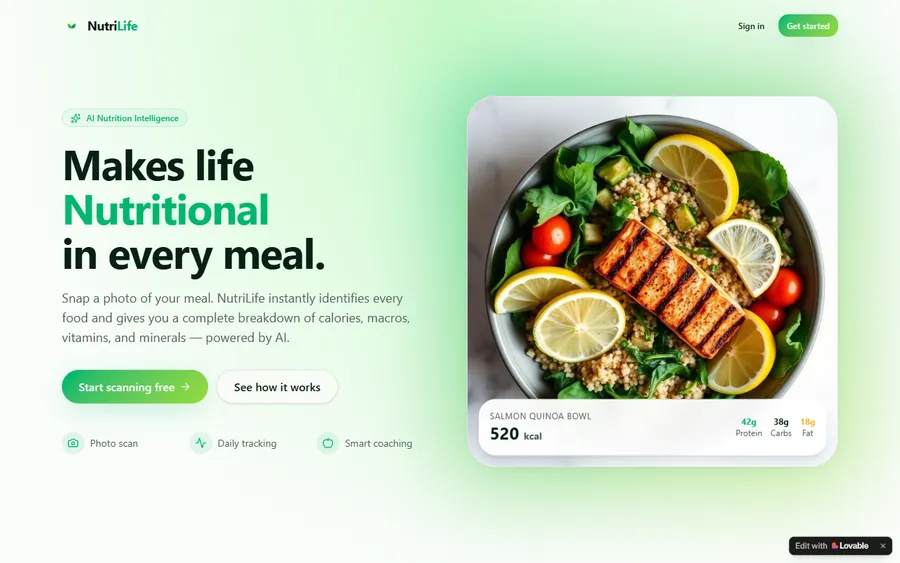
An AI nutrition coach that reads what you eat and works you toward a target.
AI and ML
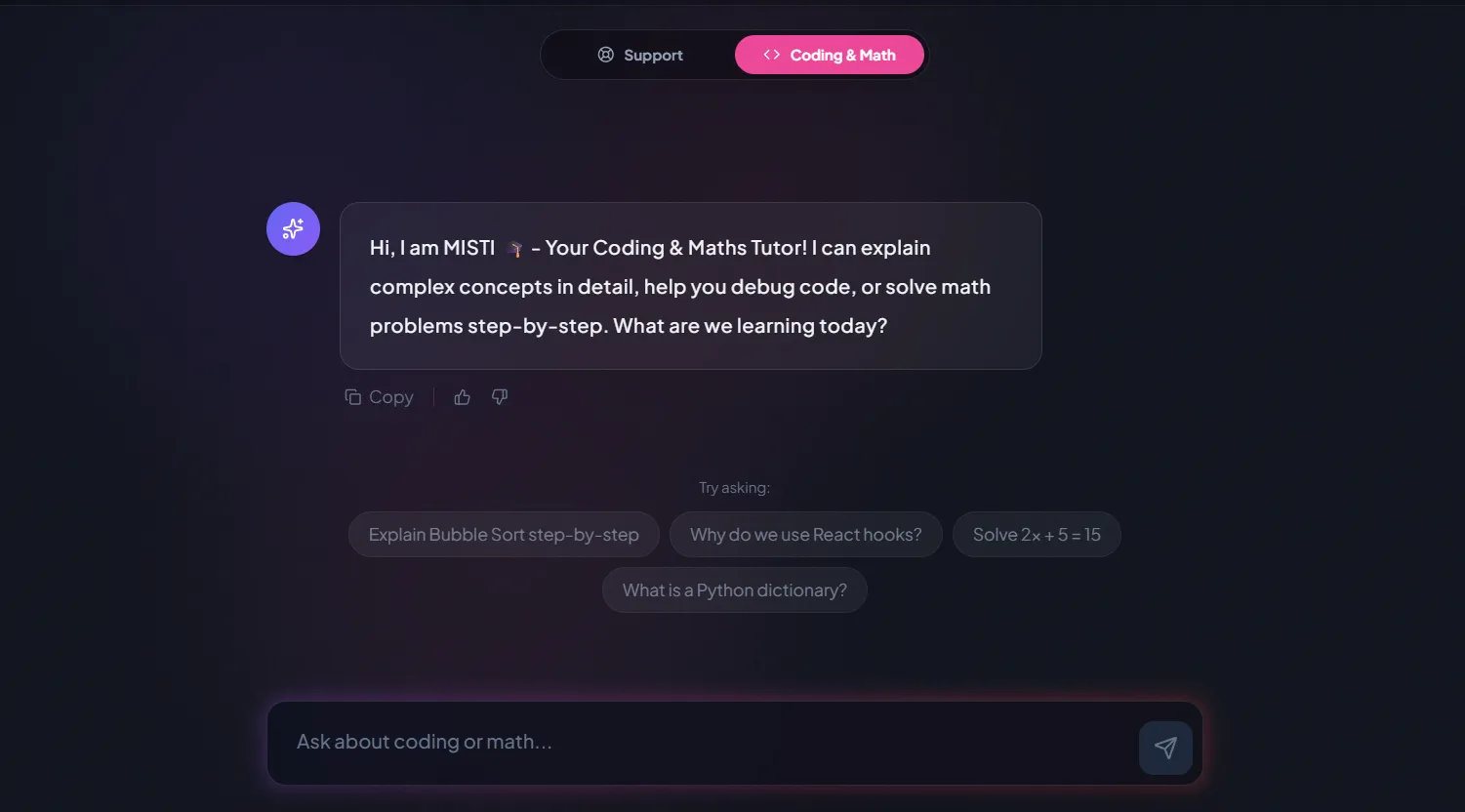
A chatbot that answers mathematics and programming questions, built and deployed by a student.
AI and ML
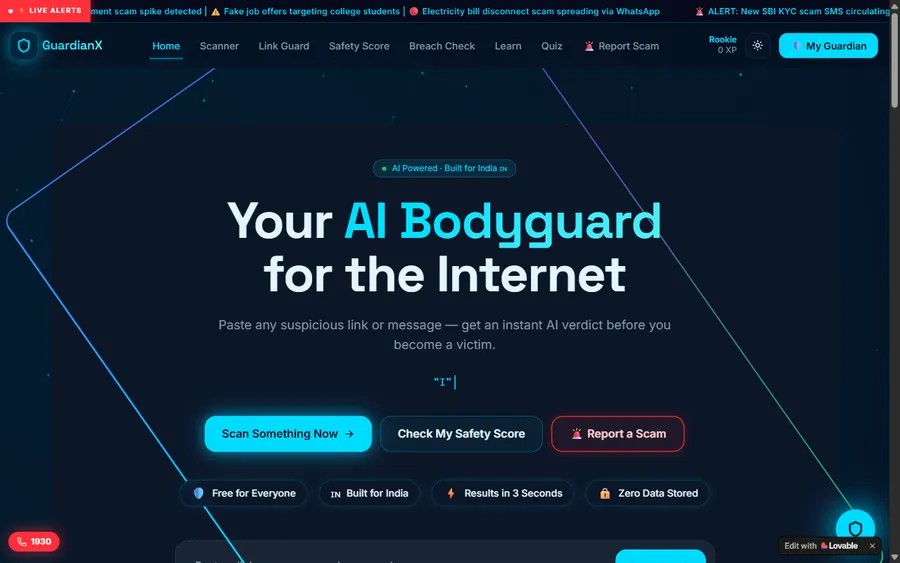
An assistant that helps a young person recognise unsafe situations online.
Web app
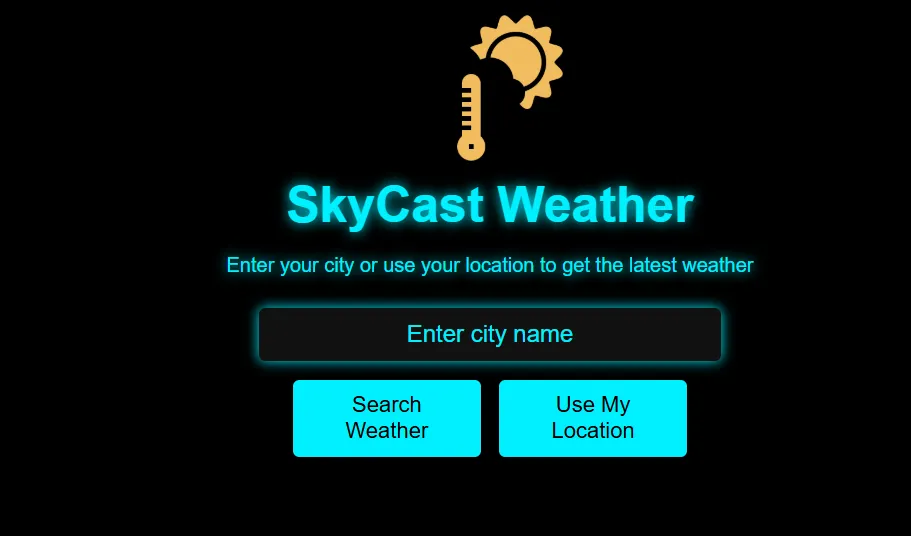
A weather forecasting site with live conditions for any location.
Fees
A flat charge each month, priced in US dollars for every country but India. Try the free lesson first; billing starts only once a course and a weekly time are fixed.
Free first class
USD 0
no card required
Group batch
USD 100
a month, billed in US dollars
One to one
USD 150
a month, billed in US dollars
What families say
From Google, unedited, by families nobody asked.
★★★★★
"The one step solution for my son. Modern Age Coders make learning coding so simple that kids love it. The teachers explain complex concepts clearly with practical exercises and interactive content."
Ria Mukherjee
Parent
★★★★★
"Modern Age Coders has been a game-changer for me. I struggled to grasp IT concepts and coding before joining, but their classes transformed everything. I can now confidently write complex programs with ease."
Samriddha Mondal
Student
★★★★★
"One of the most wonderful education centres out there. Education is not limited to school syllabus but focuses on skill development."
Vansh Agarwal
Student
★★★★★
"My child Dhairya is really enjoying the Modern Age Coders classes. This is his first online class and he eagerly looks forward to it. I can already see his improvement, and the teachers are very cooperative."
Sonam Oswal
Parent of Dhairya
★★★★★
"Modern Age Coders have wonderful teachers who teach in a clear, easy and practical way. The teacher boosts students' confidence and inspires them to learn without hesitation."
Sonu Goyal
Parent
★★★★★
"I highly recommend this computer coding class! The teachers are incredibly knowledgeable and passionate about coding."
Ritu Kedia
Parent
Questions about OCR J277
Two written papers, J277/01 and J277/02, each an hour and a half, each 80 marks and each worth half the GCSE. Both are non-calculator and every question is mandatory.
No. The specification lists under Not required "to remember the code, pseudocode or Exam Reference Language for these algorithms". You must be able to identify, understand and apply them.
OCR's own notation. All programming code given in examination papers is presented in it, so every candidate has to be able to read it fluently.
In Section B, questions on writing or refining algorithms must be answered using either the OCR Exam Reference Language or the high-level programming language you are familiar with. So yes, if that is your language.
Section A assesses structuring answers logically without a focus on syntactic precision, and gives flexibility in how you present them. Section B assesses designing, writing, testing and refining programs, with a published table of how each kind of question may be answered.
No assessed coursework. The specification does require that all students are given the opportunity to undertake a programming task during the course, but it is not assessed.
The specification notes that as of September 2025 the board's name is Cambridge OCR. It is the same qualification and the same code.
No, in either paper. Binary conversion, storage calculations and Boolean logic all have to be done by hand, which is a matter of practice rather than knowledge.
Read it beside any revision guide, topic by topic. Where the guide goes beyond the Required column, that depth is optional. Where the Not required column names something, it is settled.
Nothing for the opening lesson. A group place runs at USD 100 each month afterwards and a private one at USD 150, billed monthly and never up front.
Elsewhere on this site
Each covers a different part of the picture.
The other big English board, and why its notation rules differ.
Why most secondary schools are not required to teach computing at all.
One board examines Python on a computer. Here is which, and what that changes.
What the research says builds skill, and the claim we refuse to make.
The national page, and the index of every UK page we publish.
Where the marks sit at AQA and OCR once a project is assessed.
Start here
Send a number and we will reply at a British hour you pick. The lesson uses real J277 material and finishes with a straight view of the gaps.
Prefer reading? Syllabuses are published on every course page, the teaching method and its limits are in how we teach, and topic order runs down the coding roadmap.
WhatsApp us · +91 91233 66161 · contact@modernagecoders.com
WhatsApp gets the quickest reply and is free from a British mobile. The number is Indian, stated here rather than discovered later.