NNP / P / 01
Mental maths for kids
Number sense and estimation, not tricks.
Open the syllabusAustralia · NAPLAN Years 3, 5, 7 and 9 · Live online
NAPLAN numeracy is a short online test, but it measures something that takes years to build: whether a child can reason with numbers rather than only follow steps. The questions change as a student answers, the Year 7 and 9 tests lock the calculator away for the first part, and the results come back as one of four proficiency levels. This page explains how the test actually works, using ACARA's own descriptions, gives the confirmed dates for 2027, and offers practice questions we wrote around one habit that helps in every year level: estimating before calculating. Nothing here promises a score. Good teaching shows up in NAPLAN as a by-product, not the other way round.
Facts from ACARA's NAPLAN site · Original practice · No score promises
In short
NAPLAN numeracy is the national maths test for Years 3, 5, 7 and 9. It runs 45 minutes in Year 3, 50 in Year 5 and 65 in Years 7 and 9, where a short non-calculator section comes first. The tailored design adapts the questions to each student. In 2027 the test window is 10 to 22 March. Results are reported as four proficiency levels.
Where to start
Number sense first, then the reasoning that the later testlets reward.
NNP / 01
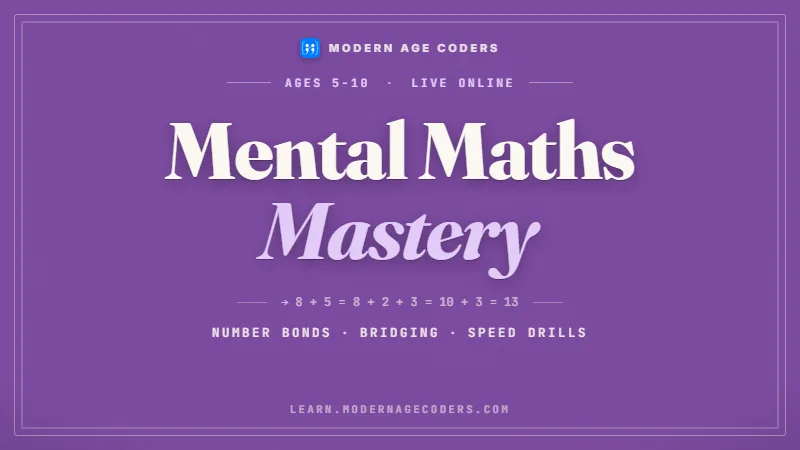
Place value, estimation and quick reasoning: the ground Years 3 and 5 stand on.
Open the syllabus →
NNP / 02
Number, measurement, space and data in step with what Australian classrooms cover.
Open the syllabus →
NNP / 03
Fractions, ratios, algebra and geometry, with reasoning written out.
Open the syllabus →What the numeracy test is
Durations and rules are ACARA's, from the NAPLAN site, checked on 7 October 2026.
| Year | Duration | Calculator |
|---|---|---|
| Year 3 | 45 minutes | No calculator section is described |
| Year 5 | 50 minutes | No calculator section is described |
| Year 7 | 65 minutes | A short non-calculator section first, then an online calculator |
| Year 9 | 65 minutes | A short non-calculator section first, then an online calculator |
ACARA describes the numeracy tests as measuring students' "application of mathematics knowledge, skills, procedures and processes" across the content strands of number, algebra, measurement, space, statistics and probability. Questions arrive as multiple choice, text entry and technology-enhanced items such as drag-and-drop and hot-spot.
The questions are mostly built on skills taught in earlier years. ACARA notes that a few assess content from the year of testing and the following year, so a Year 5 student may see something they meet properly in Year 6.
In Years 7 and 9 the calculator rule shapes the whole test. The first section asks students to show arithmetic without help. Once they move on, an online calculator appears, and they cannot go back to the non-calculator section.
NAPLAN is aligned with the Australian Curriculum: Mathematics. While states move from version 8.4 to version 9.0, ACARA says the tests assess skills common to both versions.
Sources: NAPLAN, What's in the tests; NAPLAN test window and durations. Read at source on 7 October 2026; ACARA has no connection with Modern Age Coders.
How the test adapts
NAPLAN numeracy is not the same paper for everyone. The questions a student sees depend on how they answer, which changes how practice should be done.
| Stage | What happens |
|---|---|
| First testlet | Every student at a year level starts with testlet A |
| Second testlet | Answers in A decide the next set: less complex (B) or more complex (D); a low score in A leads to testlet C early, then B |
| Final testlet | The second testlet decides the last one: highest complexity (F), average (E) or lowest (C) |
| Scoring | Based on both the number of questions answered correctly and the average difficulty of the questions the student received |
The practical consequence is about care, not speed. A careless slip early in testlet A can send a capable student down a gentler pathway, and ACARA states that a student who answers the same number of questions correctly on a less complex pathway can receive a lower scale score.
That is why our practice puts so much weight on checking an answer against an estimate. A check that takes ten seconds protects the pathway for the rest of the test.
Results are reported against four proficiency levels: Exceeding, Strong, Developing and Needs additional support. ACARA publishes descriptions of what students at each level typically show, by year and domain.
The levels describe what a child could do on the day. They are a useful snapshot for a teacher, and a poor reason for drilling. Children who understand the mathematics tend to read the questions calmly, and that matters more than practice volume.
Sources: NAPLAN, Tailored tests; NAPLAN proficiency level descriptions. Checked on 7 October 2026.
Key dates
ACARA publishes test windows years ahead. Schools choose the exact days within the window.
| Year | Test window |
|---|---|
| 2027 | 10 to 22 March |
| 2028 | 15 to 27 March |
| 2029 | 14 to 26 March |
Inside the window, ACARA sets the order: writing first, then reading, then conventions of language, then numeracy. Schools are asked to schedule tests as soon as possible within the window and to prefer mornings.
If a student is absent, schools can run catch-up sessions later in the window. Exact days for any child come from their school, not from us.
Familiarisation is free and official. ACARA says schools can complete practice tests in the assessment platform from Term 3, 2026, and the public demonstration site offers sample questions year-round so students can see the item types before test week.
We recommend that every student tries the public demonstration site once, simply to remove surprise about how drag-and-drop or text entry works on screen.
Source: NAPLAN key dates. Checked on 7 October 2026.
Practice we wrote
One habit runs through every year level: decide roughly what the answer should be before working it out. Front-end estimation uses the leading digits; benchmark fractions compare everything to a half or a whole.
Work with the leading digits first, then adjust. For 48 times 3, think 40 times 3 is 120 and 8 times 3 is 24, so about 144. The rough answer arrives before any written method.
Compare fractions to 0, a half and 1 before calculating. Five eighths is more than a half; three sevenths is less. The comparison is done without common denominators.
After calculating, set the answer beside the estimate. If they disagree by a factor of ten, a decimal point or a digit has slipped, and there is still time to fix it.
| Year | Question | Estimate first | Exact answer |
|---|---|---|---|
| Year 3 | A class receives 3 boxes of 48 pencils. About how many pencils is that? | 40 times 3 is 120, plus 8 times 3 is 24: about 144 | 144 |
| Year 5 | Which is larger, five eighths or three sevenths? | Five eighths is more than a half; three sevenths is less than a half | Five eighths |
| Year 5 | A 3.8 metre ribbon is cut into 4 equal pieces. About how long is each piece? | 3.8 is close to 4, and 4 shared by 4 is 1: just under 1 metre | 0.95 metres |
| Year 7 | Without a calculator: is seven twelfths plus five ninths more or less than 1? | Each fraction is more than a half, so the total is more than 1 | More than 1 (it is 1 and 5 thirty-sixths) |
| Year 7 | Without a calculator: estimate 49 times 21. | 50 times 20 is 1,000; both numbers moved, so the answer is near 1,000 | 1,029 |
| Year 9 | A crowd of 23,847 people is 38 per cent under 18. About how many is that? | About 24,000 times two fifths: about 9,600, a little high because both numbers were rounded up | 9,062 (to the nearest person) |
| Year 9 | A calculator shows 8.4 for 2.4 times 0.35. Is that reasonable? | 2.4 is about 2 and 0.35 about a third, so the answer is under 1 | No: the answer is 0.84, a slipped decimal point |
Notice what the estimates do. In the Year 9 calculator question, the student never needs to redo the multiplication to know something is wrong; the estimate alone catches a decimal point in the wrong place. In the Year 7 fraction question, no common denominator is needed to answer correctly. Those are exactly the moments the tailored design rewards, because a slip caught early keeps a student on the pathway their understanding deserves.
We do not sell NAPLAN drilling, and we do not promise a proficiency level. Our classes teach the mathematics properly, with estimation and checking built in from the first lesson, and families tell us the test week feels calmer as a result.
Building number sense
Where a child starts depends on how they reason with numbers, not on their year level.
| Around | Rung | The sign it is secure |
|---|---|---|
| Year 3 | 1. Place value | Rounds to the nearest ten or hundred and explains why |
| Year 5 | 2. Front-end estimation | Estimates products and quotients before calculating |
| Year 7 | 3. Benchmarks | Compares fractions and percentages to a half and a whole without converting |
| Year 9 | 4. Reasonableness | Spots a wrong calculator answer from an estimate alone |
Anxiety about tests usually comes from not knowing whether an answer is right. Estimation gives a child a way to check, which changes how a test feels.
Short, regular practice with talk about reasoning beats long sessions of worksheets.
Students who enjoy the reasoning side often try the Australian Mathematics Competition, covered on our Australian Maths Trust page.
The same habits carry into senior maths, where checking a result against an estimate saves marks in every exam.
The catalogue
Grouped by stage. Full syllabuses open from each card.
NNP / P / 01
Number sense and estimation, not tricks.
Open the syllabusNNP / P / 02
All strands, taught with reasoning out loud.
Open the syllabusNNP / P / 03
Visual calculation for younger learners who like structure.
Open the syllabusNNP / S / 01
Fractions, ratios, geometry and early algebra.
Open the syllabusNNP / S / 02
Equations and expressions, understood rather than memorised.
Open the syllabusNNP / S / 03
Data, chance and the reasoning NAPLAN's later items use.
Open the syllabusNNP / X / 01
Problem solving for the AMC and beyond.
Open the syllabusNNP / X / 02
Logic and patterns for curious primary students.
Open the syllabusNNP / X / 03
Fast calculation methods, always checked against an estimate.
Open the syllabusHow lessons run
Our maths teachers are based in India, which sits behind every Australian capital. A 4 pm class in Brisbane, for instance, begins at 11.30 am India time, so primary-age slots straight after the school bell are simple to staff and simple to keep.
Weekday after school
The usual choice for primary and middle years.
Weekend morning
For families who prefer a calmer start.
School holidays
Short catch-up blocks on a single topic.
Students explain how they know, not just what they got.
Every calculation starts with a rough answer and ends with a check.
Children grouped by what they can already do, so nobody waits and nobody is lost.
Chosen when a child needs a particular gap closed or confidence rebuilt.
A short note on what was covered and what to try at home.
No proficiency level is promised. We teach the maths; the result is the child's.
Student work
Work our learners made for its own sake, with no test attached. The full gallery lives in the student labs.

AI and ML
An AI nutrition coach that reads what you eat and works you toward a target.

AI and ML
A chatbot that answers mathematics and programming questions, built and deployed by a student.

AI and ML
An assistant that helps a young person recognise unsafe situations online.

Web app
A weather forecasting site with live conditions for any location.
Fees
Australian families are billed monthly in US dollars, the same rate we charge everywhere outside India, with nothing to pay up front and freedom to stop at any month end.
Free first class
USD 0
no card required
Group batch
USD 100
a month, billed in US dollars
One to one
USD 150
a month, billed in US dollars
What families say
Parents in their own words, quoted exactly as they appear on Google.
★★★★★
"The one step solution for my son. Modern Age Coders make learning coding so simple that kids love it. The teachers explain complex concepts clearly with practical exercises and interactive content."
Ria Mukherjee
Parent
★★★★★
"Modern Age Coders has been a game-changer for me. I struggled to grasp IT concepts and coding before joining, but their classes transformed everything. I can now confidently write complex programs with ease."
Samriddha Mondal
Student
★★★★★
"One of the most wonderful education centres out there. Education is not limited to school syllabus but focuses on skill development."
Vansh Agarwal
Student
★★★★★
"My child Dhairya is really enjoying the Modern Age Coders classes. This is his first online class and he eagerly looks forward to it. I can already see his improvement, and the teachers are very cooperative."
Sonam Oswal
Parent of Dhairya
★★★★★
"Modern Age Coders have wonderful teachers who teach in a clear, easy and practical way. The teacher boosts students' confidence and inspires them to learn without hesitation."
Sonu Goyal
Parent
★★★★★
"I highly recommend this computer coding class! The teachers are incredibly knowledgeable and passionate about coding."
Ritu Kedia
Parent
Questions about NAPLAN numeracy
It is the maths test within NAPLAN, the national assessment for students in Years 3, 5, 7 and 9. ACARA says it measures the application of mathematics knowledge, skills, procedures and processes across number, algebra, measurement, space, statistics and probability.
The 2027 test window is 10 to 22 March. Schools set the exact days within the window and run numeracy after the conventions of language test.
45 minutes in Year 3, 50 minutes in Year 5, and 65 minutes in Years 7 and 9.
In Years 7 and 9 the test has a short non-calculator section first, after which an online calculator is available. Students cannot return to the non-calculator section once they move on.
The test adapts as a student answers. Everyone starts with testlet A, and the answers decide whether the next questions are less or more complex. Results depend on both the number answered correctly and how difficult those questions were.
Results are reported as Exceeding, Strong, Developing or Needs additional support. ACARA publishes descriptions of each level by year and domain.
A way of estimating by working with the leading digits first and adjusting afterwards. It gives a rough answer quickly, so a calculated answer can be checked against it.
ACARA's public demonstration site has sample questions year-round, and schools can run practice tests in the assessment platform from Term 3, 2026. Our practice questions on this page are written by us.
We do not promise any result or proficiency level. We teach number sense, estimation and reasoning properly, and those skills are what the test draws on.
We fix one weekly slot with you once the trial class is done, normally just after school in your state. Brisbane is four and a half hours ahead of India time all year, as Queensland has no daylight saving.
Related pages
Maths beyond NAPLAN, competitions, and coding.
From Foundation year to senior maths, taught live.
Maths, coding and AI contests, month by month.
Getting primary and middle-years students ready for AMT papers.
For students who want harder problems.
Puzzles to try at home.
Where maths meets programming.
Start here
Tell us the year level and what feels hard right now. The free class works on number sense and reasoning, and ends with an honest view of next steps.
Rather browse quietly? Every maths course is laid out on the course atlas, and how we teach describes a lesson from start to finish.
WhatsApp us · +91 91233 66161 · connect@modernagecoders.com
A WhatsApp message tends to get the quickest reply. Our number carries the +91 Indian code: the school operates from India and keeps no premises in Australia.
A priority demo is a full class of about 45 to 60 minutes. After the class the mentor sends a written skill report and a personal learning roadmap on WhatsApp. If you enrol, the demo fee is adjusted against your first month's fee. Share your demo Order ID with us on WhatsApp and we take it off.
Book a priority demo