Skip to content
Sligo town, County Sligo

Coding classes in Sligo

What is the best coding class in Sligo?

Sligo town has 20,238 usual residents in the census town tables and 8,208 households, and 1,738 of its 8,622 working residents walk to work. Lessons with us need no journey at all: a teacher on a live video call twice in most weeks, with a small group of learners at the same stage or with one learner on their own, from six years old up to sixty-seven. The opening lesson is free. From then on a group place is USD 100 a month and private lessons are USD 150.

Here is a result that sounds impossible. On the census row for people whose main answer is that they work or study at home, Balbriggan is level with Sligo among working residents and ahead of Sligo among students and children, yet behind Sligo when the two groups are added together. We did not construct it. We searched the census travel table for every town large enough to compare and found exactly this one reversal against Sligo. The explanation is not in either rate but in the mix: Balbriggan has more of its travellers in the education group, where home is almost never the answer, and that group drags its combined figure down. It is called Simpson's paradox, it catches professionals, and this page shows it with real numbers from two Irish towns.

Facts last verified 19 September 2026. Teaching is online; no Sligo branch is claimed.

Course picks for Sligo

Where Sligo learners begin

The age and the interest suggest a course. The free lesson, taught by that course's own teacher, decides it.
Browse the course atlas for more than one hundred options and use the coding roadmap to check prerequisites.

The four we are known for

Python, AI, vibe coding and agentic coding

These run underneath everything above. Every one is live and online, placed by ability rather than by age, and the first class is free.
Signature project

Level, ahead, and still behind

The row labelled work mainly at or from home, for Sligo and Balbriggan, split into the census's two travel groups. Counts are published; the percentages are our division, shown to three decimals because the working-resident rates differ only in the third.

Home as the main answer, by travel group
GroupSligoSligo rateBalbrigganBalbriggan rate
Working residents831 of 8,6229.638%1,000 of 10,3739.640%
Travelling to school, college or childcare20 of 5,0730.394%38 of 7,7250.492%
Both groups together851 of 13,6956.214%1,038 of 18,0985.735%
Share of travellers in the education group37.0%42.7%

The paradox

Balbriggan is level with Sligo among working residents, ahead by two thousandths of a point, and clearly ahead among education travellers, yet its combined rate of 5.735% sits below Sligo's 6.214%. Neither town's figures are wrong.

The mechanism

The education group almost never answers home, so it has a rate near zero. Balbriggan has 42.7% of its travellers in that group against 37.0% in Sligo, and a bigger slice of near-zero pulls its average down, whatever happens inside each group.

The fix

Compare at the same mix. Apply Balbriggan's two rates to Sligo's proportions of workers and students and the combined figure becomes 6.252%, just ahead of Sligo, which is what the group-by-group comparison said all along.

Where this shows up for real

A hospital with better outcomes in every category of patient can have a worse overall figure because it takes the hardest cases. A school can beat another at every level and trail on the average because of its intake. A product can win every region and lose nationally. The overall number is not wrong; it is answering a different question, one that mixes how good each part is with how big each part is. Before comparing totals across groups of different make-up, split them, and if one figure is needed, standardise to a common mix and say which mix was used.

The learner's project has three stages. First, reproduce the table from the published counts and see the reversal for themselves. Second, write the standardisation: a function that takes two sets of rates and one set of weights and returns comparable totals, applied at Sligo's mix, at Balbriggan's, and at an even split. Third, repeat our search: loop over every sufficiently large town in the travel table, test every mode for a reversal against a chosen town, and count how many turn up. Against Sligo, among 74 towns, we found exactly one, which is itself worth knowing: the paradox is real and it is rare, which is why it surprises people when it bites.

Sligo in the town tables

The town behind the comparison

Published for the built-up area Sligo, Co Sligo, in the Census 2022 small area tables.

Sligo town, Census 2022
MeasuredCount
Usual residents20,238
Households8,208
Working residents in the travel table8,622
Working residents walking to work1,738
Residents travelling to school, college or childcare5,073
Of those, travelling on foot1,643

A walking town

Of the 8,622 working residents, 3,852 drive, 1,738 walk, 831 give home as their main answer, 447 travel as a car passenger, 304 by van, 246 by bicycle and 139 by bus, with 989 not stating.

The school run

Of 5,073 journeys to school, college or childcare, 2,172 are as a car passenger, 1,643 on foot, 350 by bus, 286 driving and 88 by bicycle.

Connections and home working

Broadband is reported by 6,322 of 8,208 households. A separate table records 1,843 working residents doing some work at home and 5,426 who never do.

The hospital

The HSE lists Sligo University Hospital at The Mall, Rathquarter, Sligo Town, F91 H684. We name it only from that published listing and have no connection with it.

Before comparing any two totals

Three questions that catch a composition effect

The Sligo and Balbriggan case turned into a checklist a learner can apply to any league table or report.

What to ask, and what the census answered here
QuestionAnswer for Sligo and Balbriggan
Is the total made of groups with very different rates?Yes: about 9.6% among working residents, under 0.5% among education travellers
Do the two places have different mixes of those groups?Yes: 37.0% of Sligo's travellers are in the education group, 42.7% of Balbriggan's
Does the comparison change at a common mix?Yes: at Sligo's mix Balbriggan's rates give 6.252%, above Sligo's 6.214%

When a paradox is possible

Only when the groups have very different rates and the places have very different mixes. If either is missing, the totals and the groups tell the same story, which is why most comparisons are safe and this one is not.

Which figure to publish

Both, labelled. The combined rate is a true description of each town's travellers; the standardised rate is the fair comparison of the towns. Publishing one without saying which it is invites the wrong conclusion.

What this page does not claim

That either town has more home-working or home-learning in any meaningful sense. The gaps are tiny, and the point is how totals behave, not a ranking of towns.

The abbey

The Office of Public Works describes Sligo Abbey, at Abbey Street, Sligo, F91 K796, as a Dominican priory that has dominated the town's eastern district since Sligo was founded in the mid-thirteenth century, with its church, sacristy and chapterhouse preserved from that period alongside a fifteenth-century cloister. We quote the description only; its admission prices are not reproduced here.

Learning in Sligo

How the lessons run for Sligo families

A fixed hour, twice in most weeks, with a teacher who is present from start to finish.

Primary age

Block coding and games, where teams and scores make fairness a real question early on.

Secondary age

Python, websites and AI projects, through the junior cycle and into the exam years.

Adults

Adults join from every starting point, and 1,843 working residents here already do part of their work from home.

The HSE and the Office of Public Works are quoted from their own published pages, and neither, nor Sligo County Council, has any connection with us. Every count on this page is a Central Statistics Office Census 2022 figure for the built-up areas of Sligo and Balbriggan, printed as published. The rates, the standardised figure and the search for reversals are our own arithmetic, run on 19 September 2026, and the search is described closely enough that anybody can repeat it.

Learning ladder

From fair teams to fair comparisons

Ages are a starting guess; the free lesson confirms the level.

Ages 6 to 10

Picking fair teams

Block games where the mix of players changes who wins, and fixing it.

Coding for KidsScratch Coding for Kids
Ages 11 to 13

Averages of mixtures

Weighted averages in Python, and why the weights matter as much as the values.

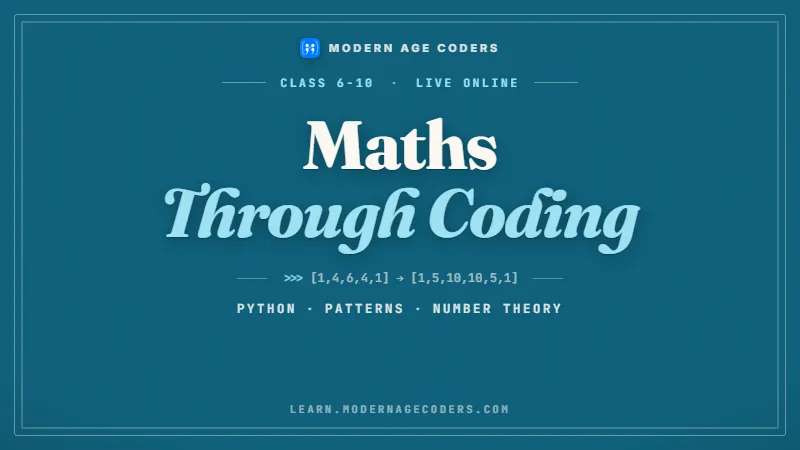
Maths Through CodingPython and AI for Kids
Ages 14 to 18

Grouped comparisons

Splitting data by group, finding reversals and standardising to a common mix.

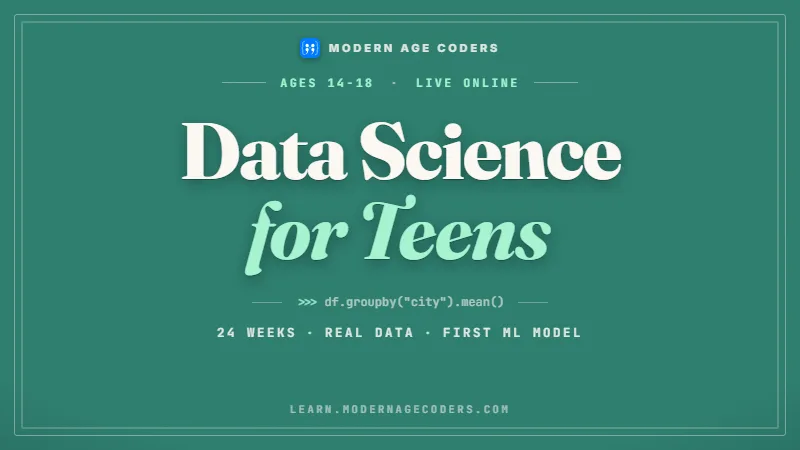
Data Science for TeensPython for Teens
Ages 18 to 67

Comparing units at work

Branches, teams and schools compared fairly when their mix of cases differs.

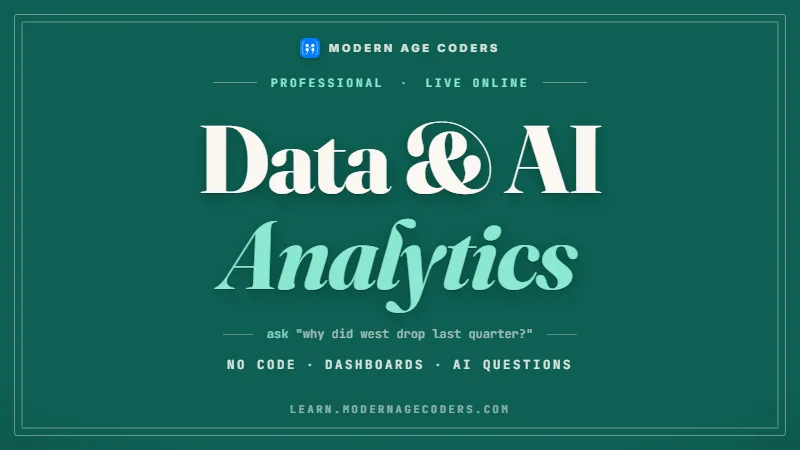
Data and AI Analytics for Non-Programmers (Excel, Sheets, Power BI)Python Automation Course
Coding and AI

Ask which town has more people working from home

The answer depends on a question the model does not ask.

Give an assistant the combined figures and it will say Sligo. Give it the group figures and it will say Balbriggan, or call them level. It will rarely notice that both answers come from the same counts, or explain that the difference is the mix of groups rather than anything happening inside them.

A learner who has worked through this page asks whether the groups have different rates and the towns different mixes before answering, and produces a standardised comparison when they do. That turns two contradictory confident answers into one correct, explained one.

Tools will hand you whichever total you ask for. Knowing which total answers your question is still a human job, and a very learnable one. The longer argument is in why coding repays a young learner.

Delivery

Practical details for Sligo

What happens in practice.

A teacher, live

Every lesson is taught in real time, with the teacher following the learner's own work.

Grouped by ability

Five to ten learners at one stage, from Sligo, the rest of Ireland and further away.

Two lessons most weeks

Around eight a month, at an hour chosen when the course begins.

Term dates

Holidays and exam weeks are planned into the schedule from the outset.

What to have

The learner needs their own screen and keyboard for the hour, working audio, and a connection that does not drop a video call.

On their own

If the timetable and the level cannot meet in a group, the teacher takes the learner one to one.

Groups matched on purpose

We group learners by level precisely so that comparisons inside a group are fair, the same principle as comparing towns at a common mix.

Fees

Sligo class fees

Three lines, nothing more.

First classUSD 0

The opening lesson, taught in full and assessed, free.

Group tuitionUSD 100

A month in a group of five to ten at one level, about eight live lessons.

Private tuitionUSD 150

A month of one to one lessons on the same weekly pattern.

Families outside India all pay the same monthly fee in US dollars, so Sligo sees the figure Galway sees, with no euro version shown. There is no charge until the free lesson has produced a course and a weekly time, and the pricing page explains what happens over holidays, after a missed lesson, and when a learner changes format.

Reviews

Six families' Google reviews, printed as they wrote them

Rated 4.9 across 547 Google reviews. These are real reviews, reproduced as written.

★★★★★

"The one step solution for my son. Modern Age Coders make learning coding so simple that kids love it. The teachers explain complex concepts clearly with practical exercises and interactive content."

Ria Mukherjee

Parent

★★★★★

"Modern Age Coders has been a game-changer for me. I struggled to grasp IT concepts and coding before joining, but their classes transformed everything. I can now confidently write complex programs with ease."

Samriddha Mondal

Student

★★★★★

"One of the most wonderful education centres out there. Education is not limited to school syllabus but focuses on skill development."

Vansh Agarwal

Student

★★★★★

"My child Dhairya is really enjoying the Modern Age Coders classes. This is his first online class and he eagerly looks forward to it. I can already see his improvement, and the teachers are very cooperative."

Sonam Oswal

Parent of Dhairya

★★★★★

"Modern Age Coders have wonderful teachers who teach in a clear, easy and practical way. The teacher boosts students' confidence and inspires them to learn without hesitation."

Sonu Goyal

Parent

★★★★★

"I highly recommend this computer coding class! The teachers are incredibly knowledgeable and passionate about coding."

Ritu Kedia

Parent

Free placement class

Book a free Sligo lesson

Tell us the learner's age and what they like. We build the opening hour from that, and it might end with a game, a first working program, or a comparison made fair by fixing the mix.

+353

FAQ

Sligo coding class questions

What families in Sligo ask before booking.

How many people live in Sligo town?

The Census 2022 small area tables count 20,238 usual residents in the built-up area of Sligo, in 8,208 households. Our County Sligo page quotes the census town list instead, which reaches its own, slightly different figure.

What is the Sligo data project?

Learners reproduce a genuine Simpson's paradox from census counts: Balbriggan level with Sligo among working residents and ahead among education travellers, yet behind when combined, then write a standardisation that compares the towns at a common mix, and repeat our search for reversals across 74 towns.

What is Simpson's paradox?

A reversal where one place or group does better in every subgroup but worse overall, because the overall figure also reflects how the subgroups are mixed. It is real, it is rare, and it is fixed by comparing at a common mix.

How do Sligo residents travel to work?

Of the 8,622 working residents in the travel table, 3,852 drive, 1,738 walk, 831 give working mainly at or from home, 447 travel as a car passenger, 304 by van, 246 by bicycle and 139 by bus, with 989 not stating.

When do lessons happen?

After school, in the evening and on weekend mornings. An Irish 5pm is 9.30pm for our teachers in India during Irish summer time and 10.30pm in winter, so the free lesson is where we find an hour that suits both ends.

Can adults learn with you in Sligo?

Yes. Our learners go up to sixty-seven, many adults start with no experience at all, and the free lesson decides whether that happens in a matched group or one to one.

Is the paradox a trick of rounding?

No. The counts are exact and the reversal holds at three decimal places. What is small is the working-resident gap, which we state openly; the education-group gap and the combined gap are clear.

Is there a Modern Age Coders classroom in Sligo?

No, and we never imply one. Teaching is live over video only, with no premises in Ireland. A learner needs a laptop or desktop, working sound and a steady connection, and the number shown here belongs to India.

What do coding classes in Sligo cost?

The first lesson is free. After that a shared place costs USD 100 a month and brings two live lessons a week, about eight monthly, with five to ten learners; one to one on the same schedule is USD 150 a month. Everything is agreed before payment.

How many learners are in a group?

Five to ten, grouped by ability, pace and goal rather than age or address. Where nothing suitable meets at a workable hour, we teach one to one instead.

Explore Ireland

Around Sligo

The rest of the county is on the County Sligo page, within Connacht, and the other town in this comparison has its own page at Balbriggan. For a view of online schools side by side, read this comparison, and the Ireland hub collects every page in the series.

Free Sligo classCall +91 91233 66161

Keep exploring Modern Age Coders

Coding classes in nearby cities

Learn more

Free resources

From the blog

Start here