Live over video, wherever in Jeddah you live

Coding Classes in Jeddah

Jeddah has traded with the world for centuries, and its families have always understood that prosperity follows whoever learns the new trade early. Right now the new trade is software. Modern Age Coders teaches it live and online: one teacher, five to eight students, a full hour of writing real Python and building real AI projects, for ages six up to working adults.

The class comes to your home over video, so it makes no difference which end of this long coastal city you live in, and nobody sits in traffic for a lesson. The first session is a free demo. Decide after it, not before.

4.9 rating across 547+ Google reviews

When

Weekday evenings in AST, with Friday and Saturday slots too

How small

Five to eight students per group, or one-on-one

To begin

One free demo lesson, with nothing owed after it

Courses

What Jeddah students can enrol in

Nine tracks, three age bands, all taught by a teacher who will know your name by the second week. The card links carry the full syllabus and schedule for each course.

Why here, why now

An old trading city meets a new trade

Every port city raises children who know the world is larger than their street. Jeddah has been the Red Sea's merchant gateway for most of recorded history, and the instinct survives in its families: watch what is moving, learn it before the neighbours do. Today the thing moving is software. The port runs on it, logistics runs on it, the tourism build-out along the coast runs on it, and the offices your children will one day apply to are already reorganising around AI.

Jeddah also has a reputation as the Kingdom's easygoing, artistic city, and coding fits that temperament better than people expect. It is a making discipline. The children who fill sketchbooks and invent elaborate stories are often the ones who take to programming fastest, because a program is just a story the computer agrees to act out. Our classes lean into that: less recitation, more building.

Two promises are missing from this page on purpose: that a coding class decides a child's future, and that finishing a course lands an adult a job. Neither claim survives contact with reality. What a weekly class reliably does is train a person to split a big problem into small ones, to treat being stuck as information rather than failure, and to carry a project from blank file to finished thing. Everything else is built on top of that.

The commute you never make

Jeddah is a long city. It stretches so far along the coast that an after-school activity in the wrong district can cost a family a driver, an hour each way, and a child too tired to benefit by the time they arrive. That arithmetic quietly kills most enrichment classes by November.

An online class deletes the problem instead of managing it. The lesson starts when the laptop opens, at home, with a parent free to listen from the next room. Attendance stops depending on traffic, and the energy a child would have spent in the back seat goes into the code. Families in Jeddah tell us this is the single most practical thing about the format, ahead of anything on the syllabus.

Alongside every school system in the city

Jeddah families reach us from the national curriculum system and from international schools running IB, British, American and Indian CBSE programmes. We are a supplement, not a replacement, and the material was designed so no school system conflicts with it. Some useful intersections:

  • Indian CBSE schools: senior secondary computer science papers use Python, so a student who has spent years building Python projects with us meets the exam syllabus as familiar territory rather than new material.
  • Schools on the British curriculum: marks in IGCSE and A Level computing lean heavily on whether a student can genuinely write and trace programs, a skill that grows from practice, not revision guides.
  • American curriculum schools: AP computer science courses expect students to reason about working code. Arriving with a portfolio of projects makes the course a consolidation instead of a scramble.
  • National curriculum schools: digital skills lessons are expanding across Saudi schools, and a weekly hour of guided building turns classroom theory into something the student has personally done.

The format

What a week with us looks like

Six plain facts about the format, none of which change after enrolment.

One live hour

A teacher and a small group on a video call, building together in real time. Questions get answered while the problem is still open on screen, not in a forum thread three days later.

Groups of five to eight

At that size, silence gets noticed. When a student goes quiet, the teacher asks why in that same lesson, and the answer shapes the next ten minutes.

Your hour, kept

Weekday classes fall in the AST evening, with Friday and Saturday options for full weekly calendars. The slot you pick belongs to you for the length of the course.

English in the classroom

Teaching happens in English, matched to how most Jeddah international schools already operate. Teachers pace themselves for students who think in Arabic first, and nobody is rushed past a concept.

Output you can open

Each course ends in things that exist: a game, a working script, a small model. Ask a student what they learned and they can show you instead of telling you.

Demo before decisions

The first lesson is free and identical to a paid one. We earn the enrolment inside that hour or we do not get it, which keeps everyone honest.

The long view

Where the learning goes, year by year

A single class is easy to picture. What parents usually want to see is the whole route, so here it is, stage by stage. Students join wherever their age and experience place them, and the demo lesson is where the teacher makes that call.

Rules of the gameAges 6 to 9

Logic through play: sequences, repetition and decisions, discovered inside games and animated stories of the child's own design. What we watch for is the moment a child stops guessing and starts predicting what their program will do.

Written codeAges 9 to 14

The move to typed Python: variables, conditions, functions, lists and dictionaries, each earned through a project rather than a lecture. Early graphics work keeps the feedback visual while the underlying discipline quietly gets serious. Debugging shifts from the teacher's job to the student's habit.

Real data, real modelsAges 13 to 18

Programs that touch the real world: reading files, calling APIs, cleaning messy data. Then machine learning as a practice rather than a buzzword, where teens train small models, measure how often they are right, and find out firsthand why nobody should trust an unmeasured one.

Professional rangeCollege and career

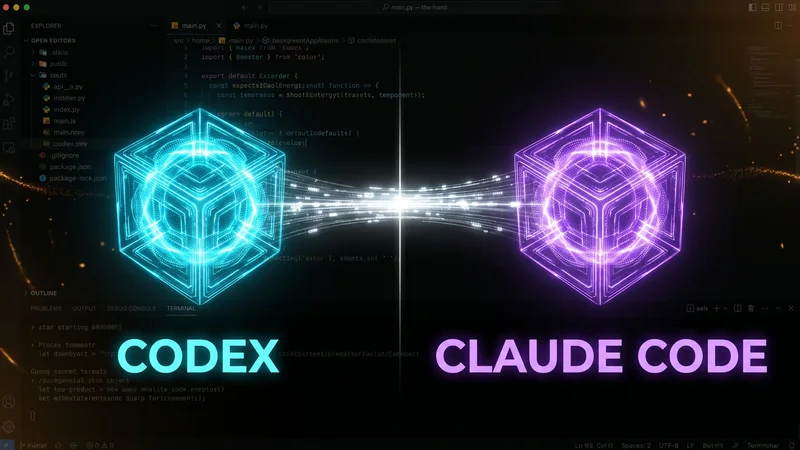
For adults, the syllabus turns toward usefulness at work: automating repetitive tasks, analysing data, building on generative AI APIs, and directing coding agents like Codex and Claude Code with a reviewer's eye.

We put the disclaimer in writing because it matters: no course guarantees employment, ours included. Our end of the bargain is real instruction, honest feedback on your code, and finished work you can show. The hiring decision belongs to someone else, and we do not pretend otherwise.

Plainly stated

Six reasons families stay after the demo

Teaching is the job

Our instructors teach full time and are trained for it. The difference shows in the tenth lesson, when the easy material is behind and the patience matters.

Small on purpose

Five to eight students is not a marketing line, it is the operating constraint everything else depends on. We would rather open another batch than stretch one.

Projects as proof

The unit of progress here is a finished thing, not a completed chapter. Students accumulate work they made, and the portfolio grows on its own.

A certificate that means completion

Each finished course comes with a certificate for the school file, the university application or the CV. We hand them out for finishing, not for enrolling.

No mystery about progress

Parents get regular notes from the teacher: the topics reached, where the student is strong, what still needs work. "Was it worth it" never has to be guessed at.

Proof before payment

The free demo puts the teaching in front of you before any money moves. If the hour does not persuade you, that is a useful answer too.

Verified reviews

What parents and students say

Our classrooms are online, so a Jeddah student shares a batch with families in several time zones. Every review below is real and verified, and the longer list is on our Wall of Love.

"I am truly grateful for my experience at Modern Age Coders. My teachers were not only teachers but also mentors and friendly figures. The perks are excellent: one-on-one doubt solving, mentoring and regular tests. The most impressive part was working on real-world projects."

Krishnam Bhatter

Former student

"Modern Age Coders have wonderful teachers who teach in a clear, easy and practical way. The teacher boosts students' confidence, keeps them updated with technology, and inspires them to learn without hesitation."

Sonu Goyal

Parent

"My son struggled with maths for years. Integrating it into coding projects has transformed his understanding and confidence. Highly recommended."

Shewta Singh

Mother of Ishan

"Mivaan enjoys the class. He understands the concepts and completes his tasks with excitement. He has started taking real interest in coding. Truly an amazing class."

Shradha Saraf

Parent of Mivaan

More Saudi guides

The rest of the Saudi guide

This page is the Jeddah chapter of our Saudi Arabia guide. The other chapters cover the rest of the country and the topics parents ask about most.

Fees

The full price list, both lines of it

Fees are charged monthly in US dollars, and the riyal equivalents below are close approximations rather than fixed figures.

Group classes

$40 per month

about SAR 150 per month

  • Live weekly lessons, five to eight students
  • AST evening and weekend timings
  • Project work and a certificate on completion
  • Preceded by the free demo lesson
Book a Free Demo

Nothing is charged to try us, nothing extra is charged to join, and stopping costs nothing. Fees stay exactly as printed above.

Questions

Frequently asked questions

Is there a Modern Age Coders centre in Jeddah?
No, and that is deliberate. Lessons happen over live video, so a student near the corniche and a student far inland get the identical lesson from the identical teacher, and neither family spends an evening in traffic for it. The only equipment needed is a computer, a headset and ordinary home broadband.
What times are classes held for Jeddah students?
Slots run through weekday evenings in Arabia Standard Time, generally between four and nine, and continue across Friday and Saturday for families who prefer the weekend. When you enrol you pick the hour that suits your household, and that hour stays yours from week to week.
Can my child join with zero coding background?
Yes. Most of our six to twelve year olds arrive knowing nothing at all. The free demo also works as a quiet assessment: the teacher watches how the child approaches a small puzzle, then suggests the track that fits, and will tell you honestly if it is worth waiting a year before starting.
Will the classes clash with schoolwork?
They are built not to. One evening hour a week, with project work a student chooses to continue rather than homework that is demanded. Families from the national curriculum and from IB, American, British and Indian CBSE international schools all run our classes alongside school without friction.
What language is used in class?
English throughout. Jeddah's international schools mostly teach in English already, and for students more comfortable in Arabic at home our teachers slow down, rephrase, and ask the student to explain the idea back in their own words, which is the fastest honest test of understanding.
How much does it cost for students in Saudi Arabia?
Forty US dollars a month for group classes, roughly SAR 150. One hundred US dollars a month for one-on-one, roughly SAR 375. You pay month by month, you can stop whenever you like, and international cards go through without trouble. The demo that comes before everything is free.
Do you only teach children, or adults in Jeddah too?
Both. Alongside the kids and teens tracks we run evening courses for college students and working professionals, covering Python, automation, machine learning and AI coding agents. Plenty of our adult students are complete beginners, and the courses assume nothing on day one.

Free demo class

Watch one lesson, then judge us

Everything on this page is a claim until a teacher spends an hour with your child in front of you. The demo costs nothing and asks nothing of you afterwards, which is exactly how confident we are in it.

Prefer WhatsApp? Write to us there and a mentor will reply during Saudi daytime hours.

4.9 rating across 547+ Google reviews

Free demo class. No card needed. A mentor will call you.