IGCSE Computer Science (0478)
Both papers taught in full, with real programming in Python, so your child understands the subject instead of memorising it.
Syllabus updated August 2026
Recordings are free with a Google sign-in. These recordings show how we teach, not the exact syllabus of this course.
How long this course takes
This course runs 6 months (24 weeks), joinable any month at 2 live classes/week + weekly programming practice. The range allows for background and pace: a complete beginner uses the full span, and a student with prior knowledge finishes sooner. The syllabus below is planned to the shorter end, with margin kept for revision.
For personalised duration planning, call +91 91233 66161 and we'll map a schedule to your goals.
At a glance
- Who it is for
- IGCSE students taking Computer Science 0478; taught from the basics, no prior coding required.
- Prerequisites
- None. The course starts from the beginning.
- Format
- Live, interactive online classes with a real mentor, never pre-recorded videos. Live classes run about one hour.
- Language
- English or Hindi, depending on the batch.
- Duration
- 6 months (24 weeks), joinable any month
- Weekly commitment
- 2 live classes/week + weekly programming practice
- Class size
- Group batches of 5 to 10 students, mini batches of 3 to 4, or 1-on-1.
- Certificate
- Certificate from Modern Age Coders, awarded on passing the final assessment
- Watch first
- Free recordings of real classes for ages 13 and up, free with a Google sign-in. These recordings show how we teach, not the exact syllabus of this course.
- Live demo
- Optional. Enroll directly on this page, or book a free live demo if you would like to meet a mentor first.
How we teach
Deep understanding. Real projects. Expert guidance.
Learn coding, AI and maths through careful explanations, practical demonstrations, and hands-on problem-solving. Our instructors guide you from the foundations to advanced ideas, helping you understand what happens, why it happens, and how to build it yourself.
You will explore concepts step by step, write and improve code, investigate mistakes, ask questions, and apply your knowledge to meaningful projects. Lessons are designed around active participation, thoughtful feedback, and growing independence.
Expert-led live teaching, with practical participation built into every lesson.
- Students explain their thinking.
- Instructors demonstrate, then guide practice.
- Learners code, solve, or build during lessons.
- Questions and misconceptions get attention.
- Assignments receive useful feedback.
- Progress is checked before advancing.
Ready to Master IGCSE Computer Science (0478): Full Syllabus and Exam Prep?
Choose your plan and start your journey into the future of technology today.
Rated 4.9 across 547 Google reviews. Enroll directly, or take a free live demo first if you like. No card needed for the demo. Monthly billing, cancel anytime.
International Students (Outside India)
Billed monthly in US dollars, the same price in every country. Contact us with any questions.
Program Overview
Cambridge IGCSE Computer Science is two subjects wearing one name. Half of it is how computers actually work, from binary and data transmission to hardware, networks and emerging technologies. The other half is thinking like a programmer: designing algorithms, writing and correcting real code, querying a database, and reasoning through logic circuits. Students who treat it as a memory subject stall on the second half, because you cannot memorise your way through writing a program you have never seen.
This course teaches both halves properly. It follows the current 0478 syllabus (version 5, for examination in 2026, 2027 and 2028) topic by topic, and it is built around the fact that the qualification is assessed by two written papers of equal weight, with no coursework. Paper 1 covers computer systems. Paper 2 covers algorithms, programming and logic. Neither can be neglected, because each is worth exactly half the grade.
The six-month structure moves in the syllabus's own order. Months 1 and 2 build computer systems from the ground up: data representation, data transmission and hardware. Months 3 and 4 finish the theory with software, the internet and its uses, and automated and emerging technologies, then add Boolean logic. Months 5 and 6 turn to the programming half: algorithm design, pseudocode, real Python, file handling, databases and SQL, and then full timed exam practice on both papers. Every class is live and small, and every programming concept is practised by actually writing code, because that is the only part of this subject that cannot be faked.
What Makes This Program Different
- Both papers taught in full and to equal depth, because each is worth exactly 50 percent of the grade and most students quietly neglect one of them
- Taught to the current syllabus (0478 version 5, for examination in 2026, 2027 and 2028), so nothing covered is out of date
- Real programming, not just pseudocode on paper: students write and run genuine Python, which is what makes Paper 2 straightforward instead of frightening
- The scenario question is prepared for directly: candidates may answer in pseudocode or in Python, Visual Basic or Java, and we drill the choice your child is strongest in
- Exam technique built in from the start: trace tables, dry runs, test data, and the difference between the marks for stating, applying and evaluating
- Live, small batches where your child writes code during class and gets it reviewed on the spot, not recorded lectures watched alone
Your Learning Journey
Career Progression
Detailed Course Curriculum
Explore the complete week-by-week breakdown of what you'll learn in this comprehensive program.
Topics Covered
- Why computers use binary, and what a bit and a byte actually are
- Converting between denary, binary and hexadecimal in both directions
- Binary addition, and what overflow means and when it happens
- Logical binary shifts and their effect on a value
- Where hexadecimal shows up in practice: error codes, MAC addresses, colour codes
Projects You Build
- A conversion drill sheet worked by hand, then a short Python script that checks your answers
Practice & Assignments
20 conversion and binary-addition questions at exam difficulty, self-marked against worked solutions
Topics Covered
- Character sets: ASCII and Unicode, and why Unicode exists
- How an image is stored: pixels, resolution, colour depth, and the file-size calculation
- How sound is stored: sampling rate, sample resolution, and the trade-off with quality
- Calculating file sizes, a guaranteed source of marks
- Measurements of storage from bit up to terabyte
Projects You Build
- Calculate the true file size of a given image and sound clip, then verify against a real file
Practice & Assignments
12 file-size and representation calculations, shown with full working
Assessment
A short written check on number systems and data representation, marked in exam style
Topics Covered
- Lossy and lossless compression, and when each is appropriate
- How run-length encoding works, step by step
- Data packets: structure, packet switching, and why packets can arrive out of order
- Serial and parallel transmission, simplex, half-duplex and duplex
- Universal Serial Bus and where it fits
Projects You Build
- Compress a sample string by run-length encoding by hand, then reverse it
Practice & Assignments
10 questions on compression and transmission methods, including a packet-structure diagram
Topics Covered
- Why errors occur in transmission, and what that means for the receiver
- Parity checks (odd and even), checksums, echo check and check digits
- Automatic Repeat reQuest and how acknowledgement works
- Symmetric and asymmetric encryption explained plainly
- Why encryption protects data but does not prevent interception
Projects You Build
- Work a parity check and a check-digit calculation by hand, then break a deliberately corrupted example
Practice & Assignments
12 error-detection questions including trace-style parity problems
Assessment
End-of-month test on data representation and transmission, scored on the exam mark scheme
Topics Covered
- The von Neumann model and the role of the processor
- Registers, buses and their purpose in plain language
- The fetch, decode, execute cycle in order
- What actually affects CPU performance: clock speed, cores, cache
- Embedded systems and where they are used
Projects You Build
- Trace one full fetch-decode-execute cycle for a simple instruction and explain each step in your own words
Practice & Assignments
10 architecture questions, including performance-comparison scenarios
Topics Covered
- Common input devices and where each is genuinely appropriate
- Output devices, including printers and their differences
- Sensors, what each measures, and their use in monitoring and control systems
- Choosing the right device for a described scenario, which is how the exam asks it
- Justifying a choice, since the marks are for the reason, not the name
Projects You Build
- Specify the input and output devices for a described real system and justify every choice
Practice & Assignments
10 scenario questions where the marks come from justification
Topics Covered
- RAM and ROM, and the difference that actually matters
- Virtual memory: what it is and why it is used
- Magnetic, optical and solid state storage, and how each physically works
- Comparing storage types on capacity, speed, portability and durability
- Cloud storage, with its genuine advantages and real drawbacks
Projects You Build
- Build a comparison table of storage types and defend a recommendation for a given user
Practice & Assignments
10 memory and storage questions including comparison and justification
Topics Covered
- Network interface card, MAC address and IP address, and how they differ
- Routers and what they actually do
- IPv4 and IPv6, and why IPv6 exists
- Public and private IP addresses
- How this connects to data transmission from Month 1
Projects You Build
- Map how a request travels from a home device to a web server and back, labelling each component
Practice & Assignments
10 networking questions at exam difficulty
Assessment
End-of-phase test covering all of hardware, scored on the mark scheme
Topics Covered
- System software versus application software, with clear examples
- What an operating system actually manages
- Interrupts: what triggers them and how they are handled
- The role of the bootstrap on start-up
- Utility software and what each utility is for
Projects You Build
- Explain, in your own words, exactly what happens between pressing power and seeing the desktop
Practice & Assignments
10 software questions including interrupt scenarios
Topics Covered
- High-level and low-level languages, and the real trade-off
- Assembly language and why it still exists
- Compilers and interpreters, and the difference in how each reports errors
- What an Integrated Development Environment gives you
- Common IDE features and how they help you debug
Projects You Build
- Run the same short program through an interpreter and observe how errors surface
Practice & Assignments
10 questions comparing translators, with justification marks
Assessment
A timed check on software, translators and the operating system
Topics Covered
- The internet and the World Wide Web are not the same thing, and the exam tests this
- URLs, HTTP and HTTPS, and what the S actually secures
- Web browsers, cookies (session and persistent) and how pages are retrieved and displayed
- Digital currency and the idea of blockchain, at syllabus depth
- Why any of this matters for security
Projects You Build
- Trace what happens from typing a URL to the page rendering, naming every step
Practice & Assignments
10 questions on web technologies and cookies
Topics Covered
- The threats named in the syllabus: brute force, data interception, DDoS, hacking, malware, phishing, pharming, social engineering
- How each threat actually works, so the definitions stop blurring together
- The solutions: access levels, anti-malware, authentication, firewalls, privacy settings, proxy servers, SSL
- Matching the right solution to the right threat, which is how marks are awarded
- Two-factor and biometric authentication
Projects You Build
- Build a threat-and-solution table, then answer a scenario recommending and justifying protections
Practice & Assignments
12 threat-matching and justification questions
Assessment
End-of-month test on the internet and cyber security
Topics Covered
- How sensors, microprocessors and actuators work together in an automated system
- Worked examples across transport, agriculture, weather and lighting
- What characterises a robot, and where robotics is genuinely used
- The real advantages and drawbacks of automation
- Answering these as scenario questions rather than definitions
Projects You Build
- Design an automated system for a described situation, naming every sensor and the microprocessor logic
Practice & Assignments
8 automated-system scenarios with full explanations
Topics Covered
- What artificial intelligence means in this syllabus, precisely
- Narrow, general and strong AI as the syllabus frames them
- The basic characteristics of expert systems and their components
- Machine learning at the level the exam requires, without overreach
- The genuine limitations, so answers stay accurate
Projects You Build
- Explain how an expert system reaches a conclusion, using its rule base and inference engine
Practice & Assignments
8 questions on AI and expert systems
Topics Covered
- The six gates: NOT, AND, OR, NAND, NOR and XOR
- The symbol, the function and the truth table for each
- Building a truth table correctly and completely, row by row
- Reading a logic statement and identifying the gates involved
- Why this topic is pure marks once the method is automatic
Projects You Build
- Produce complete truth tables for all six gates from memory, then verify them
Practice & Assignments
12 truth-table exercises building to three-input problems
Topics Covered
- Drawing a logic circuit from a written scenario
- Writing the logic expression for a given circuit
- Completing a truth table for a multi-gate circuit without losing rows
- Working backwards from a truth table to the expression
- The common slips that cost marks in this topic
Projects You Build
- Take a described safety system, draw its logic circuit, write the expression and complete the truth table
Practice & Assignments
10 full logic-circuit problems at exam standard
Assessment
End-of-phase test on emerging technologies and Boolean logic
Topics Covered
- The program development life cycle: analysis, design, coding, testing
- Decomposition and abstraction, and structure diagrams
- Writing pseudocode in the style the syllabus expects
- Drawing flowcharts with the correct symbols
- Converting freely between pseudocode and a flowchart
Projects You Build
- Take one described problem and express its solution as a structure diagram, pseudocode and a flowchart
Practice & Assignments
10 algorithm-design tasks in both pseudocode and flowchart form
Topics Covered
- Data types, variables and constants, and declaring them properly
- Input and output, and basic string handling
- Sequence, selection (IF and CASE) and iteration (FOR, WHILE, REPEAT)
- Nested statements and keeping them readable
- Totalling and counting, the two patterns that appear constantly
Projects You Build
- Write a working Python program using selection and iteration to solve a real described task
Practice & Assignments
12 short programs written and run, each tested with your own test data
Topics Covered
- One-dimensional and two-dimensional arrays, and traversing them with loops
- Standard methods: linear search, bubble sort, finding totals, maximum, minimum and average
- Procedures and functions, parameters, and why they matter
- Local and global variables
- Reading from and writing to a text file
Projects You Build
- Build a program that reads records from a file into an array, searches and sorts it, and writes results back
Practice & Assignments
10 array and file-handling programs at exam difficulty
Topics Covered
- Validation checks: range, length, type, presence, format, check digit
- Verification, and how it differs from validation
- Choosing normal, abnormal and boundary test data deliberately
- Completing a trace table accurately, a classic source of marks
- Finding the error in someone else's code, which the exam asks directly
Projects You Build
- Add full validation to an earlier program, then produce a trace table proving it works
Practice & Assignments
10 trace-table and test-data questions, plus 5 find-the-error tasks
Assessment
Timed programming assessment: write, validate and trace a full solution
Topics Covered
- Single-table databases: records, fields and the primary key
- Choosing appropriate data types for fields
- SQL: SELECT, FROM, WHERE, ORDER BY
- SUM and COUNT, and when each is wanted
- Reading a described scenario and writing the query it asks for
Projects You Build
- Design a single-table database for a described scenario and write the queries that answer real questions about it
Practice & Assignments
12 SQL questions building from single conditions to sorted, aggregated queries
Topics Covered
- How the theory paper is structured and how the marks are distributed
- Reading the command word: state, describe, explain, compare, justify
- Why a one-word answer loses marks on an explain question
- Managing time so the longer questions are not rushed
- The topics that recur every single year
Projects You Build
- A full timed Paper 1 attempt, then a question-by-question review with every miss tagged by cause
Practice & Assignments
Two timed Paper 1 sets, fully reviewed
Topics Covered
- How the programming paper is structured, including the extended scenario question
- Choosing your answer language deliberately: pseudocode, Python, Visual Basic or Java
- Structuring a long program answer so partial marks are never lost
- Writing readable code by hand, under time, with comments that earn credit
- Checking a written program for the small errors that cost marks
Projects You Build
- A full timed Paper 2 attempt including the extended scenario question, marked on the official scheme
Practice & Assignments
Timed Paper 2 sets across algorithm, array, file and database question types
Topics Covered
- Full-length timed mocks on both papers under real conditions
- Turning the error log from every mock into a focused revision plan
- Locking in the recurring high-mark topics so they are automatic
- A calm, tested routine for both exam days
- An honest read on the target grade and the final push to reach it
Projects You Build
- Two complete mock examinations, both papers, each fully reviewed and converted into a revision list
Practice & Assignments
Repeated full mocks until pacing and accuracy are consistent
Assessment
Final full mock on both papers, scored and benchmarked against the target grade
Projects You'll Build
Build a professional portfolio with 50+ projects real-world projects.
Weekly Learning Structure
Certification & Recognition
Technologies & Skills You'll Master
Comprehensive coverage of the entire modern web development stack.
Career Outcomes & Opportunities
Transform your career with industry-ready skills and job placement support.
Prerequisites
Who Is This Course For?
Career Paths After Completion
Course Guarantees
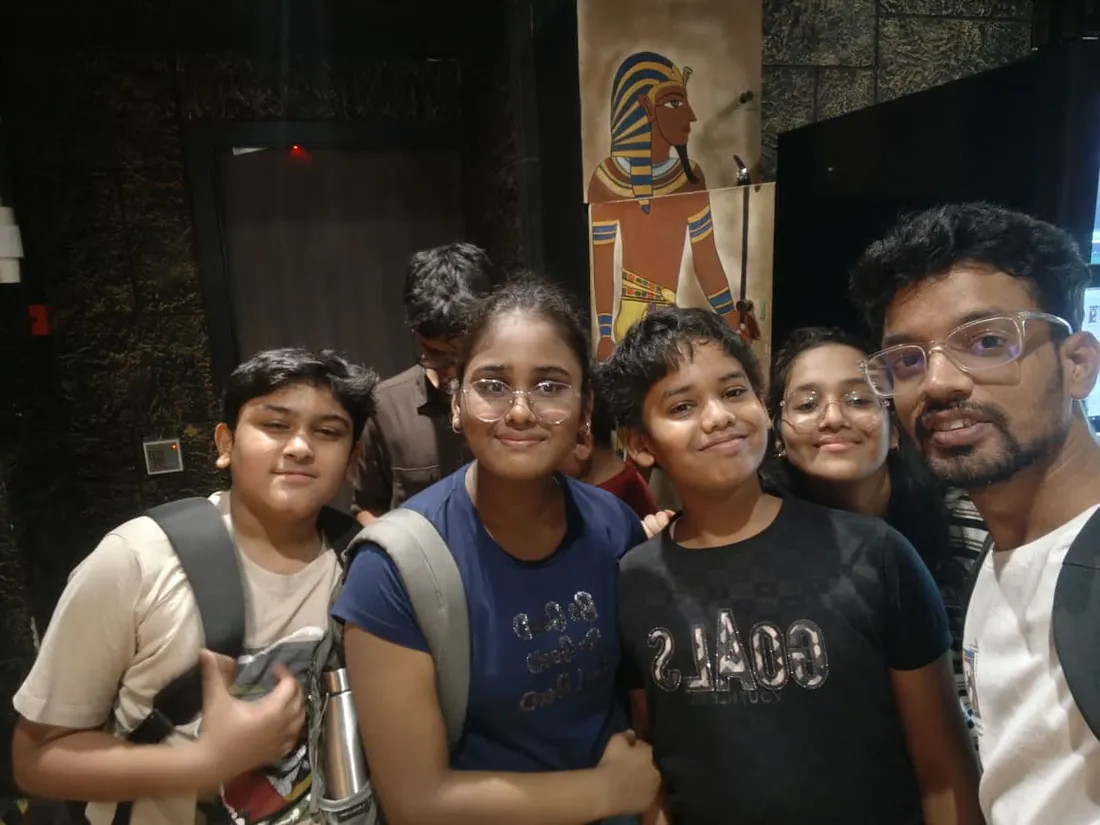
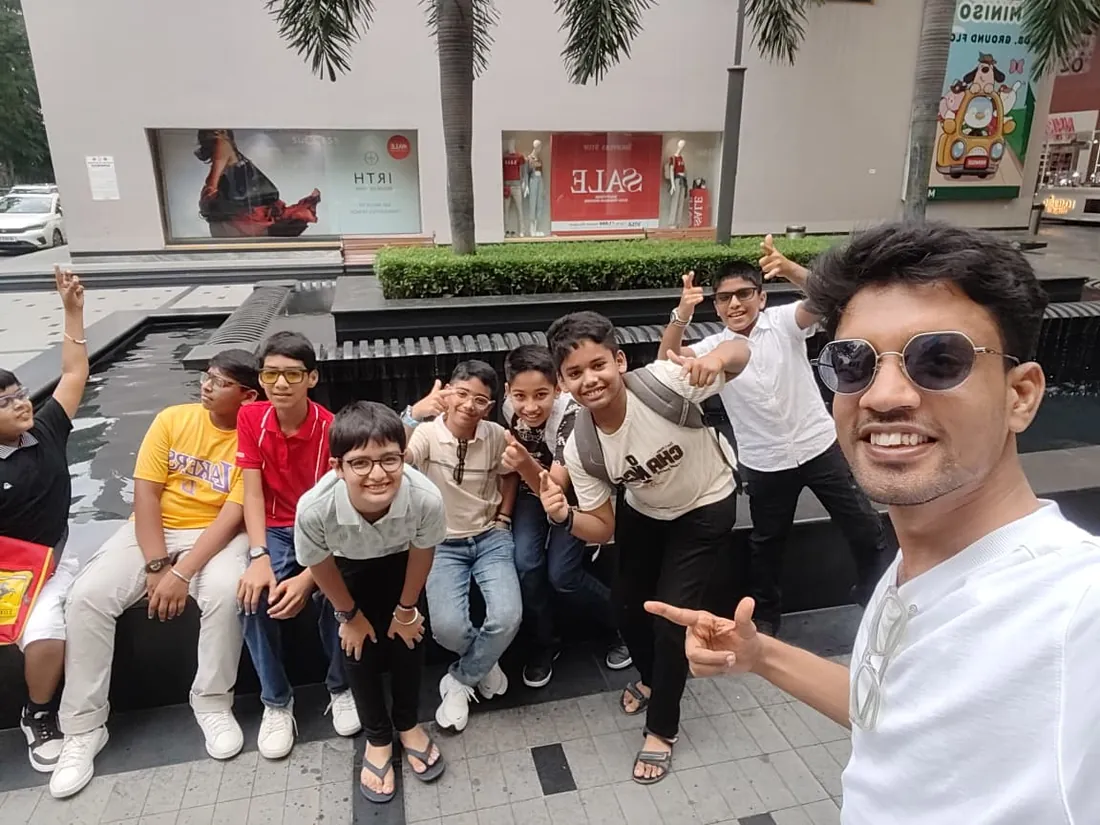
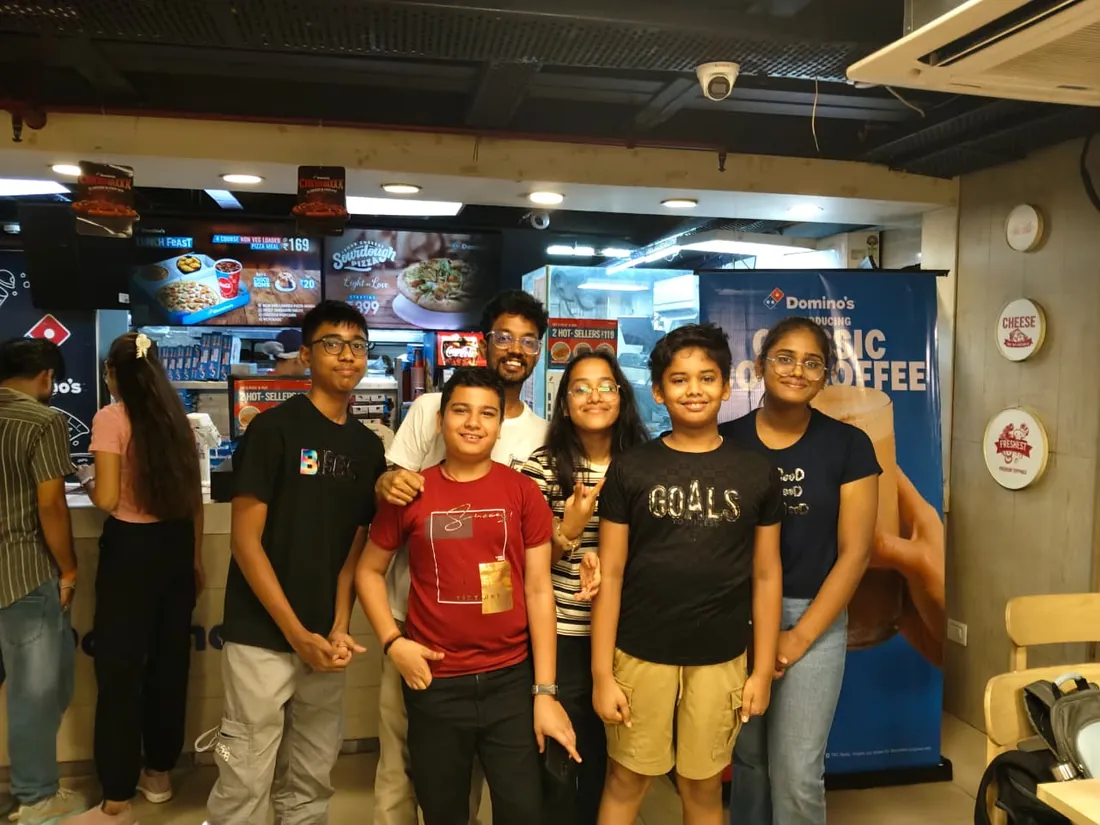
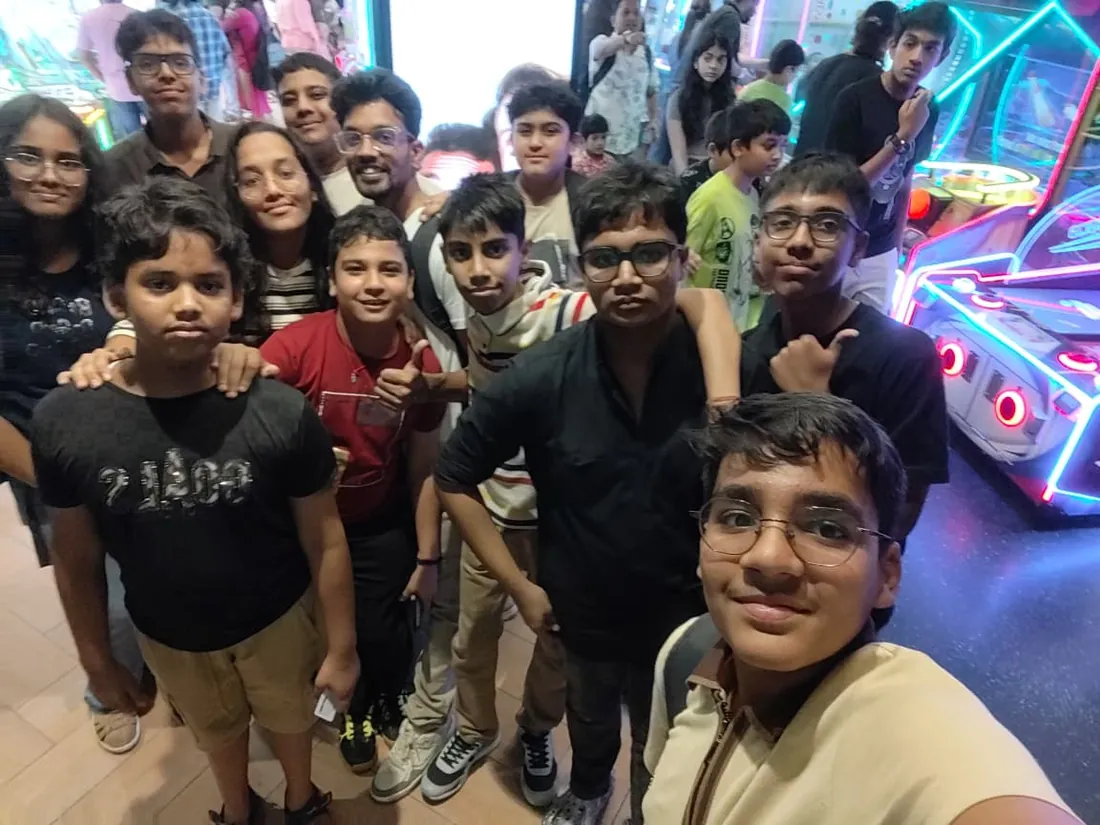
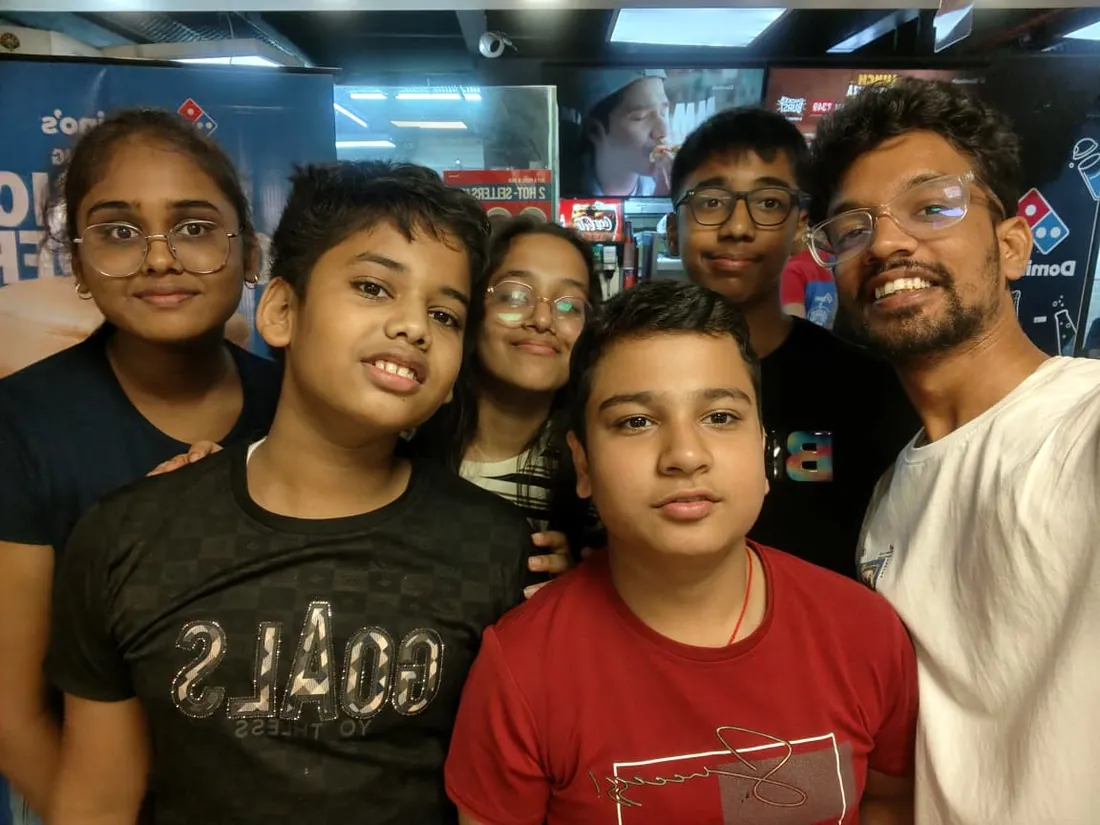
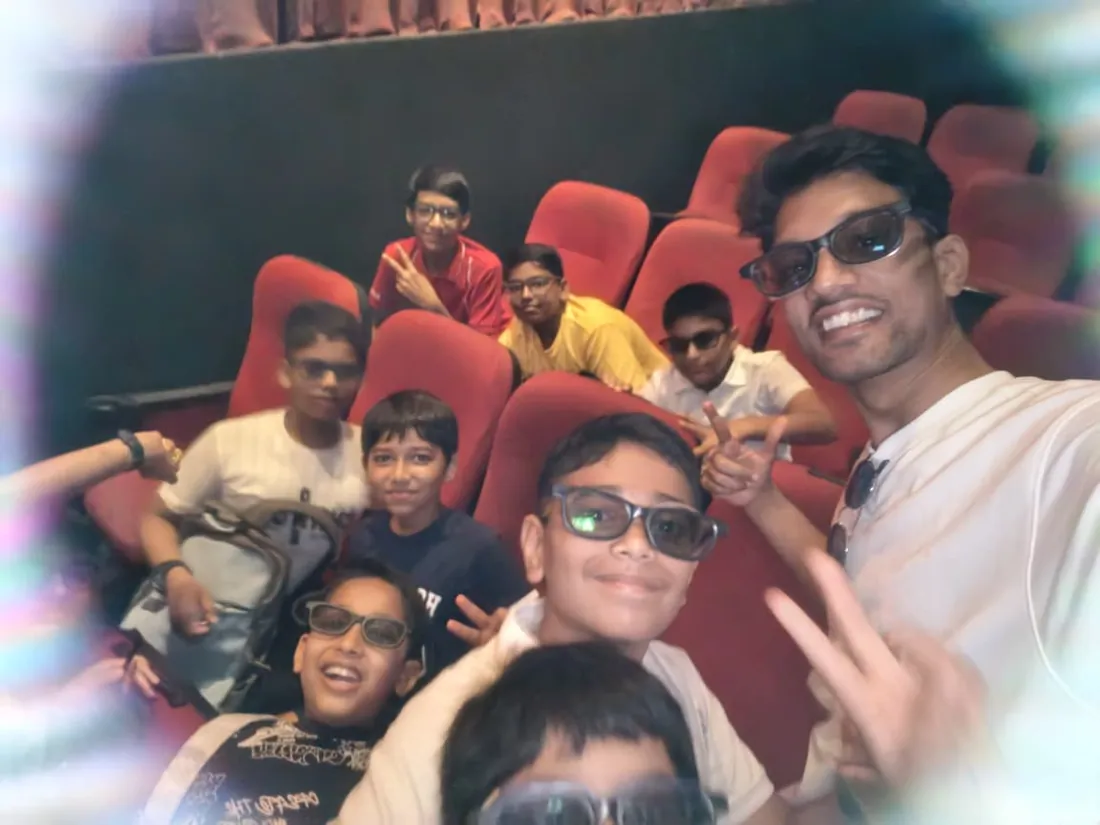
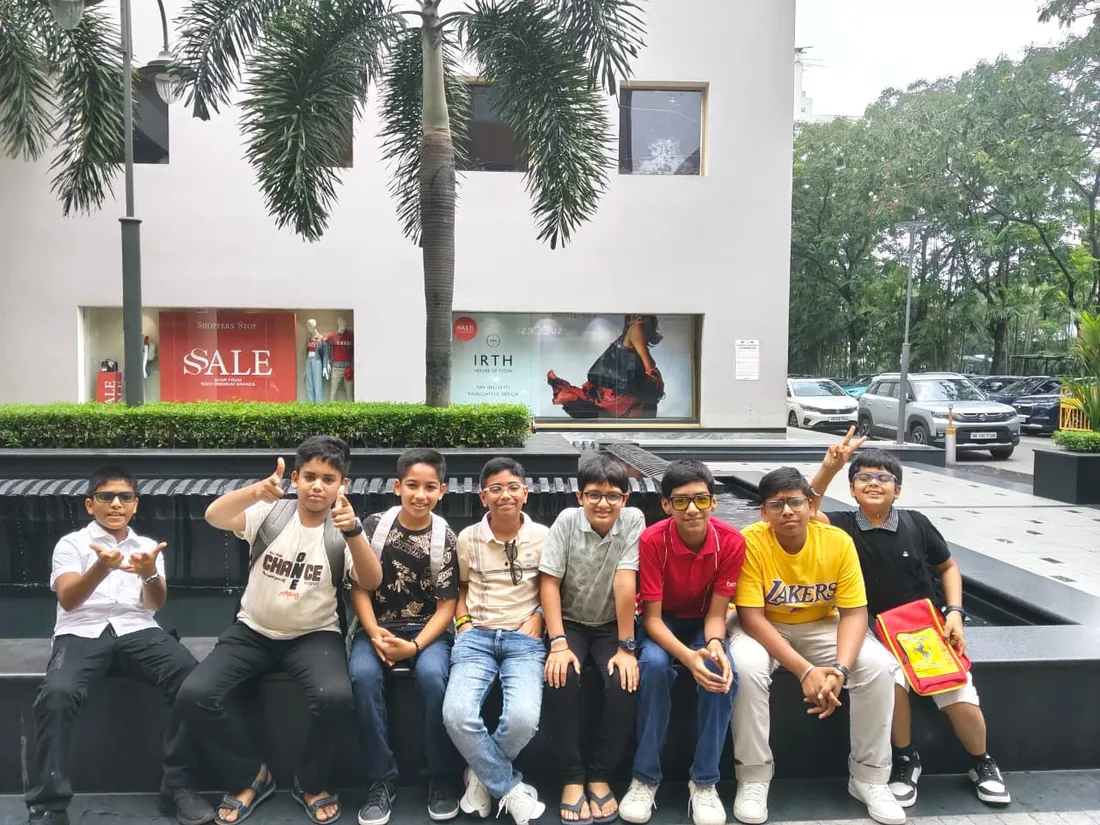
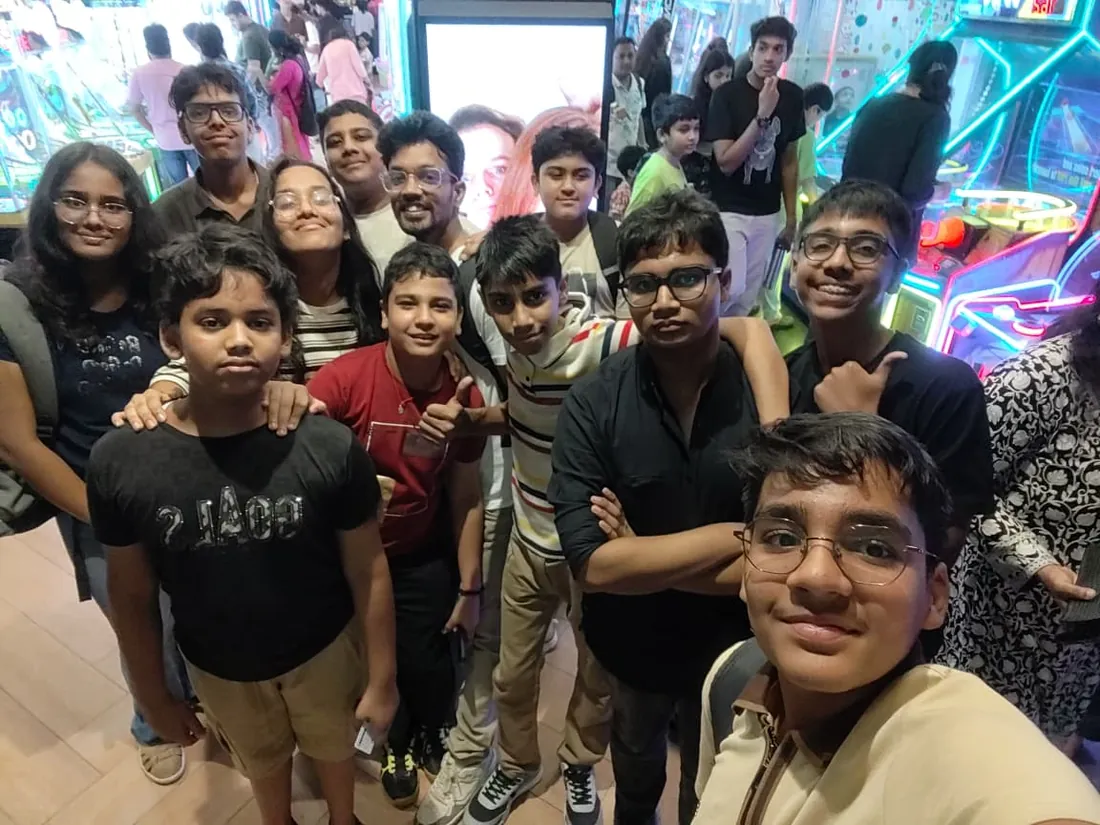
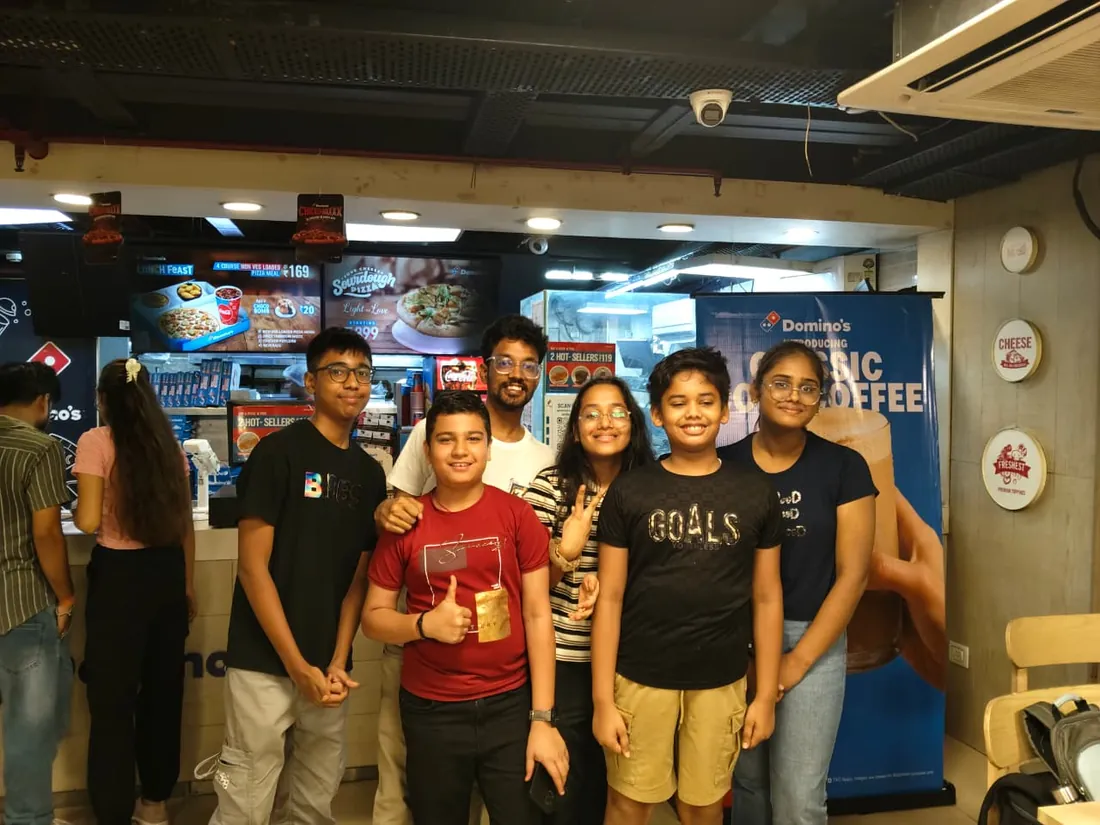
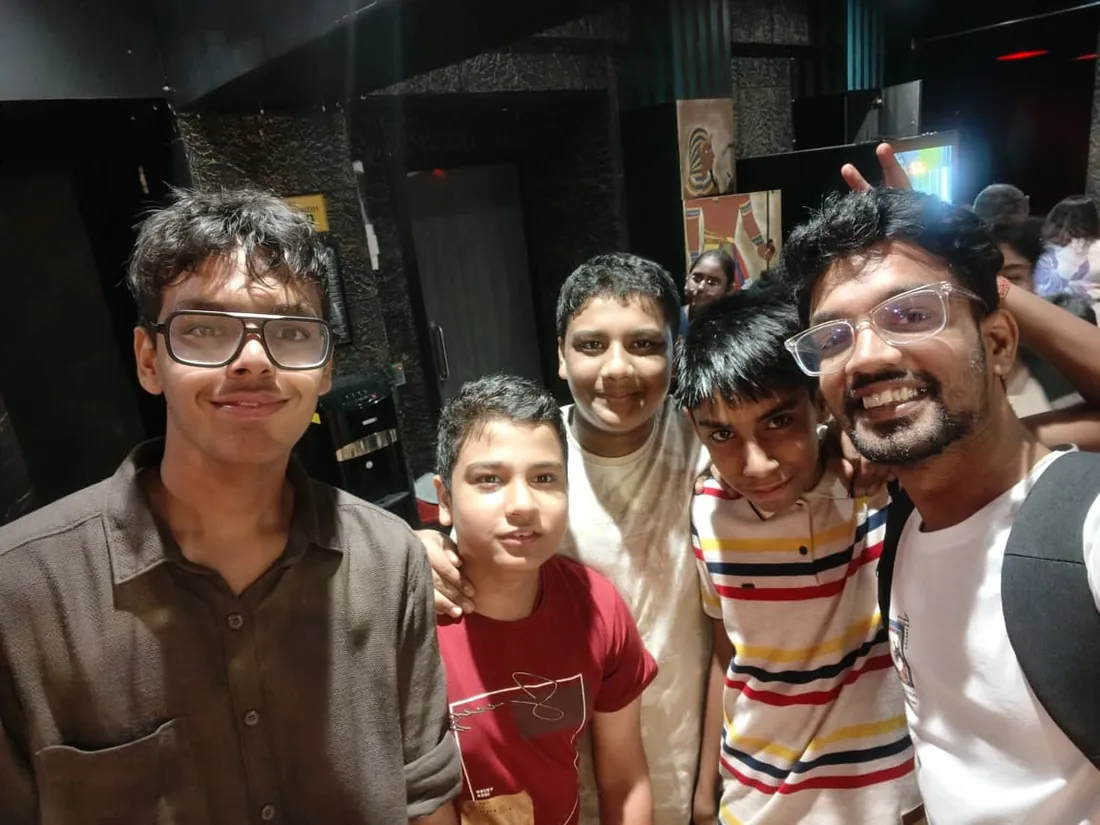
Real students. Real moments. Real joy.
These are our actual student meetups. No stock photos, no filters. Swipe through and meet the community you'll be joining.




























What families say
Straight from the parents and students who learn with us. Rated 4.9 across 547 Google reviews.
“Mivaan enjoys the class. He understands the concepts and completes his tasks with excitement. He started taking interest in coding… truly amazing class.”
“I absolutely love it here! I made new friends and learned important valuable coding skills while having the fun of my life. It's not just coding here, it's outings, bonding and most importantly preparing you for your future. Definitely five stars.”
“What stands out most is how excited my son is before every class. He looks forward to learning, problem-solving, and sharing what he's built. I've noticed a big boost in his confidence!”
“Modern Age Coders has been a game-changer for me! I struggled to grasp IT concepts and coding before joining, but their classes transformed everything. I'm now the topper in my class and can confidently write complex programs with ease.”
“Modern Age Coder have wonderful teachers who teach in a clear, easy and practical way. The teacher boosts students' confidence, keeps them updated with technology, and inspires them to learn without hesitation.”
“The one step solution for my son. Modern Age Coders make learning coding so simple that kids love it.”
“Coding classes here make learning very interesting and conceptual. The teachers teach us in a very easy-to-understand and efficient manner.”
“One of the most wonderful education centres out there. Education is not limited to school syllabus but focuses on skill development. Learning here has been a wonderful journey and still continuing.”
“I highly recommend this computer coding class! The teachers are incredibly knowledgeable and passionate about coding. They make every session engaging and insightful.”
“My child Dhairya is really enjoying the Modern Age Coder IT classes. This is his first online class, and he eagerly looks forward to it.”
“Very good classes. Don't worry about coding. They teach the best, especially Shivam sir.”
“Very good classes. Makes learning very easy and interactive.”
Hear it from our students
Real parents and students in their own words, on our public YouTube channel.
Straight answers about IGCSE Computer Science (0478): Full Syllabus and Exam Prep
- Who should take this course?
- IGCSE students taking Computer Science 0478; taught from the basics, no prior coding required.
- What will they learn and build?
- Cambridge IGCSE Computer Science is two subjects wearing one name. Half of it is how computers actually work, from binary and data transmission to hardware, networks and emerging technologies. The other half is thinking like a programmer: designing algorithms, writing and correcting real code, querying a database, and reasoning through logic circuits.
- How deeply are topics covered?
- The course runs 6 months (24 weeks), joinable any month at 2 live classes/week + weekly programming practice, across 3 phases listed week by week in the syllabus below.
- Who teaches it?
- Modern Age Coders mentors, who teach the live classes themselves. You can watch them at work in the free class recordings before you decide.
- How do practice, feedback and assessment work?
- Classwork in every session and homework after every class. Classwork every session, a task after every class, monthly reviews that mix in earlier topics, and a full mock paper as the final assessment that decides the certificate: real knowledge and real work, with a free retest after revision if needed. A certificate you earn by passing the final assessment, with a free retest after revision if needed.
- What does it cost?
- Three monthly plans: a group batch, a mini batch and 1-on-1. Prices are shown in your currency in the plans section. Monthly billing, cancel any time.
- When can classes take place?
- Live classes are scheduled around your week. Group batches meet at a fixed weekly slot; 1-on-1 students choose their own. International students are scheduled in their own timezone. Ask on WhatsApp for the current slots.
- Can I watch the teaching before deciding?
- Yes. Full recordings of real 13 and up classes are free to watch, free with a Google sign-in. These recordings show how we teach, not the exact syllabus of this course. Some classes are in English and some in Hindi; everyone follows at their own pace. Watch a class end to end, like you are in it. Sessions are interactive and each moment builds on the last.
- Can I enroll without a live demo?
- Yes. Choose a plan on this page and enroll directly; a booking or a demo is not required. A free live demo is optional, for anyone who wants to meet a mentor first. Outside India, our team confirms the plan and completes payment with you over WhatsApp, so allow a little time for that step.
Common Questions About IGCSE Computer Science (0478): Full Syllabus and Exam Prep
Get answers to the most common questions about this comprehensive program
Still have questions? We're here to help!
Contact UsRelated Courses You May Like
Continue your learning journey with these recommended programs
 College Mathematics
College Maths Course: Calculus, Linear Algebra to Analysis
College maths course, live online: three academic-year tracks from calculus and linear algebra to pr...
Explore Course School Board Mathematics
CBSE Class 10 Maths Board Prep: Case Studies & Mocks
CBSE Class 10 Maths board prep course aligned to the 2026-27 syllabus: all 14 chapters, competency a...
Explore CourseRelated Articles & Guides
Deepen your knowledge with these hand-picked articles
 Education
8 min read
Education
8 min read
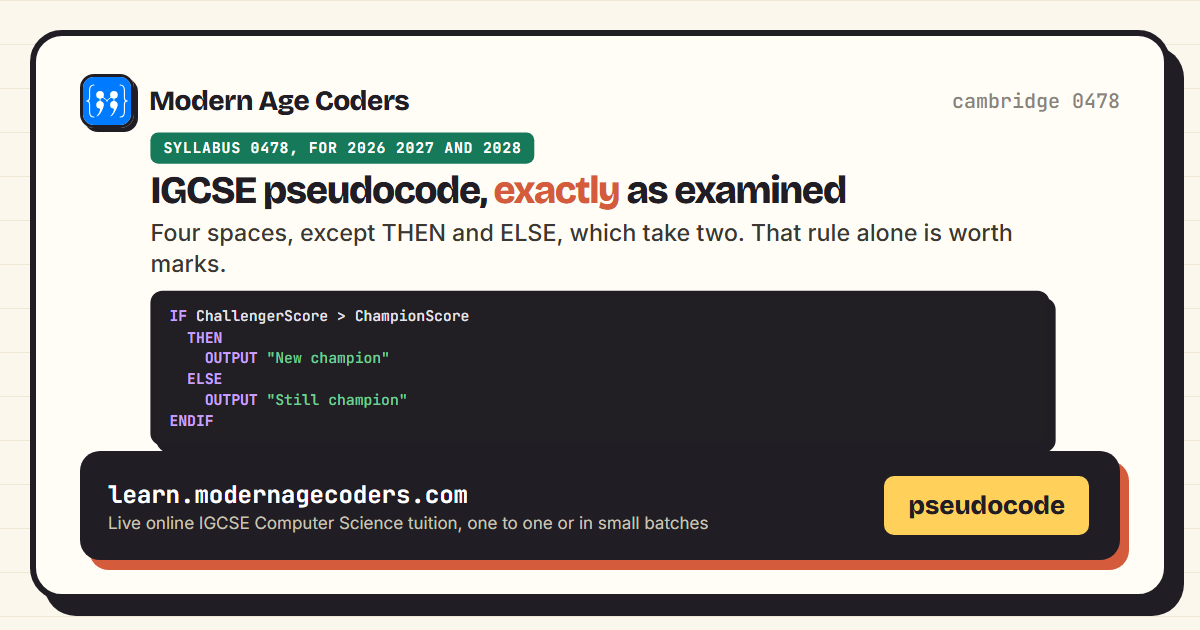
IGCSE 0478 Pseudocode: The Rules Examiners Mark
Cambridge publishes the exact pseudocode conventions used in 0478 papers. Here they are, with the in...
Read Article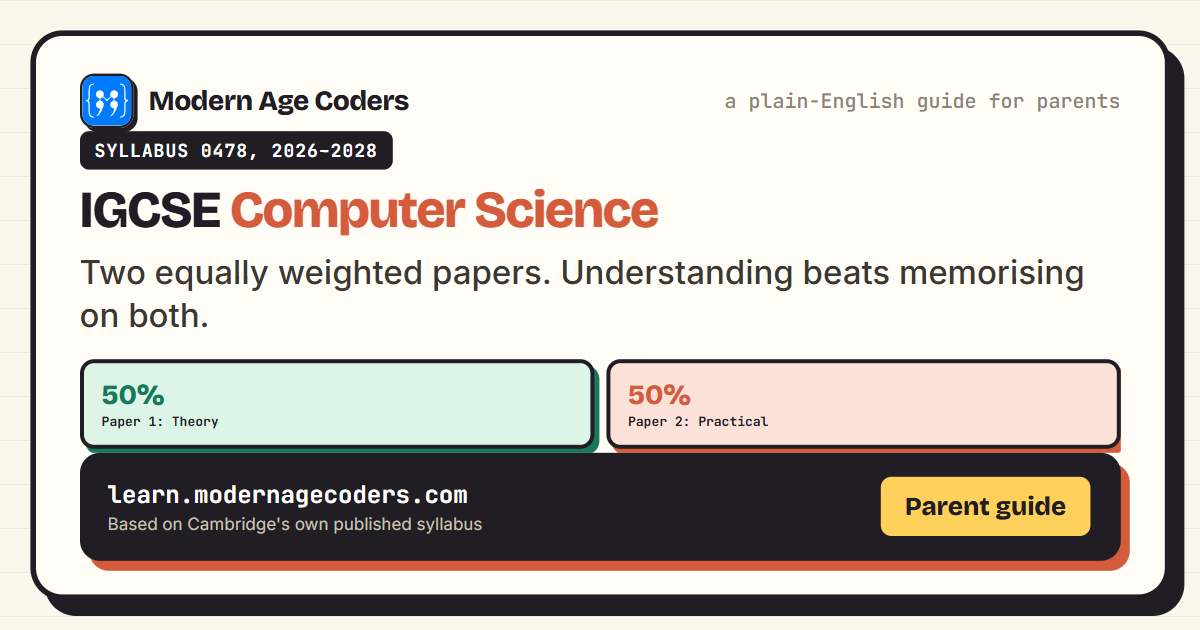 Coding
6 min read
Coding
6 min read
IGCSE Computer Science (0478) Explained for Parents
A plain-English guide to Cambridge IGCSE Computer Science 0478: how it is assessed, what your child ...
Read ArticleReady to start IGCSE Computer Science (0478): Full Syllabus and Exam Prep?
Book a free demo class to meet your mentor and see how we teach, with no commitment. Or enrol now and start this week.