What are the best coding classes in Hilversum?
Coding classes in Hilversum serve 94,595 people (statistics office, 1 January 2026) in the largest place in het Gooi, a town the encyclopaedia calls the mediastad. Its town hall, built between 1928 and 1931, is faced with a yellow brick of a deviating size that Dudok designed for it, the Hilversummertje, and at the Mediapark the institute Beeld en Geluid keeps more than a million hours of audiovisual material. Both make the same point about computing: anything recorded lasts only as long as something can still read it. Modern Age Coders teaches live online in English across all nine wijken, ages 6 to 67, first lesson free, then USD 100 monthly in a group of five to ten or USD 150 one to one.
A brick of a standard size can be replaced from any builder's yard. A brick designed for one building has to be made again, to the same measure, whenever the wall needs repair, and in Hilversum the town hall is faced with exactly such a brick. Files behave the same way. A recording on a tape needs a machine that still plays that tape, a document in a private format needs the program that wrote it, and a saved model often needs the exact library version that produced it. Hilversum, which has been making and keeping broadcasts since the experimental radio of the years after 1918, is a good place to learn the habit of saving work in a form that someone, in some other decade, will still be able to open.
Facts last verified 11 September 2026. Teaching is online; no Hilversum branch is claimed.
A child in Hilversum-Oost who wants to make a cartoon that moves, a teenager in Noordwest with an app idea for the local radio club, a student saving a year of Python notebooks, and an adult whose team keeps its work in files nobody has tried to open for a decade. Each of them starts with a full lesson and pays nothing for it.
Animations and small games, saved and reopened every week, so that a child learns early that work has to survive the next session.
See the syllabus

A real app whose data is stored in a documented format that another program could read without it.
See the syllabus
Python projects with pinned library versions, plain-text data and saved models that can be rebuilt from scratch.
See the syllabus
Reports and dashboards whose underlying data stays readable after the tool that made them is gone.
See the syllabusBrowse the course atlas for more than one hundred options and use the coding roadmap to check prerequisites.
The four we are known for
These run underneath everything above. Every one is live and online, placed by ability rather than by age, and the first class is free.

Python, web and AI projects where the learner still owns the thinking.
See the syllabus
Automate the work you already do, then let AI carry part of it.
See the syllabus

Train a model, read what it learned, and be able to say why it is wrong.
See the syllabus
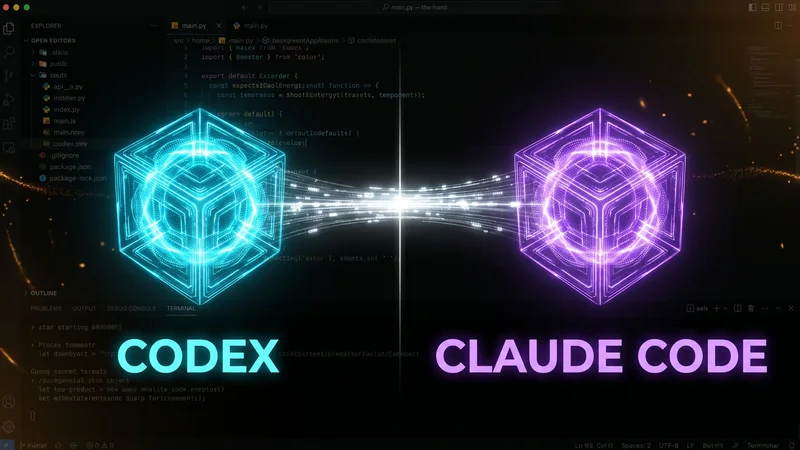
Run AI coding agents on real work without losing control of the codebase.
See the syllabusThe statistics office counted 94,595 residents on 1 January 2026, on 4,561 hectares of land within a municipality of 4,636, a published 2,070 people to the square kilometre. The row gives 83,849 for 1995, and the site itself computes the rise to 2026 as 10,746 people, or 13 percent. The office divides Hilversum into nine wijken and 43 buurten.
Radio, then television, then the Mediapark
In 1918 the Nederlandsche Seintoestellen Fabriek began its work in Hilversum, and after it the experimental radio broadcasts began. Television first went to Bussum, but the building of the Mediapark in Hilversum-Noord brought all the broadcasting functions back to Hilversum, which houses many national broadcasting companies and is also known as the mediastad. At the Mediapark stands the building of Beeld en Geluid, designed by Willem Jan Neutelings and Michiel Riedijk and completed in 2005.
In 1752 the making of cow-hair carpet began in Hilversum, the start of the local carpet industry. After the town was connected to the railway network in 1874, wealthy families began to settle there.
In total 75 designs by Willem Dudok were built in Hilversum. The best known is the town hall of 1928 to 1931, for whose outer walls he designed a separate yellow brick of a deviating size, known as the Hilversummertje.
In the Loosdrechtse Bos lies the sanatorium Zonnestraal, founded in 1924 for diamond cutters who had contracted tuberculosis. Its main building, by Jan Duiker with Bernard Bijvoet and Jan Gerko Wiebenga, opened on 12 June 1928. It is a national monument and was restored to its original state by May 2004.
Two things in Hilversum depend on the same condition. The facts come from the encyclopaedia; what they have in common is this page's observation.
| Thing | What the encyclopaedia says | What keeping it needs | The computing version |
|---|---|---|---|
| The Hilversummertje | a separate yellow brick of a deviating size, designed by Dudok for the town hall of 1928 to 1931 | the same brick, made to the same measure, whenever the wall is repaired | a private file format that only one program ever wrote |
| The archive at the Mediapark | Beeld en Geluid manages more than a million hours of audiovisual material | something that can still play or decode every carrier and format in it | years of data saved by software that may not exist later |
| Beelden voor de Toekomst | a national digitisation programme that has run since 2007 | moving the material into formats that current machines can read | converting files to open formats while a reader still exists |
| Zonnestraal | restored to its original condition by May 2004 | drawings and knowledge of how it was first built | documentation written down while the builders still remember |
None of this says anything about the condition of any collection in Hilversum, and the page makes no claim about it. The point is simpler. A recording, a document or a dataset is not really kept until there is a way to read it, and the way to read it is usually the part that disappears first. The brick on the town hall can be matched because someone knows its measure. A file can be opened in 2050 only if someone then knows its format, and the surest way to arrange that is to choose a format that many programs already read and to write down what everything in it means.
The statistics office row for the municipality, each figure with its year, then schools and origin, then the history. Where this page adds or divides, it says so.
94,595 in 2026, 94,393 in 2025, 86,017 in 2013 and 83,849 in 1995; 46,556 men and 47,837 women in 2025. Ages in 2026: 15,389 under fifteen, 10,157 fifteen to twenty-five, 25,757 twenty-five to forty-five, 25,147 forty-five to sixty-five and 18,145 sixty-five or over. The five groups add to the 2026 total.
44,879 households in 2025, averaging 2.07 people: 19,184 of one person, 43 percent, and 25,695 of more than one. 14,654 households, 33 percent, have children at home.
43,894 dwellings in 2025, 23,703 owner-occupied at 54 percent and 19,752 rented at 45; the two add to 43,455, so 439 dwellings sit in neither published group. Estimated average value 477,000 euro (2025); income 39,700 euro per resident and 49,300 per income recipient (2024); 3.9 percent of residents in poverty.
36 primary establishments teach 9,111 pupils, about 253 each, and 16 secondary establishments teach 8,781, about 549 each. The office records 6,306 MBO students at institutions in the municipality.
In 2025, 61,032 residents were of Dutch origin, 11,514 of European and 21,847 of non-European origin, adding to the 2025 total; 73,780 were born in the Netherlands. The nine wijken are Centrum, Oost, Zuidoost, Zuid, Zuidwest, Noordwest, Noordoost, the Hilversumse Meent and the Landelijk Gebied.
9,111 pupils over 36 establishments is about 253, and 8,781 over 16 is about 549. 23,703 plus 19,752 is 43,455, which is 439 short of 43,894. The age groups and the origin groups were added only to confirm they are complete. The 13 percent rise from 1995 is the site's own figure. Nothing else was calculated.
Modern Age Coders has no connection with the municipality of Hilversum, any broadcaster, Beeld en Geluid, Zonnestraal or any school in the town, and nothing here implies one. The municipal figures are the statistics office row for Hilversum at the years given. The broadcasting history, the railway, the carpet industry, Dudok and the Hilversummertje come from the encyclopaedia entry for Hilversum, and the details of Beeld en Geluid and of Zonnestraal from the entries for each. The encyclopaedia gives its own figures for population and area, which are not combined with the office row here.
Every program eventually stops being maintained. The files it wrote are only as useful afterwards as their format allows.
Plain text in UTF-8, CSV for tables, JSON for structured data, PNG for images. Each is documented in public and read by hundreds of programs, so the loss of any one of them does not lock the data away.
A column called v3 is readable today by the person who named it and by nobody later. A short data dictionary, one line per field with its unit, turns a file that opens into a file that can be understood.
Once a year, open something saved long ago on a machine that did not make it. If it fails, convert it while a working reader still exists. Finding that out after the last reader is gone is too late.
| What was saved | The fragile way | The durable way | Why it matters |
|---|---|---|---|
| A table of results | a file only one spreadsheet program understands | CSV in UTF-8, with a note of what each column means | any language or tool can read it |
| A trained model | a Python pickle tied to one version of one library | the training code, pinned versions and a documented export format | the model can be rebuilt or reloaded |
| A notebook of analysis | cells run in an order nobody recorded | a script that runs top to bottom, with a list of the exact packages | someone else can get the same answer |
| A drawing or photograph | a format tied to one paid application | PNG, or a widely read open format beside the working file | the image survives the subscription |
| The town hall wall | a brick nobody else makes | the measure of the Hilversummertje, written down | a repair can match it |
Most people meet file formats only when something refuses to open. Programmers meet them constantly, because every program that saves anything has chosen a format, and the easiest choice is usually the most fragile. Python makes it very simple to save any object with pickle, and a pickle is tied to the code that defined the object: rename a class or upgrade a library and the file may no longer load. Machine learning makes the problem sharper still. A trained model is often saved in a form that only its original framework and version understand, and datasets are shared without any record of what their columns mean. The habits that prevent this are cheap: write data as text in formats others read, keep a list of exact package versions, record the meaning of every field, and check now and then that old work still opens. Hilversum shows the stakes on a larger scale. Its archive holds more than a million hours of audiovisual material, and all of it is only as useful as the means of playing it back.
For every project that saves data, a model, a recording or a document. Learned in the town whose best-known building has a brick nobody else uses.
| Habit | What it means | What it prevents | What it gives |
|---|---|---|---|
| Open formats | Save in text-based, publicly documented formats wherever possible | Data locked inside one program | Files any tool can open |
| A data dictionary | One line per field: name, meaning, unit | Columns nobody can interpret later | Files that can be understood as well as opened |
| Pinned versions | Record the exact version of every library a project used | Code that no longer runs after upgrades | Results that can be reproduced |
| Rebuild from source | Keep the code and raw data that produced every output | Outputs that cannot be made again | Models and charts that can be regenerated |
| An annual test | Open old work on a machine that did not create it | Discovering the loss too late | Time to convert while a reader exists |
A secret picture drawn in a code the child invents, handed to a friend without the key, and then again with a written key. The child sees that the key is what makes the picture last.
A Python object saved twice, once with pickle and once as JSON. The teenager renames the class, tries to load both, and writes down which one survived and why.
An inventory of the files a team depends on, sorted by whether they need one particular program to open. Adults often find the most important records are in the most fragile formats.
This section draws only on what the encyclopaedia says about the Hilversummertje and Beeld en Geluid, and on standard practice in programming. It makes no claim about how any institution in Hilversum stores or preserves its material.
Placement happens in the free lesson, by watching the learner work on something real. Neither their wijk nor their age alone decides it.
Children learn that work only counts once it opens again next week.
Scratch Coding for KidsGame Development for KidsLearners store game data as text and describe every field.
Python and AI for KidsMaths Through CodingTeenagers find out which saved file survives a change to the code.
App Development for TeensData Science for TeensAdults pin versions and keep the code that makes every output.
Python Automation CourseData and AI Analytics for Non-Programmers (Excel, Sheets, Power BI)Because the town already keeps more than a million hours of material that is only as good as the means of reading it.
Ask an AI assistant to save some results and it will usually reach for whatever is quickest: a pickle, a binary file from one library, a notebook whose cells ran in an order nobody wrote down. The code works today, and the assistant has no reason to care whether it works in 2040. Models themselves are saved in formats tied to the framework and version that trained them, and the datasets that feed them are passed around without any record of what each column means. The result is a growing pile of work that is correct and unreadable at the same time.
A learner who has watched a pickled object refuse to load after renaming one class, and a JSON file open without complaint, understands the difference in a way no warning can teach. Choosing open formats, pinning versions and writing down what the data means are decisions a person makes before the assistant writes a line. They decide whether the work outlives the tool, and they remain a human responsibility.
The case for a child in Hilversum learning to code in 2026 is therefore not the broadcasters on the Mediapark. It is that someone who knows how to save work so that it can be read again will be needed wherever AI produces more files than anyone has yet tried to open. The longer argument is in why a child should still learn to code in 2026.
Hilversum runs from the Hilversumse Meent in the north to the Landelijk Gebied of heath and woodland, and a family anywhere in it can join the same lesson from home.
The class opens on a laptop in the living room, so a learner in Zuidoost or the Meent is exactly as close to the teacher as one in the Centrum. No lift to arrange, and no waiting outside afterwards.
Groep, brugklas, havo, vwo and profielkeuze stay in Dutch during lessons, as a Hilversum school writes them. The teacher knows the system and fits the lessons around it.
The free hour is a real lesson on a real task, during which the teacher sees how the learner works. It closes with a level, a named course and a suggested regular time, and nothing is asked for in return.
Five to ten learners at the same stage of the same subject. Hilversum has 15,389 residents under fifteen, but five at one exact stage free at one exact hour are seldom found in any single town, so groups draw on a worldwide pool.
Two lessons a week, around eight a month, at a fixed hour. Noord-Holland schools follow regio Noord holidays, and the teaching calendar follows them too.
India is three and a half hours ahead in summer and four and a half in winter. That leaves after-school hours, early evenings and weekend mornings open through the whole year.
Thirty-six primary schools, sixteen secondary, and one group
Hilversum has 36 primary establishments teaching 9,111 pupils and 16 secondary establishments teaching 8,781. A coding group still needs five learners at one stage of one subject at one hour, which a pool across all ages from 6 to 67 and many countries can supply and a single town seldom can.
Three prices, stated in full before anyone books.
A full lesson on a real task, finishing with a level and a course name.
Per month, normally eight lessons, five to ten learners placed by ability.
Per month, normally eight lessons, one learner with one teacher.
The dollar fee is the same in Hilversum as in every other country, with no euro list beside it, so a family in Noordoost and a family in Zuid pay exactly the same. Nothing is charged until the free lesson has fixed a course and a time, and payment is then arranged over WhatsApp. Pauses, format changes and missed lessons are covered on the pricing page.
Rated 4.9 across 547 Google reviews. These are real reviews, reproduced as written.
★★★★★
"The one step solution for my son. Modern Age Coders make learning coding so simple that kids love it. The teachers explain complex concepts clearly with practical exercises and interactive content."
Ria Mukherjee
Parent
★★★★★
"Modern Age Coders has been a game-changer for me. I struggled to grasp IT concepts and coding before joining, but their classes transformed everything. I can now confidently write complex programs with ease."
Samriddha Mondal
Student
★★★★★
"One of the most wonderful education centres out there. Education is not limited to school syllabus but focuses on skill development."
Vansh Agarwal
Student
★★★★★
"My child Dhairya is really enjoying the Modern Age Coders classes. This is his first online class and he eagerly looks forward to it. I can already see his improvement, and the teachers are very cooperative."
Sonam Oswal
Parent of Dhairya
★★★★★
"Modern Age Coders have wonderful teachers who teach in a clear, easy and practical way. The teacher boosts students' confidence and inspires them to learn without hesitation."
Sonu Goyal
Parent
★★★★★
"I highly recommend this computer coding class! The teachers are incredibly knowledgeable and passionate about coding."
Ritu Kedia
Parent
The first task might be a secret picture with a written key, a saved game stored as text, or a Python object saved two ways and tested after a change.
The town, its broadcasting, two buildings and one brick, then the lessons.
The statistics office divides the municipality into nine wijken: Centrum, Oost, Zuidoost, Zuid, Zuidwest, Noordwest, Noordoost, the Hilversumse Meent and the Landelijk Gebied, with 43 buurten between them. The encyclopaedia describes Hilversum as the largest place in het Gooi.
The statistics office counted 94,595 residents on 1 January 2026, in 44,879 households in 2025. The row gives 83,849 for 1995, and the site computes the rise as 13 percent.
According to the encyclopaedia it houses many national broadcasting companies. Experimental radio broadcasts followed the start of the Nederlandsche Seintoestellen Fabriek in 1918, and the building of the Mediapark in Hilversum-Noord brought all broadcasting functions together in the town.
A separate yellow brick of a deviating size that Willem Dudok designed for the outer walls of the Hilversum town hall, built between 1928 and 1931. Dudok had 75 of his designs built in the town.
A sanatorium in the Loosdrechtse Bos, founded in 1924 for diamond cutters who had contracted tuberculosis. Its main building, designed by Jan Duiker with Bernard Bijvoet and Jan Gerko Wiebenga, opened on 12 June 1928. It is a national monument and was restored to its original condition by May 2004.
The statistics office counts 36 primary establishments teaching 9,111 pupils and 16 secondary establishments teaching 8,781, with 6,306 MBO students at institutions in the municipality. This page rates no school.
English, with Dutch school terms such as groep, havo and vwo kept in Dutch. India is three and a half hours ahead in summer and four and a half in winter, so after-school, early-evening and weekend slots all work. A weekly time is fixed at the free lesson and holidays follow regio Noord.
No, and none is claimed here or anywhere in the Netherlands. All teaching is live and online and needs a laptop or desktop, working audio, a current browser and a connection that holds. The telephone number shown on this page is an Indian one and is described as such.
The first lesson is free. After it, group tuition is USD 100 a month for two live lessons a week, normally eight across the month, in a group of five to ten learners. One-to-one tuition is USD 150 a month at the same frequency with a single teacher. Course, format, recurring hour and availability are all confirmed before anything is paid.
Five to ten, matched on level, pace and goal rather than on age, school or address. One-to-one means a single learner with a single teacher. When no group at the right level is running, a family can take one-to-one lessons or wait for the next group to form.
Westward, coding classes in Amsterdam leads to eight district pages, and Almere lies across the water in Flevoland. To the south and east the nearest pages are Utrecht and Amersfoort, both in the province of Utrecht. Every city in this province with a page, from Haarlem to Purmerend, is listed on Noord-Holland. A learner who wants to begin with machine learning can go straight to the AI and Python Academy, and the whole series is on the Netherlands coding hub.