Where can Withington learners find the best coding and AI classes?
Withington ward in Manchester had 15,439 usual residents at the 2021 census. It lies in the M20 postcode district, whose ward list also includes Old Moat and Burnage. From age six up to 67, people here take coding, AI, Python, vibe coding and maths on live video calls with our India-based tutors, either privately or in a class of five to ten who share a level. We build the habit of questioning first, so a learner can ask how a chart was made before trusting what it shows. Lesson one is free and finishes with our view on which course suits. The Withington project maps Census population around the area twice, once in square cells and once in hexagons, then slides each grid about to see how much the picture changes. From then on a group place is USD 100 each month and private tuition USD 150.
Maps of data often sort points into cells and colour each cell by its total. For years the cells were squares; now many maps use hexagons. The usual explanation is that hexagons are fairer: every neighbour is the same distance away, and no part of a cell is far from its centre. That is true, and measurable. But a quieter question sits underneath: whichever shape you choose, the grid has to be placed somewhere, and nobody tells you where. This project measures both effects on real numbers, using the 2021 census counts for the small areas around Withington.
Facts last verified 30 September 2026. Teaching is online; no Withington branch is claimed.
Find the learner's age below. All four open with a live lesson that costs nothing, and no card is taken to reserve it.
Our how-to-think course: sorting things into boxes and noticing that the boxes are a choice.
See the syllabus
Scratch games built by telling an AI what to make, then testing every rule.
See the syllabus
Python from the first program to maps and charts, including the Withington hexagon test.
See the syllabus

Modern AI, reading its charts critically, and building agents in Python.
See the syllabusBrowse the course atlas for more than one hundred options and use the coding roadmap to check prerequisites.
The four we are known for
These run underneath everything above. Every one is live and online, placed by ability rather than by age, and the first class is free.

Python, web and AI projects where the learner still owns the thinking.
See the syllabus

Automate the work you already do, then let AI carry part of it.
See the syllabus

Train a model, read what it learned, and be able to say why it is wrong.
See the syllabus
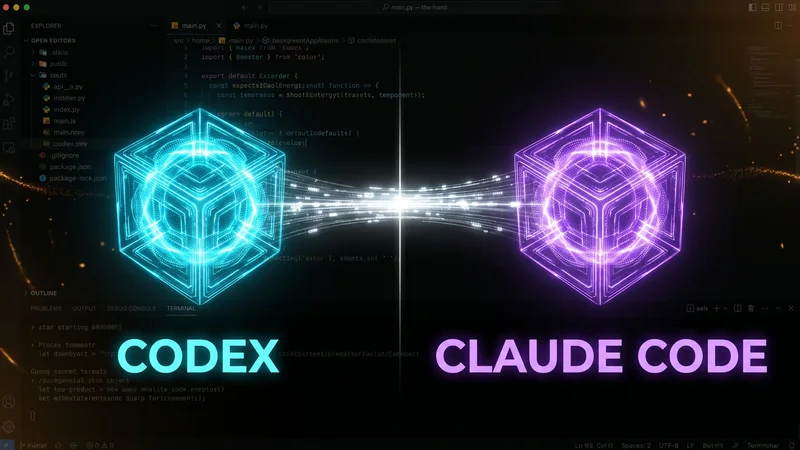
Run AI coding agents on real work without losing control of the codebase.
See the syllabusThe census figure for Withington ward, and the wards that share its postcode district.
| Area | Usual residents |
|---|---|
| Withington ward | 15,439 |
Postcodes.io records Withington as a suburban area of Manchester in M20, and lists Burnage, Chorlton Park, Didsbury East, Didsbury West, Old Moat and Withington as the wards that district touches. Schools here teach England's national curriculum. Once you tell us the holiday dates, lessons are planned around them.
The city page is coding classes in Manchester, and next door is Didsbury. Why questions come before tools is explained on learn to think, not just use AI tools.
The same people, the same cell size, two shapes and 200 different placements.
The learner downloads the 2021 census count for every output area in Manchester and the official centre point of each, then keeps the 386 areas whose centre falls inside a 5 km square around Withington. Added up by us, those areas hold 141,227 people. Python drops each area's population into a cell of a quarter of a square kilometre: first squares 500 m across, then hexagons of the same area, whose centres are 537.3 m apart. Then comes the real experiment: the grid is shifted by a random amount and the binning repeated, 200 times for each shape.
| Measure | Square cells | Hexagon cells |
|---|---|---|
| Farthest any point can be from its cell centre | 353.6 m | 310.2 m |
| Neighbours at the nearest distance | 4 of 8 | 6 of 6 |
| Busiest cell, typical population | 4,204 | 4,110 |
| Busiest cell across 200 placements | 3,273 to 5,309 | 3,268 to 5,442 |
| That range as a share of the typical value | 48.4% | 52.9% |
Hexagons do what is claimed for them. A hexagon's corner is 310.2 m from its centre against 353.6 m for a square, and all six neighbours sit at one distance, where a square has four close neighbours and four diagonal ones 707.1 m away. But neither shape fixes the placement problem. Slide the grid and the population of the busiest cell swings by about half its typical value for squares and hexagons alike, and the busiest cell itself jumps around by some 870 to 895 m. A map that announces "the densest spot has 5,300 people" could just as honestly say 3,300.
So the shape is a refinement and the placement is the bigger choice. Careful analysts show more than one placement, or smooth the data, or at least say how the cells were laid down.
Scatter counters on squared paper and on hexagon paper, then slide the paper and recount the fullest cell.
Bin real Census points into squares in Python and see how the totals change when the grid moves.
Code hexagonal binning from scratch, run 200 offsets for each shape and compare the spread.
Population counts and area centre points are Office for National Statistics data, from Nomis and the Open Geography Portal, under the Open Government Licence. The 5 km square, the cells, the offsets and the totals are our own work, and the 141,227 figure is our sum, not a published one.
Every chart is built on choices that the chart itself does not show.
| In the binning project | When an AI draws a chart for you |
|---|---|
| Hexagons were more compact than squares | Some defaults really are better |
| Shifting the grid moved the peak by half | Ask how sensitive the picture is |
| The busiest cell changed place | A hotspot may be an accident of the bins |
| Cell area was held equal | Compare like with like |
| 200 placements were tested | One drawing is one opinion |
Ask an AI assistant for "a heat map of where people live" and it will choose a cell size, a shape and a starting corner without telling you. When Withington learners vibe code, giving the AI a plain-English brief, the brief includes those choices, and the finished map is redrawn with the grid moved before anyone reads meaning into it. AI agents that produce reports make hundreds of such silent choices, which is why a person who knows to ask about them is valuable. Agent building waits until Python is second nature, typically from sixteen or so, and Copilot Studio agents are taught only one-to-one. Two longer reads go with this: AI agents for UK students, then understand the code, don't copy-paste.
We have no link to the Office for National Statistics, to Nomis or to postcodes.io. The open data is theirs; the experiment and any slips in it are ours.
School year is where we begin guessing; the trial is where we find out.
Sorting, counting and seeing that the boxes are chosen.
Problem Solving and Computational Thinking for KidsScratch Coding for KidsGames and small apps made with an AI and tested by the child.
Vibe Coding for KidsPython and AI for KidsCoordinates, binning and charts, alongside GCSE and A level.
Python for TeensVibe Coding for TeensVisualisation, modern AI and Python agents.
Generative AI CoursePython MasterclassHexagons are used because every neighbouring cell is the same distance away and no point is far from its cell's centre, which makes patterns less distorted than on a square grid; they do not, however, remove the effect of where the grid is placed.
Binning Census population around Withington into equal-area cells, a hexagon kept every point within 310.2 m of its centre against 353.6 m for a square, yet moving either grid changed the busiest cell's population by about half.
Learners who have slid those grids ask of any AI-made map: what were the bins, and would the hotspot survive if they moved?
A Withington teenager who has coded the bins knows a map is an argument, not a photograph, and can hold an AI's chart to account. The longer argument is in why teenagers should still learn to code in 2026.
Any computer with a camera will do, plus broadband that can carry a video call.
The learner writes and runs the code themselves, while the tutor follows on a shared screen and asks why each step is there.
We use the free session to find the right starting point and note any exam board.
The opening lesson is free and closes with a course suggestion.
Five to ten learners who are at the same stage, from anywhere in Britain.
Stopping for school holidays.
Tutors move with UK clock changes so the lesson time stays the same for you.
Why online
Finding five learners at one level, free at one time, inside one postcode is rare. A video class draws them from further afield.
Learners in Withington pay our international prices, the same in every country outside India.
A full lesson at no cost, then our suggestion.
About eight live group lessons each month.
About eight live private lessons each month.
We price in US dollars only. Invoices begin after the trial has decided the course and the weekly time, and holidays, missed lessons and changes of format are covered on the pricing page.
Rated 4.9 across 547 Google reviews. These are real reviews, reproduced as written.
★★★★★
"The one step solution for my son. Modern Age Coders make learning coding so simple that kids love it. The teachers explain complex concepts clearly with practical exercises and interactive content."
Ria Mukherjee
Parent
★★★★★
"Modern Age Coders has been a game-changer for me. I struggled to grasp IT concepts and coding before joining, but their classes transformed everything. I can now confidently write complex programs with ease."
Samriddha Mondal
Student
★★★★★
"One of the most wonderful education centres out there. Education is not limited to school syllabus but focuses on skill development."
Vansh Agarwal
Student
★★★★★
"My child Dhairya is really enjoying the Modern Age Coders classes. This is his first online class and he eagerly looks forward to it. I can already see his improvement, and the teachers are very cooperative."
Sonam Oswal
Parent of Dhairya
★★★★★
"Modern Age Coders have wonderful teachers who teach in a clear, easy and practical way. The teacher boosts students' confidence and inspires them to learn without hesitation."
Sonu Goyal
Parent
★★★★★
"I highly recommend this computer coding class! The teachers are incredibly knowledgeable and passionate about coding."
Ritu Kedia
Parent
Give us the learner's age or year group, plus something they enjoy. The trial might be a counters-and-grids puzzle, a Scratch game built with an AI, first steps in Python, or a small map of real data.
Hexagon maps, the Census project, vibe coding and how lessons run.
Withington ward had 15,439 usual residents at the 2021 census.
Yes. Lessons are live video calls for ages 6 to 67 in Withington and the rest of Manchester.
Grouping points into hexagon-shaped cells and summarising each cell, for example by its total. It is a common way to map many points without drawing each one.
Yes. In our Withington test, moving a grid of equal-area cells changed the busiest cell's population from about 3,300 to about 5,300, for squares and hexagons alike.
Binning 2021 census population for 386 small areas around Withington into squares and hexagons of equal area, then shifting each grid 200 times to see how stable the map is.
Yes, at every age. Learners brief an AI in plain English, then check and correct what it builds.
Once Python is second nature, typically from about sixteen; Copilot Studio agents are one-to-one only.
Yes, in computer science and maths. We aim for understanding and make no promises about grades.
The first lesson is free; after that it is USD 100 a month in a group or USD 150 a month one-to-one.
No, we pause them. Just send the dates.
Every page has its own experiment: Didsbury (measuring an area with darts), Chorlton, Wythenshawe and Salford. Other areas are listed on the UK hub.