UK / SD1 / 01
MySQL for teens
Hand-written SQL from the first lesson, joins and aggregates included.
Open the syllabusNorthern Ireland · CCEA A level · Years 13 and 14
CCEA's A level Software Systems Development asks for a great deal: object-oriented code on paper, an event-driven application, systems theory built around a case study, and finally a database application written in an object-oriented environment. Its 2025 examiners' report singles out one skill above the rest. SQL, it says, separates the strongest candidates from the weakest in both the A2 exam and the coursework, and it names a cause: students who lean on "the inbuilt database tools within Visual Studio" instead of writing SQL themselves. "Candidates who build and query their databases independently within SSMS tend to develop a deeper understanding of SQL and perform notably better in this paper." This page takes that seriously, and sets out the rest of the course from the same report.
Live teaching since 2020 · 10,000+ students · Based on CCEA's specification and 2025 report
In short
CCEA's A level Software Systems Development has four units. AS 1, Introduction to Object Oriented Development, is a two-hour written exam worth 20 per cent of the A level. AS 2, Event Driven Programming, is an internally assessed application worth 20 per cent. A2 1, Systems Approaches and Database Concepts, is a two-hour exam based on a case study CCEA releases each March, worth 30 per cent. A2 2, Implementing Solutions, is an internally assessed database application built in an object-oriented environment from a case study and task released each June, worth 30 per cent. Each internal unit represents about 60 hours of work. CCEA's 2025 report calls SQL a key differentiator and links weak SQL to relying on Visual Studio's database tools rather than writing queries in SQL Server Management Studio. Modern Age Coders teaches SQL written by hand, normalisation and ER modelling, object-oriented programming and systems theory, using past case studies and our own briefs. We never work on a portfolio or on the current year's case studies. The first lesson is free, then USD 100 a month in a group or USD 150 one to one.
Start here
SQL twice over, because CCEA says it decides the grade, and the object-oriented programming AS 1 examines. Each card opens a syllabus.
SSD / 01
Queries, joins, aggregates and subqueries, written out in SQL rather than assembled in a visual tool.
Open the syllabus →
SSD / 02
Normalisation to third normal form, ER modelling and database design, the core of A2 1 and A2 2.
Open the syllabus →
SSD / 03
Classes, constructors, inheritance, overriding and exceptions in a language very close to C#.
Open the syllabus →The four units
From the CCEA GCE Software Systems Development specification, updated September 2019.
| Unit | Assessment | Share of the A level |
|---|---|---|
| AS 1: Introduction to Object Oriented Development | Written exam, 2 hours | 20 per cent |
| AS 2: Event Driven Programming | Internal assessment: a portfolio and an event-driven application | 20 per cent |
| A2 1: Systems Approaches and Database Concepts | Written exam, 2 hours, on a case study released in March | 30 per cent |
| A2 2: Implementing Solutions | Internal assessment: a database application from a case study and task released in June for the following year | 30 per cent |
The two internal units each represent about 60 hours of work, completed in conditions that combine classroom time and independent study, and the teacher signs a declaration that the work is the candidate's own. That combination, with part of the work done away from school, is exactly why the rules on outside help matter so much here.
The specification says "Students will develop significant programming skills in the language of their choice." In practice, CCEA's 2025 report on AS 1 is written in C# terms: char.IsDigit(), Replace(), properties with get and set, throw new, the [Serializable] attribute and the virtual and override pair.
The same report names Visual Studio and SQL Server Management Studio as the tools schools use for the database work.
Our object-oriented teaching is in Java and Python, not C#. Java is close enough that classes, constructors, inheritance, overriding and exceptions carry across almost directly.
Where C# differs in ways the examiners mark, such as properties and the virtual and override pair, a student should practise in the school's own environment as well. We would rather say that plainly than claim a C# course we do not run.
Source: the CCEA GCE Software Systems Development specification and the Chief Examiner's and Principal Moderator's Report, Summer Series 2025, both from the CCEA Software Systems Development pages.
Why SQL decides it
The A2 1 question on SQL in 2025, and what CCEA concluded from it.
The 2025 A2 1 paper asked candidates to write INSERT statements, joins and aggregate queries. The report says the question once again showed how fundamental SQL is to success in both the theory paper and the coursework, and that a significant number of weaker candidates struggled with query structure and joins. Its explanation is specific: "overreliance on the inbuilt database tools within Visual Studio rather than working directly in SQL Server Management Studio (SSMS)". Dragging tables into a designer produces a working database without the student ever writing the SQL that builds or queries it.
| Area | How candidates did |
|---|---|
| Fact-finding | Questionnaires handled well; user stories poorly, often confused with general requirements |
| Methodologies | Strong: DSDM, Scrum, RAD, XP and Waterfall matched confidently |
| Prototyping | Improvements to a prototype well handled; evolutionary and throwaway prototyping often confused |
| Project management | Weaker answers stayed general instead of showing how communication reduces risk |
| Testing | The V-Model well sequenced; testing at the design stage poorly understood |
| UML | Use case and class diagrams reasonably well handled |
| Normalisation | Marked improvement on previous years, through to third normal form |
| ER modelling | Entities well defined; relationships and cardinality often confused |
| SQL | The differentiator between high and low scores |
CREATE, INSERT, UPDATE, DELETE and SELECT with joins and aggregates, typed from memory and then run. The designer can come later, once the SQL is understood.
The report is clear that "The final ER diagram should be derived from the schema produced during the normalisation process." Drawing the diagram first, or apart, produces the inconsistencies moderators keep finding.
Relationship and cardinality are different ideas. One-to-one, one-to-many and many-to-many should each come with a clear definition and an example.
Our SQL teaching runs in MySQL. The language is standard enough that queries, joins and aggregates carry across to SQL Server with small differences, and we point those out, but a student should also practise in SQL Server Management Studio, the tool CCEA's report recommends.
AS 1 code
The 2025 AS 1 paper was better structured and marks rose, but the same slips recurred.
| Topic | The slip |
|---|---|
| Terminology | Imprecise object-oriented terms; uncertainty about the purpose of method overloading |
| Strings | A validation method not returning a Boolean; changes to a string not written back into the array |
| Constructors | The parameter placed on the left of the assignment instead of the field |
| Properties | Written like methods, with brackets, or missing get or set |
| Arrays of objects | No null checks; parts of an object not accessed or output correctly |
| Exceptions | Missing throw new, an unsuitable exception type, or the updated value not returned |
| Serialisation | Poorly answered, with many scoring zero on what it is and why it is used |
| Polymorphism | The virtual and override pair omitted; subtypes not checked or cast before use |
Two of those deserve attention early. Serialisation drew the report's bluntest comment, with many candidates scoring zero on part of it, yet its purpose is simple once stated: storing an object's data outside the running program so it can be read back later. Working with arrays of mixed objects, checking each object's type before using its properties, improved on previous years but still separated candidates sharply.
Short classes written on paper each week: fields, a parameterised constructor, properties, a method that validates and returns a Boolean.
Then an array of objects of mixed subtypes, processed with type checks, and a method that throws a custom exception.
Base, parent and super class; derived, child and sub class; overloading against overriding; encapsulation tied to the actual fields in a class, not described in general.
The report rewards precise terms with short examples, so that is how answers are drafted.
Portfolios
Each is about sixty hours of work, assessed by the school and then checked by CCEA's moderators.
| Unit | What moderators saw |
|---|---|
| AS 2 requirements | Better overall, but user requirements should be written from the client's view without technical jargon; over-specific requirements multiplied the workload |
| AS 2 code | Game-based projects often showed more complexity than quizzes; applications still crashed on unexpected input in free-text fields |
| A2 2 design | ER diagrams drawn before normalisation or inconsistent with it; schemas claimed as third normal form with errors; standalone tables |
| A2 2 code | Leniency in marking: top marks given to applications with failed validation, bad data handling or crashes |
| A2 2 database | Connections untested before submission, or connection strings hard-coded |
| A2 2 testing | Too many screenshots of passing tests, too little evidence of failed tests and corrective action |
The report's advice on robustness is a useful teaching target in itself: "Candidates should be encouraged to implement validation using exception handling within classes, rather than relying on hard-coded checks." It also names the harder techniques that mark out top applications, such as writing to several tables, preventing double bookings and handling deletions where records are linked.
Teach those techniques, exception handling in classes, linked deletions, booking conflicts, tested database connections, on briefs we write and on CCEA's past case studies from earlier years.
Teach normalisation and ER modelling as one process, in that order, until a schema and its diagram always agree.
Look at, discuss or help with an AS 2 or A2 2 portfolio, or anything produced for it. Part of the work happens at home, and the teacher certifies all of it as the candidate's own.
Work on the current year's case study for A2 1 or A2 2. Past case studies are fair practice; the live ones belong to the school and the candidate.
For the GCSE that leads here, the CCEA programming route page covers Units 4 and 5, while our Northern Ireland overview maps every stage from primary school. The page on declaring AI covers AI tools near assessed work.
Progression
Placement follows what a student can write unaided, in code and in SQL.
| Rung | When | What should be true |
|---|---|---|
| 1. Objects | Start of Year 13 | Classes, constructors, properties, inheritance, overriding and exceptions, written on paper and on screen |
| 2. SQL by hand | Year 13 | Creating, filling and querying a database with joins and aggregates, without a designer |
| 3. Design | End of Year 13 | Normalisation to third normal form, the ER diagram derived from it, use case and class diagrams |
| 4. Systems theory | Year 14 | Methodologies, prototyping, project management, testing across the life cycle, applied to a case study |
CCEA's report is explicit that SQL separates the grades. It is also the rung most often skipped, because tools make it look unnecessary.
The general order of topics runs down the coding roadmap.
A2 1 questions apply theory to a scenario. We practise on past case studies so answers are always tied to one.
Lessons thin out around portfolio deadlines and exams.
The catalogue
Set out by the part of the A level they serve. The free lesson picks the first.
UK / SD1 / 01
Hand-written SQL from the first lesson, joins and aggregates included.
Open the syllabusUK / SD1 / 02
Normalisation, ER modelling and design at A level depth.
Open the syllabusUK / SD1 / 03
SQL used on real data, for students who want more practice querying.
Open the syllabusUK / SD2 / 01
Classes, inheritance, polymorphism and exceptions, close to C# in form.
Open the syllabusUK / SD2 / 02
Deeper object-oriented design for Year 14 and beyond.
Open the syllabusUK / SD2 / 03
Our only C# course, via Unity; event-driven thinking in the school's likely language.
Open the syllabusUK / SD3 / 01
The algorithmic depth a computing degree will expect next.
Open the syllabusUK / SD3 / 02
Version control, the everyday face of the methodologies A2 1 examines.
Open the syllabusUK / SD3 / 03
Databases behind real applications, for students heading into software work.
Open the syllabusHow lessons work
Our teachers are in India, where clocks never change, so Northern Ireland runs four and a half hours behind in summer and five and a half in winter. Every slot is agreed in UK time.
After school
The usual choice in Years 13 and 14.
Evening
Around study periods, jobs and sport.
Weekend
Time for a full two-hour paper and its review.
Every week some SQL written from memory and run, so the syntax never depends on a tool.
Schemas taken to third normal form first, then the ER diagram drawn from them.
Short object-oriented exercises handwritten, because AS 1 is a written paper.
A2 1 theory practised against CCEA case studies from earlier years, never the live one.
Validation through exception handling in classes, in every practice application.
Students at one rung, reviewing each other's queries and code.
Student work
Four projects from lessons, none of them assessed. More in student labs.
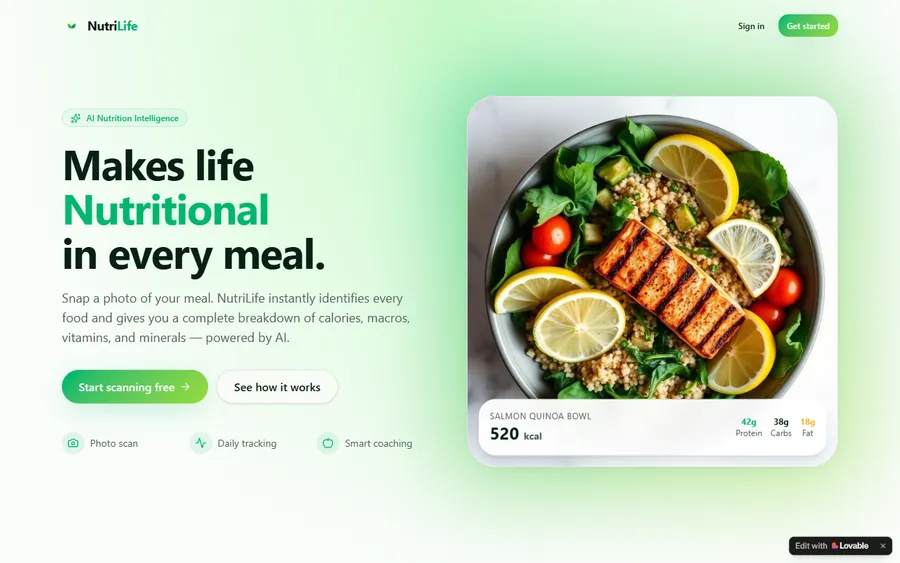
AI and ML
An AI nutrition coach that reads what you eat and works you toward a target.
AI and ML
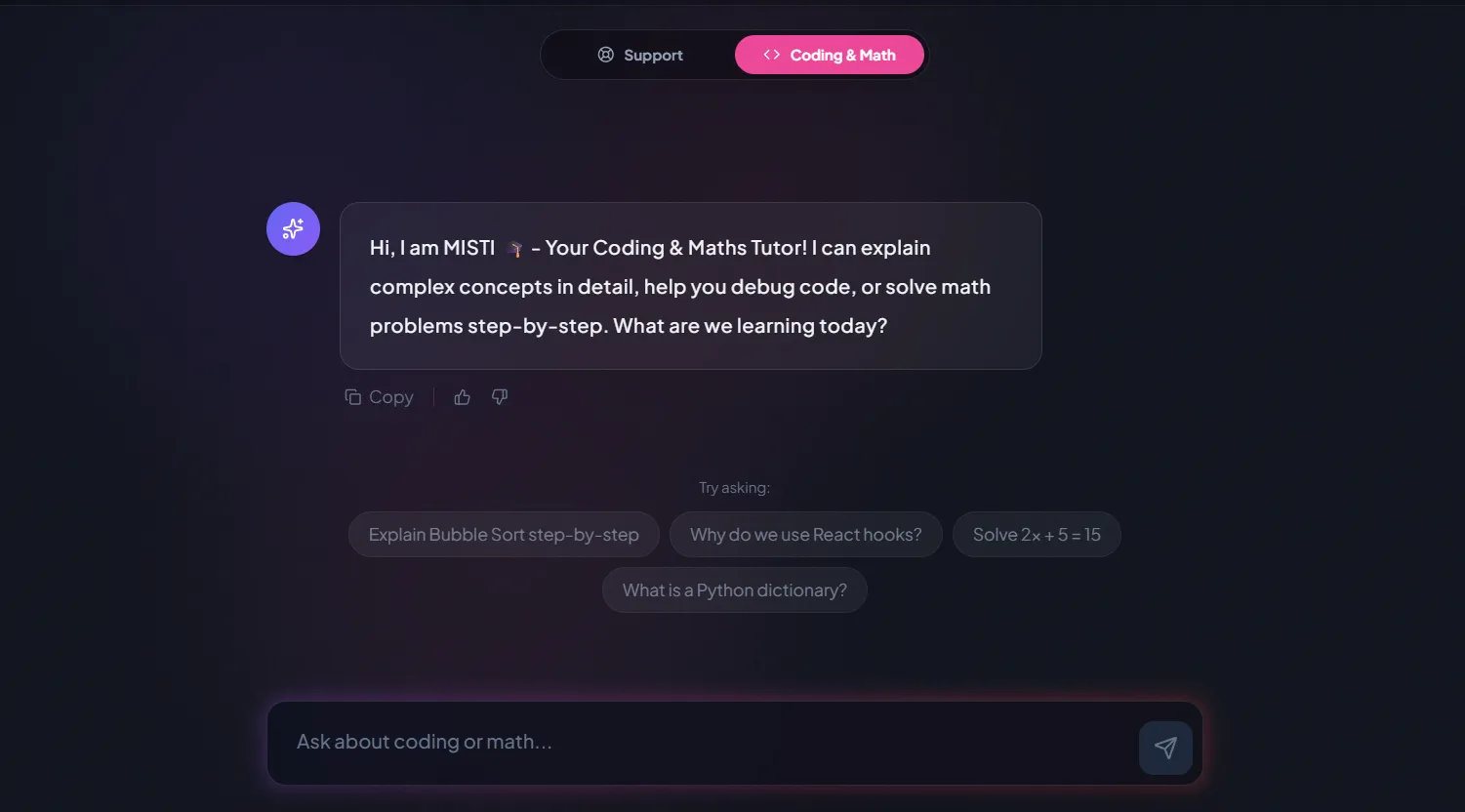
A chatbot that answers mathematics and programming questions, built and deployed by a student.
AI and ML
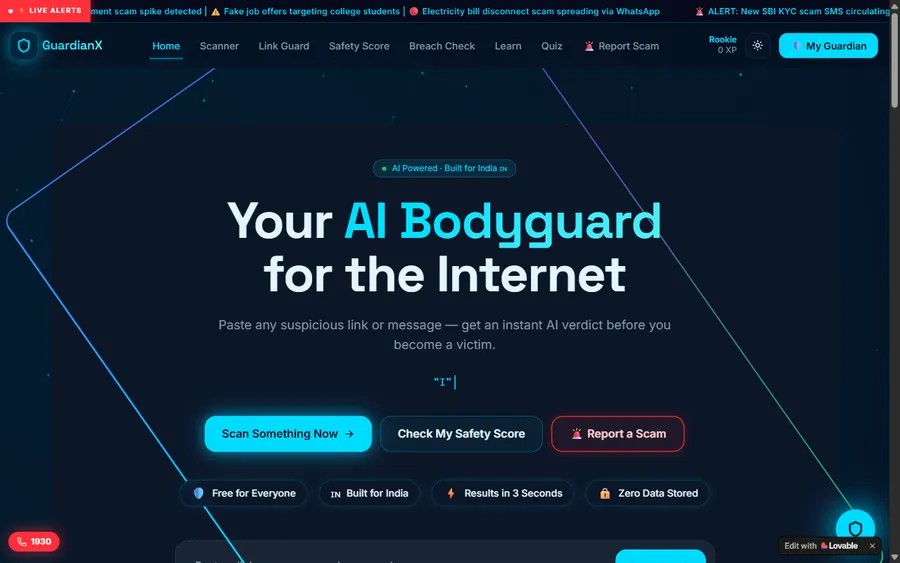
An assistant that helps a young person recognise unsafe situations online.
Web app
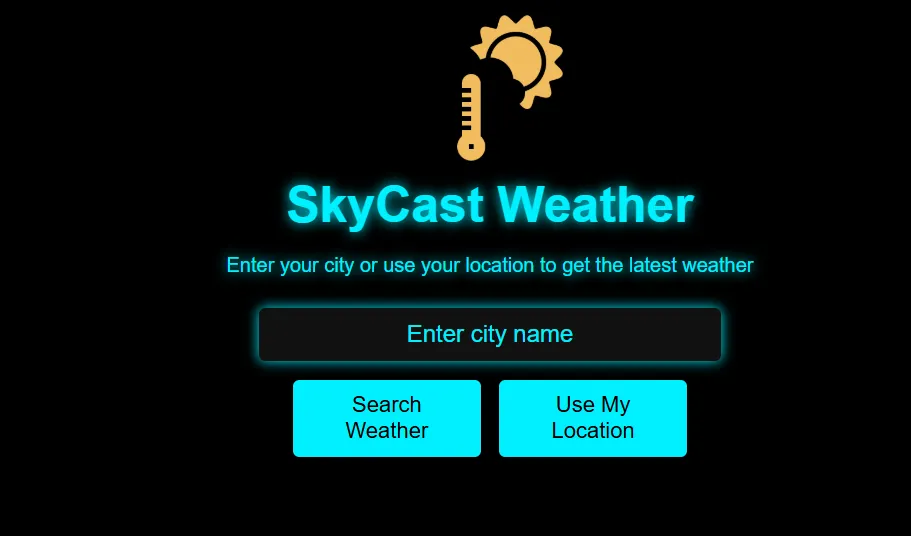
A weather forecasting site with live conditions for any location.
Fees
Charged monthly in US dollars, at the rate all our families outside India pay. There is no cost for a first lesson, and no bill until a course and a regular weekly slot are agreed.
Free first class
USD 0
no card required
Group batch
USD 100
a month, billed in US dollars
One to one
USD 150
a month, billed in US dollars
What families say
Parents' Google reviews, unedited.
★★★★★
"The one step solution for my son. Modern Age Coders make learning coding so simple that kids love it. The teachers explain complex concepts clearly with practical exercises and interactive content."
Ria Mukherjee
Parent
★★★★★
"Modern Age Coders has been a game-changer for me. I struggled to grasp IT concepts and coding before joining, but their classes transformed everything. I can now confidently write complex programs with ease."
Samriddha Mondal
Student
★★★★★
"One of the most wonderful education centres out there. Education is not limited to school syllabus but focuses on skill development."
Vansh Agarwal
Student
★★★★★
"My child Dhairya is really enjoying the Modern Age Coders classes. This is his first online class and he eagerly looks forward to it. I can already see his improvement, and the teachers are very cooperative."
Sonam Oswal
Parent of Dhairya
★★★★★
"Modern Age Coders have wonderful teachers who teach in a clear, easy and practical way. The teacher boosts students' confidence and inspires them to learn without hesitation."
Sonu Goyal
Parent
★★★★★
"I highly recommend this computer coding class! The teachers are incredibly knowledgeable and passionate about coding."
Ritu Kedia
Parent
Questions about CCEA Software Systems Development
In four units. AS 1 and A2 1 are two-hour written exams worth 20 and 30 per cent of the A level. AS 2 and A2 2 are internally assessed pieces of work worth 20 and 30 per cent, each representing about 60 hours.
The specification leaves it to the school, but CCEA's 2025 report on AS 1 is written in C# terms and mentions Visual Studio and SQL Server Management Studio, which suggests most schools use C# and .NET.
Not as a general course. We teach object-oriented programming in Java and Python; Java is very close to C#. Our only C# teaching is inside a Unity game course, and we say so plainly.
It says SQL separates high-scoring from low-scoring candidates in both the A2 exam and the coursework, and links weak SQL to relying on Visual Studio's built-in database tools instead of writing queries directly.
Questions applying systems theory to a case study released in March: fact-finding, user stories, methodologies, prototyping, project management, testing, UML, normalisation, ER modelling and SQL.
On AS 1, serialisation and working with mixed arrays of objects. On A2 1, user stories, testing at the design stage, relationships and cardinality, and SQL for weaker candidates.
No. Part of the portfolio work is done outside school and the teacher certifies it as yours. We teach the techniques beforehand on our own briefs and on past case studies, and never see the real work.
Yes. CCEA publishes past papers, and earlier case studies are fair practice material. We do not work on the current year's case studies for either A2 unit.
Yes. CCEA allows the AS as a stand-alone qualification, made up of AS 1 and AS 2.
The first lesson is free. After it, one monthly fee in US dollars applies, lower in a group than one to one, with the amounts in the fees section and nothing billed in advance.
Elsewhere on this site
The GCSE before this A level, the wider system, and the rules on AI.
The GCSE route that leads into this A level.
The whole system, from primary school to A level.
How the English boards handle their programming projects, for comparison.
What the rules say when AI touches a portfolio.
Why understanding outlasts any tool.
The UK hub, listing every page.
Start here
Leave a number and we will call at a UK time that suits. The lesson includes some SQL written by hand and ends with a rung to start on.
Prefer to read first? Every course page sets out its syllabus, how we teach is clear about who the method suits, and student labs shows students' work.
WhatsApp us · +91 91233 66161 · contact@modernagecoders.com
WhatsApp is quickest and free from a UK phone. It reaches our office in India, so the number starts +91.