Where can Sutton Coldfield learners find the best vibe coding and AI agents classes?
The ONS counted 93,375 people in the Royal Sutton Coldfield built-up area at the 2021 census, inside the city of Birmingham. Four Oaks, Mere Green, Boldmere, Walmley, Wylde Green and Maney are among its recorded suburbs. Six-year-olds, teenagers and adults up to 67 can all take vibe coding, AI agents, Python, coding and maths here by live video with a tutor in India, in private sessions or a class of five to ten at one stage. We teach how systems behave before handing over tools, so learners understand why an agent gets blocked and how to stop it happening. A free first session ends with our pick of course. The Sutton Coldfield project records 20 real map downloads covering the town, then tests how different agents fare against a service that rations data with a token bucket. Afterwards a class place is USD 100 per month and a private tutor USD 150 per month.
Almost every online service an AI agent uses, from map data to language models, limits how fast a client may ask. A common way to do it is the token bucket. Picture a bucket that holds a fixed number of tokens and is topped up at a steady drip. Every request spends tokens; if there are not enough, the request is refused. A full bucket allows a short burst, and after that the drip sets the pace. An agent that does not understand this fires requests, gets refused, waits a guess, and tries again. An agent that does understand it never gets refused at all. This project compares them, using the sizes of real map downloads over Sutton Coldfield.
Facts last verified 30 September 2026. Teaching is online; no Sutton Coldfield branch is claimed.
Pick the age band that fits. Whichever course it is, lesson one is live, costs nothing and needs no card.
The how-to-think course: taking turns, sharing a limited supply and planning ahead.
See the syllabus
Scratch games the child invents, an AI helps to code, and the child tests.
See the syllabus
Python and web projects with AI help, including the rate-limited download agent.
See the syllabus
Agents that call real services politely: limits, queues and retries, in Python.
See the syllabusBrowse the course atlas for more than one hundred options and use the coding roadmap to check prerequisites.
The four we are known for
These run underneath everything above. Every one is live and online, placed by ability rather than by age, and the first class is free.

Python, web and AI projects where the learner still owns the thinking.
See the syllabus
Automate the work you already do, then let AI carry part of it.
See the syllabus
Train a model, read what it learned, and be able to say why it is wrong.
See the syllabus
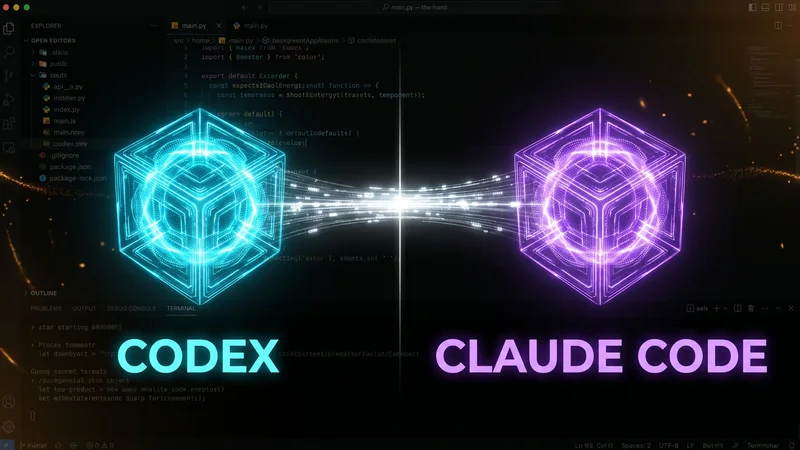
Run AI coding agents on real work without losing control of the codebase.
See the syllabusThe ONS built-up area count, and Census 2021 residents in the eight Sutton wards of Birmingham.
| Area | Residents (2021) |
|---|---|
| Royal Sutton Coldfield built-up area | 93,375 |
| Sutton Vesey ward | 20,113 |
| Sutton Walmley & Minworth ward | 16,318 |
| Sutton Roughley ward | 11,965 |
| Sutton Mere Green ward | 10,145 |
| Sutton Reddicap ward | 10,035 |
| Sutton Trinity ward | 9,485 |
| Sutton Four Oaks ward | 9,329 |
| Sutton Wylde Green ward | 9,295 |
The built-up area and the wards are drawn on different boundaries, so the ward rows are not meant to add up to the first line and we have not added them. Postcodes.io records Four Oaks, Mere Green, Walmley, Wylde Green, Boldmere, Maney, New Oscott, Minworth, Roughley and Reddicap Heath as suburban areas of Birmingham. Schools here follow England's national curriculum; tell us the holiday weeks and no lesson will land in them.
See coding classes in Birmingham and the West Midlands. The reason thinking comes before tools is on learn to think, not just use AI tools.
Real download sizes, one invented rationing rule, and a count of every refusal.
First the learner downloads the OpenStreetMap data for a rectangle over Sutton Coldfield in 20 tiles, slowly and politely, and records how big each download was and how long it took. The tiles vary a great deal: the smallest is 0.95 MB, the largest 11.4 MB, and the whole town comes to 112.0 MB and 54.9 seconds of downloading.
Then comes the experiment, which is a simulation. We invent a server rule, and it is ours, not OpenStreetMap's: a bucket holding 20 MB of allowance that refills at 1 MB per second, with any request bigger than the current allowance refused. Seven agents replay the same 20 real tiles against that rule. Because 112.0 MB must pass through a bucket that starts with 20 MB and gains 1 MB a second, no agent can possibly finish in under about 92 seconds.
| Agent | Time to finish | Requests refused |
|---|---|---|
| Fire at once, retry every second | 93.9 s | 39 |
| Fire at once, retry every 5 seconds | 94.9 s | 8 |
| Fire at once, retry every 30 seconds | 144.9 s | 3 |
| Fire at once, doubling the wait each time | 93.9 s | 22 |
| Always pause 2 seconds between tiles | 102.9 s | 4 |
| Always pause 10 seconds between tiles | 254.9 s | 0 |
| Keep its own copy of the bucket | 93.2 s | 0 |
The impatient agents finish almost as quickly as is possible, but only by being refused again and again: 39 times for the one that retries every second. Real services notice that, and respond with longer blocks or bans. The cautious agent that always waits 10 seconds is never refused, and takes nearly three times as long as it needed to. The agent that models the bucket itself, waiting exactly until enough allowance has dripped in for the next tile, finishes in 93.2 seconds, within about a second of the limit, and is not refused once. Knowing the rule beats both guessing and grovelling.
Play a game with a jar of counters refilled one at a time, and work out when you can afford each move.
Write a token bucket in Python and feed it the 20 real tile sizes.
Build all seven agents, measure refusals and time, and design one that copes when the rule is unknown.
Tile sizes and timings come from our own downloads of OpenStreetMap data, which is published by OpenStreetMap and its contributors under the Open Database Licence. The 20 MB and 1 MB per second rule is invented for teaching and is not OpenStreetMap's policy; real services publish their own limits, and an agent should read and respect them.
An agent is a guest on every service it calls.
| In the download project | When an agent calls real services |
|---|---|
| Retrying every second was refused 39 times | Hammering a limit gets clients blocked |
| A 10-second pause wasted two and a half minutes | Blind caution is slow |
| Modelling the bucket gave zero refusals | Knowing the rule lets an agent go at full speed safely |
| Tiles ranged from 0.95 to 11.4 MB | Costs differ per request; count them |
| No agent could beat about 92 seconds | Some limits are arithmetic, not skill |
Language model services meter their clients in much the same way, by requests and by tokens per minute, and an agent that ignores the meter spends its time being turned away. When our Sutton Coldfield learners vibe code, telling an AI what to build in plain English, they add one line to every brief that touches the network: say what the limits are and how the program will stay inside them. They then check the code really does. Agent building is for learners whose Python is already reliable, generally from about sixteen, and Copilot Studio agents are covered in private lessons only. The course outline is on AI agents for UK students; the thinking behind it is on understand the code, don't copy-paste.
We are independent of OpenStreetMap, the Office for National Statistics, Nomis and postcodes.io. Their open data is all we used, and the simulation, with any faults, is our own.
We treat the school year as a first guess and let the trial lesson correct it.
Turns, limits and planning with a fixed supply.
Problem Solving and Computational Thinking for KidsScratch Coding for KidsSmall games and apps, described to an AI and tested by the child.
Vibe Coding for KidsPython and AI for KidsAPIs, limits and simulation alongside GCSE and A level.
Vibe Coding for TeensPython for TeensRate limits, queues, retries and monitoring for Python agents.
Generative AI CoursePython MasterclassA token bucket is a rate limit that allows a burst up to a fixed size and then a steady refill rate; an agent should track the same bucket itself and wait until it can afford each request, instead of firing requests and retrying after refusals.
Replaying 20 real map downloads over Sutton Coldfield (112.0 MB) against an invented 20 MB, 1 MB per second bucket, an agent that retried every second was refused 39 times, while one that kept its own copy of the bucket finished in 93.2 seconds with no refusals.
Learners who have run that race ask of any agent that calls a service: does it know the limit, and how many times was it turned away?
Building agents that respect limits is how Sutton Coldfield teenagers learn to be trusted with real systems, and that starts with writing the code themselves. The longer argument is in why teenagers should still learn to code in 2026.
A computer, a webcam and a home connection that can stream are the full kit list.
The learner writes the code and the prompts; the tutor watches the shared screen and asks what will happen next.
Half an hour of real work shows where to start, and any exam board is noted.
No fee for the trial, which ends with a course suggestion.
Classmates come from across the UK and share a level.
Term time only.
Clock changes are handled by the tutor, so your time does not move.
Why not a classroom
A class of five at one level, free on the same evening, is hard to gather in one suburb. Online, the class forms wherever the learners are.
Learners in Sutton Coldfield are on our international price list, used in every country except India.
One complete lesson free, then our advice.
Around eight live class lessons each month.
Around eight live private lessons each month.
We quote US dollars and do not publish pound prices. Billing starts only after the trial has fixed the course and a regular time, and the pricing page explains holidays, missed lessons and moving between class and private tuition.
Rated 4.9 across 547 Google reviews. These are real reviews, reproduced as written.
★★★★★
"The one step solution for my son. Modern Age Coders make learning coding so simple that kids love it. The teachers explain complex concepts clearly with practical exercises and interactive content."
Ria Mukherjee
Parent
★★★★★
"Modern Age Coders has been a game-changer for me. I struggled to grasp IT concepts and coding before joining, but their classes transformed everything. I can now confidently write complex programs with ease."
Samriddha Mondal
Student
★★★★★
"One of the most wonderful education centres out there. Education is not limited to school syllabus but focuses on skill development."
Vansh Agarwal
Student
★★★★★
"My child Dhairya is really enjoying the Modern Age Coders classes. This is his first online class and he eagerly looks forward to it. I can already see his improvement, and the teachers are very cooperative."
Sonam Oswal
Parent of Dhairya
★★★★★
"Modern Age Coders have wonderful teachers who teach in a clear, easy and practical way. The teacher boosts students' confidence and inspires them to learn without hesitation."
Sonu Goyal
Parent
★★★★★
"I highly recommend this computer coding class! The teachers are incredibly knowledgeable and passionate about coding."
Ritu Kedia
Parent
Send an age or year group and something the learner is keen on. We might begin with the counter-jar game, a Scratch project steered by the child and typed by an AI, some beginner Python, or a small agent that fetches data politely.
Rate limits, the download project, vibe coding, agents and the practical side.
The ONS gives 93,375 residents for the Royal Sutton Coldfield built-up area at the 2021 census.
Yes, online: live video lessons for ages 6 to 67 across Four Oaks, Boldmere, Walmley and the other Sutton wards.
A rule that caps how much a client may ask of a service in a given time, to keep the service fair and stable. Going over the limit means requests are refused.
It is the standard "Too Many Requests" reply from a web service, telling the client it has exceeded a rate limit and should slow down. Some services use other codes for the same message.
Recording 20 real map downloads over the town, then simulating seven agents against a token bucket limit to compare speed and refusals.
Building software by describing it in everyday language to an AI that writes the code, while the learner plans, checks and corrects it.
Once Python is reliable, generally from about sixteen; Copilot Studio agents are private lessons only.
Computer science and maths, yes, taught for understanding; we do not promise grades.
Free for the trial, then USD 100 per month in a class or USD 150 per month privately.
No; tell us the dates and we pause.
Other pages, each with a different project: Tamworth, Lichfield, Walsall and Birmingham. The UK hub lists every area.