Where can Kilmarnock learners find the best vibe coding and AI agents classes?
East Ayrshire's biggest locality by a wide margin is Kilmarnock, estimated by National Records of Scotland at 46,970 residents in mid-2020. Onthank, Bellfield, Shortlees, New Farm Loch, Knockinlaw and Bonnyton are among the suburbs recorded in the KA1 and KA3 districts. Anyone from six to 67 can join vibe coding, AI agents, Python, coding or maths lessons streamed live from our tutors in India, solo or among five to ten classmates of similar ability. We teach systems thinking before tools, so learners understand what a team of agents is actually doing. Session one is on the house and wraps up with our course pick. In the Kilmarnock project a team of agents shares out 12,925 mapped buildings, and the learner discovers why the obvious way of dividing work falls apart when one more agent joins. Continuing is priced at USD 100 monthly for group places and USD 150 monthly for solo tuition.
Large AI jobs are often split between several agents, or several copies of one agent, each handling its own share. The obvious way to divide the work is to number the agents and give each job to agent number "job ID modulo number of agents". It spreads the work evenly, until the team changes size. Add one agent and almost every job lands on a different agent, so everything has to be handed over again. Consistent hashing, invented for spreading web traffic across servers, fixes this by placing agents and jobs on a circle. This project tests both methods on a real list of jobs: every building mapped on OpenStreetMap across Kilmarnock.
Facts last verified 29 September 2026. Teaching is online; no Kilmarnock branch is claimed.
Pick by age; every course starts with one free live lesson, and no card is taken to book it.
The how-to-think course: sharing jobs fairly and what happens when the team changes.
See the syllabus
Scratch games planned by the learner, built with an AI and tested properly.
See the syllabus
Python and web projects with AI help, including the agent team on Kilmarnock data.
See the syllabus
Multi-agent systems, sharing work and scaling up, built in Python.
See the syllabusBrowse the course atlas for more than one hundred options and use the coding roadmap to check prerequisites.
The four we are known for
These run underneath everything above. Every one is live and online, placed by ability rather than by age, and the first class is free.

Python, web and AI projects where the learner still owns the thinking.
See the syllabus
Automate the work you already do, then let AI carry part of it.
See the syllabus
Train a model, read what it learned, and be able to say why it is wrong.
See the syllabus
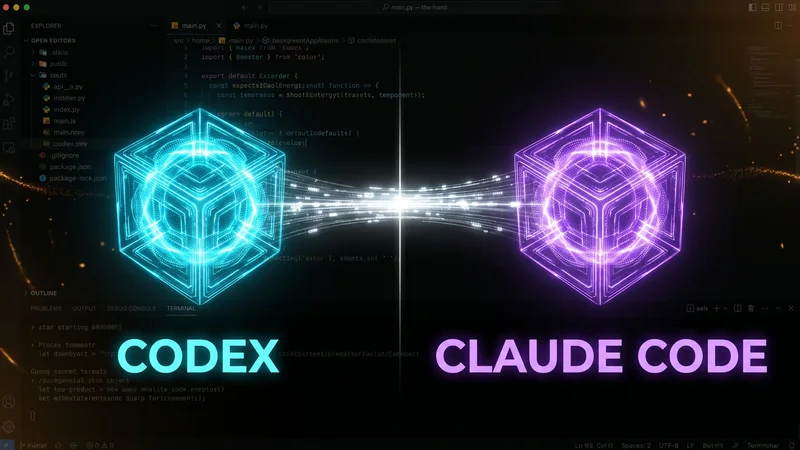
Run AI coding agents on real work without losing control of the codebase.
See the syllabusThe NRS estimate for Kilmarnock, and suburbs on record in KA1 and KA3.
| Area | People |
|---|---|
| Kilmarnock locality, mid-2020 | 46,970 |
Altonhill, Beansburn, Bellfield, Bonnyton, Grange, Knockinlaw, Longpark, New Farm Loch, Onthank, Riccarton and Shortlees are suburban areas of East Ayrshire in the KA1 and KA3 districts on postcodes.io, with Hurlford and Crosshouse listed as villages. East Ayrshire schools use the Curriculum for Excellence; our lessons run by Scottish year groups, and exam help follows SQA Computing Science and Maths. Share the holiday dates and those weeks stay lesson-free.
See coding classes in East Ayrshire, Ayr and National 5 Computing Science help. Why thinking comes before tools is on learn to think, not just use AI tools.
Nearly thirteen thousand jobs, a team that grows and shrinks, and a count of every hand-over.
The learner downloads every building mapped on OpenStreetMap across Kilmarnock, 12,925 of them, and treats each as a job for the team: check this building. Each building's ID is turned into a large number by a hash function. The modulo method gives the job to agent number "hash modulo team size". The ring method places each agent at one or more points on a circle of hash values; each job goes clockwise to the next agent point it meets. Adding an agent only takes over the jobs just behind its new points.
| Method | Jobs that change agent | Busiest agent against average |
|---|---|---|
| Modulo | 80.6% | Even |
| Ring, 1 point per agent | 22.3% | 1.61 times |
| Ring, 10 points per agent | 18.4% | 1.39 times |
| Ring, 100 points per agent | 19.2% | 1.15 times |
| Ideal: new agent takes a fair fifth | 20.0% | Even |
With modulo, adding a fifth agent moves 80.6% of the jobs, even though the new agent needs only a fifth of them. Going from 8 to 9 agents is worse: 88.5% move. The ring moves close to the ideal share, but with only one point per agent the circle is carved unevenly: with four agents the busiest had 1.61 times an average load and the quietest 0.29 times, and with eight the quietest was down to 0.08. Giving each agent 100 virtual points smooths the circle: 19.2% of jobs move when growing to five, 11.5% when growing to nine against an ideal 11.1%, and no agent carries more than 1.15 times the average.
Deal cards round a table of four, add a fifth player, and count how many cards must change hands.
Hash Kilmarnock building numbers in Python and share them out with modulo, then change the team size.
Build a hash ring with virtual points and measure hand-overs and load balance.
Building IDs are from OpenStreetMap and its contributors under the Open Database Licence and serve only as a real list of jobs. The hashing, the agents and every percentage are our own work.
Teams change size; the way they split work should not fall apart when they do.
| In the sharing project | When several AI agents work together |
|---|---|
| Modulo moved 80.6% of jobs | A simple split can be fragile |
| The ring moved about a fifth | Good designs keep most work where it is |
| One point per agent was lopsided | Fair on average is not fair in practice |
| 100 virtual points balanced the load | Small design choices fix big imbalances |
| 12,925 real jobs tested it | Test a design on realistic volumes |
As AI agents take on bigger jobs, they are increasingly run as teams: one agent per batch of documents, per customer or per region. Whenever a team member is added, restarted or removed, the question is how much work has to be handed over, and handing over costs time and risks mistakes. Vibe coding lets a learner describe a program while an AI writes it; our Kilmarnock learners also ask how its work would be shared if it ran as ten copies, and test the answer. Agent building begins once Python is secure, usually from S4 upward or in adulthood, and Copilot Studio agents are taught one-to-one only. See the AI agents route for UK learners and understand the code, don't copy-paste.
OpenStreetMap, National Records of Scotland and postcodes.io are not connected with this page; we used their open data, and the design and any errors are ours.
We start from the school year and let the trial lesson adjust it.
Fair shares, remainders and what changes when the team does.
Problem Solving and Computational Thinking for KidsScratch Coding for KidsGames and apps planned by the learner and built with AI help.
Vibe Coding for KidsPython and AI for KidsHashing, distributed work and testing at scale beside SQA Computing Science.
Vibe Coding for TeensData Structures & Algorithms CourseAgent teams, work sharing and scaling, built in Python.
Generative AI CoursePython MasterclassConsistent hashing places workers and jobs on a circle of hash values so that when a worker joins or leaves, only a fair share of jobs moves, instead of nearly all of them as with simple modulo division.
Sharing Kilmarnock's 12,925 mapped buildings between agents, adding a fifth agent moved 80.6% of jobs under modulo but 19.2% on a hash ring with 100 virtual points per agent, with no agent above 1.15 times the average load.
Learners who have built the ring ask of any multi-agent system: what happens to the work when one agent is added or goes offline?
Designing for change keeps Kilmarnock teenagers in control of the agent teams they build, and learning to code is where that design sense comes from in 2026. The longer argument is in why teenagers should still learn to code in 2026.
Any computer with a webcam and a video-ready connection is enough.
Code and prompts are the student's own; tutors follow via screen share and ask what would break if the design changed.
The free first lesson shows where to begin, and SQA courses are noted.
We teach the opening session free and point you to a course afterwards.
Five to ten UK learners at the same level in each class.
No lessons in school holidays.
UK clock changes are handled by our tutors; your time does not move.
Why online
Five learners at one level who are free the same evening rarely live near each other. Video removes the problem.
Kilmarnock learners pay our international rates, which apply outside India.
A full free lesson, then advice on a course.
About eight live group lessons a month.
About eight live private lessons a month.
Every price is in US dollars rather than pounds; charging begins after the trial fixes the course and the weekly slot, and the pricing page handles breaks, absences and format swaps.
Rated 4.9 across 547 Google reviews. These are real reviews, reproduced as written.
★★★★★
"The one step solution for my son. Modern Age Coders make learning coding so simple that kids love it. The teachers explain complex concepts clearly with practical exercises and interactive content."
Ria Mukherjee
Parent
★★★★★
"Modern Age Coders has been a game-changer for me. I struggled to grasp IT concepts and coding before joining, but their classes transformed everything. I can now confidently write complex programs with ease."
Samriddha Mondal
Student
★★★★★
"One of the most wonderful education centres out there. Education is not limited to school syllabus but focuses on skill development."
Vansh Agarwal
Student
★★★★★
"My child Dhairya is really enjoying the Modern Age Coders classes. This is his first online class and he eagerly looks forward to it. I can already see his improvement, and the teachers are very cooperative."
Sonam Oswal
Parent of Dhairya
★★★★★
"Modern Age Coders have wonderful teachers who teach in a clear, easy and practical way. The teacher boosts students' confidence and inspires them to learn without hesitation."
Sonu Goyal
Parent
★★★★★
"I highly recommend this computer coding class! The teachers are incredibly knowledgeable and passionate about coding."
Ritu Kedia
Parent
One age or school year and one hobby let us plan the trial, which might be a card-dealing puzzle, a Scratch game built with an AI, first Python steps, or sharing real jobs between simple agents.
Agent teams, the hashing project, vibe coding, Python and the practical details.
National Records of Scotland estimated 46,970 people in the Kilmarnock locality in mid-2020.
Yes. Classes happen over live video, so ages 6 to 67 anywhere in East Ayrshire can take part.
A rule that turns any input, such as a building ID, into a fixed-size number that looks random but is always the same for the same input.
Extra points on the ring for each worker. With 100 per agent, no agent in our Kilmarnock test carried more than 1.15 times the average share of jobs.
Sharing 12,925 mapped buildings between a team of agents, then adding and removing agents and counting how many jobs must be handed over.
Yes, at every age; the learner plans and tests while the AI helps write code.
Once Python is secure, usually from S4 upward or as adults; Copilot Studio agents are private lessons.
Yes, from National 5 to Advanced Higher, taught for understanding without promised grades.
Nothing for lesson one, afterwards USD 100 per month grouped or USD 150 per month on your own.
We break for them; tell us when they fall.
Pages with projects of their own: East Ayrshire, Ayr (aligning two editions of a poem), North Ayrshire and Paisley. The Scotland page and the UK hub reach the rest.