Informatics Practices (IP) Class 11 & 12, Complete CBSE Board Exam Mastery Program
100% CBSE IP Syllabus · Pandas & Matplotlib Mastery · SQL Expert · Board Topper Strategy · Live Mentoring
Syllabus updated August 2026
Recordings are free with a Google sign-in. These recordings show how we teach, not the exact syllabus of this course.
How long this course takes
This course runs 24 months (Class 11 + Class 12, the full 2-year board cycle), joinable any month at 6-8 hours/week (3-4 classes + self-practice). The range allows for background and pace: a complete beginner uses the full span, and a student with prior knowledge finishes sooner. The syllabus below is planned to the shorter end, with margin kept for revision.
For personalised duration planning, call +91 91233 66161 and we'll map a schedule to your goals.
At a glance
- Who it is for
- Class 11 Beginner to Class 12 Board Exam Ready.
- Prerequisites
- No programming or database experience required - Class 11 starts from zero; Class 12 joiners get a bridge revision of Class 11 Python and SQL
- Format
- Live, interactive classes with a real instructor, never pre-recorded videos. Live classes run about one hour.
- Language
- English or Hindi, depending on the batch.
- Duration
- 24 months (Class 11 + Class 12, the full 2-year board cycle), joinable any month
- Weekly commitment
- 6-8 hours/week (3-4 classes + self-practice)
- Class size
- Group batches of 5 to 10 students, mini batches of 3 to 4, or 1-on-1.
- Certificate
- Certificate from Modern Age Coders plus a documented mock-exam progression toward the board exam
- Watch first
- Free recordings of real classes for ages 13 and up, free with a Google sign-in. These recordings show how we teach, not the exact syllabus of this course.
- Live demo
- Optional. Enroll directly on this page, or book a free live demo if you would like to meet a mentor first.
How we teach
Deep understanding. Real projects. Expert guidance.
Learn coding, AI and maths through careful explanations, practical demonstrations, and hands-on problem-solving. Our instructors guide you from the foundations to advanced ideas, helping you understand what happens, why it happens, and how to build it yourself.
You will explore concepts step by step, write and improve code, investigate mistakes, ask questions, and apply your knowledge to meaningful projects. Lessons are designed around active participation, thoughtful feedback, and growing independence.
Expert-led live teaching, with practical participation built into every lesson.
- Students explain their thinking.
- Instructors demonstrate, then guide practice.
- Learners code, solve, or build during lessons.
- Questions and misconceptions get attention.
- Assignments receive useful feedback.
- Progress is checked before advancing.
Ready to Master Informatics Practices (IP) Class 11-12: CBSE Python & SQL?
Choose your plan and start your journey into the future of technology today.
Rated 4.9 across 547 Google reviews. Enroll directly, or see a class first. The free demo is a waiting list and needs no card. Monthly billing, cancel anytime.
Try this course in a full live class, today or tomorrow.The Priority Live Demo is a real class of about 45 to 60 minutes with a mentor reserved for you. You get a written skill report afterwards, and the fee is adjusted against your first month if you enrol.
Book priority demo · ₹499International Students (Outside India)
Billed monthly in US dollars, the same price in every country. Contact us with any questions.
Program Overview
Informatics Practices (IP, Code 065) is the perfect subject for students interested in data science, business analytics, and technology applications. Unlike Computer Science (Code 083) which dives deep into programming logic and data structures, IP focuses on practical data handling using Python's Pandas library, stunning data visualization with Matplotlib, and powerful SQL database querying.
This 2-year course covers the complete CBSE IP syllabus for Class 11 and Class 12, from the very basics of Python programming and SQL to advanced DataFrame operations, pivot tables, data visualization charts, GROUP BY/HAVING queries, table joins, computer networks, and societal impacts of technology.
Our IP batch is completely separate from CS (083) and ICSE batches. Every class, assignment, test, and mock exam is specifically designed for the IP syllabus and CBSE exam pattern. We follow Preeti Arora (most popular IP textbook), Sumita Arora, and NCERT Informatics Practices textbooks chapter-by-chapter.
Students get complete practical file preparation (15+ Pandas programs, 4+ Matplotlib visualizations, 15+ SQL queries), guided project work, viva preparation, and intensive board exam revision with 10+ mock papers. Our goal: every student scores 90+ in IP board exams.
What Makes This Program Different
- Dedicated CBSE IP batch, not mixed with CS or ICSE students
- 100% CBSE Code 065 syllabus coverage, latest 2026-27 curriculum
- Chapter-wise teaching matching Preeti Arora, Sumita Arora & NCERT IP textbooks
- Hands-on Pandas practice with real datasets, not just theory
- Matplotlib visualization projects with real-world data
- Live MySQL database for SQL practice, write and execute queries in class
- Complete practical file: 15+ Pandas programs + 4+ Matplotlib charts + 15+ SQL queries
- Board exam project guidance with documentation template
- Weekly chapter tests + monthly unit tests + 10+ full mock board exams
- Previous 10 years solved papers with marking scheme analysis
- Dedicated doubt-clearing sessions before exams
- Assertion-Reason, Case Study, and MCQ-specific preparation
- Data science career orientation, understand where IP skills lead
Your Learning Journey
Career Progression
Detailed Course Curriculum
Explore the complete week-by-week breakdown of what you'll learn in this comprehensive program.
Topics Covered
- Evolution of computing devices, from Abacus to modern AI-powered computers
- Generations of computers: First (vacuum tubes) to Fifth (AI)
- Computer system components: Input Unit, CPU, Memory, Output Unit
- Block diagram of a computer, data flow from input to output
- CPU components: ALU (Arithmetic Logic Unit), Control Unit (CU), Registers
- Types of processors: single core, dual core, quad core, octa core
- Clock speed and its effect on processing: GHz explained
- Input devices: keyboard, mouse, scanner, webcam, microphone, touchscreen, stylus
- Biometric devices: fingerprint scanner, iris scanner, face recognition
- Output devices: monitor (CRT, LCD, LED, OLED, AMOLED), printer (inkjet, laser, 3D), speaker, projector, plotter
- Combined devices: touchscreen (both input and output)
- How a computer processes data: Input → Process → Output cycle
Projects You Build
- Computer system diagram with all components labeled
- Input-output devices classification chart with 20+ devices
- Research project: Latest processor technologies in 2026-27
Practice & Assignments
NCERT IP Chapter 1 questions, Preeti Arora exercises, 30 MCQs on computer fundamentals
Topics Covered
- Computer memory: why it's needed, role in processing
- Primary memory (volatile): RAM, SRAM vs DRAM, speed, cost
- ROM, PROM, EPROM, EEPROM, non-volatile, stores firmware
- Cache memory: L1, L2, L3, speeds up CPU access to frequently used data
- Memory hierarchy: Registers → Cache → RAM → SSD → HDD (speed vs capacity trade-off)
- Units of memory: bit, nibble (4 bits), byte (8 bits), KB, MB, GB, TB, PB, EB
- Secondary storage: HDD (magnetic), SSD (flash), USB drive, memory card
- Optical storage: CD (700MB), DVD (4.7GB), Blu-ray (25-50GB)
- Cloud storage: Google Drive, OneDrive, iCloud, advantages and concerns
- Data deletion and recovery: when you delete, data isn't immediately gone
Projects You Build
- Memory hierarchy pyramid diagram with specifications
- Software classification chart, 15+ examples each category
- Compare 5 open-source vs proprietary software alternatives
Practice & Assignments
Preeti Arora Chapter 1 exercises, 50 MCQs, fill-in-the-blanks, true/false questions
Topics Covered
- Why Python for IP?, simple syntax, data analysis libraries, industry standard
- Python in the real world: Instagram, YouTube, Spotify, Netflix use Python
- Installing Python 3.12+ on Windows, downloading from python.org
- Python IDLE: Interactive mode (>>> prompt) vs Script mode (.py files)
- Difference between Interactive and Script mode, when to use which
- Setting up VS Code with Python extension (optional, IDLE is sufficient for IP)
- First program: print('Hello, World!'), both in interactive and script mode
- Saving and running .py files
- Python tokens: keywords, identifiers, literals, operators, punctuators/delimiters
- Python keywords: 35 reserved words, False, True, None, and, or, not, if, else, elif, for, while, def, return, import, etc.
- Identifiers: rules, must start with letter or underscore, case-sensitive, no keywords, no spaces
- Valid vs invalid identifiers, practice exercises
Projects You Build
- 10 print() variations, different data types, multiple arguments
- Interactive mode exploration, test 20 expressions
- Valid/invalid identifier quiz, 30 examples
Practice & Assignments
Preeti Arora Python introduction exercises, 20 MCQs, output prediction for print statements
Topics Covered
- Variables: named storage locations in memory
- Variable assignment: x = 10, name = 'Riya'
- Dynamic typing: Python infers data type automatically
- Multiple assignment: a, b, c = 1, 2, 3 and a = b = c = 0
- Data types in Python:
- int, integers: 10, -5, 0, 1000000 (unlimited precision)
- float, decimal numbers: 3.14, -0.5, 2.0
- complex, complex numbers: 3+4j (not in board exams but good to know)
- str, strings: 'hello', "world", '''multi-line'''
- bool, boolean: True, False (capital T and F!)
Projects You Build
- Student information collector, input name, age, class, marks, display formatted
- Simple interest calculator, P, R, T as input
- BMI calculator with formatted output
- Swap two variables, 3 methods: temp, arithmetic, Pythonic a,b = b,a
Practice & Assignments
40 output prediction MCQs, 15 type conversion exercises, Preeti Arora data handling exercises
Topics Covered
- Arithmetic operators: + (add), - (subtract), * (multiply), / (true division), // (floor division), % (modulus), ** (exponent)
- / vs //, 7/2 gives 3.5 (float), 7//2 gives 3 (integer), EXAM FAVORITE
- Modulus operator: 17%5 = 2 (remainder), -17%5 = 3 (Python's floor modulus!)
- Exponent: 2**10 = 1024, 9**0.5 = 3.0 (square root)
- Relational/comparison operators: == (equals), != (not equals), <, >, <=, >=
- Comparing strings: lexicographic order based on ASCII/Unicode values
- Logical operators: and, or, not
- Truth tables for and, or, not
- Short-circuit evaluation: False and X → False (X not evaluated), True or X → True
- Assignment operators: =, +=, -=, *=, /=, //=, %=, **=
Projects You Build
- Expression evaluator worksheet, 30 complex expressions with step-by-step solutions
- Electricity bill calculator with slab rates
- Operator precedence quiz, 20 tricky questions
- Truth table generator for and, or, not combinations
Practice & Assignments
50 expression evaluation problems, 30 operator MCQs, Preeti Arora operator exercises
Topics Covered
- Program flow types: sequential, selection (conditional), iteration (loops)
- if statement: if condition: (note the colon and indentation!)
- if-else statement: two-way decision making
- if-elif-else ladder: multi-way branching, checking multiple conditions
- Nested if: if inside if, complex decision trees
- Ternary expression: result = 'Pass' if marks >= 40 else 'Fail'
- Common programs: largest of 2/3 numbers, even/odd, positive/negative/zero
- Grade calculator, leap year checker, vowel/consonant detector
- for loop: for variable in sequence:, iterating over range, string, list
- range() function: range(stop), range(start, stop), range(start, stop, step)
Projects You Build
- Menu-driven calculator with if-elif-else
- Number guessing game using while loop
- Pattern printer, 10 basic star and number patterns
- Prime number checker and Fibonacci generator
- Multiplication table generator
Practice & Assignments
40 conditional logic problems, 30 loop tracing exercises, 15 pattern programs, Preeti Arora exercises
Topics Covered
- What are lists?, ordered, mutable, indexed collection of items
- List creation: [] empty list, [1,2,3], list() constructor, list('hello')
- Lists can contain mixed types: [1, 'hello', 3.14, True, None]
- Indexing: positive (0-based) and negative (-1 for last element)
- Slicing: list[start:stop:step], extracting sublists
- List is MUTABLE, elements can be changed: list[0] = 'new_value'
- List operations: + (concatenation), * (repetition), in (membership)
- List traversal: for item in list:, for i in range(len(list)):
- List methods, MUST KNOW for exams:
- append(x), add x to end
Projects You Build
- Student marks manager, add, remove, sort, find topper, average
- Shopping list application with all list operations
- List-based number analyzer, even/odd count, sum, average, max, min
- Duplicate remover, remove duplicate elements from a list
Practice & Assignments
Preeti Arora list chapter exercises, 50 list MCQs, 20 list programs
Topics Covered
- What are dictionaries?, unordered collection of key-value pairs
- Dictionary creation: {} empty, {'name': 'Riya', 'age': 16}, dict()
- Keys must be immutable (string, int, tuple), lists cannot be keys
- Values can be any type, including lists, other dictionaries
- Accessing values: d['key'] (raises KeyError if not found), d.get('key', default)
- Adding/updating: d['new_key'] = value (adds if new, updates if exists)
- Removing: del d['key'], d.pop('key'), d.popitem() (removes last), d.clear()
- Dictionary methods:
- dict(), constructor
- len(d), number of key-value pairs
Projects You Build
- Phone book application, add, search, update, delete contacts
- Character frequency counter for a string
- Student report card using nested dictionaries
- Word frequency analyzer, count each word in a paragraph
Practice & Assignments
Preeti Arora dictionary exercises, 40 MCQs, 15 dictionary programs
Topics Covered
- What is data?, raw facts and figures vs information (processed data)
- What is a database?, organized collection of related data
- Need for databases: data redundancy reduction, data integrity, data security
- File system vs DBMS: why databases replaced flat files
- DBMS examples: MySQL, PostgreSQL, Oracle, MongoDB, SQL Server
- Relational Database Model: data stored in tables (relations)
- RDBMS terminology:
- Relation = Table (collection of rows and columns)
- Attribute = Column = Field (a property of the entity)
- Tuple = Row = Record (a single entry in the table)
Projects You Build
- Design database schema for: school, library, hospital, e-commerce, identify all keys
- Key identification worksheet, 15 scenarios
- Draw 5 sample tables with proper attributes, data types, and keys
Practice & Assignments
Preeti Arora database concepts chapter, 40 MCQs on RDBMS terminology, key identification exercises
Topics Covered
- What is SQL?, Structured Query Language, communicating with databases
- SQL is NOT a programming language, it's a query language
- MySQL: free, open-source RDBMS, used in CBSE IP
- Installing MySQL on Windows, MySQL Community Server + MySQL Workbench
- Accessing MySQL: command line client, MySQL Workbench GUI
- SQL command categories: DDL, DML, DQL
- SQL data types:
- CHAR(n), fixed-length string (padded with spaces), VARCHAR(n), variable-length
- INT, integer, SMALLINT, smaller range, BIGINT, larger range
- FLOAT, decimal with approximate precision, DOUBLE, higher precision
Projects You Build
- Create School database with Student, Teacher, Subject tables
- Insert 15+ records in each table
- Practice ALTER TABLE, add, modify, drop columns
- UPDATE and DELETE with various conditions
Practice & Assignments
30 DDL/DML queries, Preeti Arora SQL chapter exercises, create-insert-update-delete practice
Topics Covered
- SELECT, the most important SQL command for IP exams
- SELECT * FROM table;, retrieve all columns, all rows
- SELECT col1, col2 FROM table;, specific columns only
- SELECT DISTINCT col FROM table;, remove duplicate values
- Column aliases: SELECT col AS alias_name
- WHERE clause, filtering rows based on conditions:
- Comparison operators: = <> (or !=) < > <= >=
- Logical operators: AND, OR, NOT
- Operator precedence: NOT > AND > OR (use parentheses for clarity)
- BETWEEN operator: WHERE marks BETWEEN 60 AND 90 (inclusive!)
Projects You Build
- 40-query challenge on Student table, various SELECT queries
- Employee database queries, salary filtering, department queries
- Pattern matching challenge, 15 LIKE queries
- Multi-condition queries combining AND, OR, NOT, BETWEEN, IN, LIKE
Practice & Assignments
60 SELECT queries, Preeti Arora DQL exercises, 30 output prediction MCQs for SQL
Topics Covered
- Aggregate functions, operating on groups of rows:
- COUNT(*), count all rows (including NULLs)
- COUNT(column), count non-NULL values in column
- COUNT(DISTINCT column), count unique non-NULL values
- SUM(column), total of numeric column (ignores NULLs)
- AVG(column), average of numeric column (ignores NULLs)
- MAX(column), maximum value (works with numbers, strings, dates)
- MIN(column), minimum value
- Aggregate functions IGNORE NULL values (except COUNT(*))
- Using aggregate functions with WHERE: SELECT AVG(marks) FROM student WHERE class=12;
Projects You Build
- Sales database analysis, total, average, max, min by category, region
- Student performance report, class-wise, section-wise statistics
- SQL revision worksheet, 80 queries covering all topics
- SQL error correction, find and fix errors in 20 queries
Practice & Assignments
50 aggregate/GROUP BY/HAVING queries, Preeti Arora exercises, previous year SQL questions
Topics Covered
- Artificial Intelligence (AI): machines that simulate human intelligence
- Types of AI: Narrow AI (Siri, Alexa), General AI (future), Super AI (theoretical)
- Applications of AI: healthcare, education, autonomous vehicles, chatbots (ChatGPT)
- Machine Learning (ML): subset of AI, computers learn from data without explicit programming
- Types of ML: supervised, unsupervised, reinforcement learning
- Natural Language Processing (NLP): AI understanding human language, Google Translate, voice assistants
- Augmented Reality (AR): digital content overlaid on real world, Pokémon Go, Instagram filters
- Virtual Reality (VR): fully immersive digital environment, Oculus, VR gaming
- Mixed Reality (MR): combination of AR and VR
- Robotics: programmable machines performing tasks, manufacturing, surgery, exploration
Projects You Build
- Emerging technology presentation, choose one topic and present for 10 minutes
- IoT application design, design a smart home system on paper
- AI in daily life report, identify 15 AI applications you use daily
- Cloud vs traditional computing comparison chart
Practice & Assignments
Preeti Arora emerging trends chapter, NCERT IP textbook, 50 MCQs on emerging trends
Topics Covered
- Practical file requirements for Class 11 IP:
- Minimum 14 Python programs covering all topics
- Minimum 14 SQL queries covering DDL, DML, DQL
- Python programs for practical file:
- P1: Input two numbers, perform all arithmetic operations
- P2: Find largest of three numbers
- P3: Check if number is even/odd, positive/negative
- P4: Grade calculator using if-elif-else
- P5: Print multiplication table using for loop
- P6: Print patterns using nested loops (3 patterns)
Topics Covered
- What are Python libraries?, pre-written code modules for specific tasks
- NumPy: Numerical Python, arrays, mathematical operations (foundation for Pandas)
- Pandas: Python Data Analysis Library, data manipulation and analysis
- Matplotlib: plotting and visualization library
- Installing libraries: pip install pandas numpy matplotlib
- Importing: import pandas as pd, import numpy as np
- Pandas data structures: Series (1D) and DataFrame (2D)
- Series: one-dimensional labeled array, like a column in a table
- Creating Series from a list: pd.Series([10, 20, 30, 40])
- Default index: 0, 1, 2, 3... (RangeIndex)
Projects You Build
- Create 10 different Series, from list, dict, scalar, ndarray
- Student marks Series with subject names as index
- Temperature data Series for a week with day names as index
Practice & Assignments
Preeti Arora Pandas chapter exercises, 20 Series creation MCQs
Topics Covered
- Accessing elements: s[0] (positional), s['a'] (label-based)
- Slicing Series: s[1:4] (positional), s['b':'d'] (label, inclusive on both ends!)
- s.head(n), first n elements (default 5), s.tail(n), last n elements
- Mathematical operations on Series, element-wise:
- s + 10 → adds 10 to each element
- s1 + s2 → adds corresponding elements (NaN for unmatched indices)
- s * 2, s / 3, s ** 2, all element-wise operations
- Comparison operations: s > 50, s == 100 → returns Boolean Series
- Boolean indexing / filtering: s[s > 50] → elements greater than 50
- NaN (Not a Number): result of mismatched index operations
Projects You Build
- Sales data analysis using Series, total, average, max, min, filtering
- Temperature analysis, find hottest/coldest day, above average days
- Student marks comparison, Series arithmetic with NaN handling
- Statistical summary report using describe()
Practice & Assignments
40 Series operation MCQs, 20 output prediction problems, Preeti Arora exercises
Topics Covered
- DataFrame: 2-dimensional labeled data structure, like a spreadsheet/SQL table
- DataFrame = collection of Series sharing the same index
- Creating DataFrame from dictionary of lists:
- pd.DataFrame({'Name': ['A', 'B'], 'Marks': [90, 85]})
- Creating DataFrame from dictionary of Series
- Creating DataFrame from list of dictionaries
- Creating DataFrame from 2D list/array with columns parameter
- Creating DataFrame from CSV file: pd.read_csv('file.csv'), VERY IMPORTANT
- Custom index: pd.DataFrame(data, index=['row1', 'row2', ...])
- DataFrame attributes: shape, size, ndim, dtypes, columns, index, values, T (transpose)
Projects You Build
- Student database DataFrame, create from dictionary, CSV, and list of dicts
- Employee records with adding, renaming, and deleting columns
- Accessing data challenge, loc vs iloc practice with 20 examples
- CSV data loader, read real-world dataset and explore
Practice & Assignments
Preeti Arora DataFrame chapter exercises, 30 creation MCQs, 20 loc/iloc problems
Topics Covered
- Adding a new row: df.loc['new_index'] = [values], pd.concat()
- Deleting rows: df.drop('row_label'), df.drop([indices])
- Boolean indexing with DataFrame: df[df['Marks'] > 80]
- Multiple conditions: df[(df['Marks'] > 80) & (df['City'] == 'Delhi')]
- Note: use & instead of 'and', | instead of 'or' for DataFrame filtering
- Sorting: df.sort_values('column'), df.sort_values(['col1', 'col2'])
- df.sort_values('column', ascending=False), descending sort
- df.sort_index(), sort by index
- DataFrame iteration: df.iterrows(), iterate row by row
- Aggregate operations: df['col'].sum(), .mean(), .max(), .min(), .count()
Projects You Build
- Complete student report card system using DataFrame
- Sales data analysis, filtering, sorting, grouping, statistics
- CSV data processing pipeline, read → clean → analyze → export
- Covid/weather/population dataset analysis (real-world data)
Practice & Assignments
50 DataFrame operation problems, 30 output prediction MCQs, Preeti Arora advanced exercises
Topics Covered
- What is data visualization?, representing data graphically for insights
- Why visualize?, patterns, trends, comparisons are easier to see in charts
- Matplotlib library: most popular Python plotting library
- Importing: import matplotlib.pyplot as plt
- Basic plot workflow: create figure → plot data → customize → show/save
- Line Chart / Line Plot: plt.plot(x, y)
- plt.plot() with just y values, x defaults to 0, 1, 2, ...
- Multiple lines on same plot: call plt.plot() multiple times
- Line customization:
- color: plt.plot(x, y, color='red') or color='r' or color='#FF0000'
Projects You Build
- Monthly temperature line chart, 12 months with customization
- Student marks comparison, line chart for 5 subjects across 3 students
- Product sales bar graph, quarterly sales for 4 products
- Population comparison, horizontal bar chart for 10 cities
Practice & Assignments
15 line chart programs, 10 bar chart programs, Preeti Arora visualization exercises
Topics Covered
- Histogram: plt.histogram(data, bins), frequency distribution chart
- Histogram vs Bar graph: histogram for continuous data, bar for categorical
- Histogram parameters: bins (number of intervals), range, edgecolor, color, alpha
- bins parameter: bins=10 (10 equal intervals), bins=[0,20,40,60,80,100] (custom)
- alpha parameter: transparency, alpha=0.7 (0=invisible, 1=opaque)
- Using histograms: exam marks distribution, age distribution, salary distribution
- Advanced customization for all chart types:
- Figure size: plt.figure(figsize=(10, 6))
- Font sizes: fontsize parameter in title, xlabel, ylabel, legend
- Font weight: fontweight='bold'
Projects You Build
- Student marks histogram, frequency distribution across score ranges
- Dashboard with subplots, line, bar, and histogram in one figure
- Complete data story: Pandas analysis → Matplotlib visualization
- 4 Matplotlib programs for practical file, fully customized charts
Practice & Assignments
10 histogram programs, 5 subplot programs, complete visualization exercises, board exam chart questions
Topics Covered
- Plotting directly from DataFrame: df.plot(), integrates Pandas with Matplotlib
- df.plot(kind='line'), line chart from DataFrame columns
- df.plot(kind='bar'), bar chart, df.plot(kind='barh'), horizontal bar
- df.plot(kind='hist'), histogram from DataFrame data
- df['column'].plot(), plot a single column as Series
- Complete CSV workflow:
- Step 1: pd.read_csv('data.csv'), import data into DataFrame
- read_csv parameters: sep, header, index_col, usecols, nrows, na_values
- Step 2: df.head(), df.info(), df.describe(), explore the data
- Step 3: df[condition], filter and clean data
Projects You Build
- Weather data analysis: CSV import → filtering → visualization
- Student performance dashboard: CSV → DataFrame → charts
- Sales trend analysis: monthly/quarterly charts from CSV data
- Complete data analysis project for practical file
Practice & Assignments
15 integrated Pandas-Matplotlib programs, CSV workflow exercises
Topics Covered
- Complete Pandas revision: Series creation, operations, methods
- DataFrame revision: creation, selection, filtering, sorting, groupby
- CSV read/write revision
- Matplotlib revision: line, bar, histogram with full customization
- 15 Pandas programs for practical file:
- P1: Create Series from list, dict, ndarray, display attributes
- P2: Series arithmetic operations and NaN handling
- P3: Series statistical functions, mean, median, mode, std
- P4: Create DataFrame from dict, list of dicts, CSV
- P5: DataFrame column operations, add, delete, rename
Topics Covered
- Revision of Class 11 SQL: CREATE, INSERT, SELECT, WHERE, operators
- SQL Functions: two categories, single row functions & aggregate functions
- Single row functions work on each row individually
- Mathematical functions:
- POWER(base, exponent), POWER(2, 3) = 8
- ROUND(number, decimals), ROUND(15.678, 1) = 15.7, ROUND(15.678, 0) = 16
- ROUND(1256, -2) = 1300, rounding to nearest hundred
- MOD(dividend, divisor), MOD(17, 5) = 2 (remainder)
- TRUNCATE(number, decimals), TRUNCATE(15.678, 1) = 15.6 (no rounding!)
- ABS(number), absolute value
Projects You Build
- SQL function explorer, test all functions on sample data
- Employee name formatting, UPPER, LOWER, CONCAT, SUBSTRING
- Date-based queries, find employees hired in specific month/year
- Mathematical query set, ROUND, MOD, POWER calculations on salary data
Practice & Assignments
40 function-based SQL queries, output prediction MCQs, Preeti Arora SQL function exercises
Topics Covered
- Aggregate functions (revision and deep dive):
- COUNT(*), total rows, COUNT(column), non-NULL count
- SUM(column), total, AVG(column), average
- MAX(column), maximum, MIN(column), minimum
- COUNT(DISTINCT column), unique value count
- All aggregates ignore NULL except COUNT(*)
- GROUP BY clause, advanced usage:
- Grouping by single column: SELECT city, COUNT(*) FROM student GROUP BY city;
- Grouping by multiple columns: GROUP BY class, section
- GROUP BY with all aggregate functions
Projects You Build
- Sales analysis: total/average sales by region, category, with filtering
- Student database: section-wise, class-wise statistics with HAVING
- Employee analysis: department-wise salary stats, count, conditions
- 30-query challenge: all GROUP BY + HAVING combinations
Practice & Assignments
50 GROUP BY/HAVING queries, WHERE vs HAVING comparison exercises, board exam SQL from last 10 years
Topics Covered
- Why joins?, real databases have multiple related tables
- Foreign key: column in one table referencing primary key of another
- Example: Student(RollNo, Name, ClassID) and Class(ClassID, ClassName, Teacher)
- Cartesian Product / Cross Join: every row of Table1 × every row of Table2
- If Table1 has 5 rows and Table2 has 3 rows → result has 15 rows
- Cartesian product is rarely useful, need to filter with conditions
- Equi-Join: Cartesian product + WHERE condition matching common columns
- SELECT s.Name, c.ClassName FROM student s, class c WHERE s.ClassID = c.ClassID;
- Table aliases: student s, class c, shorter names for readability
- Using dot notation: s.Name, c.ClassName, specify which table's column
Projects You Build
- Student-Marks-Subject multi-table query project
- Employee-Department join queries, 20 questions
- Product-Order-Customer join queries
- Complete SQL revision: single table + multi-table + functions + aggregates
Practice & Assignments
30 join queries, Preeti Arora join exercises, board exam join questions from last 10 years
Topics Covered
- Complete SQL revision, all commands:
- DDL: CREATE DATABASE/TABLE, ALTER TABLE, DROP TABLE/DATABASE
- DML: INSERT INTO, UPDATE, DELETE
- DQL: SELECT with WHERE, BETWEEN, IN, LIKE, IS NULL/IS NOT NULL
- Functions: Math (POWER, ROUND, MOD), String (UPPER, LOWER, MID, LENGTH, LEFT, RIGHT, INSTR, TRIM, CONCAT), Date (NOW, DATE, MONTH, MONTHNAME, YEAR, DAY, DAYNAME)
- Aggregates: COUNT, SUM, AVG, MAX, MIN
- Clauses: GROUP BY, HAVING, ORDER BY, DISTINCT
- Joins: Cartesian product, Equi-join, Natural join
- 15+ SQL queries for practical file:
- Q1: CREATE TABLE with constraints (PRIMARY KEY, NOT NULL)
Topics Covered
- What is a computer network?, interconnected devices sharing resources
- Types of networks based on geographical area:
- PAN (Personal Area Network): Bluetooth headset, smartwatch, within 10 meters
- LAN (Local Area Network): within a building, school lab, office, home WiFi
- MAN (Metropolitan Area Network): across a city, cable TV network, city WiFi
- WAN (Wide Area Network): across countries/continents, Internet is the largest WAN
- Networking devices:
- Modem: MOdulator-DEModulator, converts digital to analog and vice versa
- Hub: broadcasts data to ALL connected devices, dumb device, creates traffic
- Switch: intelligent hub, sends data ONLY to intended device using MAC addresses
Projects You Build
- Network diagram for a school, choose topology, devices, media
- Networking device comparison chart with functions and use cases
- Topology pros-cons table with real-world examples
Practice & Assignments
Preeti Arora network chapter, 40 MCQs on network types, devices, topologies
Topics Covered
- Internet: global network of networks, largest WAN
- How internet works: ISP, DNS, routers, data packets
- Internet services:
- WWW (World Wide Web): system of interlinked hypertext documents, uses HTTP
- Email: electronic mail, SMTP (sending), POP3/IMAP (receiving)
- Chat/Instant Messaging: WhatsApp, Telegram, Slack
- VoIP (Voice over IP): voice calls over internet, Zoom, Google Meet, Skype
- Video conferencing: audio + video communication over internet
- URL (Uniform Resource Locator): address of a web resource
- URL structure: protocol://domain_name:port/path/page?query#fragment
Projects You Build
- URL anatomy exercise, break down 10 URLs into components
- Static vs dynamic website comparison, 10 examples each
- Web technology glossary, define 30 web-related terms
- Browser feature exploration report
Practice & Assignments
Preeti Arora web chapter, 50 MCQs on internet, web, protocols, cookies
Topics Covered
- Digital footprint: trail of data you leave on the internet
- Active digital footprint: intentional, social media posts, emails, comments
- Passive digital footprint: unintentional, browsing history, cookies, IP logs
- Managing your digital footprint: privacy settings, thinking before posting
- Communication etiquette (netiquette): proper online behavior
- Email etiquette: professional subject lines, proper greeting, no ALL CAPS
- Social media etiquette: respect others, verify before sharing, no cyberbullying
- Data protection: safeguarding personal and organizational data
- Personal data: name, address, phone, email, financial info, biometric data
- Consent: permission before collecting/using personal data
Projects You Build
- Digital citizenship poster, 15 dos and don'ts for online behavior
- Cybercrime awareness infographic, types, prevention, reporting
- E-waste management plan for school/home
- IPR case study, analyze 3 real-world copyright/patent cases
Practice & Assignments
Preeti Arora societal impacts chapter, NCERT exercises, 60 MCQs, case study questions, IT Act scenario-based questions
Topics Covered
- Complete practical file requirements verification:
- 15+ Pandas programs, Series and DataFrame operations
- 4+ Matplotlib programs, line chart, bar graph, histogram with customization
- 15+ SQL queries, DDL, DML, DQL, functions, aggregates, joins
- Project work (5 marks): data analysis project using Pandas + Matplotlib
- Suggested projects:
- COVID-19 data analysis, cases, recoveries, deaths by country/state
- Weather data analysis, temperature, rainfall trends over years
- Student performance analyzer, class-wise, subject-wise analysis with charts
- IPL/cricket statistics analysis, batting, bowling averages with visualization
Topics Covered
- Pandas Series revision: creation, indexing, slicing, operations, methods, NaN handling
- Pandas DataFrame revision: creation, selection, filtering, sorting, groupby, CSV operations
- DataFrame vs Series, comparison table
- loc vs iloc, 20 practice problems
- Boolean indexing revision, complex condition filtering
- Aggregate functions on DataFrame: sum, mean, max, min, count, describe
- Matplotlib revision: line chart, bar graph, histogram
- Chart customization checklist: title, xlabel, ylabel, legend, grid, color, marker, linestyle
- Format strings revision: 'r--o', 'b-s', 'g:^'
- Common Pandas output prediction patterns
- Quick reference card for Pandas methods and Matplotlib functions
Practice & Assignments
40 Pandas MCQs, 20 output prediction, 15 Matplotlib code-writing questions
Topics Covered
- SQL complete revision: DDL, DML, DQL
- SQL functions revision: POWER, ROUND, MOD, UPPER, LOWER, MID, LENGTH, LEFT, RIGHT, INSTR, TRIM, CONCAT, NOW, DATE, MONTH, YEAR, DAY, MONTHNAME, DAYNAME
- Aggregate functions revision: COUNT, SUM, AVG, MAX, MIN
- GROUP BY + HAVING revision, 20 practice queries
- Joins revision: Cartesian product, equi-join, natural join
- Complete SQL query writing, from WHERE to JOIN
- Computer networks revision: PAN, LAN, MAN, WAN, devices, topologies
- Internet and web concepts revision: URL, DNS, HTTP/HTTPS, static/dynamic, cookies
- Societal impacts revision: digital footprint, IPR, cybercrime, IT Act, e-waste
- Case study practice, network design scenarios (CBSE board favorite)
Practice & Assignments
50 SQL revision queries, 40 network MCQs, 30 societal impact MCQs, case study practice
Topics Covered
- Full-length Mock Exam 1: 70 marks, 3 hours, strict exam conditions
- CBSE IP paper structure:
- Section A: 21 questions × 1 mark = 21 marks (MCQ, True/False, Fill-in-blanks)
- Section B: 7 questions × 2 marks = 14 marks (Very Short Answer)
- Section C: 4 questions × 3 marks = 12 marks (Short Answer)
- Section D: 2 questions × 4 marks = 8 marks (Case Study based)
- Section E: 3 questions × 5 marks = 15 marks (Long Answer)
- Detailed solution discussion with CBSE marking scheme
- Full-length Mock Exam 2: different question set, same structure
- Common mistakes analysis and correction
Topics Covered
- 3 more full-length mock exams (Set 3, 4, 5)
- CBSE IP Previous Year Papers solved:
- 2020, 2021, 2022, 2023, 2024, 2025, complete solutions with marking scheme
- CBSE IP Sample Paper 2026-27, official sample paper solved
- Frequently repeated question analysis, top 30 topics that appear every year
- Most important Pandas questions: Series operations, DataFrame creation, loc/iloc, groupby
- Most important SQL questions: GROUP BY + HAVING, aggregate functions, joins, functions
- Most important theory questions: network devices, topologies, cybercrime, IPR, IT Act
- Case study question patterns, how to approach and answer
- Assertion-Reason question strategy, understanding the format
- Partial marks strategy, how to get step marks even if you don't know complete answer
Practice & Assignments
5 mock papers + 6 previous year papers = 11 full papers solved
Topics Covered
- One-shot revision: entire IP syllabus in 2 days, key points only
- Pandas cheat sheet: all methods, attributes, operations on one page
- Matplotlib cheat sheet: plot types, customization options, format strings
- SQL command reference: all DDL, DML, DQL, functions on 2 pages
- Network concepts summary: devices, topologies, protocols on 1 page
- Societal impacts summary: key terms, IT Act sections on 1 page
- Top 30 most important Pandas output prediction problems
- Top 20 SQL queries you must know by heart
- Top 15 theory questions with model answers
- Board exam day strategy: reading time, question selection, presentation
- How to handle unfamiliar questions, partial answer strategies
- Confidence building: you've practiced more than 95% of students
- Practical exam preparation: Pandas program + SQL queries + project viva
Projects You'll Build
Build a professional portfolio with 35+ graded programs across both years, including 2 complete board practical files (Pandas, Matplotlib, and SQL) and 2 board-submission projects real-world projects.
Weekly Learning Structure
Certification & Recognition
Technologies & Skills You'll Master
Comprehensive coverage of the entire modern web development stack.
Support & Resources
Career Outcomes & Opportunities
Transform your career with industry-ready skills and job placement support.
Prerequisites
Who Is This Course For?
Career Paths After Completion
Course Guarantees
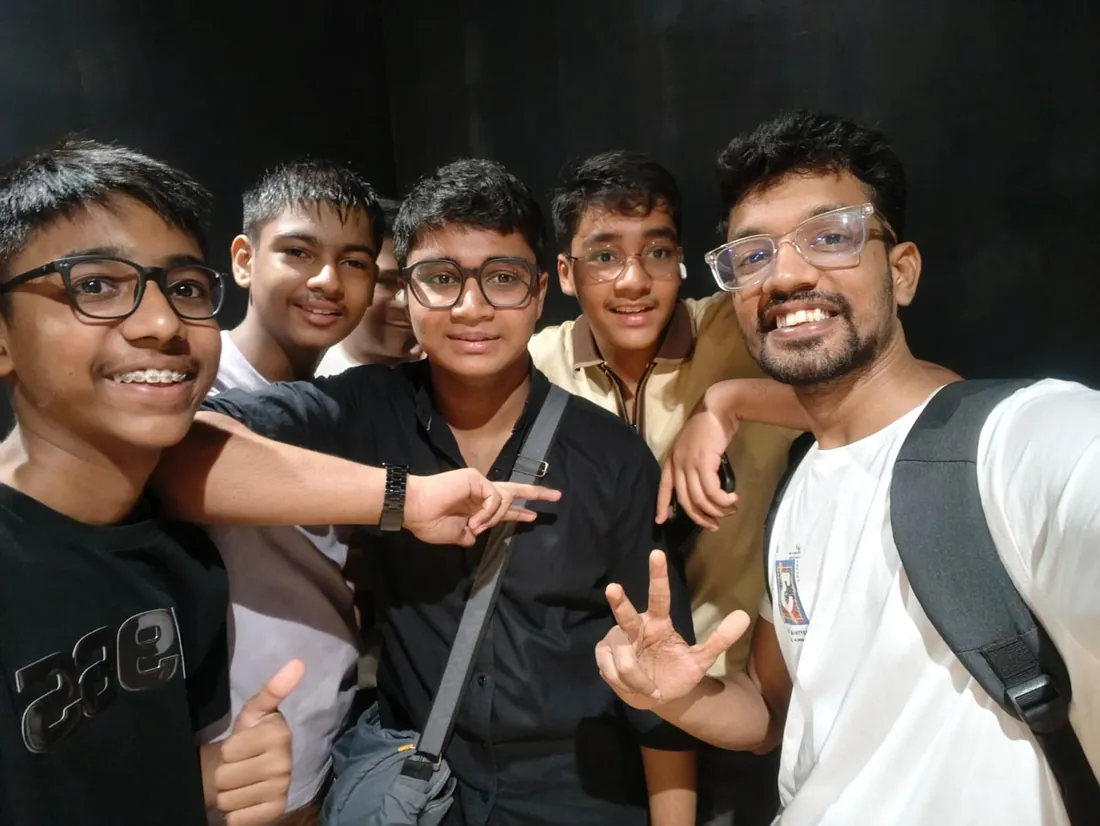
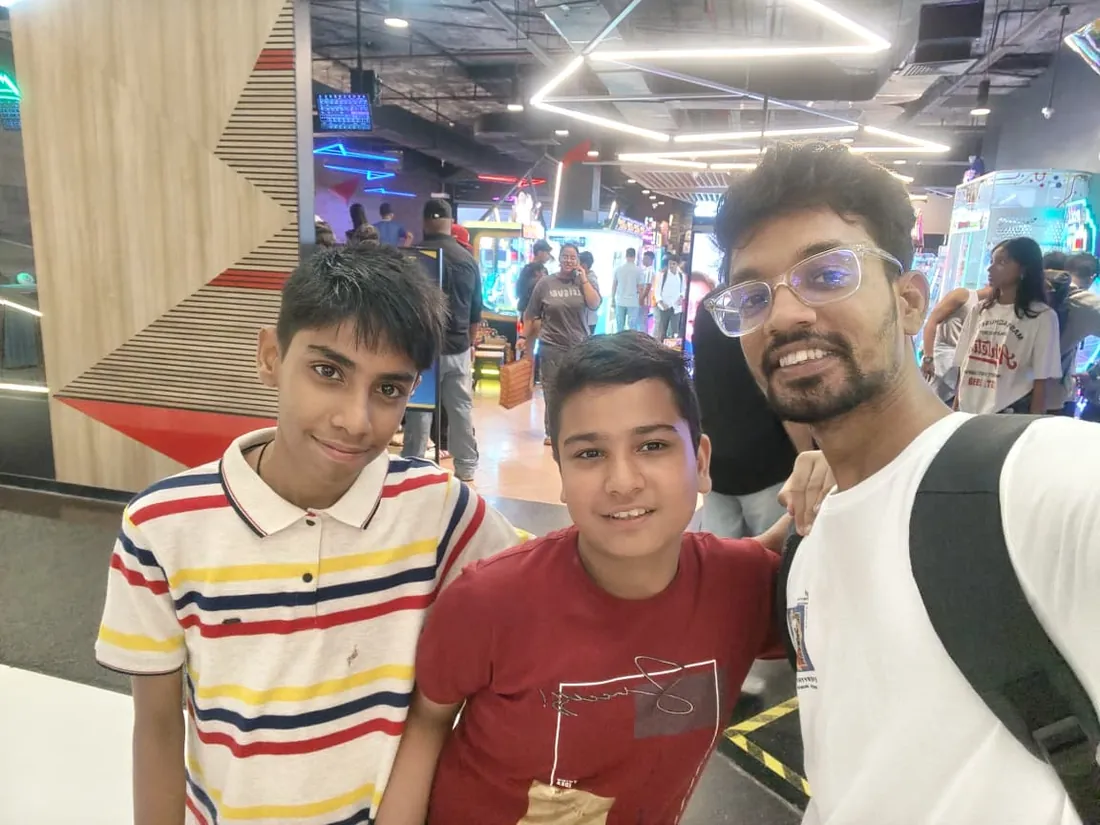
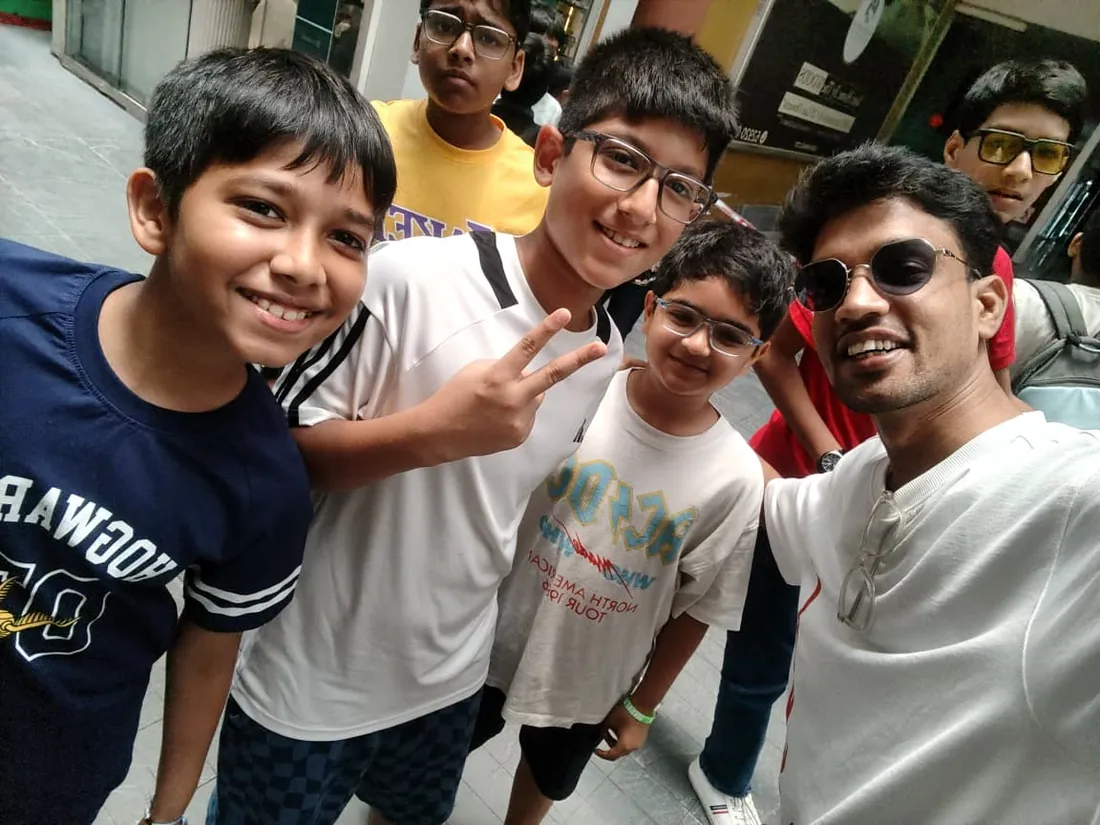
Real students. Real moments. Real joy.
These are our actual student meetups. No stock photos, no filters. Swipe through and meet the community you'll be joining.












What families say
Straight from the parents and students who learn with us. Rated 4.9 across 547 Google reviews.
“Mivaan enjoys the class. He understands the concepts and completes his tasks with excitement. He started taking interest in coding… truly amazing class.”
“I absolutely love it here! I made new friends and learned important valuable coding skills while having the fun of my life. It's not just coding here, it's outings, bonding and most importantly preparing you for your future. Definitely five stars.”
“What stands out most is how excited my son is before every class. He looks forward to learning, problem-solving, and sharing what he's built. I've noticed a big boost in his confidence!”
“Modern Age Coders has been a game-changer for me! I struggled to grasp IT concepts and coding before joining, but their classes transformed everything. I'm now the topper in my class and can confidently write complex programs with ease.”
“Modern Age Coder have wonderful teachers who teach in a clear, easy and practical way. The teacher boosts students' confidence, keeps them updated with technology, and inspires them to learn without hesitation.”
“The one step solution for my son. Modern Age Coders make learning coding so simple that kids love it.”
“Coding classes here make learning very interesting and conceptual. The teachers teach us in a very easy-to-understand and efficient manner.”
“One of the most wonderful education centres out there. Education is not limited to school syllabus but focuses on skill development. Learning here has been a wonderful journey and still continuing.”
“I highly recommend this computer coding class! The teachers are incredibly knowledgeable and passionate about coding. They make every session engaging and insightful.”
“My child Dhairya is really enjoying the Modern Age Coder IT classes. This is his first online class, and he eagerly looks forward to it.”
“Very good classes. Don't worry about coding. They teach the best, especially Shivam sir.”
“Very good classes. Makes learning very easy and interactive.”
Hear it from our students
Real parents and students in their own words, on our public YouTube channel.
Straight answers about Informatics Practices (IP) Class 11-12: CBSE Python & SQL
- Who should take this course?
- Class 11 Beginner to Class 12 Board Exam Ready. It suits students starting ip in class 11 who want clear fundamentals in python and sql from the first chapter; students facing boards in the 2026-27 session who need complete code 065 coverage plus intensive exam practice; students who find series, dataframes, loc and iloc, and boolean indexing confusing and want them taught step by step with real data.
- What will they learn and build?
- Informatics Practices (IP, Code 065) is the perfect subject for students interested in data science, business analytics, and technology applications. Unlike Computer Science (Code 083) which dives deep into programming logic and data structures, IP focuses on practical data handling using Python's Pandas library, stunning data visualization with Matplotlib, and powerful SQL database querying.
- How deeply are topics covered?
- The course runs 24 months (Class 11 + Class 12, the full 2-year board cycle), joinable any month at 6-8 hours/week (3-4 classes + self-practice), across 4 phases listed week by week in the syllabus below. A structured, well-paced curriculum taught step by step, with hands-on practice in every session.
- Who teaches it?
- Modern Age Coders mentors, who teach the live classes themselves. You can watch them at work in the free class recordings before you decide.
- How do practice, feedback and assessment work?
- Chapter tests, mixed revision, and board-pattern mocks with a documented score progression: real preparation, really measured. Doubt support between classes over WhatsApp, so you are never left stuck. A course-completion certificate you can share.
- What does it cost?
- Three monthly plans: a group batch, a mini batch and 1-on-1. Prices are shown in your currency in the plans section. Monthly billing, cancel any time.
- When can classes take place?
- Live classes are scheduled around your week. Group batches meet at a fixed weekly slot; 1-on-1 students choose their own. International students are scheduled in their own timezone. Ask on WhatsApp for the current slots.
- Can I watch the teaching before deciding?
- Yes. Full recordings of real 13 and up classes are free to watch, free with a Google sign-in. These recordings show how we teach, not the exact syllabus of this course. Some classes are in English and some in Hindi; everyone follows at their own pace. Watch a class end to end, like you are in it. Sessions are interactive and each moment builds on the last.
- Can I enroll without a live demo?
- Yes. Choose a plan on this page and enroll directly; a booking or a demo is not required. A free live demo is optional, for anyone who wants to meet a mentor first. Outside India, our team confirms the plan and completes payment with you over WhatsApp, so allow a little time for that step.
Common Questions About Informatics Practices (IP) Class 11-12: CBSE Python & SQL
Get answers to the most common questions about this comprehensive program
Still have questions? We're here to help!
Contact UsRelated Courses You May Like
Continue your learning journey with these recommended programs
 Elementary Mathematics
Mental Maths for Kids: Number Sense, Not Tricks (Ages 5-10)
Live mental maths course for kids ages 5-10: number bonds, decomposition and estimation build real n...
Explore Course IB Diploma Computer Science
IB DP Computer Science (New Guide, First Assessment 2027)
Live online IB Diploma Computer Science classes for the new guide: both themes, the case study in Pa...
Explore CourseRelated Articles & Guides
Deepen your knowledge with these hand-picked articles
 Programming
11 min read
Programming
11 min read
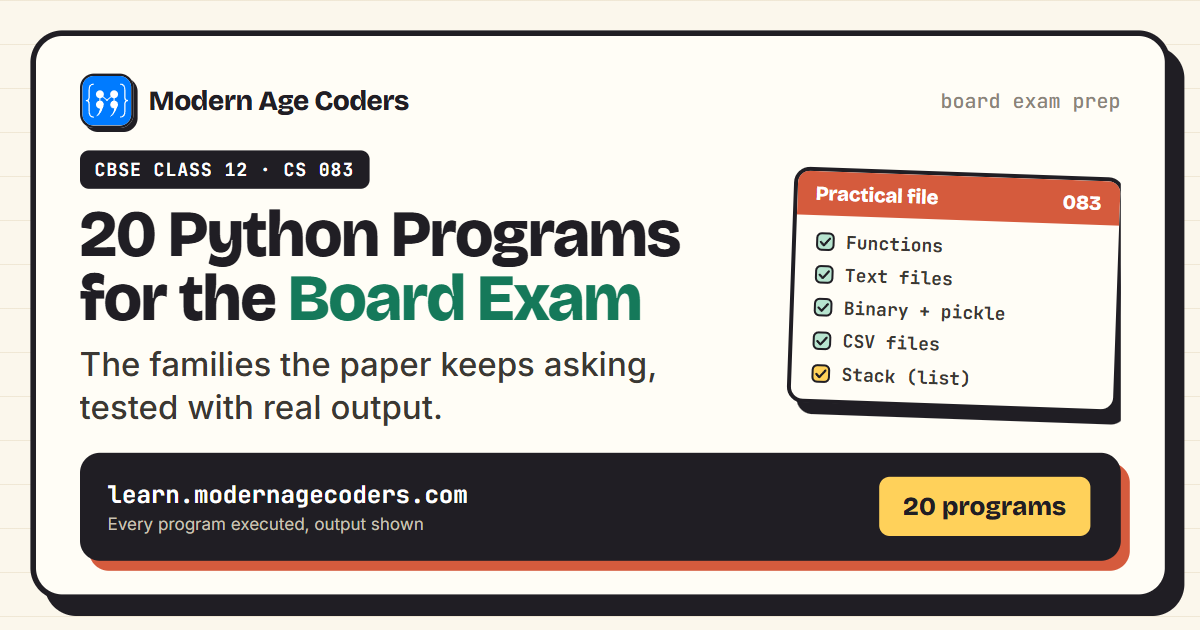
20 Python Programs for CBSE Class 12 Board Exam (083)
20 Python programs for the CBSE Class 12 Computer Science board exam: functions, text, binary and CS...
Read Article Mathematics
18 min read
Mathematics
18 min read
Best Online CBSE Maths Tuition for Class 6-12 in India (2026 Guide)
Find the best online CBSE maths tuition for Class 6 to 12 in India. Live 1:1 classes, expert tutors,...
Read ArticleReady to start Informatics Practices (IP) Class 11-12: CBSE Python & SQL?
Book a free demo class to meet your mentor and see how we teach, with no commitment. Or enrol now and start this week.