A Level Computer Science for AQA 7517 and OCR H446
Two boards, one discipline: write real Python, explain the theory in the words examiners mark, and run your own project with a method you understand.
Syllabus updated October 2026
Questions? WhatsApp +91 91233 66161 or email connect@modernagecoders.com
Recordings are free with a Google sign-in. These recordings show how we teach, not the exact syllabus of this course.
Fees and enrolment
How to join A Level Computer Science for AQA 7517 and OCR H446
Choose how you want to pay, pick a plan and press Enrol. We then fix your class timing with you.
Rated 4.9 across 547 Google reviews.
How would you like to pay?
Pay once for 6 months and save 20%. Same live classes, same mentor, a lower price for every session.
Group Classes
6 months · 48 sessions
One payment for all 6 months
- Paying monthly
₹1,499 × 6 months = ₹8,994- You save
- ₹1,795 (20%)
- Per session
- ₹150
₹187
2 sessions a week · 15 to 20 students
Stop early? Every session you have not taken is refunded at ₹150. Refund policy
Enrol for 6 monthsMini Batch
6 months · 48 sessions
One payment for all 6 months
- Paying monthly
₹2,999 × 6 months = ₹17,994- You save
- ₹3,595 (20%)
- Per session
- ₹300
₹375
2 sessions a week · Up to 6 students
Stop early? Every session you have not taken is refunded at ₹300. Refund policy
Enrol for 6 monthsHow your 6-month price works
- Sessions
- 24 one-to-one sessions over 6 months, fully flexible timing
- Price per session
- ₹1,000 instead of
₹1,250 - Your 6-month fee
- ₹1,000 × 24 sessions = ₹24,000
- Paying monthly instead
₹4,999 × 6 months = ₹29,994- You save
- ₹5,994 (20%)
Everything in the monthly 1-on-1 plan is included: your own mentor, flexible timing, personal dashboard, class recordings, progress reports and parent-teacher meetings.
Stop early? Every session you have not taken is refunded at ₹1,000. Refund policy
Pay once for 6 months and save 25%. Same live classes, same mentor, a lower price for every session.
Group Classes
6 months · 48 sessions
One payment for all 6 months
- Paying monthly
$100 × 6 months = $600- You save
- $151 (25%)
- Per session
- $9.35
$12.50
2 sessions a week · 15 to 20 students
Stop early? Every session you have not taken is refunded at $9.35. Refund policy
Enrol for 6 monthsHow your 6-month price works
- Sessions
- 48 one-to-one sessions over 6 months, 2 sessions a week
- Price per session
- $14 instead of
$18.75 - Your 6-month fee
- $14 × 48 sessions = $672
- Paying monthly instead
$150 × 6 months = $900- You save
- $228 (25%)
Everything in the monthly 1-on-1 plan is included: your own mentor, flexible timing, personal dashboard, class recordings, progress reports and parent-teacher meetings.
Stop early? Every session you have not taken is refunded at $14. Refund policy
Pay once for 6 months and save 25%. Same live classes, same mentor, a lower price for every session.
Group Classes
6 months · 48 sessions
One payment for all 6 months
- Paying monthly
$140 × 6 months = $840- You save
- $211 (25%)
- Per session
- $13.10
$17.50
2 sessions a week · 15 to 20 students
Stop early? Every session you have not taken is refunded at $13.10. Refund policy
Enrol for 6 monthsHow your 6-month price works
- Sessions
- 48 one-to-one sessions over 6 months, 2 sessions a week
- Price per session
- $19.60 instead of
$26.25 - Your 6-month fee
- $941
- Paying monthly instead
$210 × 6 months = $1,260- You save
- $319 (25%)
Everything in the monthly 1-on-1 plan is included: your own mentor, flexible timing, personal dashboard, class recordings, progress reports and parent-teacher meetings.
Stop early? Every session you have not taken is refunded at $19.60. Refund policy
How enrolment works
Pick a plan
Group (15 to 20 students), Mini Batch (up to 6, India only) or 1-on-1 with your own mentor. Pay monthly, or for 6 months at once and save.
Press Enrol and pay
Fill in the student's name, email and phone, then pay securely: UPI, cards or net banking in India, or a debit or credit card from any other country.
Fix your class timing
After paying, WhatsApp or call +91 91233 66161 with the student's name and your preferred time. We confirm the batch or 1-on-1 slot and send the class link.
Start learning
Join your first live class at the time you chose. Your mentor takes it from there.
Want to see a class first? Book a Priority Demo: a live class of about 45 to 60 minutes with a mentor reserved for you. If you enrol, the demo fee is adjusted against your first month's fee. Share your demo Order ID with us on WhatsApp and we take it off.
Pay monthly and cancel any time, or pay for 6 months at once and save. Stop a 6-month plan early and every session left is refunded.
International Students (Outside India)
Billed monthly in US dollars, the same price in every country. Contact us with any questions.
Questions before you enrol? Talk to our team.
Ask about class timings, the right level for your child, what they need to know already, or payment. Parents and adult learners can reach us on WhatsApp, by email or by phone.
Our promise
The world's best learning experience, open to everyone.
- World-class instructorsEvery class is taught by an instructor who specialises in that exact field.
- No compromise on qualityEvery lesson, project and piece of feedback is held to the highest standard.
- Education for everyoneLearners aged 6 to 67, from first-time beginners to working professionals, in 25+ countries.
If you want the highest quality, Modern Age Coders is the right choice.
Book a Priority DemoHow long this course takes
This course runs 9 months (36 weeks) covering the two-year content, joinable any month and paced to the student's year and board at 2 live classes/week + weekly Python programming, written exam questions and a monthly timed paper. The range allows for background and pace: a complete beginner uses the full span, and a student with prior knowledge finishes sooner. The syllabus below is planned to the shorter end, with margin kept for revision.
For personalised duration planning, call +91 91233 66161 and we'll map a schedule to your goals.
At a glance
- Who it is for
- Year 12 and Year 13 students (roughly ages 16 to 18) on AQA 7517 or OCR H446; GCSE Computer Science helps but is not required. Age: Roughly 16 to 18, in Year 12 or Year 13 on AQA 7517 or OCR H446.
- Prerequisites
- None required to start; the first month rebuilds Python from the beginning. Any GCSE Computer Science or prior coding helps
- Format
- Live, interactive classes with a real teacher, never pre-recorded videos. Live classes run about one hour.
- Language
- English or Hindi, depending on the batch.
- Duration
- 9 months (36 weeks) covering the two-year content, joinable any month and paced to the student's year and board
- Weekly commitment
- 2 live classes/week + weekly Python programming, written exam questions and a monthly timed paper
- Class size
- Group batches of 15 to 20 students, mini batches of up to 6, or 1-on-1.
- Certificate
- Certificate from Modern Age Coders, awarded on passing the final assessment (this is not an AQA or OCR qualification or result)
- Watch first
- Free recordings of real classes for ages 13 and up, free with a Google sign-in. These recordings show how we teach, not the exact syllabus of this course.
- Live demo
- Optional. Enrol directly on this page, or book a Priority Demo: a full live class of about 45 to 60 minutes with a mentor reserved for you.
- Questions
- WhatsApp +91 91233 66161 or email connect@modernagecoders.com.
How we teach
Deep understanding. Real projects. Expert guidance.
Learn coding, AI and maths through careful explanations, practical demonstrations, and hands-on problem-solving. Our instructors guide you from the foundations to advanced ideas, helping you understand what happens, why it happens, and how to build it yourself.
You will explore concepts step by step, write and improve code, investigate mistakes, ask questions, and apply your knowledge to meaningful projects. Lessons are designed around active participation, thoughtful feedback, and growing independence.
Expert-led live teaching, with practical participation built into every lesson.
- Students explain their thinking.
- Instructors demonstrate, then guide practice.
- Learners code, solve, or build during lessons.
- Questions and misconceptions get attention.
- Assignments receive useful feedback.
- Progress is checked before advancing.
Program Overview
Two English exam boards set most A Level Computer Science entries, and they examine the same subject in different shapes. AQA's A Level 7517 has two exams worth 40% each and a project worth 20%. AQA's Paper 1 is an "On-screen exam: 2 hours 30 minutes" in which "Students answer a series of short questions and write/adapt/extend programs in an Electronic Answer Document", and AQA says it will "issue Preliminary Material, a Skeleton Program (available in each of the Programming Languages) and, where appropriate, test data, for use in the exam." AQA's Paper 2 is a "Written exam: 2 hours 30 minutes" of "Compulsory short-answer and extended-answer questions." AQA's entry options for the A Level are C# (7517A), Java (7517B), Python (7517D) and VB.Net (7517E).
OCR's A Level H446 (OCR now calls itself Cambridge OCR: "As of September 2025, our name is Cambridge OCR.") also has two exams. Computer systems (01) and Algorithms and programming (02) are each a 140-mark, 2 hours and 30 minutes written paper with "no calculators allowed", and each is 40% of the A Level. The Programming project (03 or 04) is non-exam assessment worth 70 marks and 20%. Python is first on OCR's list of programming languages it will accept for the project.
This course teaches the content of both boards in Python, split into the two kinds of thinking the exams test: the programming and algorithms that AQA's Paper 1 and OCR's Paper 02 reward, and the systems theory that AQA's Paper 2 and OCR's Paper 01 reward. Each student works in a batch matched to their board, and every timed paper uses our own original questions written in that board's style. Students practise with the board's free past papers on the board's own website; we never copy board papers or mark schemes into our materials.
The NEA project is the student's own work. AQA asks teachers to sign that "the work is solely that of the student concerned", and OCR's specification says "Students are not allowed help from anyone else. This includes: teachers, parents/carers and other students". So we teach the method on our own practice projects (analysis, design, iterative development, testing and evaluation), and we never write, edit, review or comment on any part of a student's actual NEA. We are independent of AQA and OCR, and we make no promise of grades or university offers.
What Makes This Program Different
- Board-matched batches: AQA 7517 students and OCR H446 students are taught the same ideas in the shape their own papers ask for
- Python throughout, the language both boards offer, with real programs written and tested by the student every week
- Skeleton-program practice for AQA Paper 1: reading, adapting and extending a large unfamiliar program under time, using our own practice programs
- Written-answer craft for the theory papers: precise definitions, comparisons and extended answers taught as a skill
- NEA method taught on practice projects only, so the student's real project stays entirely their own, as both boards require
- A timed paper of original questions every month, marked with written feedback, plus the boards' free past papers worked on the boards' sites
Your Learning Journey
Career Progression
Detailed Course Curriculum
Explore the complete week-by-week breakdown of what you'll learn in this comprehensive program.
Topics Covered
- AQA 7517 and OCR H446 side by side: which paper tests programming, which tests theory, and how the project fits
- A short diagnostic in Python and theory to set each student's starting point
- Variables, data types, input and output, and why type matters
- Selection and iteration written cleanly, with trace tables to check them
- Subroutines with parameters and return values, and local versus global scope
- Starting a personal code journal and an error log
Projects You Build
- A unit converter with validated input, written as small tested subroutines
Practice & Assignments
Short daily programs plus trace-table exercises of our own design
Topics Covered
- String handling: slicing, searching, character codes and formatting
- Lists and two-dimensional lists, and when a record or dictionary fits better
- Reading and writing text files, and processing them line by line
- Exception handling so a program fails politely instead of crashing
- Random numbers and simple simulations
- Writing pseudocode that matches the board's published style before writing Python
Projects You Build
- A quiz engine that reads its questions from a file and saves scores back
Practice & Assignments
A set of original short-answer programming questions in the board's style
Assessment
Month 1 check: a short timed set of programming and tracing questions
Topics Covered
- Classes, attributes, methods and constructors in Python
- Encapsulation and private attributes, and why they protect a program
- Inheritance and overriding a method
- Polymorphism explained with a working example
- Class diagrams drawn from code and code written from class diagrams
- Aggregation and composition, and how exam questions describe them
Projects You Build
- A small library system with a class hierarchy and a class diagram
Practice & Assignments
Read a short class-based program of our own, then extend it with one new subclass
Topics Covered
- Reading a program you did not write: following the data, not the lines
- Finding where to make a change and testing that nothing else broke
- Recursion: base case, recursive case and the call stack
- Recursive and iterative versions of the same algorithm compared
- Testing with normal, boundary and erroneous data
- Commenting and naming so a marker can follow your code
Projects You Build
- Adapt and extend a 300-line practice program of our own in three requested ways
Practice & Assignments
Recursion tracing problems, each drawn as a call stack
Assessment
Month 2 timed task: a code-reading and extension exercise in the AQA Paper 1 or OCR Paper 02 style
Topics Covered
- Binary, denary and hexadecimal conversions done fast and checked
- Two's complement for negative numbers and binary arithmetic
- Fixed point and floating point representation, normalisation and precision
- Rounding errors, overflow and underflow explained with examples
- Character sets, ASCII and Unicode
- Writing a Python tool that checks your own conversions
Projects You Build
- A base-conversion and two's complement checker in Python
Practice & Assignments
Mixed number-representation questions with full working shown
Topics Covered
- Bitmap and vector graphics, resolution, colour depth and file-size calculations
- Sampling sound: rate, resolution and the size of the file
- Lossy and lossless compression, run-length encoding and dictionary methods
- Encryption basics, and hashing as a different idea
- Logic gates, truth tables and Boolean algebra simplification, including De Morgan's laws
- Karnaugh maps for OCR students and Boolean identities for both boards
Projects You Build
- A run-length encoder and decoder, with a written comparison of compression methods
Practice & Assignments
Boolean simplification problems and file-size calculations of our own design
Assessment
Phase 1 assessment: a mixed timed paper of original questions, programming and theory together
Topics Covered
- Stacks and queues, including circular and priority queues, built from lists
- Linked lists: adding and removing nodes, drawn and coded
- Binary trees and binary search trees, with pre-order, in-order and post-order traversal
- Hash tables, hashing functions and handling collisions
- Graphs: adjacency matrix and adjacency list, and when each is better
- Dictionaries and vectors as AQA describes them
Projects You Build
- Implement a stack, a queue and a binary search tree as Python classes with tests
Practice & Assignments
Draw-then-code exercises: every structure sketched before it is programmed
Topics Covered
- Linear and binary search, written and traced
- Bubble, insertion, merge and quick sort, compared on real data
- Breadth-first and depth-first traversal of a graph
- Dijkstra's shortest path algorithm traced by hand and coded
- A* search for OCR students, and why a heuristic helps
- Big O notation: constant, logarithmic, linear, polynomial and exponential time
Projects You Build
- A sorting race: time four sorts on growing lists and explain the results with Big O
Practice & Assignments
Algorithm tracing questions of our own, timed
Assessment
Month 4 timed paper: algorithms and data structures, original questions
Topics Covered
- Abstraction, decomposition and computational thinking as both boards describe them
- Finite state machines with and without output, drawn and tabulated
- Regular expressions and the languages they describe
- Backus-Naur form and syntax diagrams
- Turing machines and the idea of a universal machine (AQA)
- Tractable, intractable and non-computable problems, and the Halting problem
Projects You Build
- Code a finite state machine in Python that validates a postcode-style pattern
Practice & Assignments
State diagram and regular expression questions with written explanations
Topics Covered
- The processor: ALU, control unit, registers and buses
- The fetch-decode-execute cycle and the registers it uses
- Factors affecting performance: cores, cache and clock speed
- Assembly language, addressing modes and a little machine code
- Operating systems: memory management, scheduling and interrupts
- Translators: compilers, interpreters and assemblers, and the stages of compilation
Projects You Build
- Write and trace a short assembly-style program in an online simulator
Practice & Assignments
Extended-answer questions on the processor, marked for precise vocabulary
Assessment
Month 5 timed paper: computation and architecture, original questions
Topics Covered
- Network topologies, protocols and the TCP/IP stack
- Packet switching, routing, IP addressing and the domain name system
- Network security: firewalls, encryption and common threats
- Client-server and peer-to-peer models
- HTML, CSS and JavaScript at the level OCR's Paper 01 expects
- Search engine indexing and page rank in outline (OCR)
Projects You Build
- A small client-server message program in Python on one machine
Practice & Assignments
Comparison questions: two technologies, three reasoned differences
Topics Covered
- Relational databases, keys, normalisation to third normal form and entity relationship diagrams
- SQL: SELECT, JOIN, INSERT, UPDATE and DELETE, written and tested in Python with sqlite3
- Transactions, ACID and record locking
- Big Data and functional programming in outline for AQA, with map, filter and reduce in Python
- Software development methods: waterfall, agile and the rest the boards name
- Legal, moral, ethical and cultural issues, with UK legislation the boards list
Projects You Build
- Design a normalised database for a club and query it with SQL from Python
Practice & Assignments
SQL writing tasks and a structured ethics essay plan
Assessment
Phase 2 assessment: a full-length timed theory paper of original questions
Topics Covered
- AQA: studying a large practice skeleton program of our own in the days before a mock
- AQA: predicting the kinds of change a question might ask for, then practising them
- AQA: working in an Electronic Answer Document style, pasting code and evidence
- OCR: answering algorithm questions in the pseudocode format OCR publishes, or in Python
- OCR: writing, tracing and correcting code on paper without a computer
- Both: pacing a 2 hours 30 minutes paper
Projects You Build
- A full mock of the programming paper for the student's board, written by us
Practice & Assignments
Two timed code-change exercises per week on practice programs
Topics Covered
- Questions that ask why one algorithm or structure suits a problem better
- Complexity questions answered with a reason, not just a symbol
- Object-oriented design questions: classes, inheritance and diagrams
- Testing questions: choosing test data and explaining its purpose
- Common slips in tracing and how to stop making them
- Reviewing a marked mock and rewriting the weakest answers
Projects You Build
- A personal answer bank: ten of your own corrected answers to hard question types
Practice & Assignments
Board past papers worked on the board's website, reviewed in class against the student's own reasoning
Assessment
Month 7 mock: the programming paper for the student's board, marked with written feedback
Topics Covered
- Reading the command word: state, describe, explain, compare, evaluate
- Planning a long answer in three minutes and writing it in ten
- Using precise technical terms instead of everyday words
- Calculation questions: file sizes, floating point and Boolean simplification
- Linking topics: an answer about networks that uses security and protocols together
- Self-marking against a level-of-response style of our own
Projects You Build
- A set of model extended answers written by the student and improved after feedback
Practice & Assignments
One timed extended answer every class
Topics Covered
- What the boards mark in a project: for AQA, Analysis 9, Documented design 12, Technical solution 42, Testing 8 and Evaluation 4 marks out of 75
- For OCR: Analysis of the problem 10, Design of the solution 15, Developing the solution 25 and Evaluation 20 marks out of 70
- Choosing a problem with enough technical depth, and identifying real users
- Designing in iterations, prototyping early and tackling the hardest part first
- Testing evidence and evaluation against measurable success criteria
- Acknowledging sources and AI use, as JCQ and the boards require, and why only your own work earns marks
Projects You Build
- A small practice project of our own choosing, taken from analysis to evaluation in class, entirely separate from the student's NEA
Practice & Assignments
Write success criteria and a test plan for the practice project
Assessment
Month 8 mock: the theory paper for the student's board, marked with written feedback
Topics Covered
- A full mock of each paper for the student's board, in exam conditions
- Reviewing every lost mark and sorting it into knowledge, method or slip
- Targeted mini-lessons on each student's two weakest topics
- Speed drills on the calculation and tracing questions
- Rewriting the weakest extended answers
- Checking the board's current specification and dates together
Projects You Build
- A personal revision plan based on the mock evidence
Practice & Assignments
Short daily mixed questions across both papers
Topics Covered
- Last review of programming: tracing, recursion, object-oriented design and algorithms
- Last review of theory: architecture, networks, databases and ethics
- Exam-day routine for a 2 hours 30 minutes paper
- University courses in computer science and what they expect
- Contests and projects to keep programming after the exams
- Presenting a favourite program of the year to the class
Projects You Build
- A final portfolio of the student's own practice programs from the year
Practice & Assignments
One last timed mixed paper of original questions
Assessment
Final assessment: a timed mixed paper plus a short conversation about the student's own code
Projects You'll Build
Build a professional portfolio with A year of the student's own Python programs, a practice project with full documentation, an answer bank of corrected exam answers and a mock-paper history for both papers real-world projects.
Weekly Learning Structure
Certification & Recognition
Technologies & Skills You'll Master
Comprehensive coverage of the entire modern web development stack.
Support & Resources
Career Outcomes & Opportunities
Transform your career with industry-ready skills and job placement support.
Prerequisites
Who Is This Course For?
Career Paths After Completion
Course Guarantees
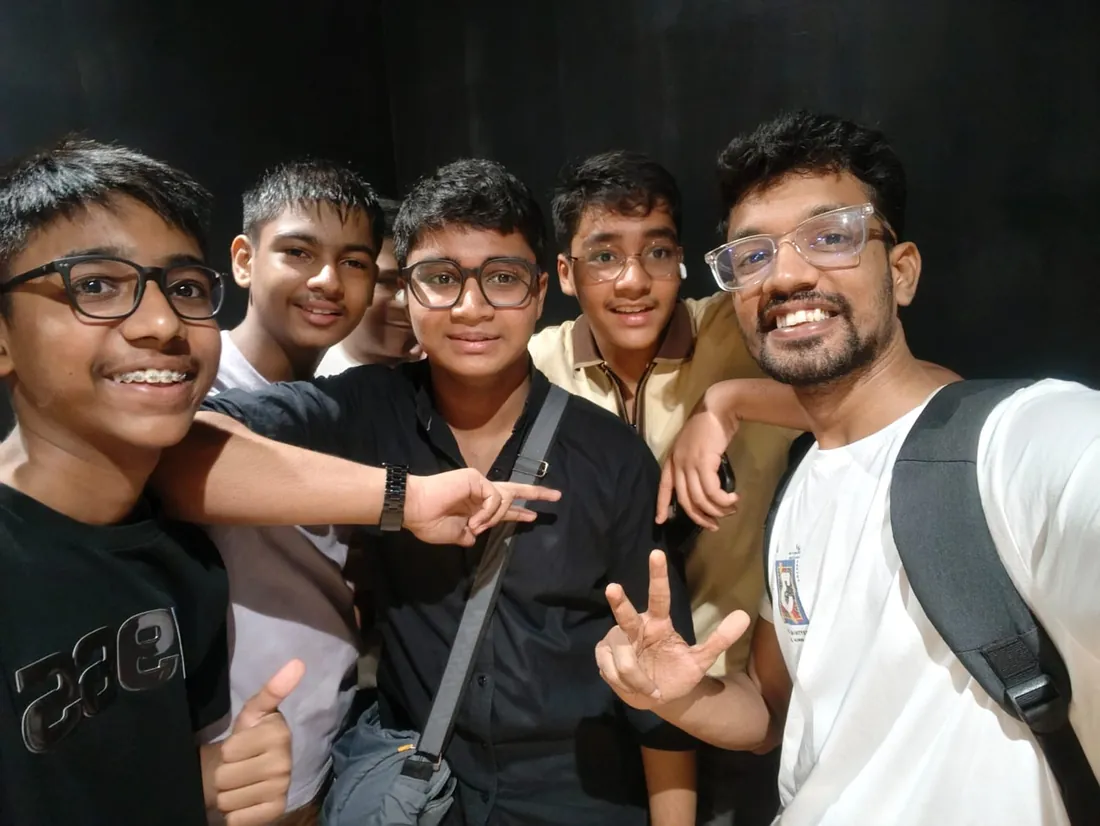
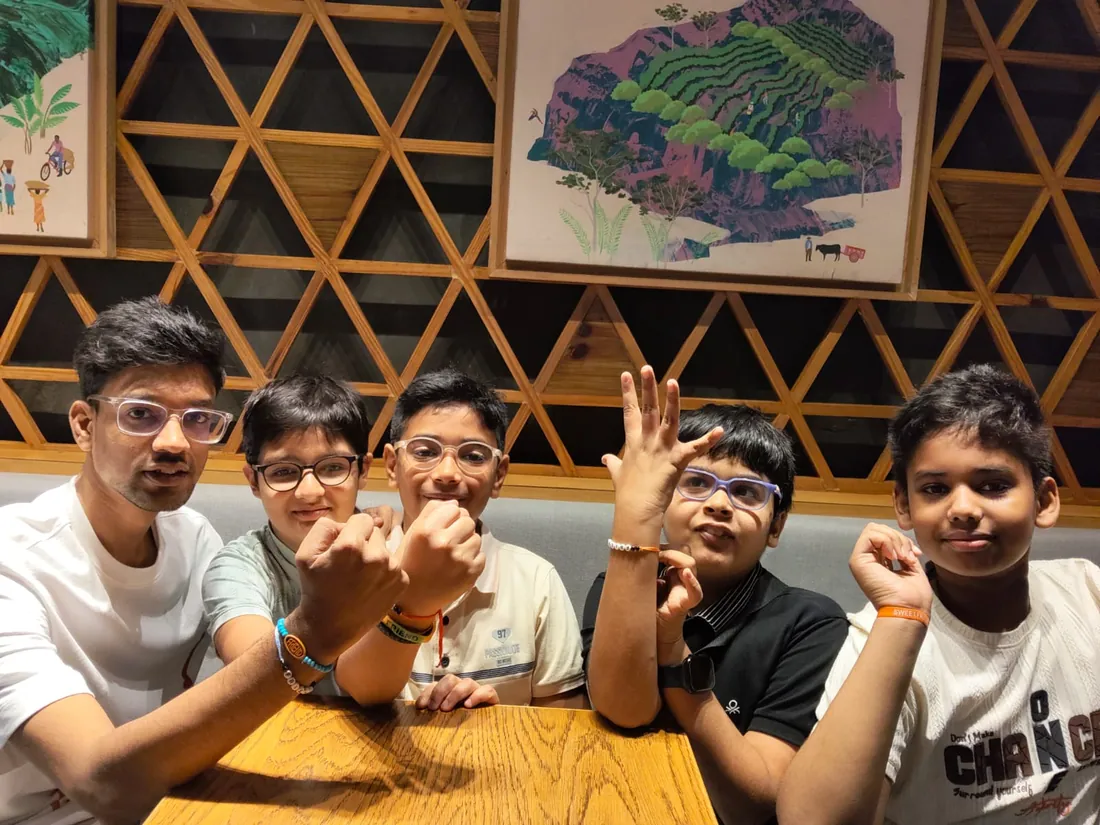
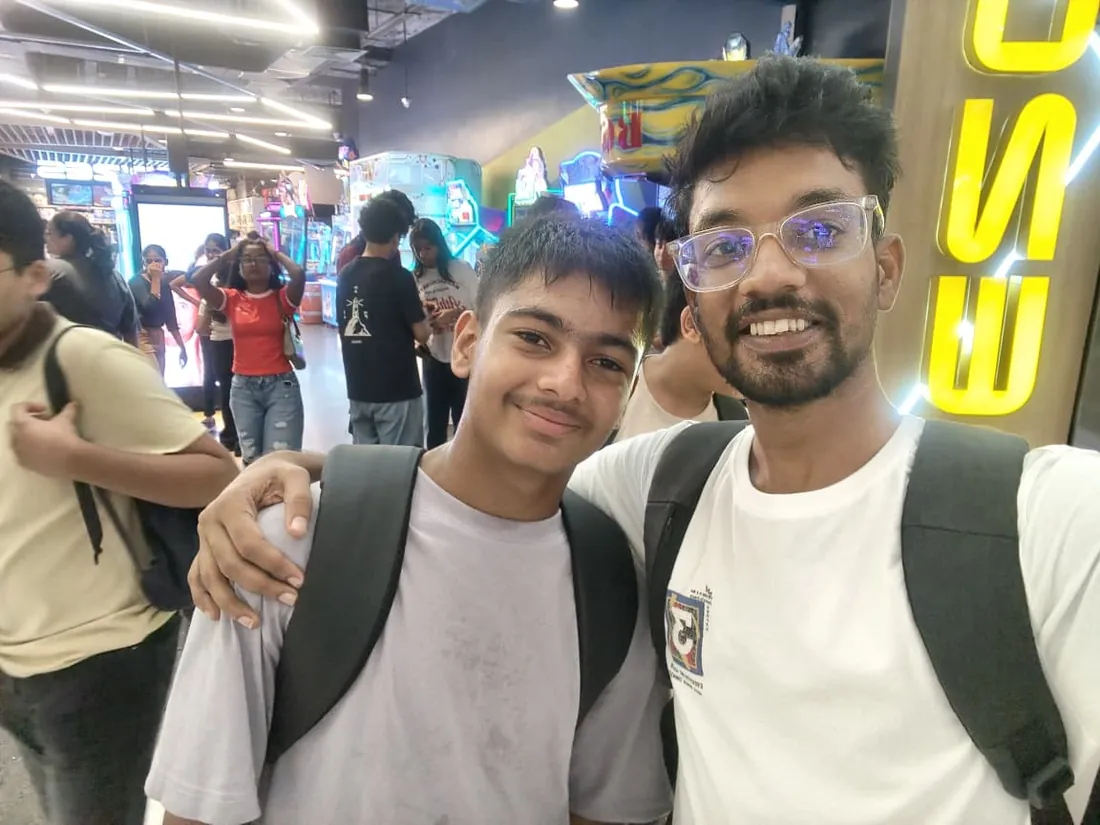
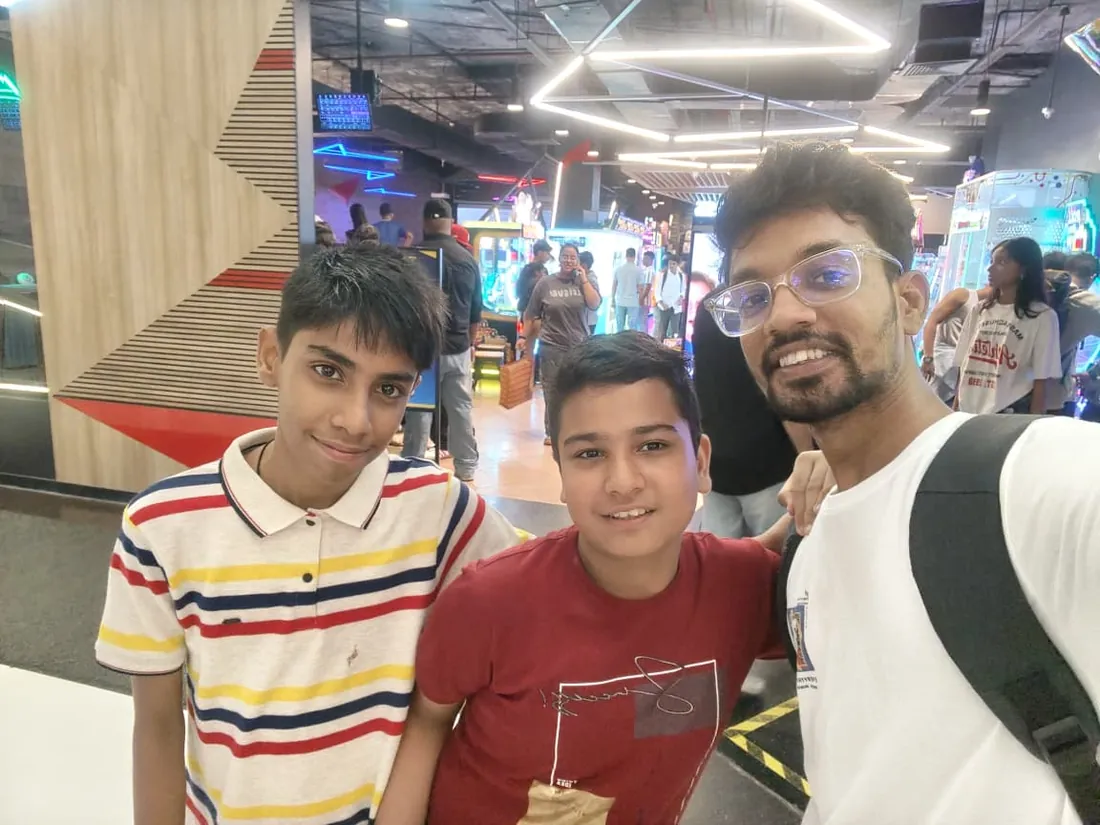
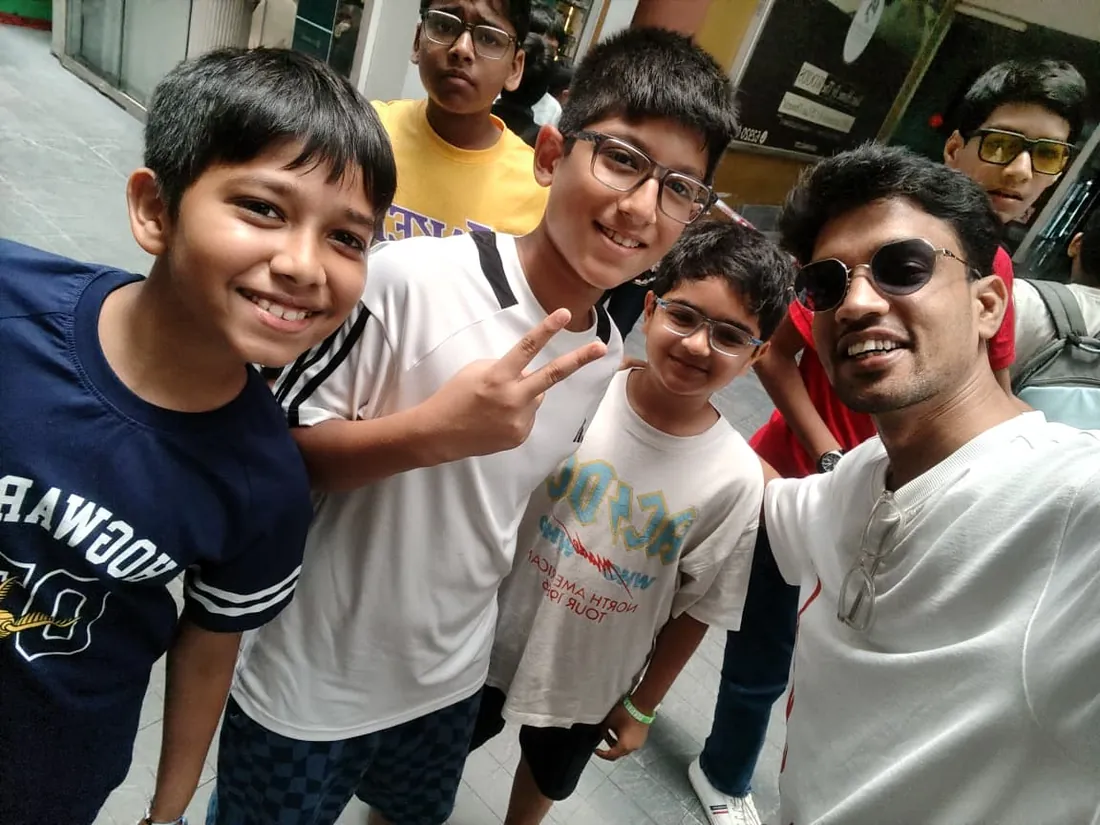
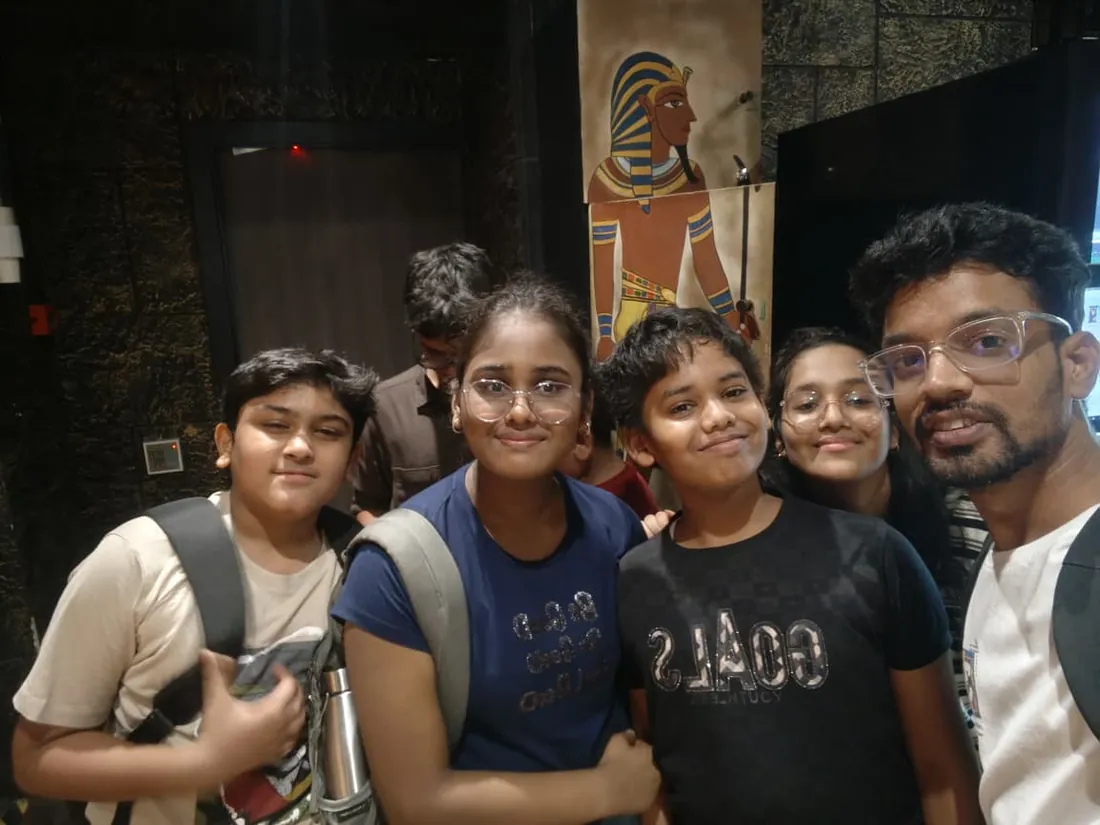
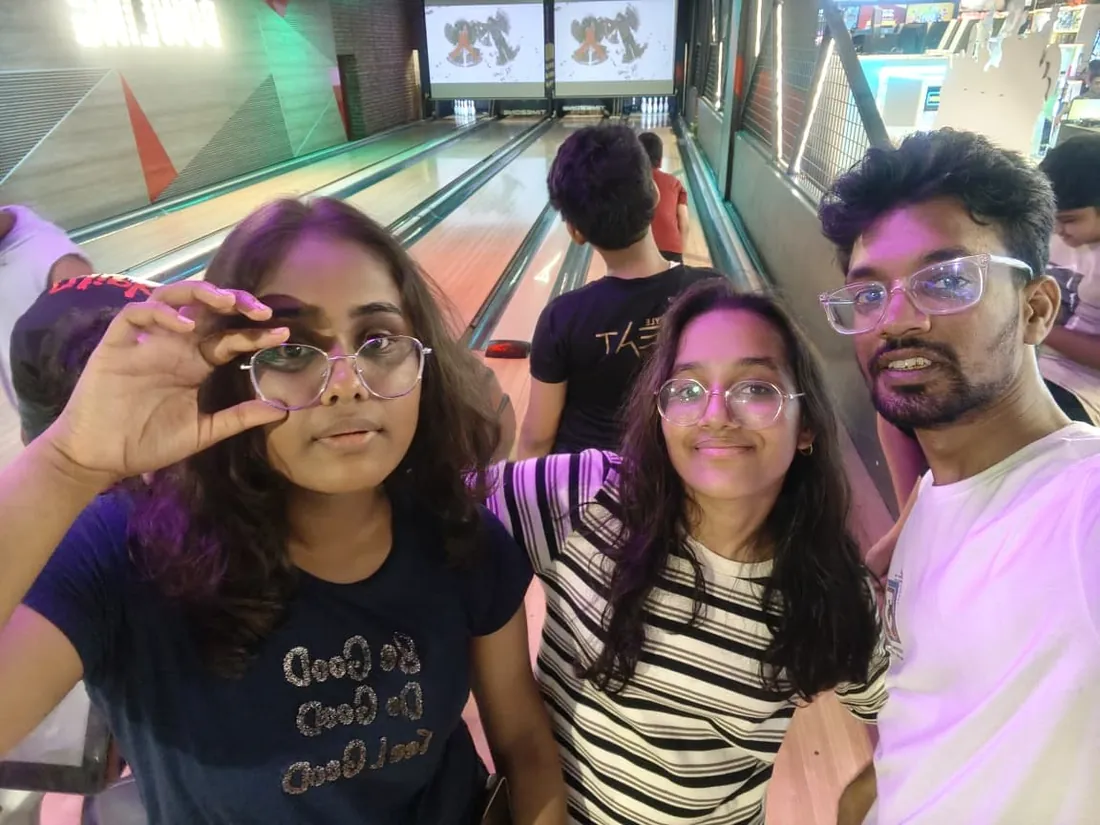
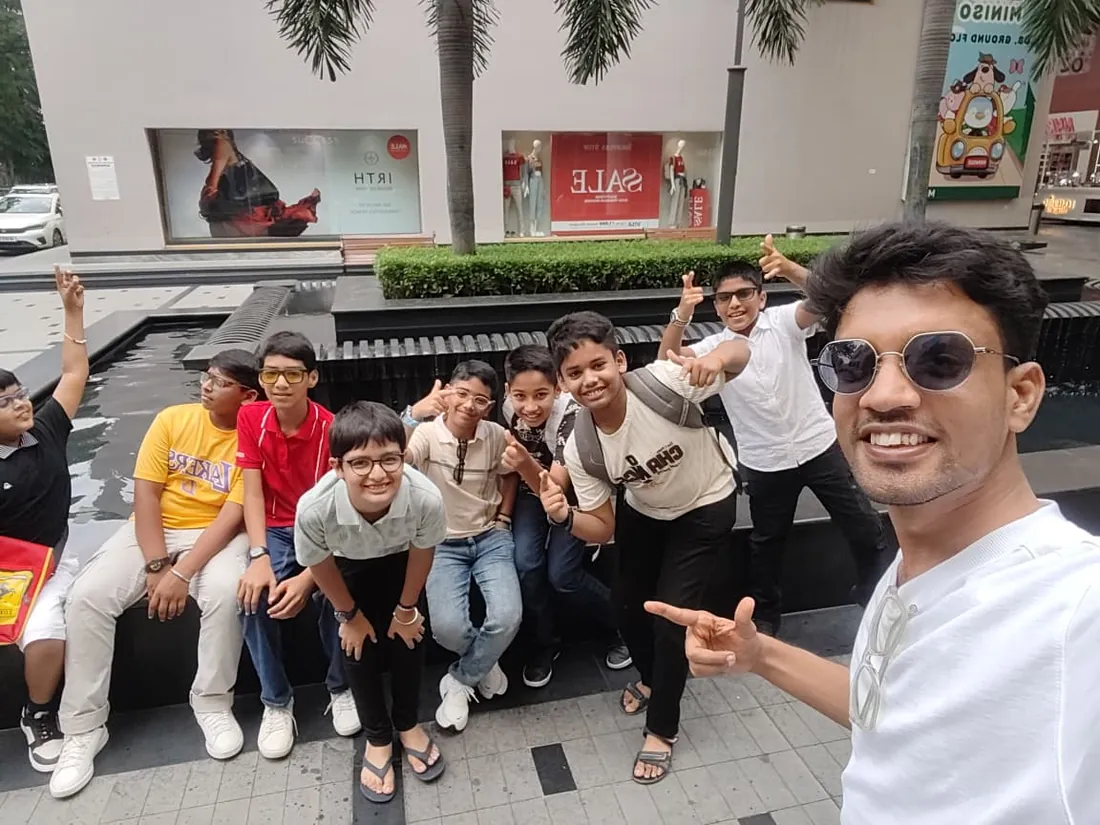
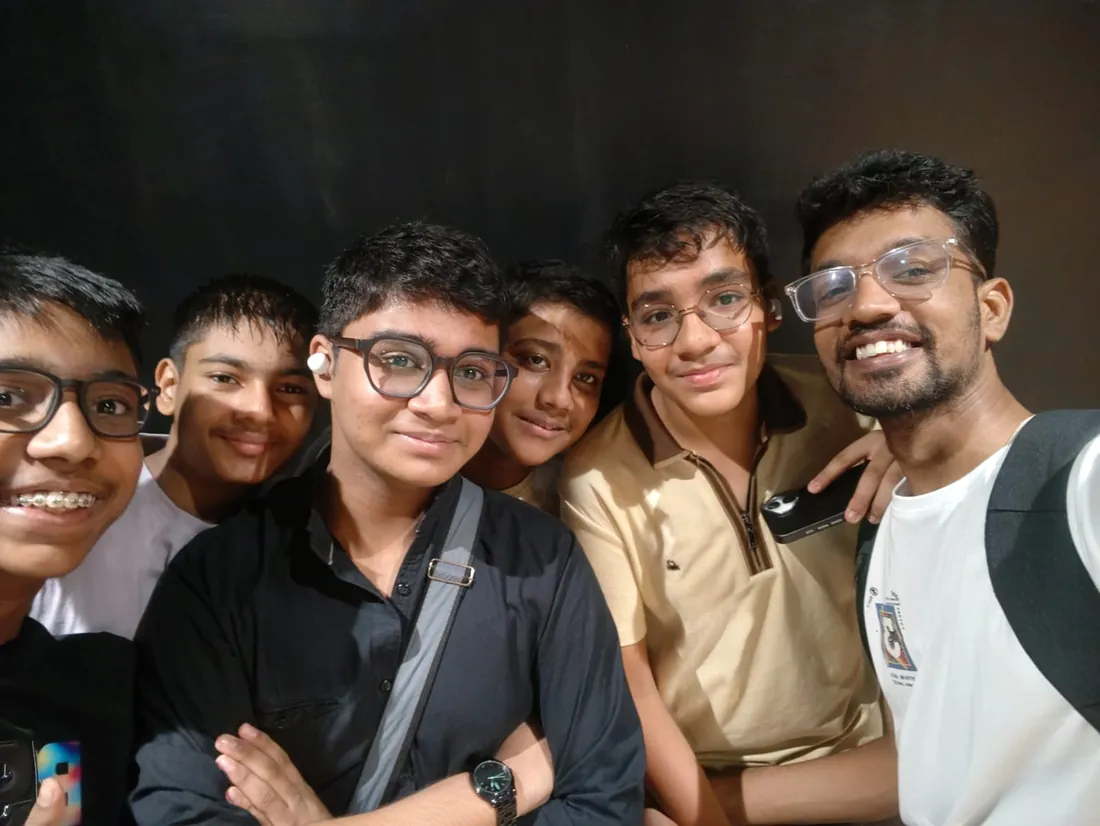
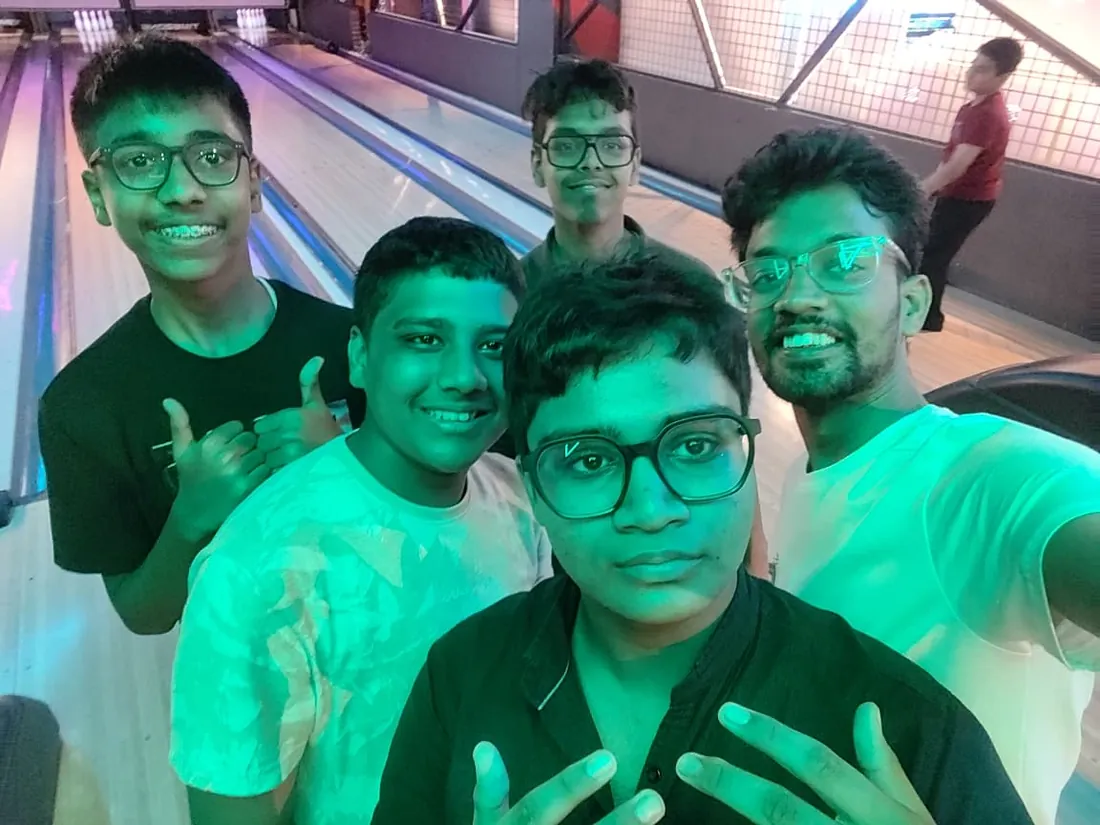
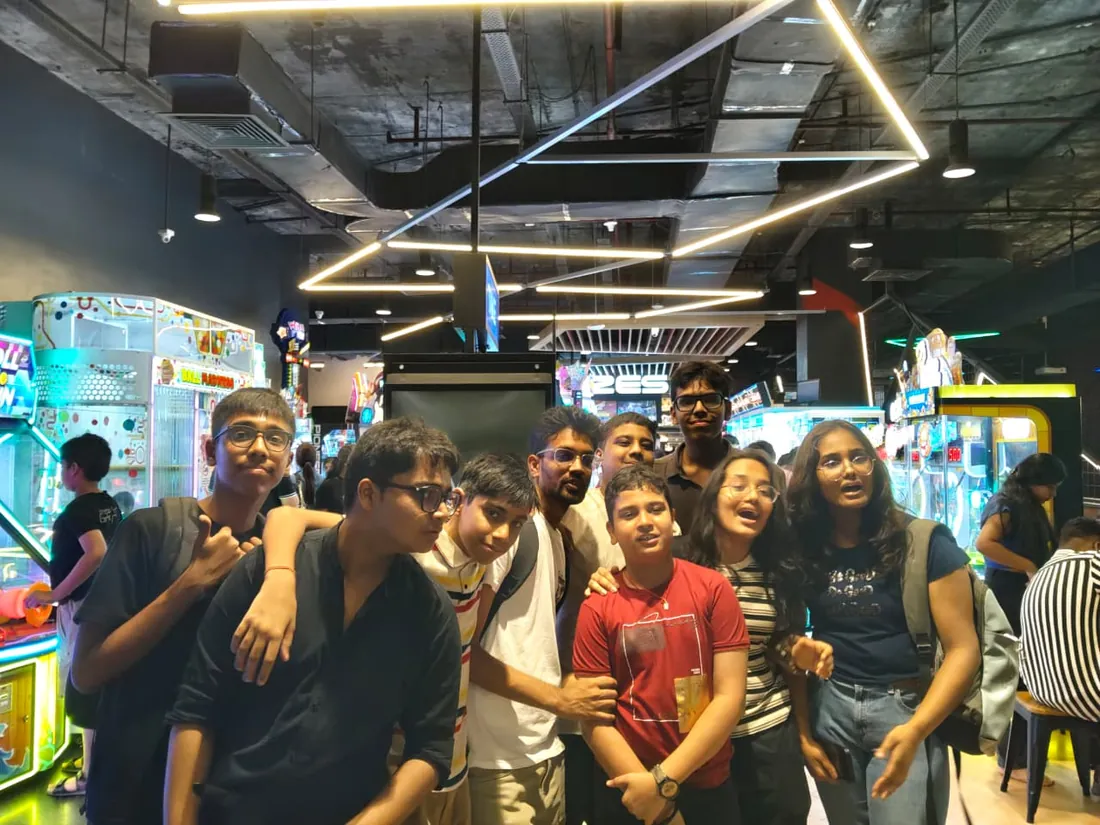
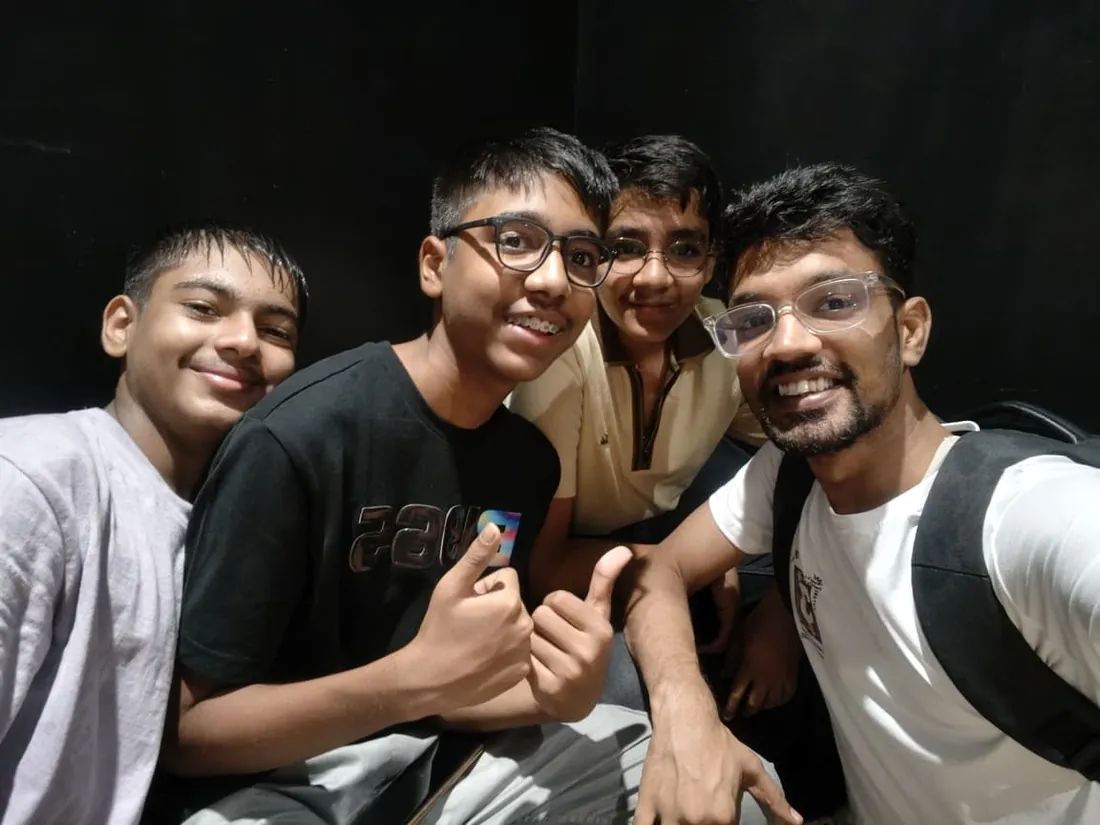
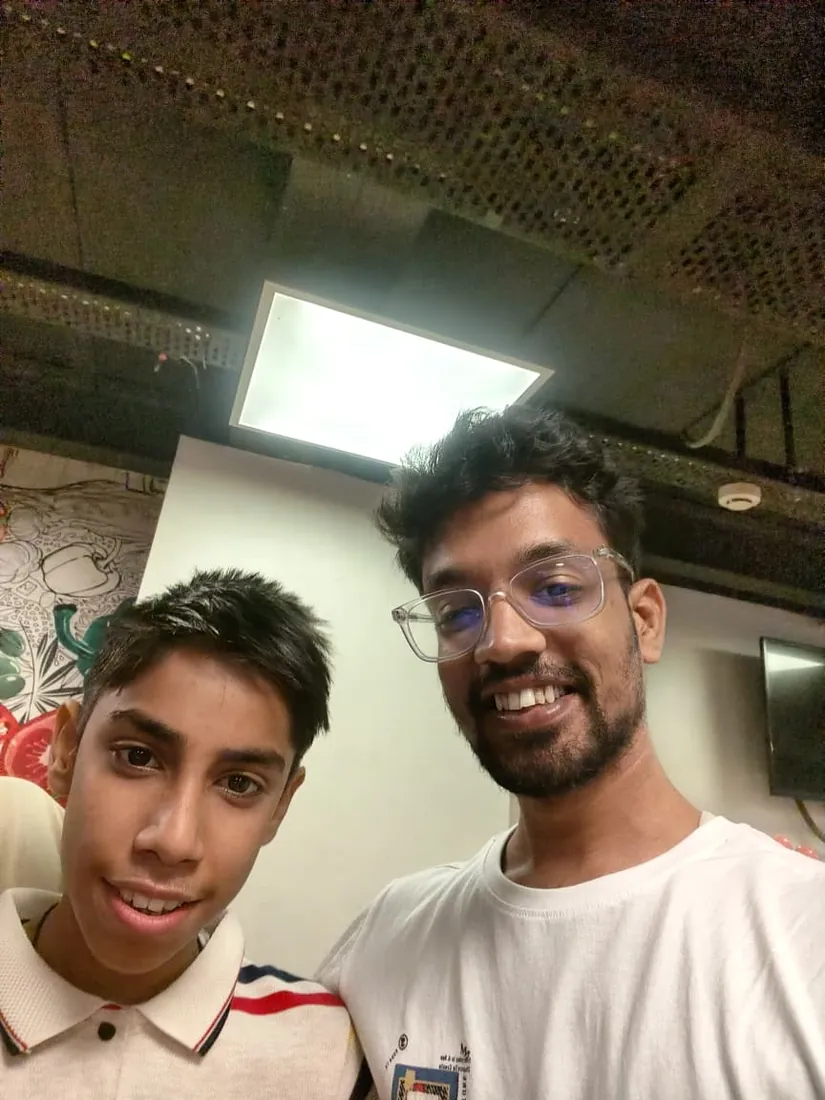
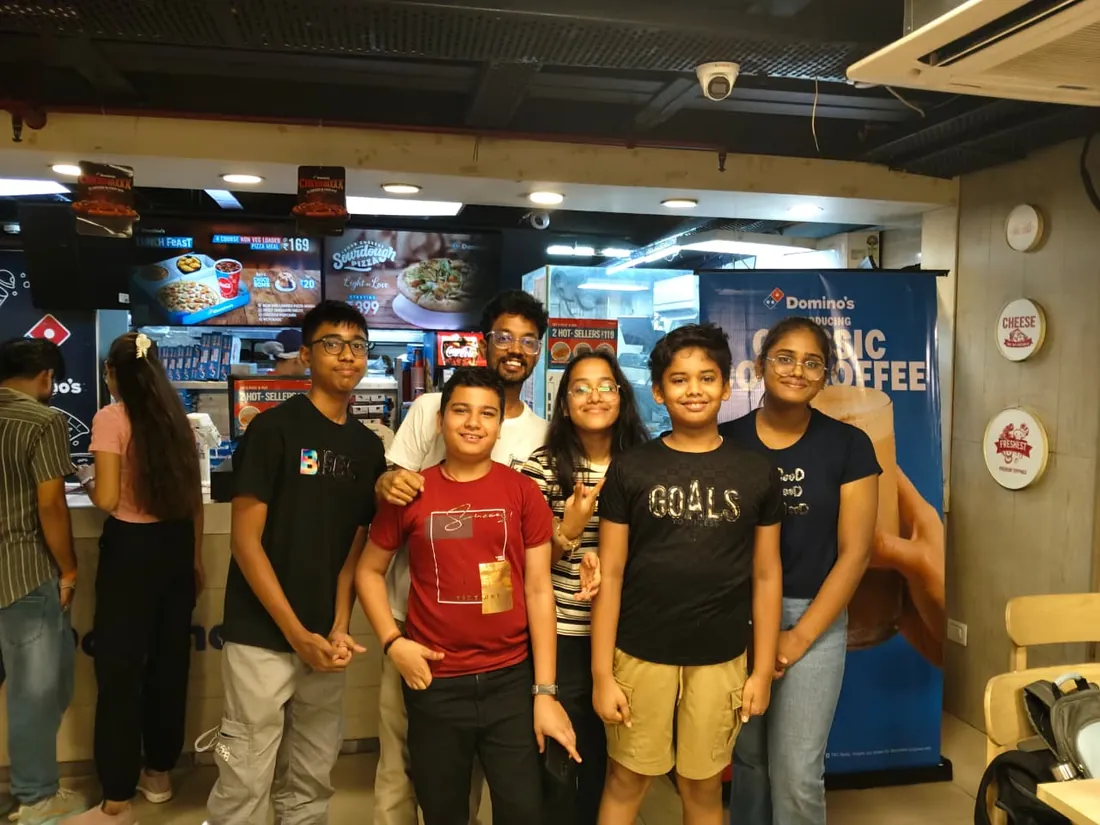
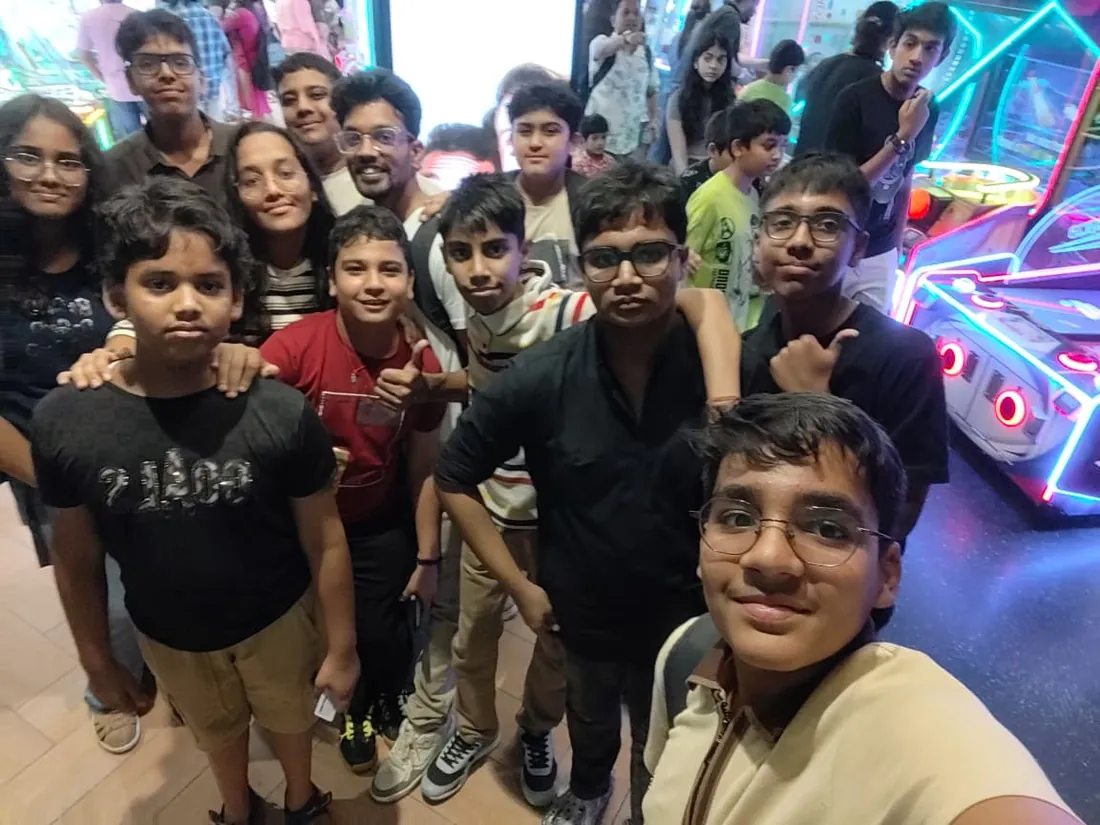
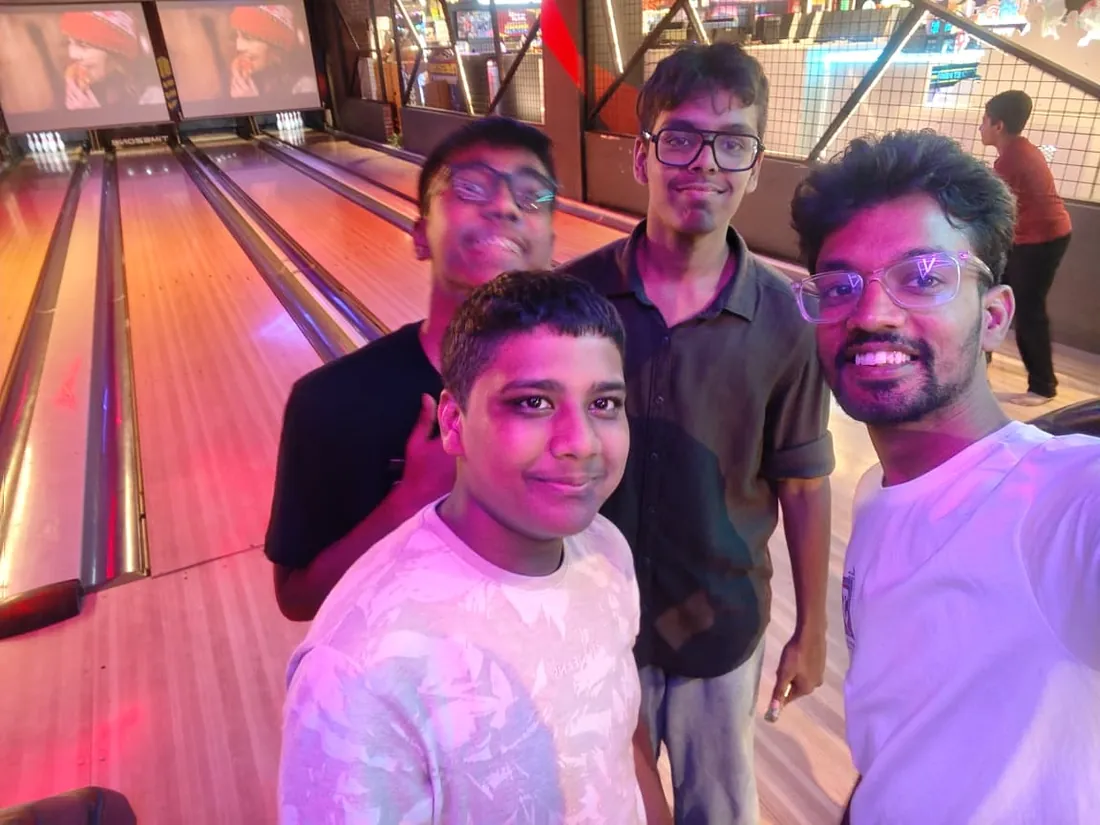
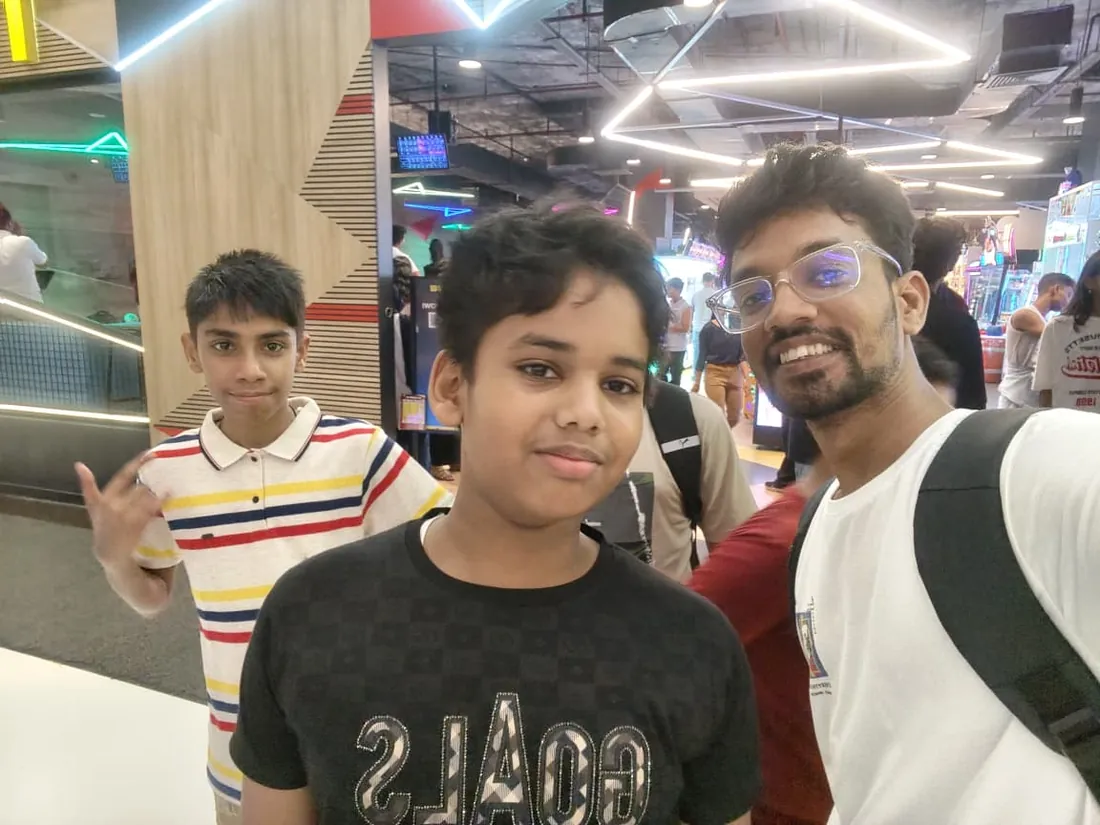
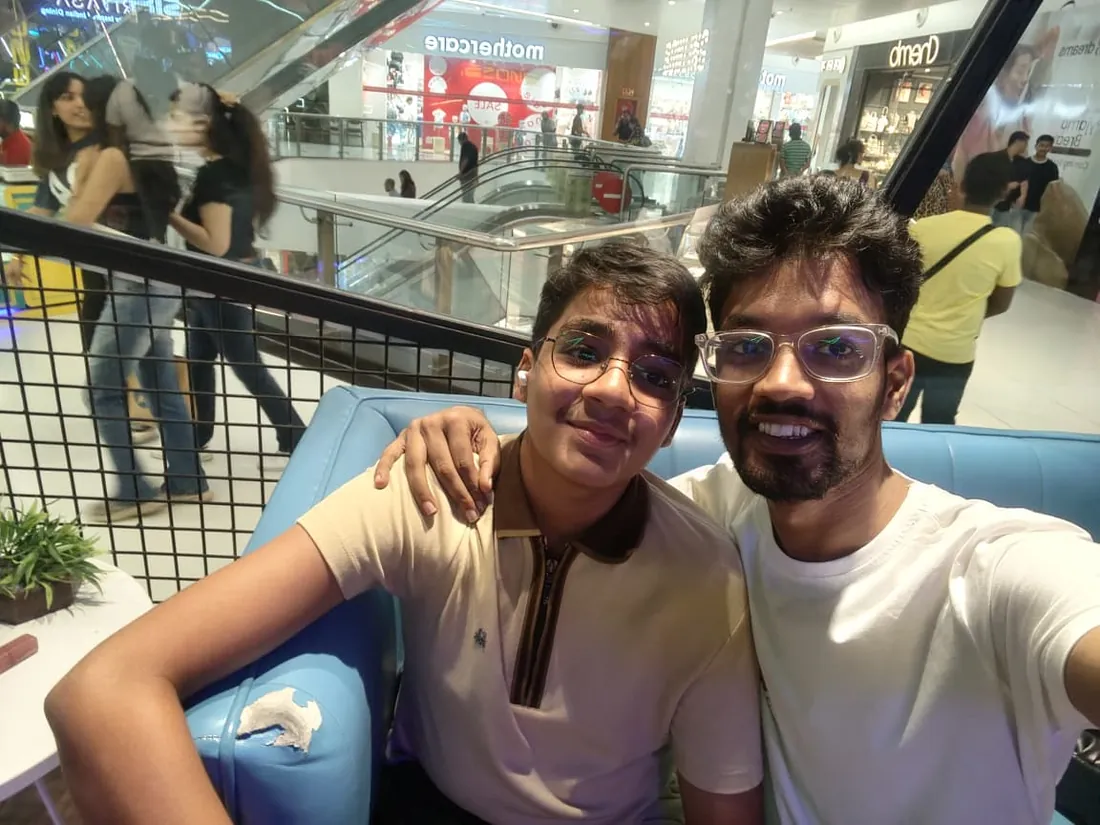
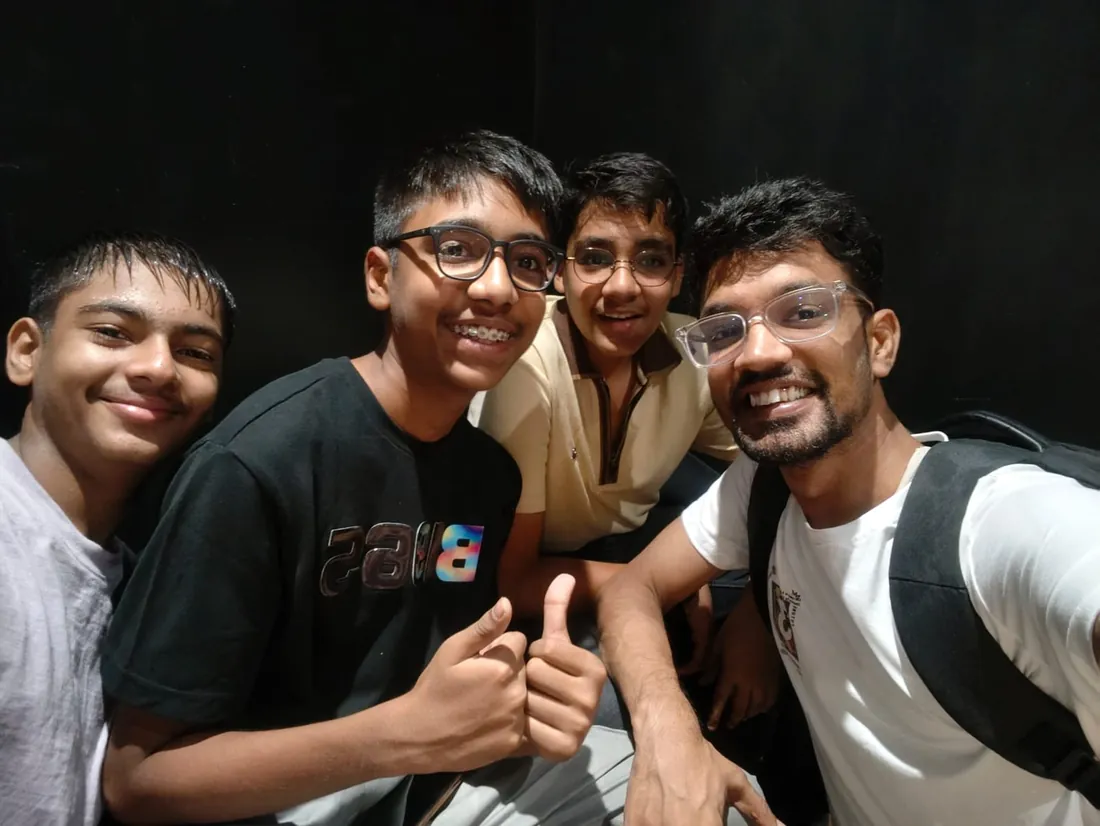
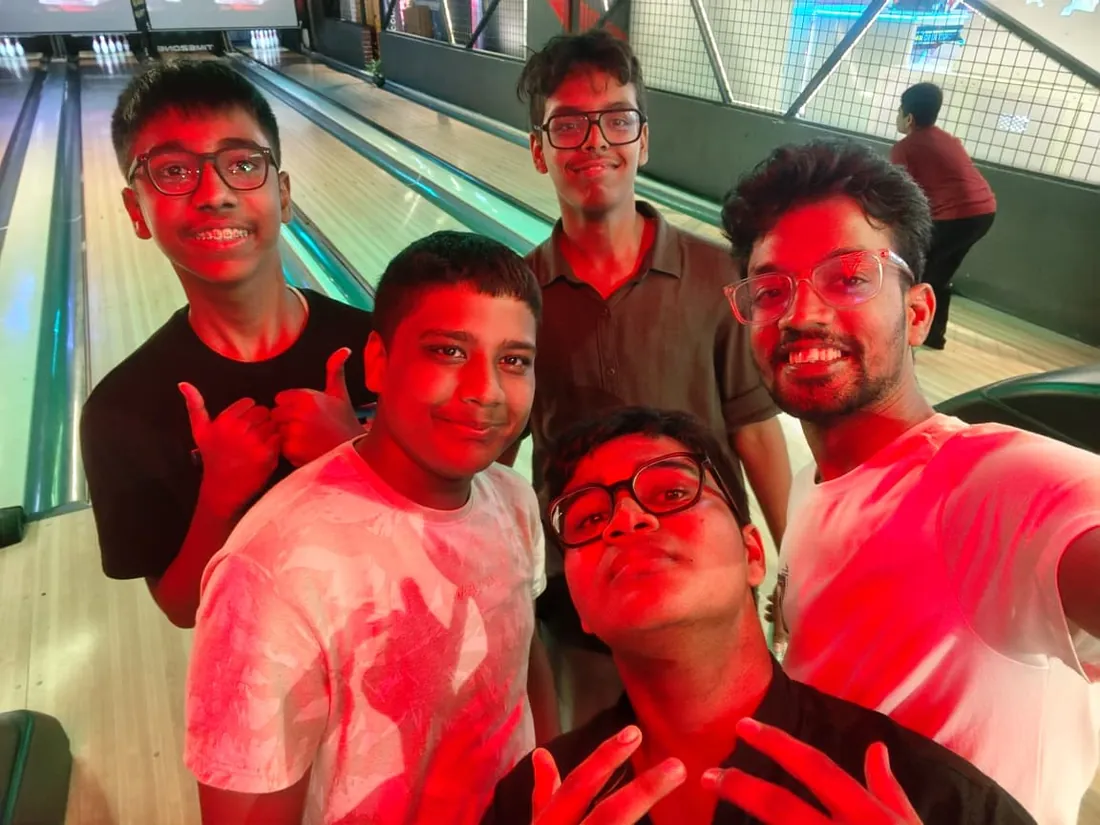
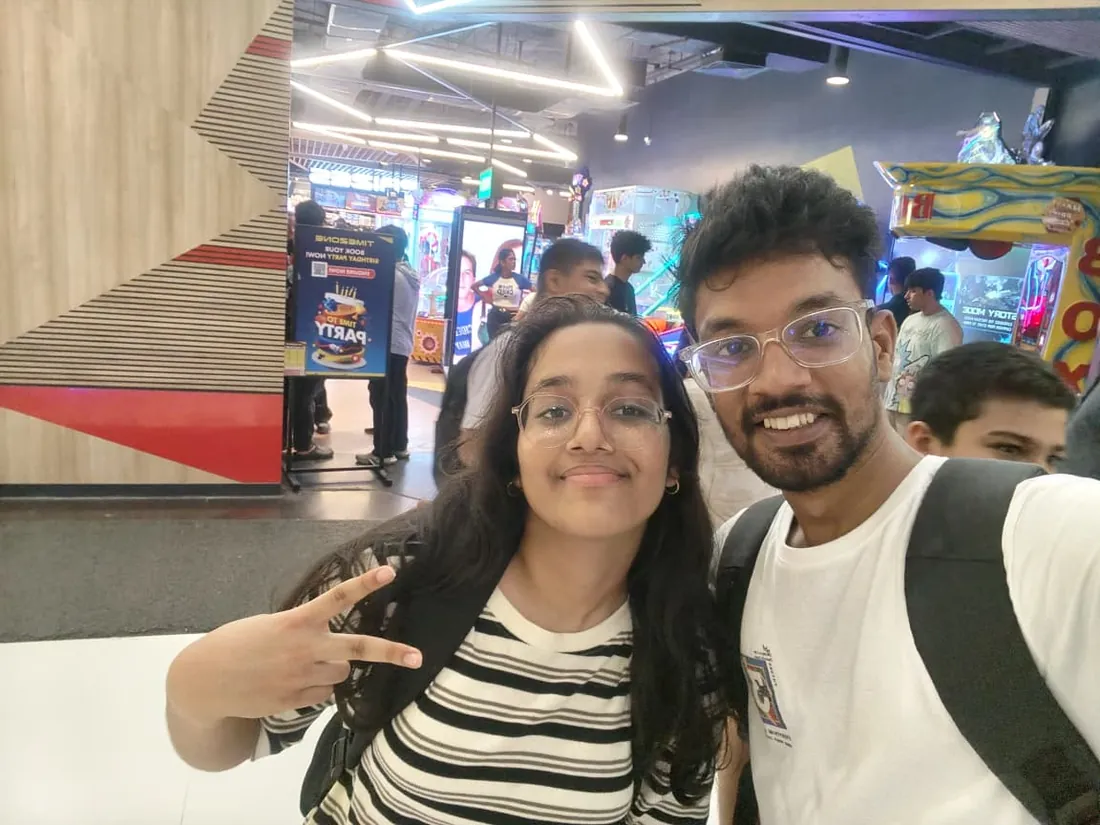
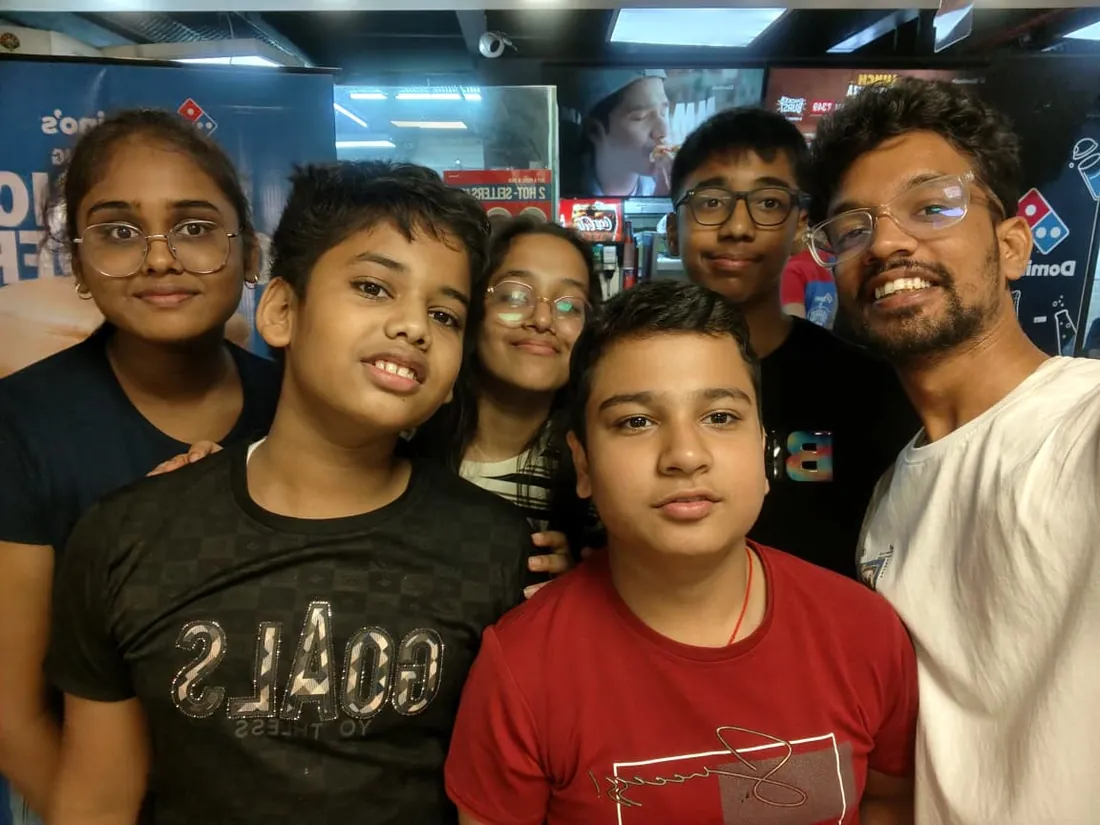
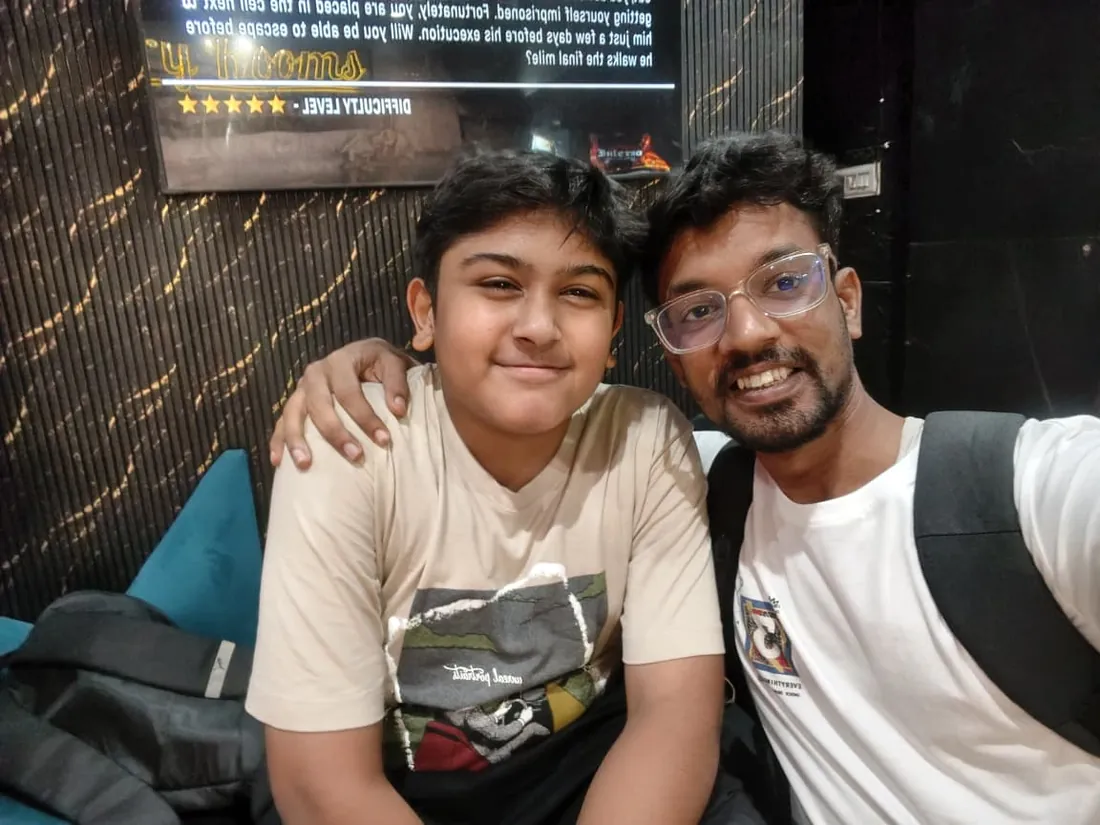
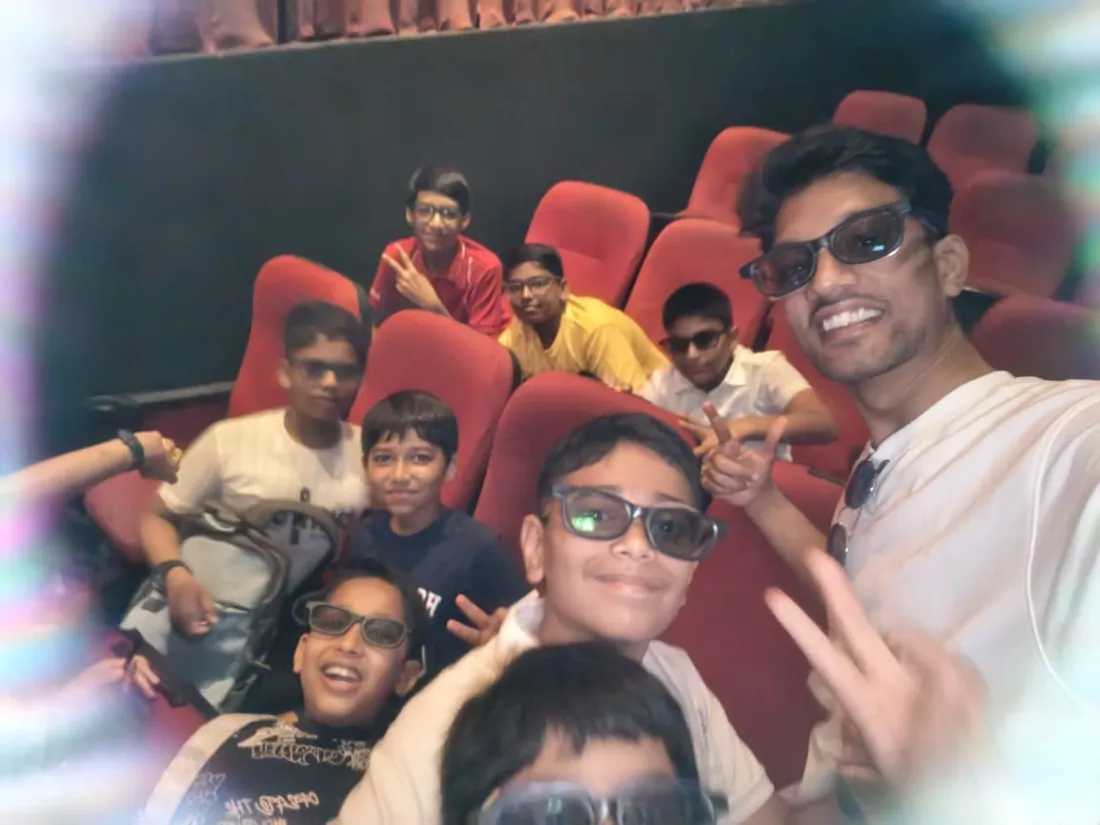
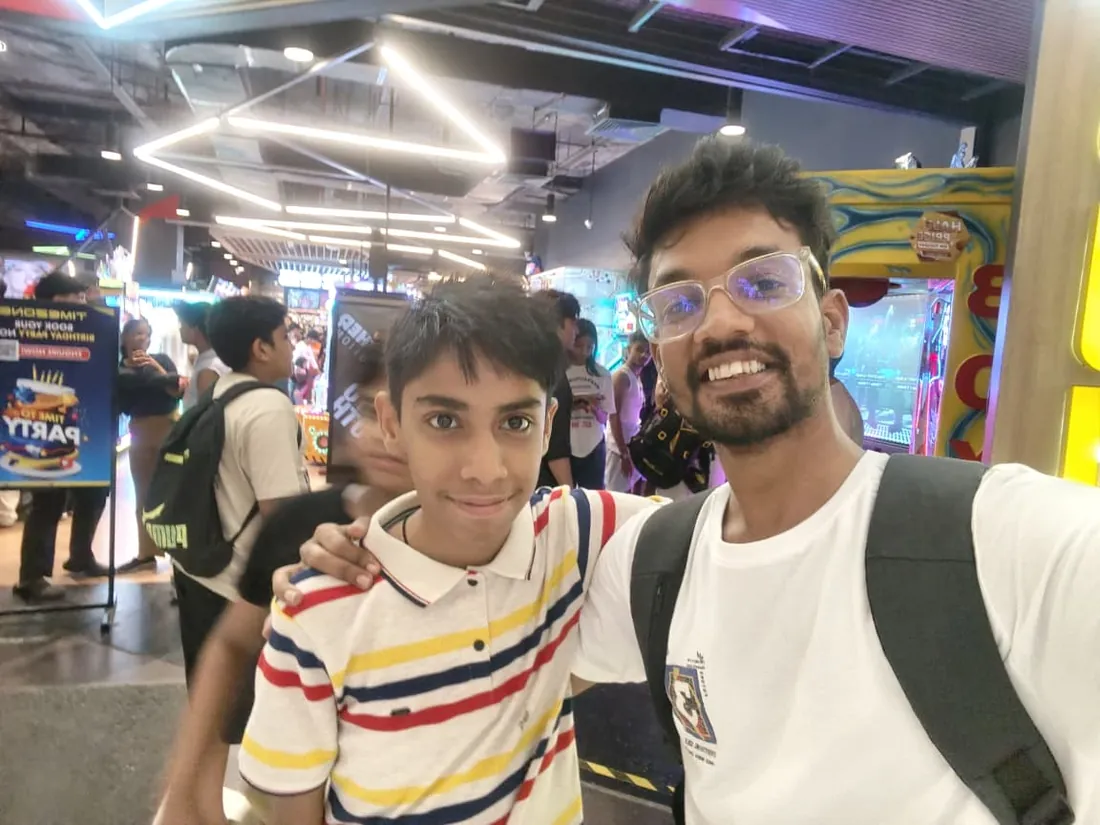
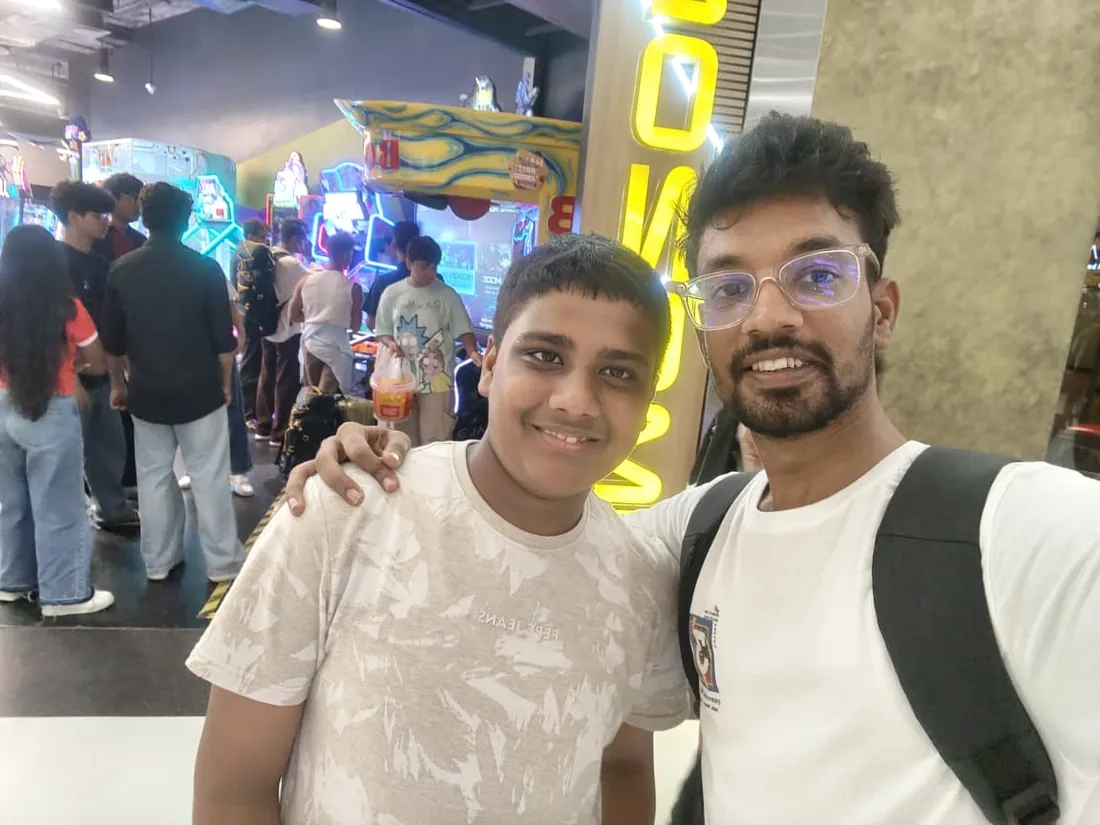
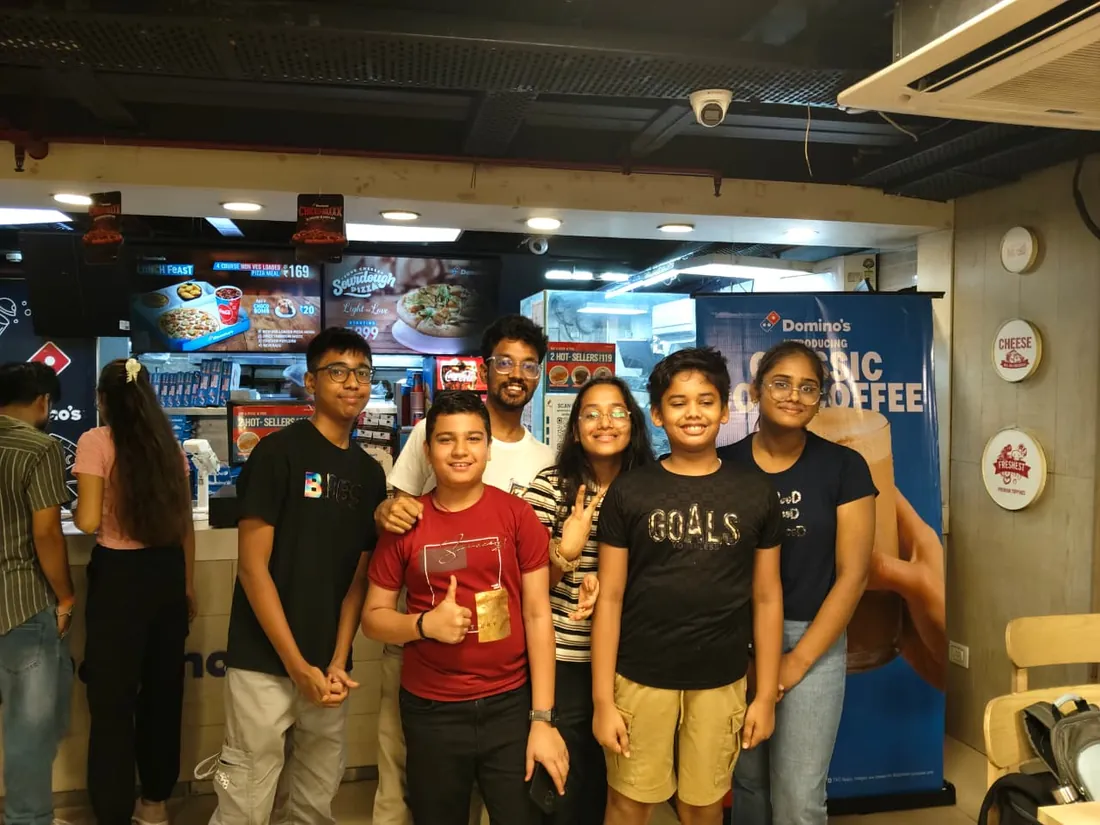
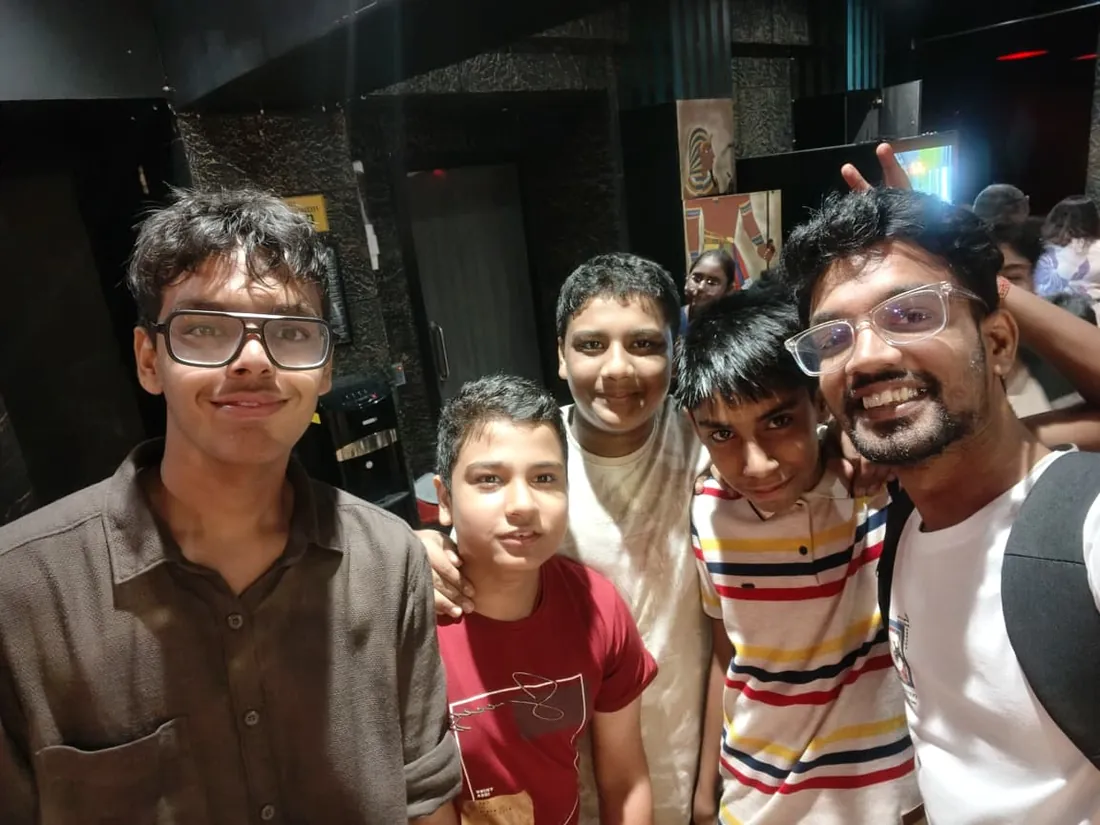
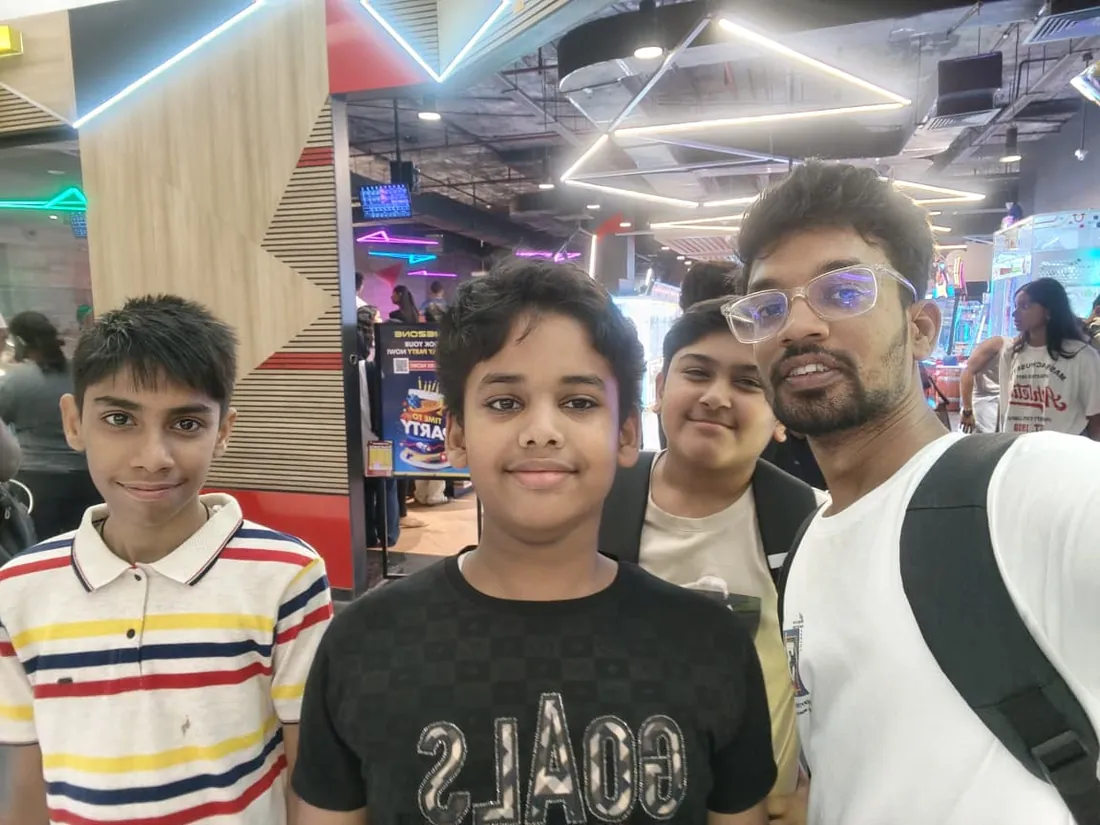
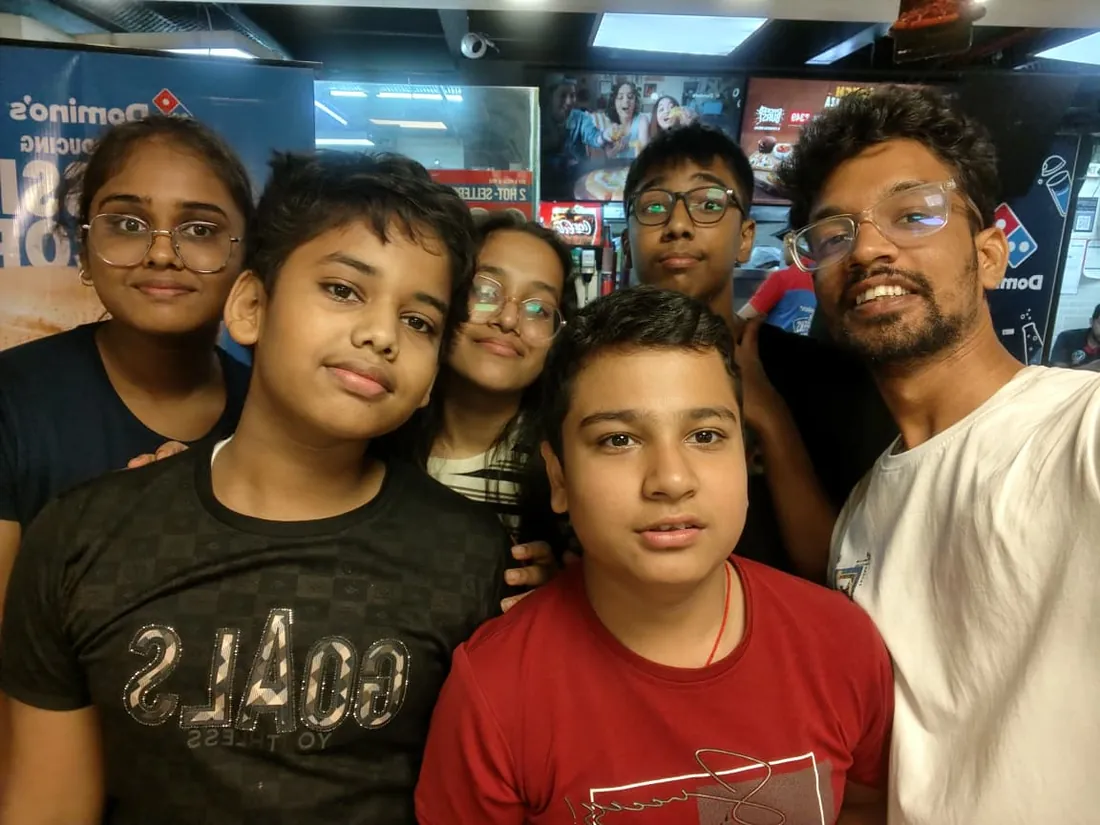
Real students. Real moments. Real joy.
These are our actual student meetups. No stock photos, no filters. Swipe through and meet the community you'll be joining.
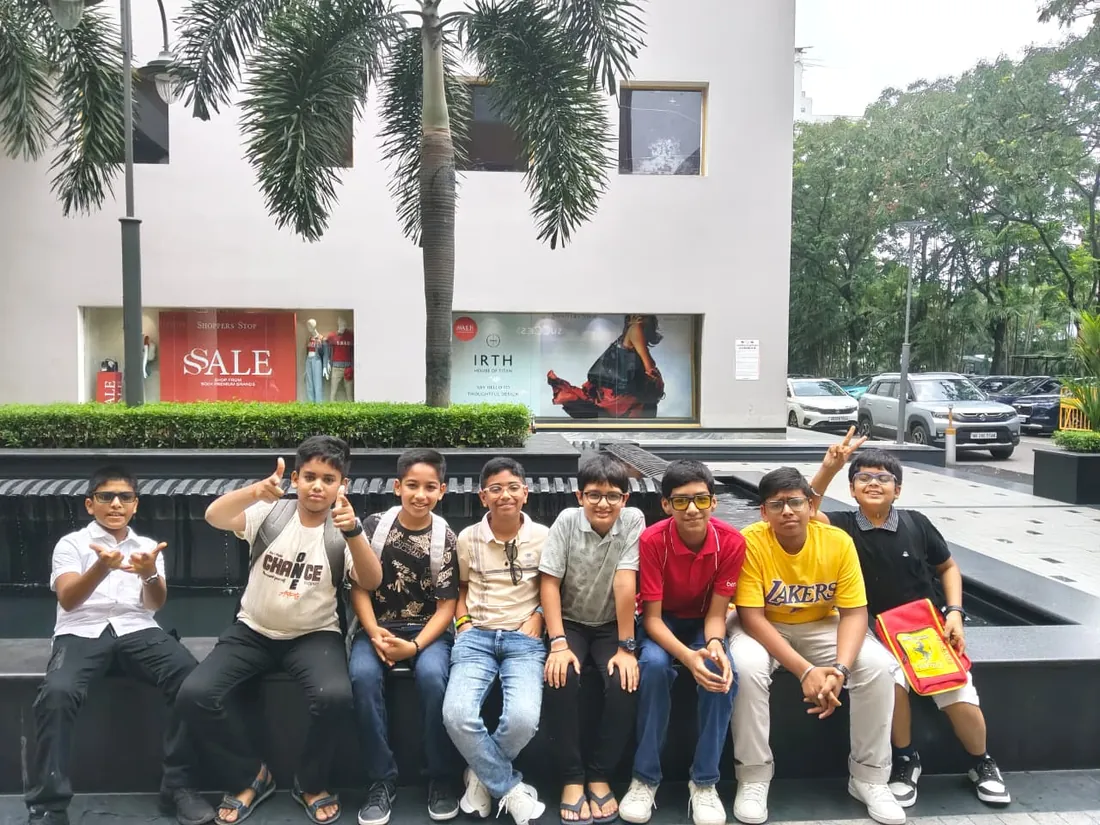
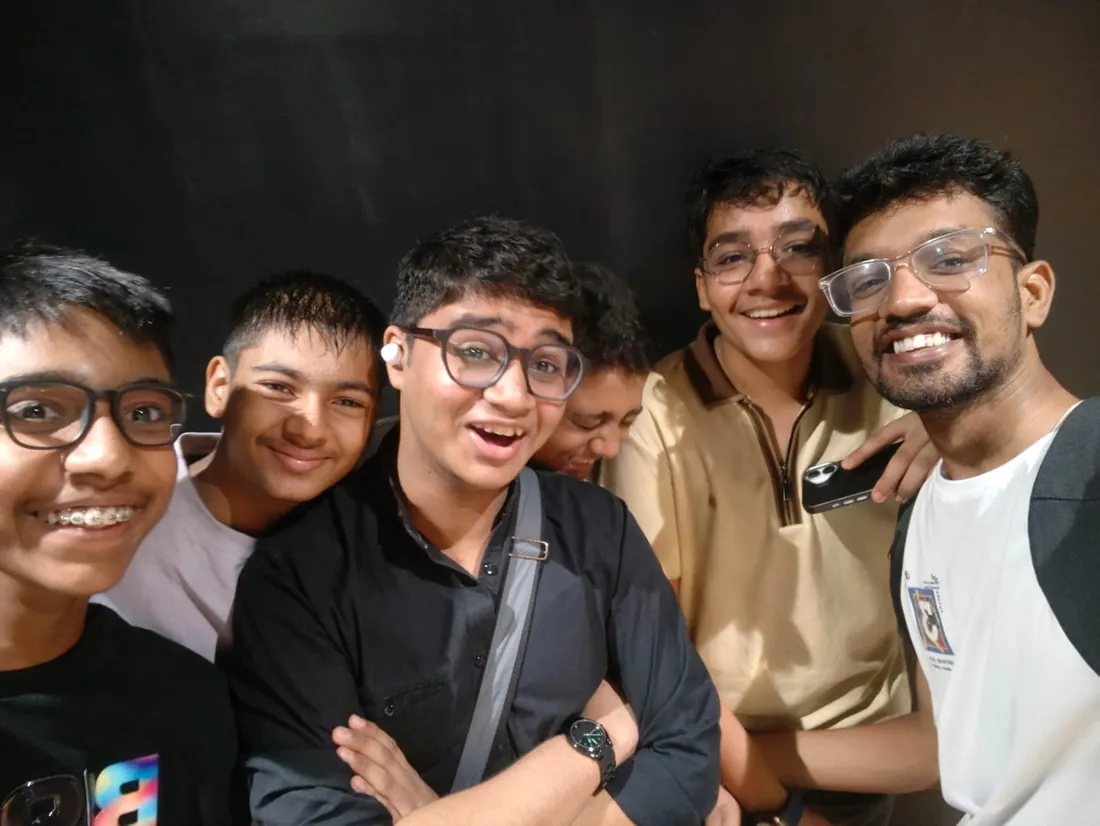
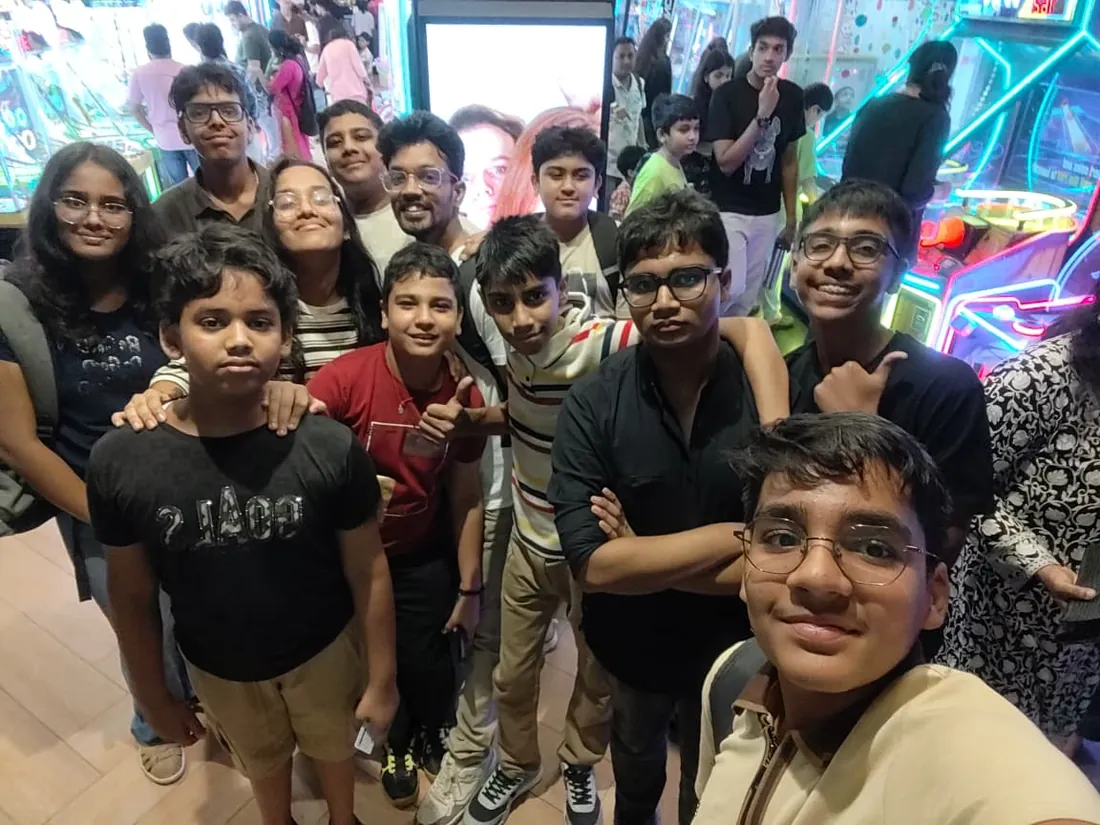
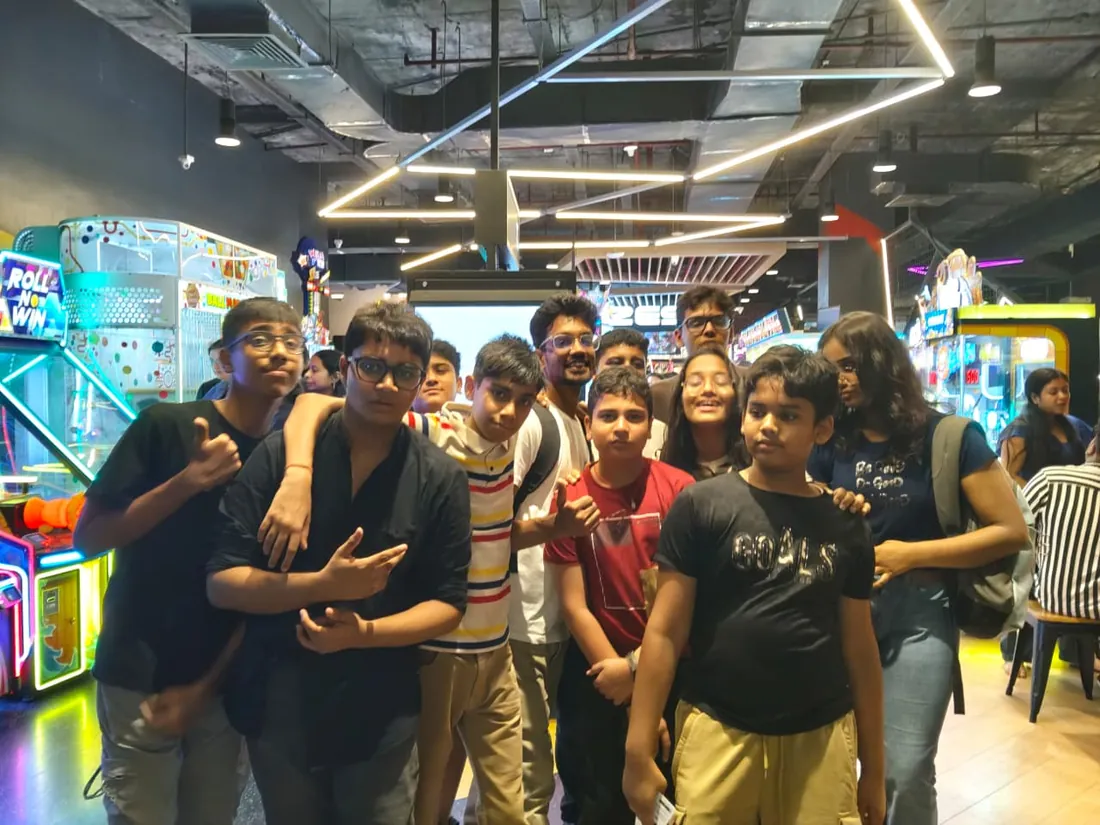
What families say
Straight from the parents and students who learn with us. Rated 4.9 across 547 Google reviews.
“Mivaan enjoys the class. He understands the concepts and completes his tasks with excitement. He started taking interest in coding… truly amazing class.”
“I absolutely love it here! I made new friends and learned important valuable coding skills while having the fun of my life. It's not just coding here, it's outings, bonding and most importantly preparing you for your future. Definitely five stars.”
“What stands out most is how excited my son is before every class. He looks forward to learning, problem-solving, and sharing what he's built. I've noticed a big boost in his confidence!”
“Modern Age Coders has been a game-changer for me! I struggled to grasp IT concepts and coding before joining, but their classes transformed everything. I'm now the topper in my class and can confidently write complex programs with ease.”
“Modern Age Coder have wonderful teachers who teach in a clear, easy and practical way. The teacher boosts students' confidence, keeps them updated with technology, and inspires them to learn without hesitation.”
“The one step solution for my son. Modern Age Coders make learning coding so simple that kids love it.”
“Coding classes here make learning very interesting and conceptual. The teachers teach us in a very easy-to-understand and efficient manner.”
“One of the most wonderful education centres out there. Education is not limited to school syllabus but focuses on skill development. Learning here has been a wonderful journey and still continuing.”
“I highly recommend this computer coding class! The teachers are incredibly knowledgeable and passionate about coding. They make every session engaging and insightful.”
“My child Dhairya is really enjoying the Modern Age Coder IT classes. This is his first online class, and he eagerly looks forward to it.”
“Very good classes. Don't worry about coding. They teach the best, especially Shivam sir.”
“Very good classes. Makes learning very easy and interactive.”
Hear it from our students
Real parents and students in their own words, on our public YouTube channel.
Straight answers about A Level Computer Science for AQA 7517 and OCR H446
- Who should take this course?
- Year 12 and Year 13 students (roughly ages 16 to 18) on AQA 7517 or OCR H446; GCSE Computer Science helps but is not required. Age: Roughly 16 to 18, in Year 12 or Year 13 on AQA 7517 or OCR H446. It suits year 12 and 13 students on aqa 7517 who want confident python for paper 1 and clear theory for paper 2; year 12 and 13 students on ocr h446 preparing for computer systems (01) and algorithms and programming (02); students who started a level computer science without gcse computer science and need the foundations quickly.
- What will they learn and build?
- Two English exam boards set most A Level Computer Science entries, and they examine the same subject in different shapes. AQA's A Level 7517 has two exams worth 40% each and a project worth 20%.
- How deeply are topics covered?
- The course runs 9 months (36 weeks) covering the two-year content, joinable any month and paced to the student's year and board at 2 live classes/week + weekly Python programming, written exam questions and a monthly timed paper, across 3 phases listed week by week in the syllabus below.
- Who teaches it?
- Modern Age Coders mentors, who teach the live classes themselves. You can watch them at work in the free class recordings before you decide.
- How do practice, feedback and assessment work?
- Classwork in every session and homework after every class.
- What does it cost?
- Three monthly plans: a group batch, a mini batch and 1-on-1. Prices are shown in your currency in the plans section. Monthly billing, cancel any time.
- When can classes take place?
- Live classes are scheduled around your week. Group batches meet at a fixed weekly slot; 1-on-1 students choose their own. International students are scheduled in their own timezone. Ask on WhatsApp for the current slots.
- Can I watch the teaching before deciding?
- Yes. Full recordings of real 13 and up classes are free to watch, free with a Google sign-in. These recordings show how we teach, not the exact syllabus of this course. Some classes are in English and some in Hindi; everyone follows at their own pace. Watch a class end to end, like you are in it. Sessions are interactive and each moment builds on the last.
- Can I enroll without a live demo?
- Yes. Choose a plan on this page and enrol directly; a demo is not required. If you would like to see a full class with a mentor first, book a Priority Demo.
- How do I reach you with a question?
- WhatsApp +91 91233 66161, email connect@modernagecoders.com, or call +91 91233 66161. Tell us the student's age and what they have learned so far, and we will point you to the right plan and batch.
Common Questions About A Level Computer Science for AQA 7517 and OCR H446
Get answers to the most common questions about this comprehensive program
Still have questions? We're here to help!
Contact UsRelated Courses You May Like
Continue your learning journey with these recommended programs
 Kids Coding
Minecraft Coding for Kids: From Blocks to Real Code
Minecraft coding classes for kids ages 7-12: live online lessons using block-based MakeCode, from fi...
Explore Course Web Development
React Course for Teens: JavaScript to Real React Apps
React course for teens aged 13-18: web foundations, modern JavaScript, then React with hooks, router...
Explore CourseRelated Articles & Guides
Deepen your knowledge with these hand-picked articles
 Education
8 min read
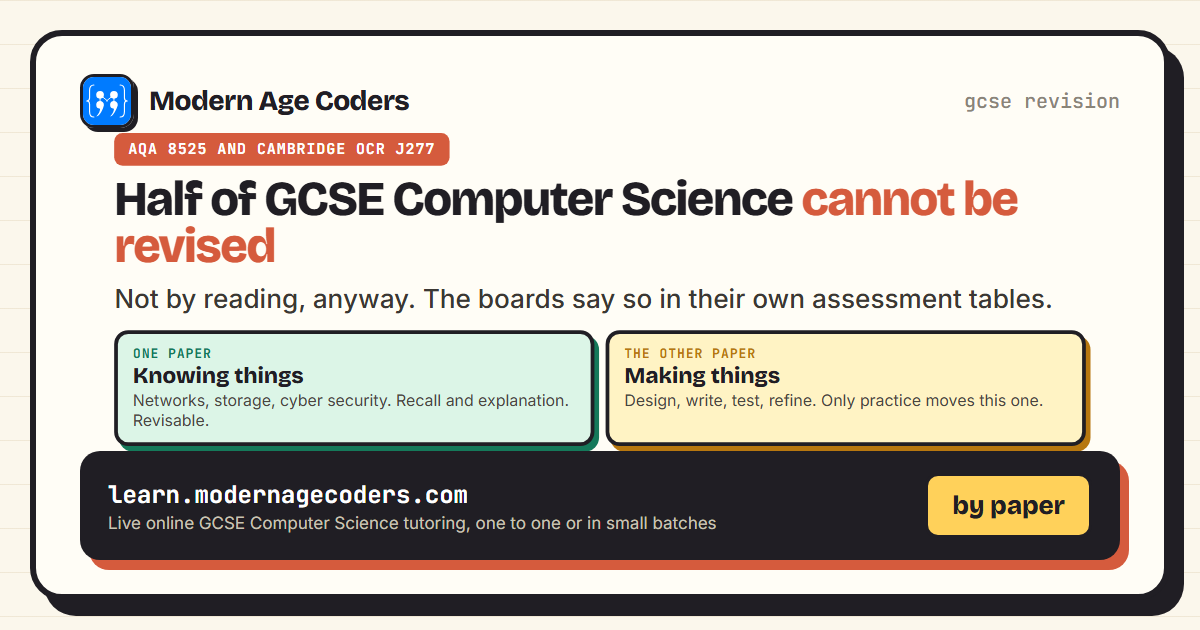
How to Revise GCSE Computer Science (AQA and OCR)
One GCSE Computer Science paper rewards knowing things and the other rewards making them. The boards...
Read Article Education
16 min read
How Coding and Mathematics Work Together in Engineering & Science
Discover the powerful connection between coding and mathematics in engineering and science. Learn ho...
Read ArticleReady to start A Level Computer Science for AQA 7517 and OCR H446?
Book a Priority Demo to see a full live class with a mentor reserved for you, today or tomorrow. Or choose a plan and enrol now.
Questions? WhatsApp +91 91233 66161 or email connect@modernagecoders.com