Skip to content
Mid Ulster

Coding classes in Mid Ulster

What are the best coding classes in Mid Ulster?

NISRA recorded 150,293 usual residents in Mid Ulster at the 2021 census. Dungannon, Cookstown and Magherafelt are its main towns, and Coalisland, Maghera, Castledawson, Moneymore, Moy and Draperstown are among the smaller ones. We teach every lesson live by video, with teachers based in India. From age 6 to 67, learners take coding, Python and maths in a private lesson or a same-level group of five to ten. Your first lesson is free and points to the right course. The district project is set in an eighteenth-century linen mill. After that, group lessons cost USD 100 a month and one-to-one lessons USD 150 a month.

In 1764 a linen draper named Hugh Faulkner found a site near Cookstown with, in his family's words, a great command of water, and began a bleach works at Wellbrook. The Historic Environment Division's record quotes the Faulkners' plan: a ten-acre green that would let them bleach seven to eight thousand pieces of linen a year, and a mill with two wash mills, four pairs of rubbing boards, two beetling engines, which pounded the cloth to give it a sheen, and a drying loft for five hundred pieces. Every piece had to pass through each stage in turn. So which stage set the pace, and was eight thousand a year realistic with that equipment? This page's project models the mill as a line of stages in Python and finds out.

Facts last verified 26 September 2026. Teaching is online; no Mid Ulster branch is claimed.

Courses for Mid Ulster

Where Mid Ulster learners begin

A P3 pupil in Moneymore who loves building machines, a Year 8 in Magherafelt trying Python, a Year 11 in Dungannon preparing for CCEA GCSE maths, and a Cookstown adult learning to automate work. Each starts with a free lesson.
Browse the course atlas for more than one hundred options and use the coding roadmap to check prerequisites.

The four we are known for

Python, AI, vibe coding and agentic coding

These run underneath everything above. Every one is live and online, placed by ability rather than by age, and the first class is free.

Mid Ulster census figures

150,293 people in Mid Ulster

All of these figures come from NISRA's Census 2021 table MS-A01: the district total and its seven district electoral areas, each shown as published and not added together here.

Mid Ulster district electoral areas, usual residents at the 2021 census, NISRA
Electoral areaResidentsElectoral areaResidents
Carntogher17,167Magherafelt19,266
Clogher Valley21,997Moyola18,586
Cookstown24,617Torrent23,020
Dungannon25,640

NISRA also approximates its settlements: Dungannon 16,282, Cookstown 12,546, Magherafelt 9,648, Coalisland 6,349, Maghera 4,235, Castledawson 2,348, Moneymore 2,141, Moy 1,944, Draperstown 1,853 and Fivemiletown 1,341. Mid Ulster schools teach the Northern Ireland Curriculum across P1 to Year 14, leading to CCEA GCSE and A level exams. We do not have local holiday lists, so families pass on their own.

Armagh and CCEA links

The city of Armagh has its own page. For exam support, see CCEA GCSE maths and CCEA A level Software Systems Development.

The Mid Ulster project

The slowest machine sets the pace

A line of stages can go no faster than its slowest one.

The learner gives each stage two numbers: how many machines it has, from the plan, and how long one machine takes per piece, which we have to invent because the record does not say. A stage's hourly capacity is machines divided by time per piece. The drying loft works differently: it holds 500 pieces for, say, four days, so its capacity is how often it can be filled and emptied. Over an invented working year of 2,500 hours, Python prints each stage's capacity, and then the key line: the whole mill can manage only the smallest of them.

Our Wellbrook capacity model, invented times, 26 September 2026
Stage (count from the 1764 plan)Invented time per piecePieces an hourPieces a year
Wash mills (2)0.4 h512,500
Rubbing boards (4 pairs)1.0 h410,000
Beetling engines (2)0.8 h2.56,250
Drying loft (500 pieces, 4 days)Not per pieceNot hourly31,250
Whole millSlowest stage2.56,250

With these guesses the beetling engines hold everything back, and 6,250 pieces a year falls short of the plan's seven to eight thousand. Now the program can answer design questions. To reach 7,500, the beetling engines would need to manage about 3 pieces an hour between them, around 0.67 hours per piece each. Add a third engine and the mill jumps to 9,375. Add a fourth and it stops at 10,000, because now the rubbing boards are slowest: the bottleneck has moved. Add a fifth pair of boards too and three stages tie at 12,500. Improving anything except the slowest stage does nothing at all.

Two slips are worth testing. Add up the stage capacities and you get a nonsense 60,000 a year; average them and you get 15,000. Neither describes a line in which every piece passes every stage. Learners write a check that the mill's answer can never exceed any single stage. They also see how much rests on guessed times: nudge the beetling time from 0.8 to 0.65 hours and the plan's figure suddenly looks reasonable, which is why a model's assumptions belong right beside its answer.

Ages 8 to 11

Run a paper-cup assembly line with friends, time each station, then animate it in Scratch.

Ages 11 to 15

Code stage capacities in Python, find the minimum, and try adding machines one at a time.

Ages 15 and up

Automate the upgrade search, watch the bottleneck move, and test how sensitive the answer is to guesses.

Machine counts from 1764, times from us

The numbers of machines, the loft size and the seven to eight thousand come from the record's quotation of the plan. Every time per piece and the working year are ours, so the table shows how to reason about capacity, not what Wellbrook really produced.

Why Wellbrook

A bleach works built on water

What the listed building record says.

Wellbrook Beetling Mill, Cookstown, Department for Communities historic building record HB09/04/003
Record detailWhat it says
BeginningBleaching at Wellbrook began in 1764
The planA ten-acre green to bleach seven to eight thousand pieces of linen a year
Machinery plannedTwo wash mills, four pairs of rubbing boards, two beetling engines, a buck house and boiling house
Drying loftTo hold five hundred pieces of linen
First beetlesStarted for the first time in October 1765
TodayThe mill building dates from about 1830 and has been in National Trust ownership since 1969

Finding the slowest step is how engineers speed up factories, websites and even computer programs. A web page that waits on one slow database query, a delivery firm limited by one loading bay and a program that spends most of its time in one loop are all the same problem. A Mid Ulster learner who has watched the bottleneck move from the beetling engines to the rubbing boards knows where to look first.

Modern Age Coders has no link to NISRA, the Department for Communities or the National Trust. The record is the department's; the capacity model, and any error in it, is ours.

Stages of learning

From assembly lines to simulations

These stages are only a guide; the free lesson decides the start.

P3 to P7

Machines and timing

Block coding with timers, belts and repeating actions.

Scratch Coding for KidsCoding for Kids
Years 8 to 10

Rates in code

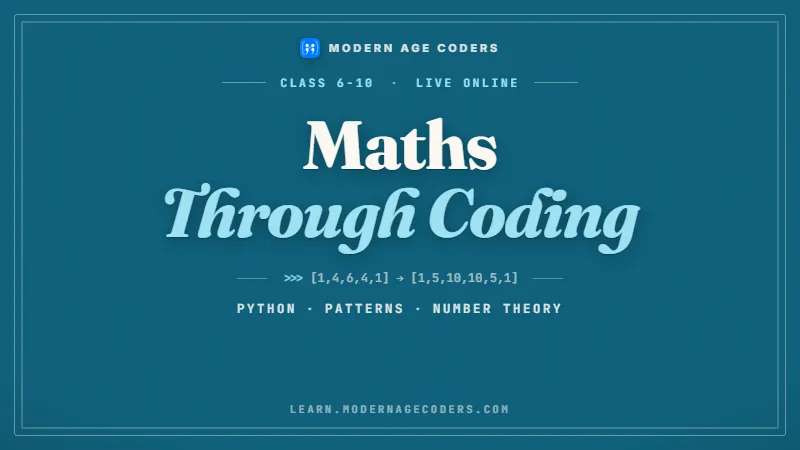
Python with rates, division and finding minimums.

Maths Through CodingPython and AI for Kids
Years 11 to 14

Modelling

Rates, optimisation and simulation, alongside CCEA GCSE and A level.

Python for TeensHigh School Mathematics
Adults

Planning with Python

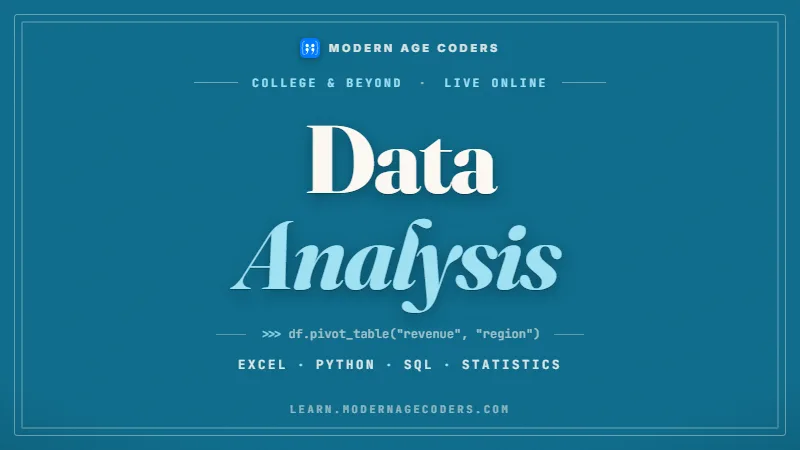
Adult Python for capacity, scheduling and business numbers.

Data Analysis CoursePython Masterclass
AI and assumptions

An AI can build a capacity model. Will it show you the guesses?

A model is only as good as the numbers nobody wrote down.

Ask a chatbot whether a factory can meet a target and it may produce a confident yes or no, quietly filling in machine times it made up. The answer can flip when one hidden guess changes.

A learner who has watched 0.8 hours become 0.65 and turn a shortfall into success knows to ask which inputs are real and which are assumed, before trusting any model.

Demanding to see a model's assumptions is a strong reason for a Mid Ulster teenager to keep learning to code in 2026. The longer argument is in why teenagers should still learn to code in 2026.

Running the classes

From Draperstown to Fivemiletown, live online

Town or country, the classroom is a video link.

Their own keyboard

Every line is typed by the learner; the teacher watches the shared screen and offers a hint only when it helps.

Northern Ireland years

A Coalisland P4 or a Maghera Year 12 is matched by key stage and school year, and CCEA exam titles are used. Lessons are taught in English.

Trial at no cost

A full lesson free of charge, followed by an honest recommendation.

Grouped by level

Classes of five to ten at one stage, from across the UK.

Term pattern

Two lessons weekly through term, with holidays free.

Local time kept

Spring and autumn clock changes leave your slot where it was; our teachers adapt.

Why online suits small towns

Five learners at the same level, free at the same hour, rarely live in one small town. Online, a Moy or Castledawson learner joins exactly the right class.

Fees

Mid Ulster fees

Dungannon or Draperstown, one fee applies, the same as in every country we teach outside India.

First classUSD 0

A full lesson free, then clear guidance.

Group tuitionUSD 100

About eight lessons a month with five to ten other learners.

Private tuitionUSD 150

About eight lessons a month with a tutor of your own.

We price in US dollars only; no sterling figures. Billing begins after the trial fixes a course and a weekly time, and holidays, missed lessons and format changes are covered on the pricing page.

Reviews

What families say on Google

Rated 4.9 across 547 Google reviews. These are real reviews, reproduced as written.

★★★★★

"The one step solution for my son. Modern Age Coders make learning coding so simple that kids love it. The teachers explain complex concepts clearly with practical exercises and interactive content."

Ria Mukherjee

Parent

★★★★★

"Modern Age Coders has been a game-changer for me. I struggled to grasp IT concepts and coding before joining, but their classes transformed everything. I can now confidently write complex programs with ease."

Samriddha Mondal

Student

★★★★★

"One of the most wonderful education centres out there. Education is not limited to school syllabus but focuses on skill development."

Vansh Agarwal

Student

★★★★★

"My child Dhairya is really enjoying the Modern Age Coders classes. This is his first online class and he eagerly looks forward to it. I can already see his improvement, and the teachers are very cooperative."

Sonam Oswal

Parent of Dhairya

★★★★★

"Modern Age Coders have wonderful teachers who teach in a clear, easy and practical way. The teacher boosts students' confidence and inspires them to learn without hesitation."

Sonu Goyal

Parent

★★★★★

"I highly recommend this computer coding class! The teachers are incredibly knowledgeable and passionate about coding."

Ritu Kedia

Parent

Free placement class

Book a free Mid Ulster lesson

Tell us the learner's age or school year and something they like. The trial could be a Scratch machine game, a first Python program, or the Wellbrook capacity puzzle.

+44

FAQ

Mid Ulster questions

The district, the mill project and practical points.

What is the population of Mid Ulster?

The 2021 census counted 150,293 usual residents in Mid Ulster, according to NISRA.

What are the biggest towns in Mid Ulster?

NISRA estimates Dungannon at 16,282, Cookstown at 12,546 and Magherafelt at 9,648.

What is the Wellbrook project?

Learners model the 1764 plan for a linen mill as stages in Python, find the slowest stage, and test whether seven to eight thousand pieces a year was possible.

What is a bottleneck in a production line?

The slowest stage, which limits how much the whole line can produce however fast the other stages are.

When did bleaching begin at Wellbrook?

In 1764, according to the Historic Environment Division record.

Are the lessons online?

Yes. Everything is taught live by video, from home.

Can a Mid Ulster student get help with CCEA exams?

Yes, in maths and computing. We teach for understanding and never promise grades.

What ages can learn?

From 6 up to 67, on a course that suits each learner.

How much do lessons cost?

The first is free. After it, a group costs USD 100 a month and private lessons USD 150 a month.

Are there lessons in school holidays?

Lessons pause for school breaks; just list the weeks your school is closed.

Neighbouring pages

More Northern Ireland pages

Armagh counts how far a star catalogue is out of order, Fermanagh and Omagh dates a canal bridge from clues, and Mid and East Antrim splits a gasworks' growth. Every district is linked from our Northern Ireland page, and the UK hub covers everywhere else.

Free Mid Ulster classCall +91 91233 66161

Keep exploring Modern Age Coders

Coding classes in nearby places

Free resources

From the blog

Start here