CE maths is broader and deeper than school maths at the same age: and it shows.
Common Entrance maths, especially at 13+ Level 3 and scholarship, is pitched well above the national curriculum for the same age. It expects fluent technique and the confidence to work through long, multi-step problems that don't announce their method, the kind of question that rewards a child who can think, not just recall.
A capable child who's only ever been drilled on standard questions can freeze when a CE problem winds through several steps.
Prep schools prepare well, but a class can't always give each child the depth, pace or individual attention that the harder levels and scholarship papers demand.
That's where one-to-one work fits. We build genuine understanding and multi-step problem-solving, target the exact level and schools your child is aiming for, and add scholarship-level stretch where it's wanted, so your child meets the paper with composure.
Understanding and problem-solving, pitched to the level.
Tailored to your child's CE level and target senior schools.
Secure the technique
Fluent arithmetic, fractions, ratio and algebra across calculator and non-calculator work, the foundation every CE question assumes.
Teach multi-step problem-solving
How to read a long problem, plan the steps, and work through without losing the thread, the heart of the CE papers.
Pitch to the right level
We aim at the level your child is sitting, and stretch toward Level 3 or scholarship depth where that's the goal.
Rehearse under exam conditions
Past papers at the correct level, with calculator and non-calculator practice and the timing the exam demands.
A 13+ multi-step problem: broken into clear steps.
The question: "A recipe for 6 people needs 450g of flour and 300ml of milk. A chef makes it for 10 people but only has 700g of flour. How much more flour does she need, and how much milk?" Children often grab numbers at random and tangle themselves up.
How we teach it. The CE skill is to plan the steps before calculating. We find the amount per person, scale to 10, then answer each part:
she has 700g → needs 750 − 700 = 50g more flour
milk per person = 300 ÷ 6 = 50ml → for 10 = 500ml milk
The whole problem becomes simple once you see the move, "find one person's share, then scale", and tackle each part in order rather than all at once. We teach children to slow down, plan the route, and label each step, so a long CE question stops being intimidating and becomes a series of small, calm calculations. That composure under a multi-step problem is exactly what Common Entrance, and a strong start at senior school, rewards.
Planning a multi-step problem is exactly how a programmer thinks.
Plan before you compute
A coder maps the steps before writing a line. A CE problem-solver maps the steps before calculating. It's the same discipline, and we teach it explicitly.
Break into sub-problems
Long questions yield to decomposition, solving "flour" and "milk" separately, just as software is built from small parts.
Check each step
Verifying a sub-answer before moving on catches errors early, in maths and in code alike.
We're Modern Age Coders, and the structured, plan-it-out thinking we teach young programmers is precisely what the harder Common Entrance and scholarship problems reward. Children who learn this don't just pass. They arrive at senior school thinking like genuine problem-solvers.
The full Common Entrance maths syllabus.
Across the CE levels, calculator and non-calculator, tailored to your target schools.
Number & calculation
Fluent four operations, fractions, decimals, percentages, factors and primes, fast and accurate, with and without a calculator.
Ratio, proportion & rates
Sharing, scaling and recipe-style problems, a CE favourite, taught with a clear, reliable method.
Algebra
Expressions, equations, sequences and graphs, pitched to the level and stretched for scholarship.
Geometry & measures
Angles, area and volume, the start of Pythagoras, constructions, and units and conversions.
Data & probability
Reading and drawing graphs, averages, and basic probability.
Problem solving & exam technique
Multi-step problems, scholarship-style questions, and the calculator/non-calculator and timing strategy CE demands.
The right fit: and an honest word on what to expect.
This fits the prep-school child preparing for 13+ or 11+ Common Entrance, the child aiming at a competitive senior school or a maths scholarship, and the able child who needs depth and multi-step problem-solving rather than more routine practice. We tailor to your child's level and target schools.
What's realistic. Genuine depth, the kind that performs on the day and beyond, builds over months of steady, calm work. Independent entry is competitive, so we never guarantee a place or award; we promise genuinely strong maths and a composed, capable problem-solver.
What we won't do
- Drill past papers without building real depth.
- Guarantee a senior-school place or scholarship.
- Pile on pressure that drains confidence.
- Pitch above or below your child's actual level.
Calm, consistent, and built toward the exam.
1:1, live
One child, one tutor, real-time video with a shared whiteboard for working multi-step problems together.
8 lessons a month
Two each week, around 60 minutes, paced for the exam timeline.
UK time
After-school, early-evening and weekend slots in GMT/BST.
You stay informed
A note after each lesson and a progress summary every few weeks.
One simple price. No contract.
1:1 Private Tuition
$150 / month
- 8 live one-to-one lessons a month (2 per week, 1 hour each)
- 4 live one-to-one lessons a month (1 per week, 1 hour each)
- The same dedicated tutor to the exam
- Pitched to your CE level & target schools
- Scholarship stretch available · cancel any time
Small-Group Cohort
$100 / month
- 8 live small-group lessons a month (2 per week, 1 hour each)
- A few children at the same level
- Same teaching approach, lower price
- A friendly option · cancel any time
Sitting the 11+ for grammar schools too? See our 11 Plus Maths Tuition → page.
Tutors who know the standard and keep it calm.
Common Entrance, especially at scholarship level, demands a tutor who genuinely understands the depth expected, and who can stretch a bright child without piling on pressure. Ours combine real mathematical strength with warmth for this age group, building ambition and composure together.
The same tutor stays to the exam, knows your target schools and required level, and aims each lesson at exactly the problem types your child still finds hard.
"My son struggled with math for years. Integrating it into coding projects has transformed his understanding and confidence. Highly recommended!"
Shewta Singh, mother of Ishan · verified Google review
How we differ from the alternatives.
| What matters | Modern Age Coders | Past-paper packs | A typical tutor |
|---|---|---|---|
| Builds multi-step problem-solving | Yes, the core of it | No | Varies |
| Pitches to the exact CE level | Yes | Generic | Sometimes |
| Scholarship-level stretch | Yes | Rarely | Not all tutors |
| Same tutor to the exam | Yes | N/A | Often |
| Monthly price | $150 (1:1) / $100 (group) | A one-off purchase | Charged by the hour |
Past-paper packs are useful practice and we use them, but only on top of the depth and problem-solving the harder CE and scholarship papers actually test.
Everything you might be wondering.
What is Common Entrance maths, exactly?
The ISEB exam many independent senior schools use for entry at 11+ or 13+. The 13+ maths has three levels and calculator and non-calculator papers, pitched above the national curriculum.
Do you cover 13+ and 11+ Common Entrance?
Yes, both, tailored to your child's exam and target senior schools.
Which CE level should my child sit?
Usually guided by the prep and target school. We can assess and advise, and prepare for the right level, including scholarship standard.
Can you prepare for maths scholarships?
Yes, by building genuine problem-solving depth, not just drilling past papers.
How much does it cost?
The fees for private 1-on-1 and small-group classes are shown in your own currency in the pricing section of this page. Billing is monthly, there is no contract and you can cancel any time.
Can we try a class before enrolling?
Yes. Book a Priority Demo: a full live class of about 45 to 60 minutes, today or tomorrow, with a mentor reserved for your child. After the class the mentor sends a written skill report and a personal learning roadmap on WhatsApp. If you enrol, the demo fee is adjusted against your first month's fee.
Will my child keep the same tutor?
Yes, one tutor to the exam who knows your target schools.
How does this fit with my child's prep school?
We complement the school, focusing 1:1 on the hardest areas and adding depth or pace a class can't always provide.
Are lessons live?
Yes, live, one-to-one, with a shared whiteboard, ideal for multi-step problems.
When should we start?
A year or more before the exam allows calm, thorough preparation, especially for scholarships. We help later starters honestly too.
Does this strengthen general school maths too?
Yes: CE maths is broad and demanding, so preparing for it genuinely strengthens overall maths.
What time slots are available?
After-school, early-evening and weekend slots in UK time (GMT/BST).
Book a free Common Entrance maths trial lesson.
Tell us your child's level, exam date and target schools. We'll assess where they are and map a calm, thorough path to the paper. No card needed.
More maths tuition from Modern Age Coders.
Real student projects
What our students actually build
Every one is a real, live project shipped by a Modern Age Coders student. Explore more in Student Labs.
 GameThe Beautiful MindA scientifically designed focus and brain-strength game with 15 progressive levels, testing attention, control and mental endurance with real-time progress tracking and leaderboards.by Modern Age CodersOpen the live project ↗
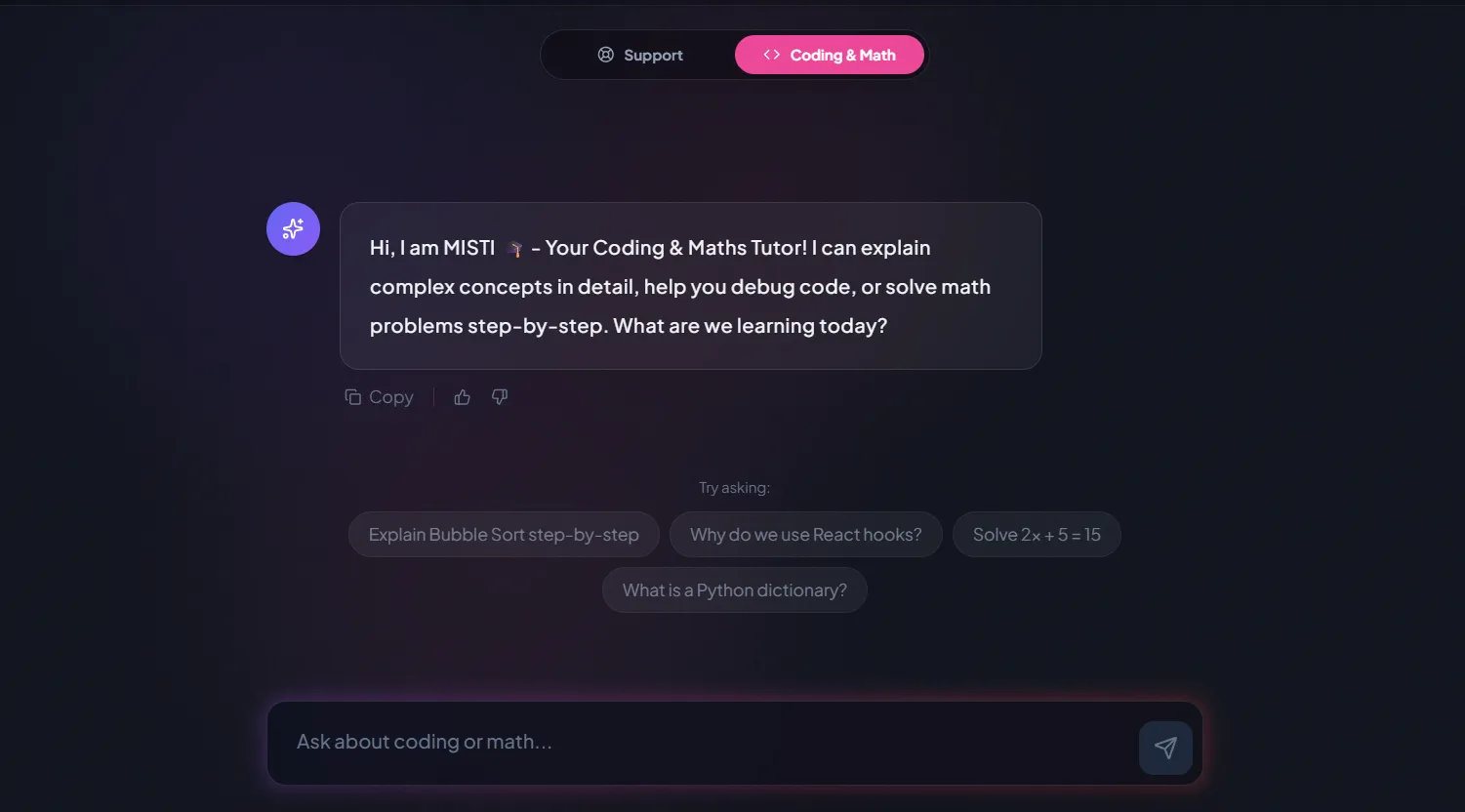 AI & MLMisti: AI Chatbot for Maths & CodingAn intelligent AI-powered chatbot that helps students solve maths and coding questions with deep, step-by-step explanations using advanced Python AI frameworks and LLM APIs.by HarshitOpen the live project ↗
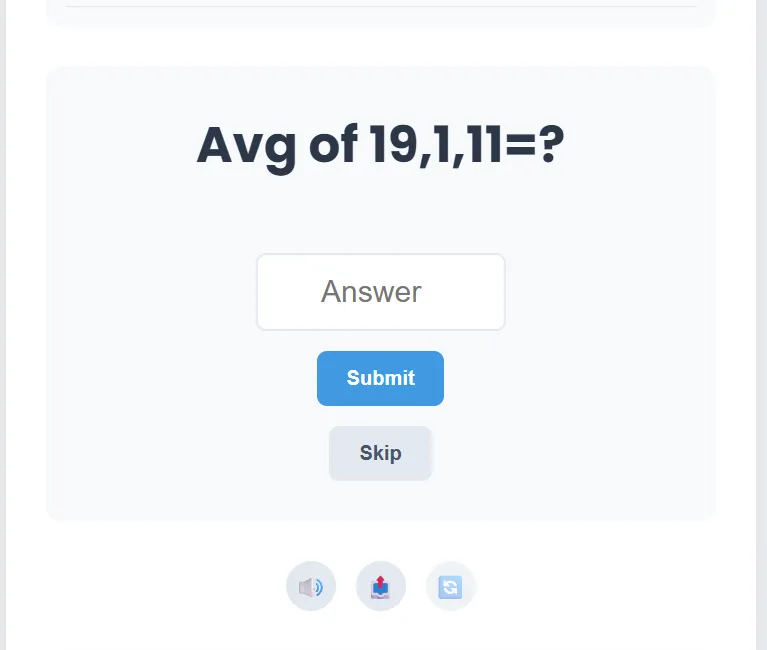 GameBabu: 90 Second Maths ChallengeAn exciting 90-second maths challenge with random problems under time pressure, and a dynamic leaderboard powered by Firebase/MongoDB with real-time score updates.by Modern Age CodersOpen the live project ↗