UK / ED1 / 01
Python in full
Written in a real editor every week, which is the only preparation an onscreen paper accepts.
Open the syllabusEngland · Pearson Edexcel 1CP2 · Years 10 and 11
Two things about this qualification are unlike anything the other English boards do, and both change how a student should revise. The first is in a single line of the specification: Paper 1 "consists of five compulsory questions, each one focused on one of the topic areas". Five topics, five questions, so a weak topic is not a scattering of lost marks, it is a whole question on a paper worth seventy-five. There is nowhere to hide networks if networks never went in. The second is that Paper 2 is not a written paper at all. It is sat at a keyboard, in the student's own development environment, in Python 3, with no internet. This page covers both, and what a year of preparation should actually look like for each.
Live teaching since 2020 · 10,000+ students · Python 3, typed, every week
In short
Edexcel 1CP2 is two externally examined papers of equal weight, 75 marks each. Paper 1 is written, an hour and a half, and covers five topics in five compulsory questions, one per topic. Paper 2 is an onscreen practical of two hours, covering a sixth topic only, in which candidates design, write, test and refine programs in their own development environment using Python 3, with coding files supplied, a printed question paper, the programming language subset as an insert, and no internet access. That structure rewards two specific things: even coverage across the five written topics, because each one is a whole question, and genuine keyboard fluency, because the practical paper is a real programming session under a clock. We teach both. The first lesson is free, then USD 100 a month in a group or USD 150 one to one.
Start here
One for the written paper, one for the keyboard, one for the algorithms both lean on. Cards open the full syllabus.
EDX / 01
All five written topics covered evenly, because on this paper each one is a whole question rather than a few marks.
Open the syllabus →
EDX / 02
Python 3 typed at speed in a real editor, which is precisely the medium of Paper 2.
Open the syllabus →
EDX / 03
Decomposition and algorithm design, which Topic 1 tests on paper and Topic 6 tests at a keyboard.
Open the syllabus →One question per topic
From the Pearson Edexcel specification, Issue 1, January 2020. The structure of Paper 1 is unusual and it changes what revision should look like.
The line that shapes the year
Paper 1 "consists of five compulsory questions, each one focused on one of the topic areas. The questions consist of multiple-choice, short-, medium- and extended-open-response, tabular and diagrammatic items."
| Topic | What the specification says it covers |
|---|---|
| 1. Computational thinking | "Understanding of what algorithms are, what they are used for and how they work; ability to follow, amend and write algorithms; ability to construct truth tables" |
| 2. Data | "Understanding of binary, data representation, data storage and compression" |
| 3. Computers | "Understanding of hardware and software components of computer systems and characteristics of programming languages" |
| 4. Networks | "Understanding of computer networks and network security" |
| 5. Issues and impact | "Awareness of emerging trends in computing technologies, and the impact of computing on individuals, society and the environment, including ethical, legal and ownership issues" |
On a paper where questions are scattered across topics, a weak area costs a few marks here and there and a good student can absorb it. Here, a weak topic is a question, and on a 75-mark paper across five questions that is a substantial share of half the qualification.
So the revision rule for Paper 1 is coverage before depth. A student who is excellent at three topics and vague on two is in worse shape than one who is solid at five.
Each question mixes multiple choice, short, medium and extended open response, tabular and diagrammatic items. The diagrammatic and tabular items reward practice rather than knowledge, and most students have never drawn one under time pressure.
Truth tables are named explicitly in Topic 1, which makes them one of the safest marks on the paper for anyone who has built a few.
A practical consequence for anyone tutoring themselves: work through the five topics in rotation rather than in a block. Finishing networks in November and never returning is exactly the pattern this paper punishes, and it is the commonest revision plan there is.
Source, read 20 September 2026: Pearson Edexcel Level 1/Level 2 GCSE (9-1) in Computer Science specification, Issue 1, January 2020. Check the current issue on Pearson's site, and your school will confirm which applies.
The onscreen paper
Paper 2 is a practical assessment rather than a written one, which makes Edexcel unlike the other English boards at GCSE.
| Element | What the specification says |
|---|---|
| Format | "Onscreen examination: 2 hours", 75 marks, 50 per cent of the qualification |
| Content | Topic 6 only, "Problem solving with programming" |
| The task | "This practical paper requires students to design, write, test and refine programs in order to solve problems" |
| The environment | "Students will complete this assessment onscreen using their Integrated Development Environment (IDE) of choice" |
| What is supplied | Coding files, a hard copy of the question paper, and the programming language subset "as an insert in the question paper and in electronic format" |
| The language | "Students should then answer the questions onscreen using Python 3" |
| The questions | "This assessment consists of six compulsory questions" |
| The internet | Students "must not have access to the internet" |
A candidate sits the paper in the environment they have used all year, which is a real advantage and only if they have actually used one all year.
No documentation, no search, no assistant. Whatever a student can do at that keyboard unaided is what the paper measures.
Twenty minutes a question on average, which is a pace problem as much as a programming one and is the thing least often practised.
Fluency at the keyboard, reading an error message without panic, and knowing the standard library well enough not to need to look anything up. None of those come from revision notes; they come from having written a lot of Python.
It also rewards testing as you go, because the paper asks candidates to design, write, test and refine, and a program that has never been run halfway through is a risk taken for no reason.
A student who has learnt computer science mostly on paper. They can define a while loop and cannot type one at speed, and on this paper that gap is the whole difference.
The remedy is unromantic and effective: write Python every week for two years. There is no substitute and no shortcut, which at least makes the plan simple.
The subset booklet supplied with the paper is worth understanding in its own right, and it is covered properly on the Python classes page, which sets out what it does and does not include and why a class should aim above it rather than inside it.
One more requirement sits behind the scenes. Centres must complete a Practical Programming Statement, signed by a member of the senior leadership team, confirming that each candidate had the opportunity to design, write, test and refine programs in Python during the course. A board does not create a signed declaration unless it considers the alternative a genuine risk, which tells a parent what to ask their school about.
How to prepare
The commonest mistake with 1CP2 is preparing for both papers the same way. They reward almost opposite habits.
| Paper 1 | Paper 2 | |
|---|---|---|
| Main risk | A topic that never went in | Keyboard hesitancy under a clock |
| Best weekly habit | Rotate through all five topics rather than blocking one | Write and run Python, every week, without exception |
| What to practise | Diagrams, tables, truth tables and extended written answers | Reading errors, testing as you go, and finishing within twenty minutes |
| What not to do | Master three topics and hope | Learn programming from notes rather than from an editor |
| Mark profile | Five whole questions, one per topic | Six compulsory questions across one topic |
For the written paper the highest-value activity is spaced rotation: a little of each topic every week, all year, rather than a block on data in October that is never revisited. The structure of the paper makes this worth more here than on any other board, because coverage is scored directly.
For the practical paper the highest-value activity is volume. A student who has written two hundred small programs arrives fluent; one who has written twenty arrives hoping. We use the whole of Year 10 for that, and Year 11 for timing and for the written topics.
Typed Python every week in a real editor, with the learner driving the keyboard. Prediction before running, so that an unexpected result becomes information rather than a scare.
And timed practice from the spring of Year 11, six questions in two hours, because pace is a skill that only improves when it is measured.
We do not take part in any assessed work. There is none at GCSE with this board, which keeps the line easy, but it holds at A level too, where a project does count.
And we do not promise grades. We teach the content, the fluency and the pacing, and what happens in the hall is the student's.
For students continuing to sixth form, the change is significant: a project starts counting and the rules on acknowledgement bite. The A-level coursework page sets out where the marks sit at AQA and OCR, and the page on understanding the code covers what the awarding bodies say about AI in assessed work.
Progression
Position is judged by what a student can type unaided and how evenly the five topics have landed.
| Rung | When | What should be true |
|---|---|---|
| 1. Typing without friction | The first term of the course | Short Python programs written in an editor without copying an example |
| 2. Five topics started | By the end of the first year | Every written topic has been covered at least once, none left for later |
| 3. Programs that get tested | Second year | Testing as you go, reading errors calmly, and refining rather than restarting |
| 4. Working to a clock | The spring before the papers | Six questions in two hours, and five written topics answered in rotation |
Because it is invisible. A student who is enjoying programming will happily leave networks and impact until later, and on this paper later is a whole question.
The full topic order past the GCSE runs down the coding roadmap.
Pace comes from repetition under timing, and a candidate who first sees a two-hour practical in May will spend the first half of it adjusting.
Lessons ease off in the fortnight before the papers and restart once they are done.
The catalogue
Grouped by which paper they serve. The free lesson decides the starting point.
UK / ED1 / 01
Written in a real editor every week, which is the only preparation an onscreen paper accepts.
Open the syllabusUK / ED1 / 02
For Year 9 and early Year 10 students who arrived from blocks and need the keyboard stage properly.
Open the syllabusUK / ED1 / 03
Using tools properly on our own projects, so the habit is reviewing rather than pasting.
Open the syllabusUK / ED2 / 01
All five written topics in rotation rather than in blocks, which is what this paper rewards.
Open the syllabusUK / ED2 / 02
Following, amending and writing algorithms, which is Topic 1 almost word for word.
Open the syllabusUK / ED2 / 03
Background for the data and systems topics, and essential for anyone continuing to A level.
Open the syllabusUK / ED3 / 01
A real application with data behind it, built once the specification feels routine.
Open the syllabusUK / ED3 / 02
Published datasets questioned rather than accepted, which sixth form rewards.
Open the syllabusUK / ED3 / 03
Models trained and broken, where programming and mathematics start pulling together.
Open the syllabusHow lessons work
Our teachers work from India, where the clock does not shift, so the UK runs five and a half hours behind from October and four and a half from March. Times are agreed in UK time.
Straight after school
The usual slot for Years 10 and 11.
Later in the evening
For students whose day finishes late.
Weekend morning
Long enough for a full two-hour practical and a proper review.
Every lesson, in a real development environment. Watching somebody else code builds nothing an onscreen paper can use.
A learner says what the program will do first. That habit is what turns an unexpected error into information.
Run it early and often, because the paper asks for programs that are tested and refined rather than merely written.
The five written topics revisited across the year rather than blocked, because each one is a whole question.
From the spring of Year 11, six questions in two hours, with the clock visible.
Five to ten students at one stage, comparing two solutions to the same problem.
Student work
Four published projects from candidates of about this age. The student labs page has more.
AI and ML
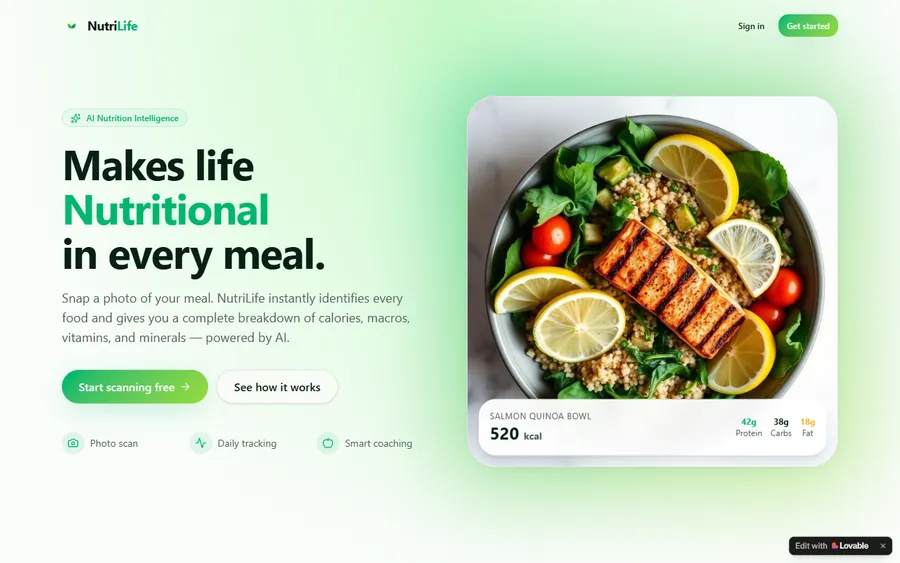
An AI nutrition coach that reads what you eat and works you toward a target.
AI and ML
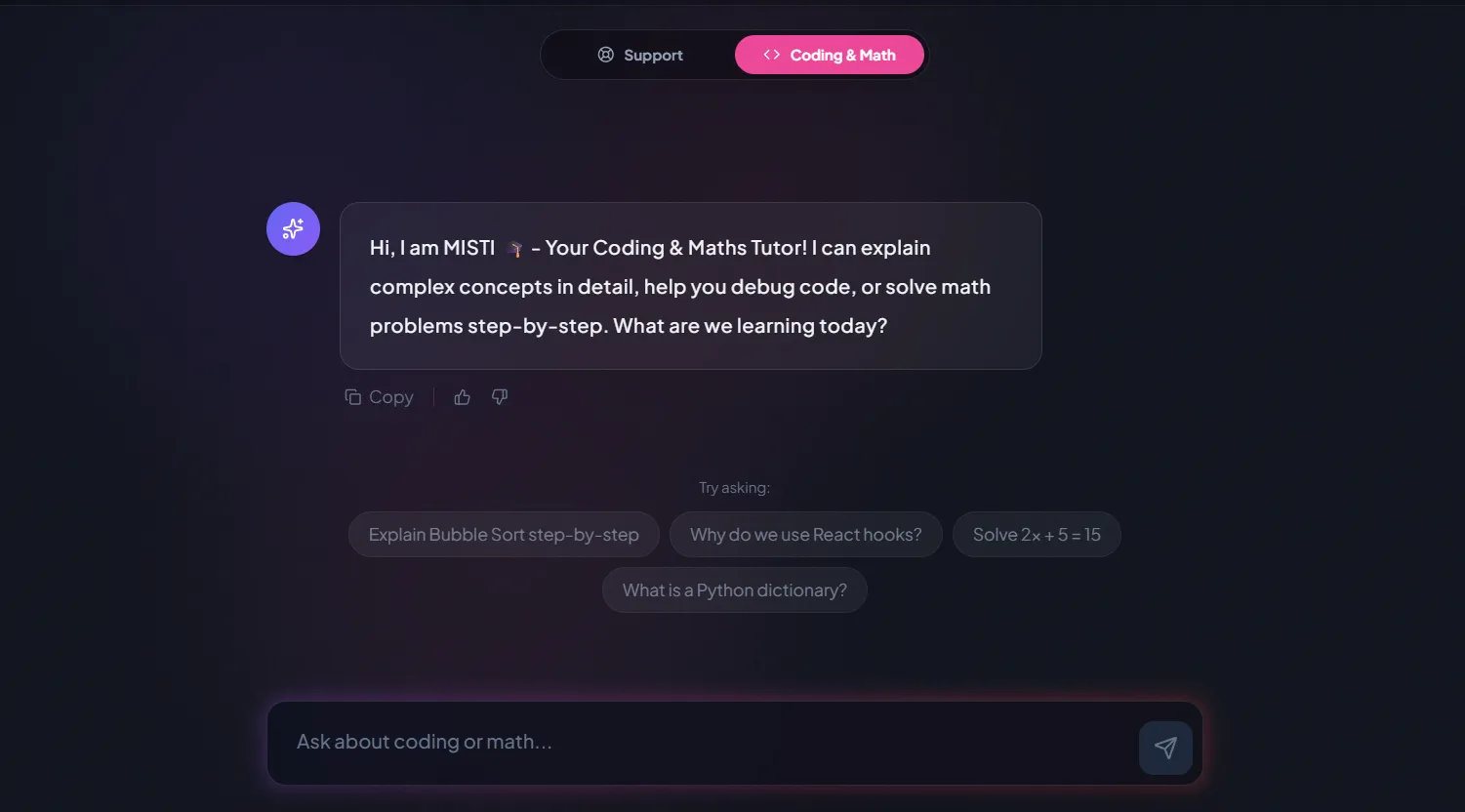
A chatbot that answers mathematics and programming questions, built and deployed by a student.
AI and ML
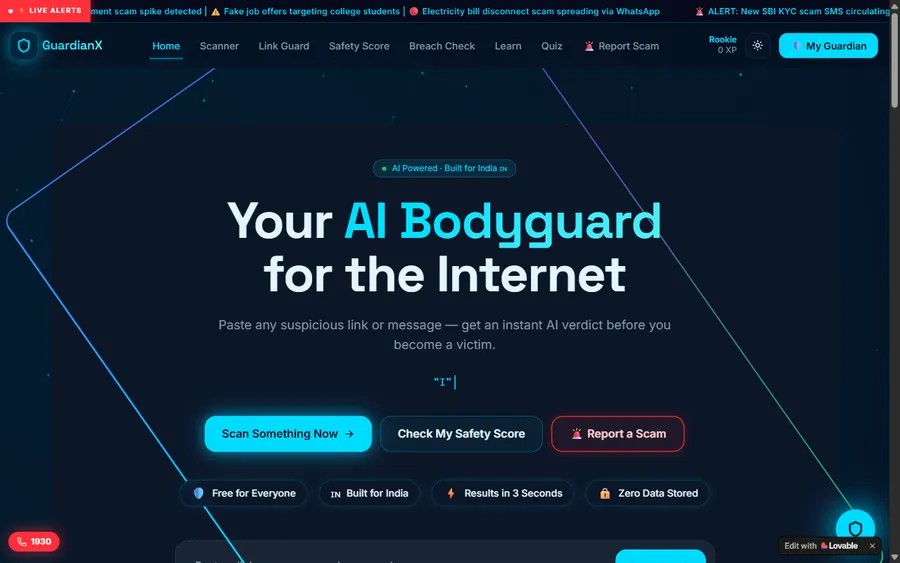
An assistant that helps a young person recognise unsafe situations online.
Web app
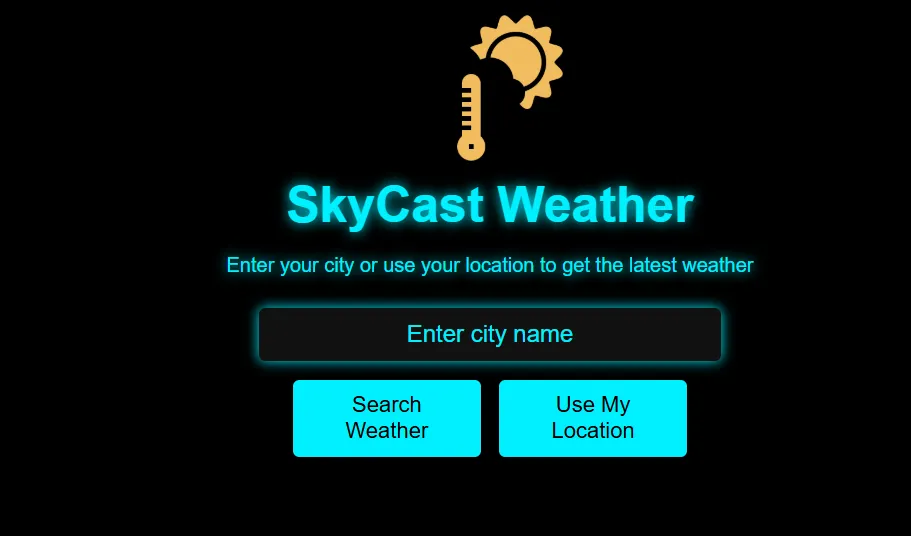
A weather forecasting site with live conditions for any location.
Fees
One monthly charge in US dollars, the rate for every country outside India. The free lesson comes first and billing starts only when a course and a weekly slot are fixed.
Free first class
USD 0
no card required
Group batch
USD 100
a month, billed in US dollars
One to one
USD 150
a month, billed in US dollars
What families say
Taken from Google unedited, from families who volunteered them.
★★★★★
"The one step solution for my son. Modern Age Coders make learning coding so simple that kids love it. The teachers explain complex concepts clearly with practical exercises and interactive content."
Ria Mukherjee
Parent
★★★★★
"Modern Age Coders has been a game-changer for me. I struggled to grasp IT concepts and coding before joining, but their classes transformed everything. I can now confidently write complex programs with ease."
Samriddha Mondal
Student
★★★★★
"One of the most wonderful education centres out there. Education is not limited to school syllabus but focuses on skill development."
Vansh Agarwal
Student
★★★★★
"My child Dhairya is really enjoying the Modern Age Coders classes. This is his first online class and he eagerly looks forward to it. I can already see his improvement, and the teachers are very cooperative."
Sonam Oswal
Parent of Dhairya
★★★★★
"Modern Age Coders have wonderful teachers who teach in a clear, easy and practical way. The teacher boosts students' confidence and inspires them to learn without hesitation."
Sonu Goyal
Parent
★★★★★
"I highly recommend this computer coding class! The teachers are incredibly knowledgeable and passionate about coding."
Ritu Kedia
Parent
Questions about Edexcel 1CP2
Two externally examined papers of equal weight, 75 marks each. Paper 1 is a written examination of an hour and a half. Paper 2 is an onscreen practical of two hours.
Yes. Students complete it onscreen in their own development environment, answering in Python 3, with coding files and a printed question paper supplied and no internet access.
Paper 1 has five compulsory questions, one focused on each topic area. Paper 2 has six compulsory questions.
Because a weak topic is a whole question rather than a scattering of marks. Even coverage across the five topics is worth more on this paper than depth in three of them.
Python 3. The specification says the requirements of the qualification can be met using Python 3 and that students answer the onscreen questions in it.
Coding files, a hard copy of the question paper, and the programming language subset both as an insert and in electronic format.
No assessed coursework. Centres do have to complete a Practical Programming Statement, signed by a member of the senior leadership team, confirming candidates had the opportunity to program during the course.
By writing Python in an editor every week for two years. There is no substitute for volume, and from the spring of Year 11 add timed practice at six questions in two hours.
No. We teach the content, the fluency and the pacing beforehand. What happens in the hall is the student's own work, which is the whole point of an unaided practical.
The opening lesson costs nothing. After that a group place is USD 100 a month and a teacher to yourself USD 150, billed monthly with nothing in advance.
Elsewhere on this site
Each page takes a different part of this further.
What the programming language subset contains, and why to aim above it.
Where questions arrive in AQA pseudo-code and answers must match the form asked.
The Not required column, and the notation choice in Section B.
Why most secondary schools are not required to teach computing at all.
What changes once a project counts towards the grade.
The national page, and the index of every UK page we publish.
Start here
Send a number and we will reply at a British hour that suits. The lesson uses real 1CP2 material, at a keyboard, and ends with a straight view of which paper needs the work.
Prefer reading? Syllabuses sit on each course page, the method and its limits are in how we teach, and the topic order runs down the coding roadmap.
WhatsApp us · +91 91233 66161 · contact@modernagecoders.com
A WhatsApp message is free from a British mobile and gets the fastest answer. The number is an Indian one, said here rather than noticed later.