Coding classes for adults, live and taught in small batches
Most of what ranks for "coding classes for adults" is a list of video courses. This is a class: a live hour with a mentor who writes software for a living, in a batch of 5 to 10 adults or 1-on-1, in the evening or at the weekend, that ends with something you built. It is for the career changer, the professional who needs Python for the job they already have, the parent who wants to keep up with their child, and the retired engineer who always meant to learn. Ages 18 to 67, in India and 25+ countries.
A live adult class at Modern Age Coders is one hour on a video call with a mentor and a batch of 5 to 10 adults at the same level, or 1-on-1. You write code from the first session in Python, JavaScript or Java, the mentor sees your screen and unblocks you on the spot, and a short task follows each class. Batches run in the evening and at the weekend, twice a week, with the same mentor all course. The first class is a free demo.
The courses adults start with
Six live courses for complete beginners from 18 up. Each is taught in a batch of 5 to 10 or 1-on-1, one hour per class, and ends with a project you can show.
 First language / most adultsPython Masterclass: Zero to AdvancedThe default first language for an adult: readable, in demand, and useful at work within weeks. Fundamentals to objects, files and a real project.See the course
 First language / visual learnersHTML and CSS: Build Real WebsitesFor the adult who wants to see something on screen in the first hour. Responsive pages you can put online, then JavaScript when you are ready.See the course
 Career change / the long roadFull Stack Web DevelopmentReact, Node.js and the basics of deployment: the course a career changer takes after Python or JavaScript, ending with a portfolio that works on a live link.See the course
 Enterprise / large systemsJava: Core to Spring BootFor the adult heading into, or already inside, a company that runs on Java. Core language, objects, then Spring Boot.See the course
 No code required / at workData and AI Analytics for Non-ProgrammersExcel, Sheets and Power BI with AI tools, for the professional who needs answers from data without becoming a programmer.See the course
 Professionals / automate the jobPython Automation and Applied AIScripting, scraping and small AI tools that remove the repetitive part of a job. The course working professionals most often ask for.See the course
Five kinds of adult learner, and what each one actually needs
The same live hour, paced differently. Say which of these you are on the call and the mentor plans from there.
Career changers
You need a real language, a portfolio on a live link, and honest feedback on whether the work is hireable. Python or JavaScript first, then full stack, over six to nine months of two classes a week. We do not promise a job; we do promise you will know exactly where you stand.
Working professionals upskilling
You already know your field and want the code that removes its repetitive parts: Python automation, data analytics, or AI tools. Short courses, evening batches, and projects built on your own spreadsheets.
Returners after a break
You coded once, a decade ago, and the language or the tools have moved. A placement conversation in the free class, then a course that starts where your memory ends rather than at zero.
Parents learning alongside their child
You want to understand what your child is building and keep up. We teach the same curriculum to both ages, so a parent in the Python batch and a child in Python for 10 year olds can compare notes at dinner.
Retired and later-life learners
Time, patience and a project in mind, often a website for a club or a tool for a hobby. Paced for you, in a batch of adults, with nothing to prove to anyone. Our learning to code over 50 page is written for you.
Choosing your first language as an adult
Three good answers, and the case where the usual one is wrong.
Python, and when it is the wrong first pick
Python is the right first language for most adults: it reads like English, it is used in data, automation and AI, and a beginner writes something useful in the first weeks. It is the wrong pick for one adult: the one who wants to build websites and needs to see a page change in the browser to stay motivated. That adult should start with HTML, CSS and then JavaScript.
JavaScript
The language of the browser and, with Node.js, of the server too. Start here if your goal is websites and web apps, or if you learn best by seeing results on screen. The full stack course is where it leads.
Java
Verbose, strict and everywhere in large companies, banks and Android. Start here if you are heading into a Java shop or an engineering degree that uses it, and nowhere else; as a first language for a hobbyist it is a slower start than Python. See Java classes for adults.
Do you need to be good at maths to learn coding?
No, not for most of it. Building a website, automating a spreadsheet, writing a script that renames a thousand files, or making a small app needs arithmetic and logic, not algebra. The maths that matters in everyday programming is the kind of careful, step-by-step thinking you already use to follow a recipe or plan a journey.
Maths becomes necessary in three places: data science and machine learning (statistics and some linear algebra), graphics and games (geometry and trigonometry), and competitive programming or computer science degrees (discrete maths). If one of those is your goal, the maths can be learnt alongside the code, and we teach both. Our maths for data science course exists for exactly this, and adults who want to rebuild school maths from the ground up before anything else can do that in a live maths batch too.
The honest warning: adults returning to code stall on maths more often than on syntax, usually because a data or AI course assumed statistics they never had. Say so on the first call and the plan changes; it is not a reason to wait.
Is it too late to learn to code at 40, 50 or 60?
No, and the useful answer is what actually gets harder, because something does. Memorising syntax takes longer after 40 than at 20, and a 55 year old will not out-type a 25 year old. Neither matters much: syntax is looked up, not memorised, and typing speed has never been the bottleneck in programming.
What adults have that younger learners do not is a reason, a domain, and patience. A 45 year old accountant learning Python knows exactly which report to automate first; a 60 year old learning to build a website knows what the website is for. Projects with a purpose get finished, and finished projects are the whole game.
The two things that make it work after 40 are a fixed time each week, because life will otherwise always be busier, and a mentor who can see your screen, because an adult who gets stuck alone at 10 pm tends to stop for good. That is the case for a live class over a recorded one, and it is stronger for adults than for children. Our learn to code over 50 page goes further, and families searching for a coding bootcamp for seniors will find that a paced live class, not a bootcamp, is what they actually want.
Live classes compared with self-paced courses, for adults
Adults abandon recorded courses for the same reason children do, only later at night. The middle column is what we run.
Swipe sideways to see every column
| Self-paced video course | Live batch of 5 to 10 ours | Live 1-on-1 | |
|---|---|---|---|
| Pace | Yours, which usually means stopping | The batch's, adjusted by the mentor per person | Entirely yours |
| When you get stuck | A forum, or the next evening | The mentor, on your screen, in the same minute | Immediately |
| Completion | Low; most adults finish the first fifth | High; the class happens whether you felt like it or not | High |
| Cost | One-time, often low | Monthly, ₹187 per live class | Monthly, ₹1,250 per private class |
| Support between classes | None | A short task and a place to ask | The same, on your own plan |
| What you finish with | A certificate | Projects on a live link, and a mentor who can vouch for them | The same, plus a plan written for you |
Evening and weekend timetable
Adult batches run on weekday evenings between 7 pm and 10 pm Indian Standard Time and on weekend mornings, two classes a week of one hour each. The same windows serve the UK and Europe in the afternoon and early evening, the Gulf in the early evening, and Singapore and Australia at night. Learners in the US and Canada usually take the early-morning IST batches, which fall in their evening.
Exact days and times are agreed on the free class once we know your level and your week, and they stay fixed for the course with the same mentor. One-to-one learners choose their own slot within the same windows.
How long until you build something that works
In the first class. Every adult batch writes and runs code in the first hour, because the point of a live class is that nothing waits for a video to finish. Within four weeks of two classes a week, a Python beginner has a program that does something useful on their own machine, and an HTML and CSS beginner has a page online.
A full first language takes about three to four months at two classes a week. A career-change path, first language then full stack with a portfolio, is six to nine months. Automation and analytics courses for professionals are shorter, because the goal is one job done, not a new career. None of these is a promise about employment; they are the pace we see in our own batches when the two classes a week actually happen.
Where to go next, by what you want
This is the hub for everything we run for adults. Each page below goes deeper on one audience or subject.
The fee, shown in your own currency
One flat monthly fee for every adult coding course, with no enrolment charge and no contract; stop at any month end. Specialist courses for professionals, such as AI agents, are priced on their own pages.
Our published fees
Rated 4.9 across 547 Google reviews; 10,000+ students taught live since 2020. The first class is a free demo of 30-45 minutes minutes; a Priority Live Demo, a full 45-60 minute class today or tomorrow, has a small fee that is adjusted against your first month if you enrol.
Frequently asked questions
Can I learn coding as an adult with no experience?
Yes. Every adult batch starts from zero: what a program is, how to run one, and a first working script in the first hour. No prior coding, no particular degree and no maths beyond arithmetic is assumed. The free class includes a short placement conversation so a returner is not put in a beginner batch and a beginner is not rushed.
Is it too late to learn to code at 40?
No. What gets harder after 40 is memorising syntax and typing quickly, and neither is the bottleneck in real programming, because syntax is looked up and speed is irrelevant. What adults bring is a reason and a domain: the report to automate, the website the club needs. A fixed weekly time and a mentor who can see your screen are what make it work.
How long does it take an adult to learn to code?
Something useful in the first class, a program of your own within about four weeks at two classes a week, a full first language in three to four months, and a career-change portfolio in six to nine months. Professional automation and analytics courses are shorter because the goal is a job done, not a new career.
Do you need to be good at maths to learn coding?
Not for websites, automation, scripting or apps, which need arithmetic and clear thinking. Maths matters for data science and machine learning, graphics and games, and computer science degrees, and in those cases it can be learnt alongside the code. We teach both subjects, so a learner who stalls on statistics gets a maths batch, not a dead end.
Are free coding courses good enough for adults?
For testing interest, yes, and for a self-driven adult learning one specific tool, often yes. For learning to program from nothing, most adults stop within weeks because nobody notices when they do. A live class is a fixed time, a person expecting you and someone to fix the bug at the moment it happens; that is what free courses cannot provide.
Is there a coding bootcamp for seniors?
What most people searching for that phrase want is a paced live class, not a bootcamp. A bootcamp is full-time and intense; a later-life learner usually wants two evenings a week, a project with a purpose and a mentor who does not rush. Our adult batches run that way for ages up to 67, and the over-50 page describes the experience in detail.
Can I learn to code alongside my child?
Yes, and it works well. We teach the same curriculum to children and adults, so a parent in a Python batch and a child in a kids Python class learn the same ideas in the same weeks and can build together at home. Book the free class for each of you and say so on the call.
When do adult classes run for learners outside India?
The evening and weekend windows are set in Indian Standard Time and fall in the UK and European afternoon and early evening, the Gulf early evening, and the Singapore and Australian night. Learners in the US and Canada usually take the early-morning IST batches, which fall in their evening. Exact times are fixed on the free class.
Write your first program in the free class
One live hour with a mentor and a batch of adults at your level. Bring the report you want to automate or the website you want to build; the plan starts from there.
Real student projects
What our students actually build
Every one is a real, live project shipped by a Modern Age Coders student. Explore more in Student Labs.
 Web AppPracy: Coding Practice & Quiz PlatformAn all-in-one coding-practice site with interactive challenges, quizzes and score tracking across multiple languages to strengthen logic and problem-solving.by RohanOpen the live project ↗
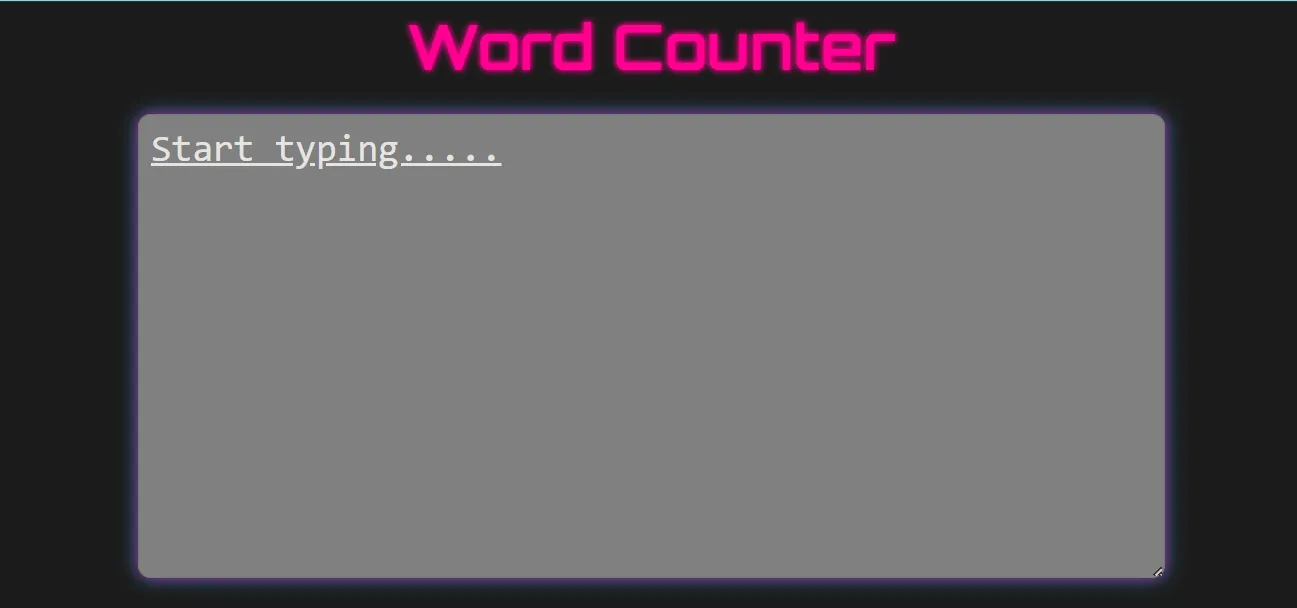 ToolWord Counter WebsiteA simple yet powerful tool that counts words, sentences and paragraphs from user input with instant, real-time results and a clean responsive interface.by VanshOpen the live project ↗
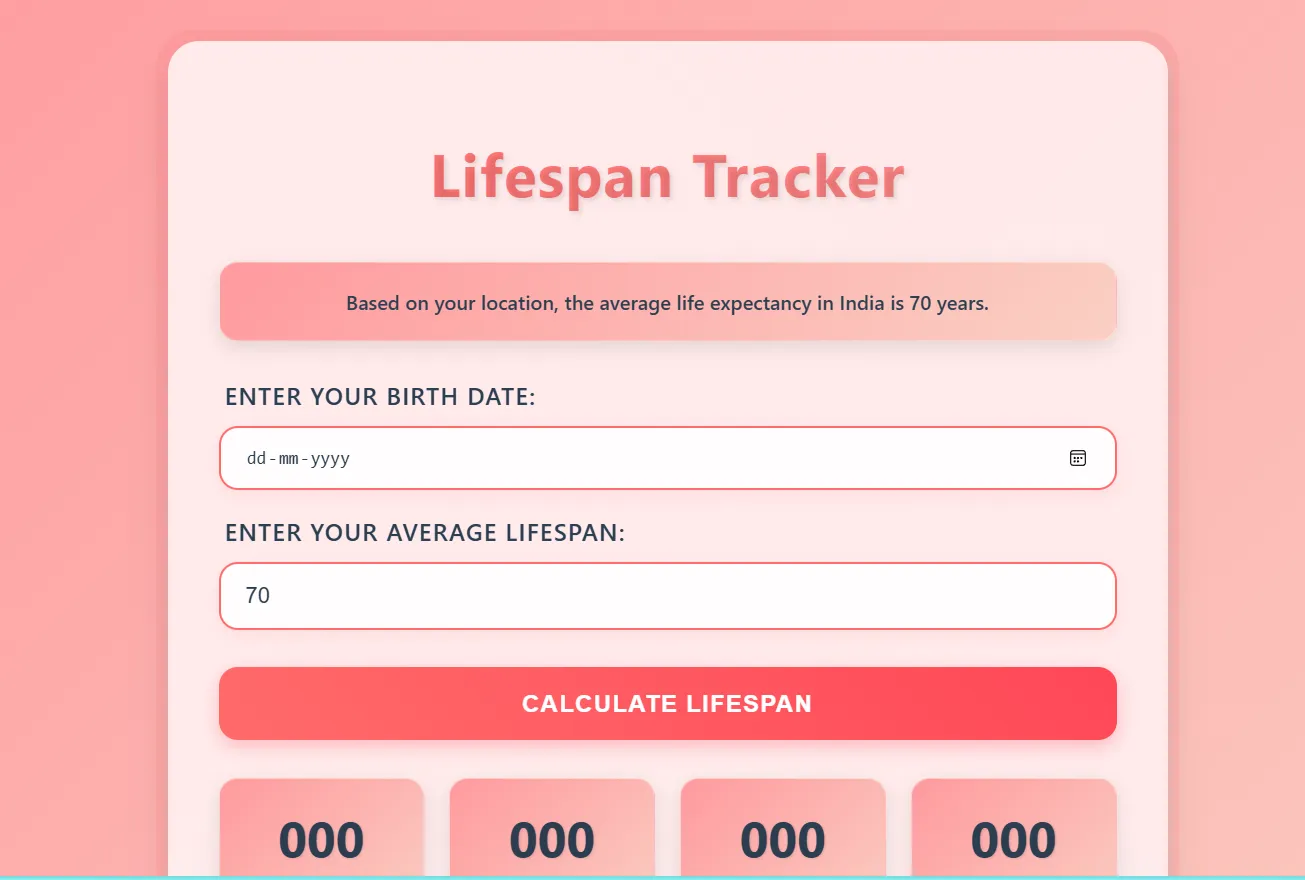 ToolLife Span TrackerAn interactive web tool that calculates expected lifespan, shows days, months and years lived, and visualises remaining time to motivate better habits.by ManayOpen the live project ↗
Parent & student voices
What our families say
Real, verified reviews from Modern Age Coders families. Read hundreds more on our Wall of Love.
“Mivaan enjoys the class. He understands the concepts and completes his tasks with excitement. He started taking interest in coding… truly amazing class.”
Parent of Mivaan
“I highly recommend this computer coding class! The teachers are incredibly knowledgeable and passionate about coding. They make every session engaging and insightful. They explain complex concepts in an easy way and encourage students to ask questions and think critically. The friendly class atmosphere has boosted my son's confidence and interest in coding.”
Parent
“Very good classes. Makes learning very easy and interactive.”
Parent