What are the best coding classes in York?
Census 2021 counted 202,821 usual residents in York, and a quarter of those aged five and over were in study, 25.1% against 20.4% for England. The University of York says plans for a university in the city go back to 1617, though permission came only in 1960. From six-year-olds to learners of sixty-seven, York students work with our teachers over live video, in level-based groups of five to ten or one to one, with India-based staff teaching at hours that suit the UK. The first lesson is free; after it a group place costs USD 100 a month and one-to-one teaching USD 150 a month.
Ordnance Survey lists 2,785 named roads in York. Guess how one ends before you read it, and you will be right more often with Close than with anything else, since 369 of them do. You will almost never guess Coppergate, or Shambles, which is the only name in the city with that ending. Information theory turns that feeling into a number. A likely ending carries little surprise, about 2.9 bits for Close, and a rare one carries a lot, 11.4 bits for a one-off. Averaged over the whole city, a York road ending carries 4.729 bits, the second-highest of eight English cities we measured on equal terms. Our teenagers compute it, then build a code that gets within a few hundredths of a bit of it.
Facts last verified 22 September 2026. Teaching is online; no York branch is claimed.
Let the learner's interests decide. Each course starts with a live lesson that is free, and booking it takes no card.
Puzzles, patterns and twenty-questions games, where asking the question that splits the options in half is the first taste of a bit.
See the syllabus
Python from a first program to full projects, including counting words and letters in a real file of names.
See the syllabus
Priority queues, trees and greedy algorithms built by hand, the parts a Huffman code is made from.
See the syllabus
Python for adults who handle text and data at work, from cleaning messy names to summarising them honestly.
See the syllabusBrowse the course atlas for more than one hundred options and use the coding roadmap to check prerequisites.
The four we are known for
These run underneath everything above. Every one is live and online, placed by ability rather than by age, and the first class is free.
Python, web and AI projects where the learner still owns the thinking.
See the syllabus
Automate the work you already do, then let AI carry part of it.
See the syllabus
Train a model, read what it learned, and be able to say why it is wrong.
See the syllabus
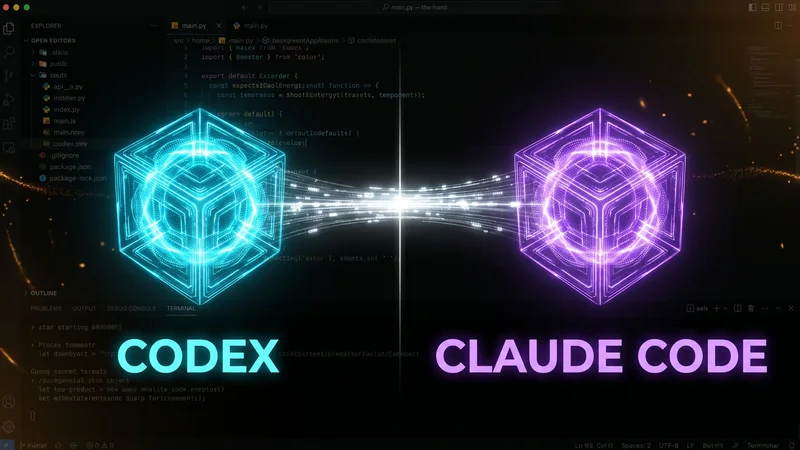
Run AI coding agents on real work without losing control of the codebase.
See the syllabusThese are the Office for National Statistics' own 2021 census counts for the City of York council area, fetched from Nomis without adjustment.
| Measure | York | England |
|---|---|---|
| Usual residents | 202,821 | 56,490,048 |
| Living in households | 191,572 | Not compared |
| Living in communal establishments | 11,249 | Not compared |
| Aged 15 to 19 | 15,216 (7.5%) | 5.7% |
| Aged 20 to 24 | 20,355 (10.0%) | 6.0% |
| Students among residents aged 5 and over | 48,779 (25.1%) | 20.4% |
| Usual residents per square kilometre | 745.8 | 433.5 |
Of 194,206 residents aged five and over, 48,779 were schoolchildren or full-time students in 2021, a quarter of the total.
People aged 20 to 24 made up 10.0% of York's residents, against 6.0% across England, and those aged 15 to 19 were 7.5%.
At 745.8 residents per square kilometre, the council area takes in villages and farmland around the walled centre, so it is far less dense than most cities.
Our York learners reflect that spread. A Year 4 child in Haxby might be making a first game in Scratch, a Year 13 student in Fulford finishing A level Computer Science, and an adult in Acomb learning Python to tidy spreadsheets at work, each in a small group at the right level.
From the University of York's own history and the National Railway Museum's picture history.
The University of York says plans for a university in the city first appeared as early as 1617, and that it would be more than three centuries before they came to anything.
Permission to build was finally granted in 1960. The site at Heslington had been, before the Second World War, a quiet rural retreat and a working agricultural village.
The National Railway Museum's pictures show locomotives around the turntable of York motive power depot in about 1950, in the engine shed that is now the museum's Great Hall, and its Leeman Road entrance in 1975.
We are not connected with the University of York or the National Railway Museum. Both stories are about a city that keeps its old names and buildings and gives them new jobs, which is also true of York's streets. The walled centre is full of road names nothing like those on a modern estate, and that difference can be measured.
Where the names come from
Ordnance Survey publishes Open Names as free data under the Open Government Licence, listing named roads with the council area they fall in. For the City of York it lists 2,785 distinct road names, from Coppergate and Fossgate inside the walls to the closes and avenues of the outer villages.
Claude Shannon defined the information in an event as the number of yes-or-no questions it takes to pin it down. Rare events carry more.
| Ending | Names | Share | Surprise in bits |
|---|---|---|---|
| Close | 369 | 13.2% | 2.92 |
| Street | 247 | 8.9% | 3.50 |
| Avenue | 235 | 8.4% | 3.57 |
| Road | 212 | 7.6% | 3.72 |
| A -gate word, such as Coppergate | 42 | 1.5% | 6.05 |
| An ending used only once, such as Shambles | 1 each | Under 0.1% | 11.44 |
Take the last word of each name. York has 151 different endings, from Close, used 369 times, to 80 that appear only once.
Weight each ending's surprise by how often it occurs. That average is the entropy: 4.729 bits for York, against a maximum of 7.238 if all 151 were equally common.
A fixed-length code needs 8 bits for 151 endings. A Huffman code gives short codes to common endings and averages 4.760 bits, within 0.031 of the entropy.
Leeds has 12,005 road names and 253 endings, and its entropy on the full list is 4.987 bits. Measured on random samples the size of York's, it falls to 4.940 and shows about 120 endings, because rare endings need a big list to appear. At equal size York comes second of eight cities, below Leeds and above Newcastle at 4.410, Bristol at 4.072 and Sheffield at 4.044. Comparing entropies from lists of different sizes quietly rewards the bigger list.
The ending -gate is a York signature: 47 of its road names end that way, 1.7% of the total, against 86 of 12,005 in Leeds and 31 of 6,457 in Sheffield. Bristol shows the opposite pattern. Road ends 30.1% of its names, so a Bristol ending is easier to guess and, on its full list, carries only 4.092 bits on average.
Practised on street names, then used on passwords, text compression, survey answers, error messages and the language models behind AI tools.
| Habit | On York's road names | What it prevents |
|---|---|---|
| Define the category first | Last word, with Stonegate and Coppergate grouped as -gate words | Two analysts getting different numbers from the same list |
| Report the maximum too | 4.729 bits out of a possible 7.238 | A number with no sense of scale |
| Match sample sizes | Leeds cut to 2,785 names before comparing | Rewarding the bigger list for its size |
| Keep the rare cases | 80 endings appear once, and they carry the most information | Throwing away what makes the city distinctive |
| Check against a code | A Huffman code averages 4.760 bits | Trusting a formula that nothing has tested |
The first habit decides everything else. Treat Stonegate as its own ending and York gains dozens of one-off endings and a higher entropy; group every -gate word together and the number drops. Neither is wrong, but the rule must be stated, and it must be the same for every city in a comparison.
Twenty questions played with street names, and the discovery that a good first question halves the list.
Open Names read in Python, endings counted, entropy computed, and a Huffman code built and checked against it.
Categorical data at work, summarised with entropy and compared across groups of equal size.
We have no link with Ordnance Survey, the University of York, the National Railway Museum or City of York Council. Open Names is published under the Open Government Licence and the census figures are public; the counts, entropies and codes on this page are our own work.
Treat the age bands as rough. The free lesson finds the real starting point.
Guessing games where each yes-or-no question cuts the options, and counting how many questions a guess really needs.
Problem Solving and Computational Thinking for KidsScratch Coding for KidsTallying words in code, turning counts into fractions, and seeing that rare things are harder to guess.
Python and AI for KidsMaths Through CodingLogarithms in bits, Shannon entropy on real names, and a Huffman code built with a priority queue.
Problem Solving for TeensPython for TeensEntropy for categorical data, compression and the cross-entropy loss used to train AI models.
Python Automation CourseStatistics & ProbabilityBecause surprise is exactly what those models are trained to reduce.
A language model is scored during training by how surprised it is by the real next word, measured in the same bits this page uses. A learner who has computed the surprise of Close against Shambles understands, in a small and concrete way, what the model is being pushed to learn and why common phrases come out fluent while rare facts come out wrong.
Entropy also explains compression, from zip files to the way images and speech travel across networks. The same few lines of Python that measure York's street names measure how much any message can be squeezed, and whether a code is wasting space. It is one of the few ideas in computing that runs from a guessing game to the frontier of AI without changing shape.
So a York teenager should still learn to program in 2026, in a city whose street names have outlasted most of its buildings: AI is built on prediction, and knowing how to measure a surprise is where understanding it starts. The longer argument is in why coding is worth learning in 2026.
Crossing York at school-run time can take longer than the lesson. A live online class takes the trip away.
A learner in Bishopthorpe and another in Huntington can join the same lesson without anyone driving round the ring road.
We describe progress the way York schools do, in key stages, Year 9 option choices, GCSEs and A levels. All teaching is in English.
The free session teaches something real, then recommends a level, a course and a weekly time. Booking needs no card details.
Groups of five to ten learners at one level, from York, elsewhere in the UK and abroad, so every stage has a workable time.
Two regular weekly lessons, around eight a month, with holidays and exam weeks settled with the teacher in advance.
A 5 pm lesson in York starts at 9.30 pm in India during British Summer Time and at 10.30 pm in winter, because Indian clocks never change. Our teachers work those late hours so York learners do not have to rearrange their day.
Across the Vale of York
Families in Selby, Tadcaster, Pocklington or Easingwold join exactly the same classes, since everything is online and groups are formed by level.
A free first lesson, then a single monthly fee.
A full lesson at no cost, ending with a level, a course we recommend and a weekly time to consider.
Around eight live lessons a month in a group of five to ten learners working at one stage.
Around eight live lessons a month, with the teacher giving your learner all of the time.
Every family outside India pays the same US dollar fee, whether in Dringhouses or Tang Hall, and we publish no prices in pounds. No payment is taken until the free lesson has agreed a course and a slot; the pricing page covers pausing, missed lessons and moving between group and private teaching.
Rated 4.9 across 547 Google reviews. These are real reviews, reproduced as written.
★★★★★
"The one step solution for my son. Modern Age Coders make learning coding so simple that kids love it. The teachers explain complex concepts clearly with practical exercises and interactive content."
Ria Mukherjee
Parent
★★★★★
"Modern Age Coders has been a game-changer for me. I struggled to grasp IT concepts and coding before joining, but their classes transformed everything. I can now confidently write complex programs with ease."
Samriddha Mondal
Student
★★★★★
"One of the most wonderful education centres out there. Education is not limited to school syllabus but focuses on skill development."
Vansh Agarwal
Student
★★★★★
"My child Dhairya is really enjoying the Modern Age Coders classes. This is his first online class and he eagerly looks forward to it. I can already see his improvement, and the teachers are very cooperative."
Sonam Oswal
Parent of Dhairya
★★★★★
"Modern Age Coders have wonderful teachers who teach in a clear, easy and practical way. The teacher boosts students' confidence and inspires them to learn without hesitation."
Sonu Goyal
Parent
★★★★★
"I highly recommend this computer coding class! The teachers are incredibly knowledgeable and passionate about coding."
Ritu Kedia
Parent
The first task suits the level: a twenty-questions game for a young child, a short Python program that counts words for a beginner, or the Open Names file and an entropy calculation for a teenager ready for real data.
What York families ask us most often.
Census 2021 counted 202,821 usual residents in the City of York council area, with 191,572 living in households and 11,249 in communal establishments such as student halls and care homes.
York leans young and studious but is spread out: 10.0% of residents were aged 20 to 24 in 2021, where the English share was 6.0%, and 25.1% of those aged five and over were students, against 20.4%. Because the council area takes in villages, its density was only 745.8 people per square kilometre, though that is still above the English 433.5.
A measure, in bits, of how unpredictable something is on average. Common outcomes carry little information and rare ones carry a lot; entropy is the average, and it sets the shortest possible average length of a code.
In our analysis a York road-name ending carries 4.729 bits of information on average. On lists of equal size that is second of the eight cities we measured, behind Leeds and ahead of Newcastle, Bristol and Sheffield.
Ordnance Survey Open Names, free data published under the Open Government Licence. For the City of York it lists 2,785 distinct road names, 47 of which end in -gate.
The University says plans for a university in York first appeared as early as 1617, and permission to build was granted in 1960. We are not connected with the University.
Weekday afternoons and evenings or weekends, at a UK time settled in the free lesson. India is four and a half hours ahead of York in summer and five and a half hours ahead in winter.
No. There is no centre in York and no premises anywhere in the UK, because all lessons are live online. Learners need a computer with working sound and a steady connection, and our phone number is Indian.
The first lesson is free. After that, a group place is USD 100 a month for two live lessons a week, about eight a month, with five to ten learners, and one-to-one lessons on the same pattern are USD 150 a month. Course, format and time are agreed before anything is charged.
By level, pace and goals rather than age or address, with five to ten learners at one stage. When no group suits the learner's week, we offer one-to-one lessons.
Down the Ouse to the Humber, the Hull page runs a flood fill across a height map of the city, and to the south-west Leeds samples a year of footfall fairly. Newcastle colours a map of its wards with as few colours as possible. The England guide sets out the school stages, and the UK coding page links every city we cover.