Pick the course. Start this week.
Every mentor teaches from a structured programme, adapted live to your child. Open a course to see the full syllabus and enroll in minutes, or start with a Priority Demo and let the diagnostic pick the level for you.
 Best fit
Middle School Mathematics Mastery
Ratios, negatives, algebra and geometry: the make-or-break years, taught for genuine ownership.
$100/mo group · $150/mo 1-on-1
View course & enroll
Elementary Mathematics Masterclass
Counting to advanced problem solving: number sense, fractions, geometry and word problems, built concrete-first.
$100/mo group · $150/mo 1-on-1
View course & enroll
Olympiad & Competition Mathematics
Contest-level problem solving for the student who wants more than the syllabus.
$100/mo group · $150/mo 1-on-1
View course & enrollGood ISEE or SSAT math prep does three things: builds calculator-free number sense, because neither test allows one and both punish slow arithmetic; trains the reasoning sections separately from the achievement sections, they measure different things; and teaches strategy honestly, when to reason, when to estimate, when to move on. That is what we do: live one-hour classes in small groups (8 a month) or private 1-on-1, priced for your country and shown in your local currency, Priority Demo first.
Admissions math measures how a child thinks, on purpose.
The ISEE and SSAT were designed for schools that want to see thinking, not test-prep polish. That design shows everywhere: no calculator, so arithmetic fluency and estimation matter; quantitative-reasoning questions that can be answered without computing, if the child sees the structure; and content that reaches slightly beyond grade level to find each child's ceiling.
This is why pure content-cramming underperforms on these tests. A child drilled on procedures meets a quantitative comparison, "which is greater, or can you not tell?", and starts computing furiously when ten seconds of reasoning would settle it. The clock eats them alive, not because they know too little math, but because they know it the wrong way.
The stakes explain the anxiety around these tests: they gatekeep competitive private and independent schools, and scores are reported against a demanding cohort, other private-school applicants, not the general population. A child who is strong at school can land mid-percentile here, which shocks families every autumn.
The honest good news: reasoning is teachable. Number sense, structural seeing, quantitative comparison strategy, all of it responds beautifully to the depth-first teaching we do anyway. Our prep students are not learning tricks; they are becoming the thinker the test was designed to find, which conveniently is also the student the school wants to admit.
The ISEE and SSAT, mapped side by side.
| Dimension | ISEE | SSAT |
|---|---|---|
| Levels | Lower (applying to grades 5-6), Middle (7-8), Upper (9-12) | Elementary (applying to grades 4-5), Middle (6-8), Upper (9-12) |
| Math sections | Quantitative Reasoning (word problems and, at Middle/Upper, quantitative comparisons) plus Mathematics Achievement (curriculum-based) | Two Quantitative sections mixing arithmetic, algebra and geometry reasoning |
| Calculator | Not allowed | Not allowed |
| Scoring flavor | Stanines 1-9 against applicant cohort; no penalty for wrong answers | Percentiles against same grade and gender; Middle/Upper have historically penalized wrong answers, making skip strategy matter |
| Signature question type | Quantitative comparison: which quantity is greater, if it can be determined | Number-sense problems built to reward estimation and structure |
| Retakes | Limited windows per admissions season | Multiple test dates per year |
Formats and policies evolve; we verify current details against erblearn.org and ssat.org for each student's test date and level.
Eight signs a strong student will underperform on these tests.
Arithmetic leans on the calculator
School allows one; these tests do not. Slow mental arithmetic taxes every single question on the clock.
Every problem gets fully computed
Quantitative comparisons are designed to be reasoned, not computed. Computing them all is how time dies.
Estimation feels like cheating
Children trained for exact answers resist the approximation these tests openly reward.
Above-grade content causes panic
Both tests deliberately reach past grade level. A child who expects to know everything freezes; the test expects strategic response.
No skip strategy exists
Especially on the SSAT, where wrong answers have historically cost fractions of a point, knowing when not to answer is a scored skill.
Word problems get skimmed
ISEE quantitative reasoning is deliberately wordy. Skim-and-grab, which survives at school, fails here.
Pacing collapses under the clock
Strong students used to finishing comfortably meet a test built so almost nobody finishes comfortably.
The first practice score shocked everyone
Mid-percentiles against a private-school cohort are normal starting points, and very movable, taught the right way.
Recognize your child? A diagnostic hour against their actual test level shows exactly where the points are. A Priority Demo doubles as that diagnostic: a full live class, with a written skill report afterwards.
A quantitative comparison, answered in ten seconds without computing.
Column B: 50 × 50
Which is greater, are they equal, or can it not be determined?
The computing child: multiplies 47 × 53 longhand under the clock, gets 2491 after ninety seconds (if no slip), compares with 2500, answers B. One question, a tenth of the section's time, gone.
The reasoning child our mentors build: both pairs sum to 100. Of all pairs summing to 100, the closer the numbers, the bigger the product, a square beats every rectangle with the same perimeter. 50 and 50 are as close as it gets.
equal sums → the more balanced pair wins
Column B is greater. (Ten seconds, no multiplication.)
That is the entire philosophy of these tests in one question: structure beats computation. It is also, not coincidentally, real mathematical thinking, which is why our prep doubles as genuine enrichment rather than disposable test tricks.
Number sense first, strategy second, drills last.
Calculator-free fluency
Mental arithmetic, friendly-number tricks and estimation trained daily, the muscle every question secretly tests.
Comparison strategy as a skill
Quantitative comparisons get their own toolkit: balance reasoning, plugging smart values, and recognizing "cannot be determined".
Content to level, honestly
Each level's actual content range gets covered from understanding, with above-grade topics taught as reachable stretch, not panic fuel.
Pacing and skip discipline
When to invest, when to estimate, when to walk away: rehearsed until the clock becomes a tool instead of a predator.
Real practice material
Official-style sections under real timing, reviewed question by question for the reasoning, not just the answer key.
One mentor to test day
The same teacher tracks percentile movement, wobbly topics and confidence, and adjusts the plan weekly.
Three months to test day, mapped.
Weeks 1-2 · Diagnose against the real test
A timed section at your child's level, reviewed for reasoning, sets the baseline and the plan. The Priority Demo starts this.
Month 1 · Number sense and content gaps
Calculator-free fluency built daily while the diagnostic's content gaps, often fractions, ratios or early algebra, get properly repaired.
Month 2 · Question craft
Quantitative-comparison strategy, wordy-problem reading discipline, and the estimation habit, each trained on real questions.
Month 3 · Pacing and polish
Full timed sections, skip discipline, review rhythms, and confidence work, so test day feels like another Tuesday class.
After · The skills keep paying
Number sense and structural reasoning are not test tricks; they compound straight into school math. Many families simply continue.
What the math sections actually test, level by level.
Both tests draw from the same broad territory, arithmetic, algebra, geometry, measurement, data and probability, but the reach deepens with each level. This is the map we diagnose against and prep from; the mentor tunes it to your child's exact level and test date.
| Level | Core content territory | Where prep points usually hide |
|---|---|---|
| ISEE Lower / SSAT Elementary (applying to grades 4-6) | Whole-number operations, place value, fractions and early decimals, patterns and sequences, basic geometry and measurement, simple data and graphs, early word problems | Fraction sense without pictures, multi-step word problems, and mental arithmetic speed, the calculator ban bites earliest here |
| ISEE Middle / SSAT Middle (applying to grades 7-8) | Ratios, rates and percents, negative numbers and integer operations, early algebra (expressions, one-variable equations), proportional geometry, area and volume, probability and statistics basics | Quantitative comparisons appear on the ISEE here; ratio reasoning and estimation carry more points than any single content topic |
| ISEE Upper / SSAT Upper (applying to grades 9-12) | Linear and quadratic algebra, functions and graphs, exponents and radicals, coordinate and plane geometry, right-triangle basics, counting and probability, data interpretation | Above-grade reach is widest here; knowing what to skip is worth real percentile, and QC strategy separates the top stanines |
Notice what the right-hand column keeps saying: the points hide in reasoning habits, not missing chapters. That is why our prep is taught by mathematics mentors rather than run through drill software, the habits are the product.
An estimation problem, solved the way the test intends.
(A) 6 (B) 60 (C) 300 (D) 600 (E) 6,000
The long-division child starts the algorithm, no calculator allowed, and spends two minutes reaching an exact 60.96 that the question never asked for.
The estimating child rounds both numbers to friends: 2,987 is nearly 3,000, and 49 is nearly 50.
Answer: (B), in about eight seconds.
The answer choices are a full order of magnitude apart, which is the test quietly telling you: estimate, do not compute. Reading that signal is a taught skill, and once a child owns it, whole families of questions collapse from two minutes to ten seconds. That reclaimed time is where percentile jumps actually come from.
What one full hour of prep actually looks like.
Every class is a full 60 minutes, live and interactive, no 25-minute "sessions", no videos pretending to be teaching. A typical prep hour:
0-10 min · Number-sense warm-up
Rapid mental arithmetic and estimation rounds, the calculator-free muscle, trained every single class.
10-35 min · The day's territory
One content area or question type taught properly, from why it works, with your child solving and explaining aloud, not watching.
35-50 min · Test-condition reps
Real-format questions on a real clock, then the review that matters: not "right or wrong" but "was that the fastest honest route?"
50-60 min · Strategy debrief
Skip decisions reviewed, pacing checked against target, and the week's practice set assigned with a purpose your child can state.
Parents tell us their children wait for these classes, which sounds impossible for test prep until you watch one. That is the point of a Priority Demo. See exactly how we teach →
Who this genuinely fits, and who it does not.
A strong fit if…
• Your child is applying to a competitive private or independent school and the first practice percentile landed lower than anyone expected.
• Your child knows the math but bleeds points to time, computation habits and missing test strategy.
• Homework has become a nightly negotiation and you want a calm expert to take over the teaching.
• You want one mentor who knows your teen, not a rotating cast or an app with streaks.
Honestly not the fit if…
• Your child cannot yet engage with a screen and a teacher for a full hour. By grade 4 nearly every child can, provided the hour is genuinely interactive, and ours are, this matters double for younger Lower and Elementary level candidates.
• You want homework done for the child. We teach the child to do it, which is slower on night one and far faster by week four.
• You want a two-week miracle before test day. A fortnight buys strategy polish, real percentile movement takes six to twelve weeks of reasoning work, and we will tell you honestly which one time allows.
The courses behind the tutoring.
Every mentor teaches from a structured curriculum, adapted live to your child. If you prefer to see the full syllabus before you start, these are the programmes ISEE and SSAT candidates join, matched to test level.
Premium teaching. One honest price.
You are paying for a real teacher, live, for a full hour, twice a week, the same format US tutoring centers charge $300 to $450 a month for. Our cost base is global, so the price is not.
1:1 Private Mentorship
$150 / month
- 8 live one-hour classes a month, 2 per week4 live one-hour classes a month, 1 per week
- A dedicated mentor who knows your child by name
- Diagnostic-led plan against the full map for their test level
- Class recordings for revision · cancel any time
Small-Group Class
$100 / month
- 8 live one-hour classes a month, 2 per week
- A handful of children at the same level
- Same teaching method, gentle peer energy
- Recordings included · cancel any time
That is $18.75 per dedicated hour of 1-on-1 teaching, or $12.50 in a small group. No registration fee, no contract, and you can see a full class first with a Priority Demo. Read our zero-risk promise or compare with what US math tutoring costs in 2026.
Mentors who teach the why, in classes kids wait for.
Our mentors are trained in one method: understanding before procedure, concrete before abstract, the child talking more than the teacher. They teach both maths and coding, which matters more than it sounds, because a mentor who can turn "4 groups of 6" into a game your child wants to build has engagement tools a worksheet never will.
And because the same mentor stays with your child month after month, teaching compounds. They know that your daughter rushes when unsure, that your son shuts down after two wrong answers, and exactly which idea to revisit before it becomes a gap.
"My child Dhairya is really enjoying the classes. This is his first online class, and he eagerly looks forward to it. I can see his improvement."
Sonam Oswal, mother of Dhairya · verified Google review
"My son struggled with math for years. Integrating it into coding projects has transformed his understanding and confidence. Highly recommended!"
Shewta Singh, mother of Ishan · verified Google review
Your real options for ISEE or SSAT prep.
| Option | Typical cost | What it really is | Best for |
|---|---|---|---|
| Modern Age Coders | $100–$150 / month | 8 live one-hour classes with a dedicated math mentor: number sense, strategy and real timed practice | Building the reasoning the tests measure, with honest timelines |
| Big test-prep companies | $1,000-$3,000+ / package | Fixed-length packages, often rotating instructors, strategy-heavy and math-depth-light | Families who want a bundled all-subjects package and can absorb the price |
| Private admissions tutor | $80-$250 / hour | Quality varies enormously; twice weekly runs $640-$2,000 a month | Short final-stretch polish when you have found a proven specialist |
| Prep books + practice tests | $30-$80 one-time | Good question banks, zero teaching; a child who computes everything just practices computing everything faster | Motivated older students who already own the reasoning habits |
| Test-prep apps | $10-$30 / month | Gamified drills, no teacher, no strategy correction | Extra reps between real lessons |
Competitor figures are typical published US prices as of July 2026. See our full comparisons: vs Kumon · what US math tutoring costs · best online math tutoring 2026.
Everything families ask about ISEE and SSAT math prep.
Which test should my child take, ISEE or SSAT?
Usually the schools decide for you: check which tests your target schools accept, many accept both. Where there is a genuine choice, the mentor looks at your child's profile: the ISEE's quantitative comparisons reward structural thinkers, the SSAT's scoring has historically punished guessing, which changes strategy for impulsive test-takers. We prep either, and the reasoning core we build serves both.
When should prep start?
Six to twelve weeks before the test date is the honest working range: enough time to build number sense and strategy, not so long that a young child burns out. Applying in autumn means starting in late summer. If you are closer than six weeks, come anyway, we will tell you plainly what is achievable and prioritize the highest-value strategy work first.
My child does well at school. Why was the practice percentile so low?
Because the comparison group changed. ISEE stanines and SSAT percentiles rank your child against other private-school applicants, a self-selected, well-prepared cohort, not the general population. A mid-percentile start is normal and very movable; it measures unfamiliarity with the format far more than it measures mathematical ability.
There is no calculator on these tests. My child depends on one. How bad is that?
It is the single most common gap we find, and among the most fixable. Every class opens with mental-arithmetic and estimation training, and within a month most children stop reaching for the phantom calculator. The bonus: that fluency keeps paying at school long after test day.
What are quantitative comparisons and why do they matter so much?
They are the ISEE Middle and Upper level's signature question: two quantities, and you decide which is greater, whether they are equal, or whether it cannot be determined. They are designed to be reasoned in seconds rather than computed in minutes, and untrained students compute. We teach the comparison toolkit explicitly: balance arguments, smart test values, and the discipline to spot "cannot be determined".
Do you prep both math sections of the ISEE?
Yes, and differently, because they measure different things. Quantitative Reasoning gets strategy and structure work; Mathematics Achievement gets curriculum coverage to your child's level. A prep that treats them as one blob leaves points on both tables.
How do you handle guessing strategy on the SSAT?
The SSAT's Middle and Upper levels have historically deducted a fraction of a point for wrong answers, which makes when-to-skip a genuinely scored skill, and it interacts with pacing. We teach it explicitly and rehearse it on timed sections, and we verify the current scoring policy at ssat.org for your child's test date, since policies evolve.
How much can the score actually move?
We will not invent a number; movement depends on the starting gap, the weeks available and the practice done between classes. What we promise instead: an honest diagnostic in week one, a plan with the highest-value points first, and visible movement on timed sections you can track yourself. Monthly billing means you re-decide every four weeks based on evidence.
What does it cost?
Pricing is set for each country and shown on this page in your own currency. Group plans include 8 live one-hour classes a month and 1-on-1 plans run private weekly sessions, all billed month to month. To see a class first, book a Priority Demo. No registration fee, no package lock-in, which matters in a market where admissions-prep packages routinely run $1,000 to $3,000.
Is the prep useful if my child ends up not sitting the test?
More than most prep, yes. Because we build number sense and reasoning rather than disposable tricks, everything transfers straight into school math. Families regularly continue after test day for exactly that reason.
My child is anxious about this test. How do you handle that?
Gently and structurally. Anxiety on these tests usually traces to pacing panic and above-grade questions, both of which have taught answers: skip discipline turns "I could not finish" into a plan, and stretch topics are framed as bonus territory rather than expectations. The same mentor every class, in an interactive hour that children genuinely enjoy, does the rest.
Can we try a class before enrolling?
Yes. Book a Priority Demo: a full live class of about 45 to 60 minutes, today or tomorrow, with a mentor reserved for your child. After the class the mentor sends a written skill report and a personal learning roadmap on WhatsApp. If you enrol, the demo fee is adjusted against your first month's fee.
More math help from Modern Age Coders.
Watch one full hour of real teaching. Free.
Book the demo class. Your child gets a real lesson with a real mentor, you get a diagnostic against their actual ISEE or SSAT level, one full hour of real prep teaching, free. If your child does not leave the hour lighter about the test, walk away with our thanks.
Real student projects
What our students actually build
Every one is a real, live project shipped by a Modern Age Coders student. Explore more in Student Labs.
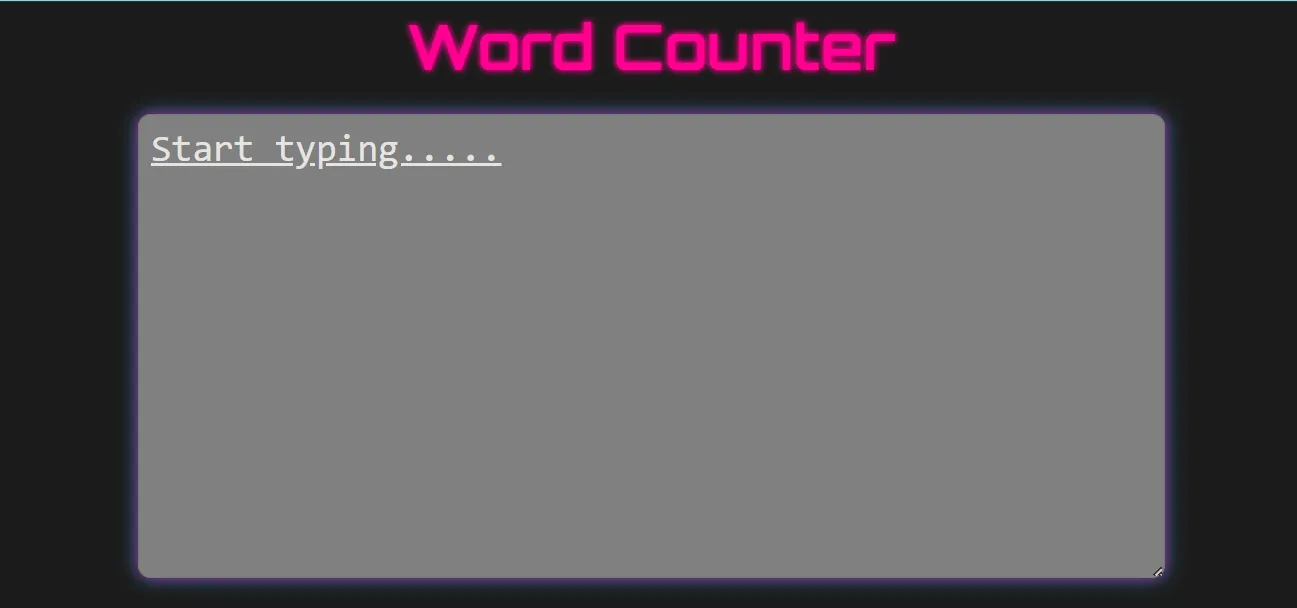 ToolWord Counter WebsiteA simple yet powerful tool that counts words, sentences and paragraphs from user input with instant, real-time results and a clean responsive interface.by VanshOpen the live project ↗
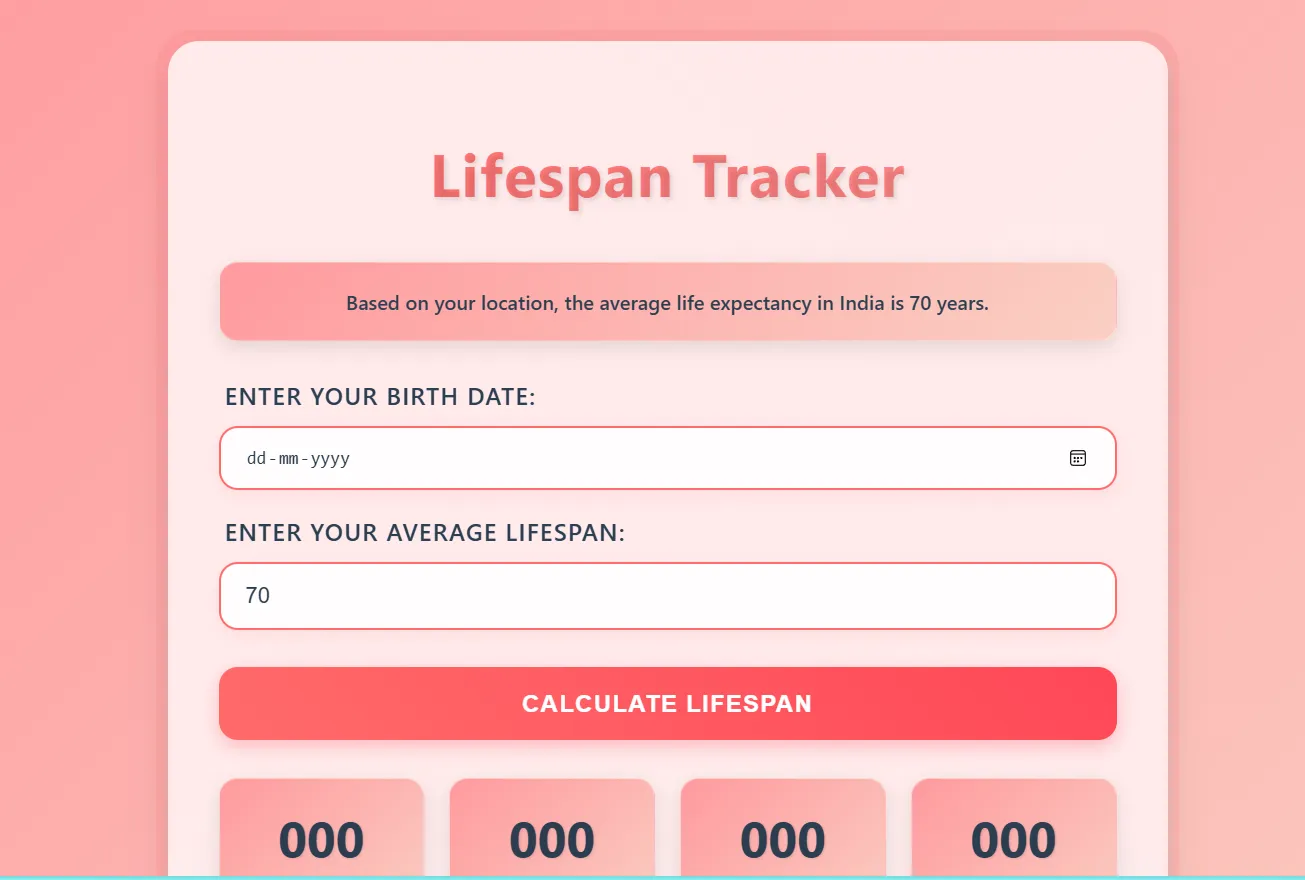 ToolLife Span TrackerAn interactive web tool that calculates expected lifespan, shows days, months and years lived, and visualises remaining time to motivate better habits.by ManayOpen the live project ↗
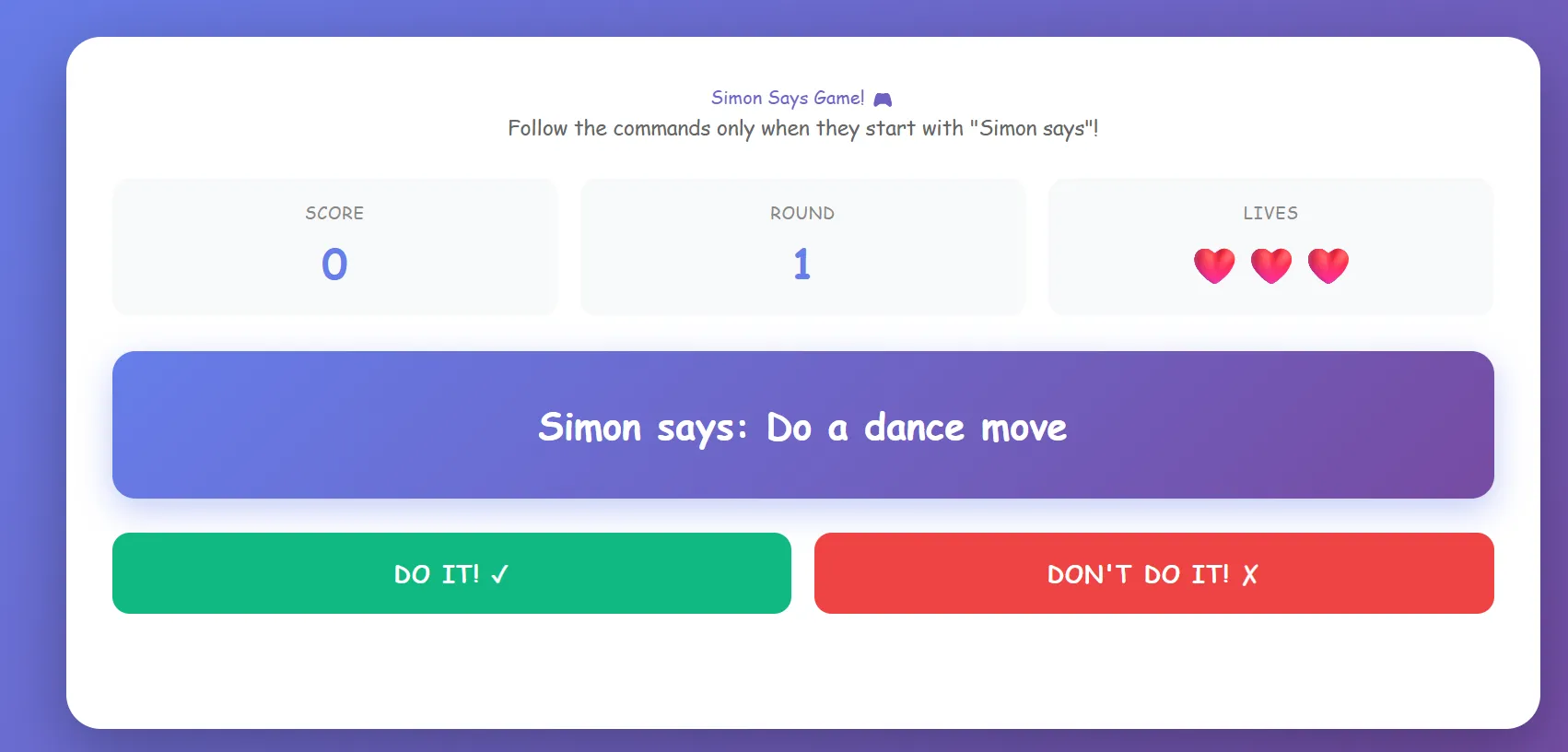 GameSimon GameA fun memory-based game where players repeat colour and sound sequences. Each level adds a new challenge, brain-boosting for kids learning logic and focus.by YashaswiOpen the live project ↗