UK / HC1 / 01
Python, zero to advanced
Sub-programs, parameters, files and records, which is Higher programming.
Open the syllabusScotland · Higher · S5 and S6
Students who pass National 5 Computing Science often arrive at Higher expecting more of the same, and the assessment does nothing to correct them. The shape is identical: a question paper worth 80 marks, an assignment worth 40, software design and development compulsory in both, database or web chosen in each, and an assignment completed within six hours. The one visible change is that the paper now lasts two hours instead of an hour and a half, thirty more minutes for exactly the same eighty marks, which is the specification quietly telling you the questions are harder. Everything else that changes sits inside that familiar frame. This page lists it, section by section, so a candidate knows what is genuinely new before the year starts.
Live teaching since 2020 · 10,000+ students · Built from the Higher specification itself
In short
Higher Computing Science is assessed exactly as National 5 is in outline: a question paper worth 80 marks and an assignment worth 40, software design and development compulsory in both, database or web chosen in each, and an assignment completed within six hours, set annually and marked externally. The paper runs two hours rather than an hour and a half. The difference is in the content. Higher adds iterative and agile development, standard algorithms on arrays and arrays of records, a comprehensive final test plan, breakpoints and watchpoints, floating-point representation with mantissa and exponent, Unicode, the fetch-execute cycle and performance factors, the Computer Misuse Act, and SQL across three or more tables with aggregate functions and GROUP BY. The course is now awarded by Qualifications Scotland, which took over from SQA in February 2026. The first lesson is free, then USD 100 a month in a group or USD 150 one to one.
Start here
Deeper programming, the algorithms Higher names, and the SQL it adds. Cards open the full syllabus.

H / 01
Sub-programs, parameters, file handling and arrays of records, which is where Higher programming sits.
Open the syllabus →
H / 02
Linear search, find minimum and maximum, and count occurrences, implemented on arrays and arrays of records.
Open the syllabus →
H / 03
Three or more linked tables, aggregate functions, GROUP BY and wildcards, for candidates on the database route.
Open the syllabus →The same frame
From the Higher Computing Science Course Specification, version 3.0, valid from session 2023 to 24.
| National 5 | Higher | |
|---|---|---|
| Question paper marks | 80 | 80 |
| Question paper length | 1 hour and 30 minutes | 2 hours |
| Assignment marks | 40 | 40 |
| Assignment time | Within 6 hours | Within 6 hours |
| Compulsory in both | Software design and development | Software design and development |
| Optional in both | Database or web | Database or web |
| Course code | C816 75, SCQF level 5 | C816 76, SCQF level 6 |
Thirty extra minutes for the same eighty marks is the specification telling you, without saying so, that the questions demand more per mark. More reading, more working, more written explanation.
It also means pace matters differently. A National 5 candidate who finished early may find Higher runs to the end.
The Higher paper asks candidates to "communicate how a program works in technical detail" and to "analyse computing science problems with some complex aspects". National 5 asks candidates to communicate how a program works, without the qualifier.
Those two phrases, technical detail and complex aspects, are where most of the new difficulty lives.
The optional structure is the same, which means the choice between database and web still comes twice, once in the paper and once in the assignment. That decision is set out in full on the National 5 page, and it applies at Higher unchanged.
Source: the Higher Computing Science Course Specification, version 3.0, linked from the Qualifications Scotland Higher page. The new awarding body took over from SQA at the start of February 2026 and confirms the SQA-era course documents are still the ones in force.
What changes inside
Quoted from the specification's own list of skills, knowledge and understanding. These are the areas a National 5 candidate has not yet met.
| Area | What the specification asks |
|---|---|
| Methodologies | "Describe and compare the development methodologies: iterative development process, agile methodologies" |
| Standard algorithms | "Describe, exemplify and implement standard algorithms using 1D arrays or arrays of records: linear search, find minimum and maximum, count occurrences" |
| Testing | "Describe, exemplify and implement a comprehensive final test plan to show that the functional requirements are met" |
| Debugging | Debugging techniques: "dry runs, trace tables/tools, breakpoints, watchpoints" |
| Evaluation | In terms of "fitness for purpose, efficient use of coding constructs, usability, maintainability, robustness" |
| Area | What the specification asks |
|---|---|
| Floating point | Floating-point representation of real numbers "using the terms mantissa and exponent", and "the relationship between the number of bits assigned to the mantissa/exponent, and the range and precision of floating-point numbers" |
| Characters | "Describe Unicode used to represent characters and its advantage over extended ASCII code (8-bit)" |
| Computer structure | "Describe the concept of the fetch-execute cycle", and performance factors: "number of processors (cores), width of data bus, cache memory, clock speed" |
| Environment | The environmental impact of intelligent systems: "heating systems, traffic control, car management systems" |
| Law | Implications of the "Computer Misuse Act 1990" for individuals and businesses |
| SQL | Relational databases "with three or more linked tables", using "wildcards", "aggregate functions (MIN, MAX, AVG, SUM, COUNT)", "computed values, alias", "GROUP BY", "ORDER BY" and "WHERE" |
Four named algorithms, implemented on arrays and on arrays of records. Records are where most students stumble, because the data has shape as well as values.
The single most commonly misunderstood topic at Higher. The trade-off between range and precision is the thing to understand, not the conversion steps alone.
GROUP BY with aggregate functions across three linked tables is a real step up from National 5 queries, and it rewards writing queries rather than reading them.
The web route deepens too, with considerably more CSS and JavaScript than at National 5 and a stronger emphasis on usability. A candidate choosing web at Higher should expect to write and read scripts, not only structure pages.
Technical detail
The phrase that separates Higher from National 5 is small, and it changes how answers are marked.
At National 5 a candidate can describe what a program does. At Higher the aim is to communicate how it works "in technical detail": naming the construct, the data structure and the reason, rather than paraphrasing the output.
That is a writing skill as much as a programming one, and it is almost never practised, because students read code far more than they explain it in sentences.
Take a short program and explain it in writing, line by line, using the correct terms. Then trace it with a trace table and check the explanation against what actually happens.
Do it weekly. The breakpoints and watchpoints the specification names are exactly the tools for checking an explanation against reality.
| If a candidate can already | The Higher step is | Practise by |
|---|---|---|
| Write a working program | Structure it into sub-programs with parameters | Refactoring an old National 5 program into functions |
| Use a single array | Use arrays of records and the four standard algorithms | Implementing each algorithm on a list of records |
| Test by running it | Write a comprehensive final test plan | Writing the plan before the code, against the functional requirements |
| Fix errors by trial | Debug with dry runs, trace tables, breakpoints and watchpoints | Tracing a buggy program by hand before touching it |
| Convert binary integers | Represent real numbers in floating point | Changing mantissa and exponent bit counts and watching range and precision move |
The coursework is off limits to us: a fresh task each year, supervised in school and marked elsewhere as proof of what the candidate can do alone. The practice we offer uses our own briefs, and the page on declaring AI covers what the rules say about AI in any assessed work.
For candidates going further, the Advanced Higher page covers the project that dominates the next level, and coding and AI classes in Scotland sets out the whole Scottish system.
Progression
Placement follows what a candidate can do unaided, not whether they passed National 5.
| Rung | When | What should be true |
|---|---|---|
| 1. Structured programs | Early S5 | Sub-programs with parameters, file handling and arrays of records, written without examples |
| 2. The standard algorithms | S5 | Linear search, find minimum and maximum, count occurrences, on arrays and records |
| 3. Systems and data | S5 | Floating point, Unicode, the fetch-execute cycle, and aggregate SQL or deeper web scripting |
| 4. Technical explanation | Before the paper | Explaining how code works in precise terms, checked against trace tables and breakpoints |
National 5 programs are often one long block. Higher expects them split into parts, and candidates who have not done that meet it in the assignment.
The full topic order runs down the coding roadmap.
The harder questions reward precise explanation. It improves quickly with weekly written practice and not at all without it.
Lessons ease off before the exam diet and resume afterwards.
The catalogue
Grouped by which part of the course they support. Where to begin is settled in the free lesson.
UK / HC1 / 01
Sub-programs, parameters, files and records, which is Higher programming.
Open the syllabusUK / HC1 / 02
The four standard algorithms, implemented and traced properly.
Open the syllabusUK / HC1 / 03
Iterative development in practice, which the methodologies section asks candidates to compare.
Open the syllabusUK / HC2 / 01
Aggregate functions, GROUP BY and three linked tables.
Open the syllabusUK / HC2 / 02
CSS and JavaScript well past National 5, for the web route.
Open the syllabusUK / HC2 / 03
For candidates who want web work grounded in a language they already know.
Open the syllabusUK / HC3 / 01
The deeper algorithm work Advanced Higher and university expect.
Open the syllabusUK / HC3 / 02
Real datasets, which many Advanced Higher projects turn out to need.
Open the syllabusUK / HC3 / 03
Where floating point and data structures meet real models, for candidates with time to spare in S6.
Open the syllabusHow lessons work
Teachers work from India on a clock that never shifts, so Scotland is five and a half hours behind from October and four and a half from March. Slots are agreed in UK time.
After school
Where most S5 and S6 students settle.
Later evening
For students with part-time work or long journeys.
Weekend morning
Long enough for a full two-hour paper and a review.
Every program split into sub-programs with parameters, because Higher expects structure and the assignment rewards it.
The standard algorithms implemented on arrays of records, where the real difficulty is.
Short written explanations of code in precise terms, marked weekly, because the paper asks for technical detail.
Trace tables, breakpoints and watchpoints used to test explanations against what the program actually does.
The assignment is off limits. Every exercise we set is our own brief, never the year's task.
Five to ten candidates at one stage, explaining each other's code.
Student work
Four projects from lessons, none of them assessed work. Many more in student labs.

AI and ML
An AI nutrition coach that reads what you eat and works you toward a target.
AI and ML
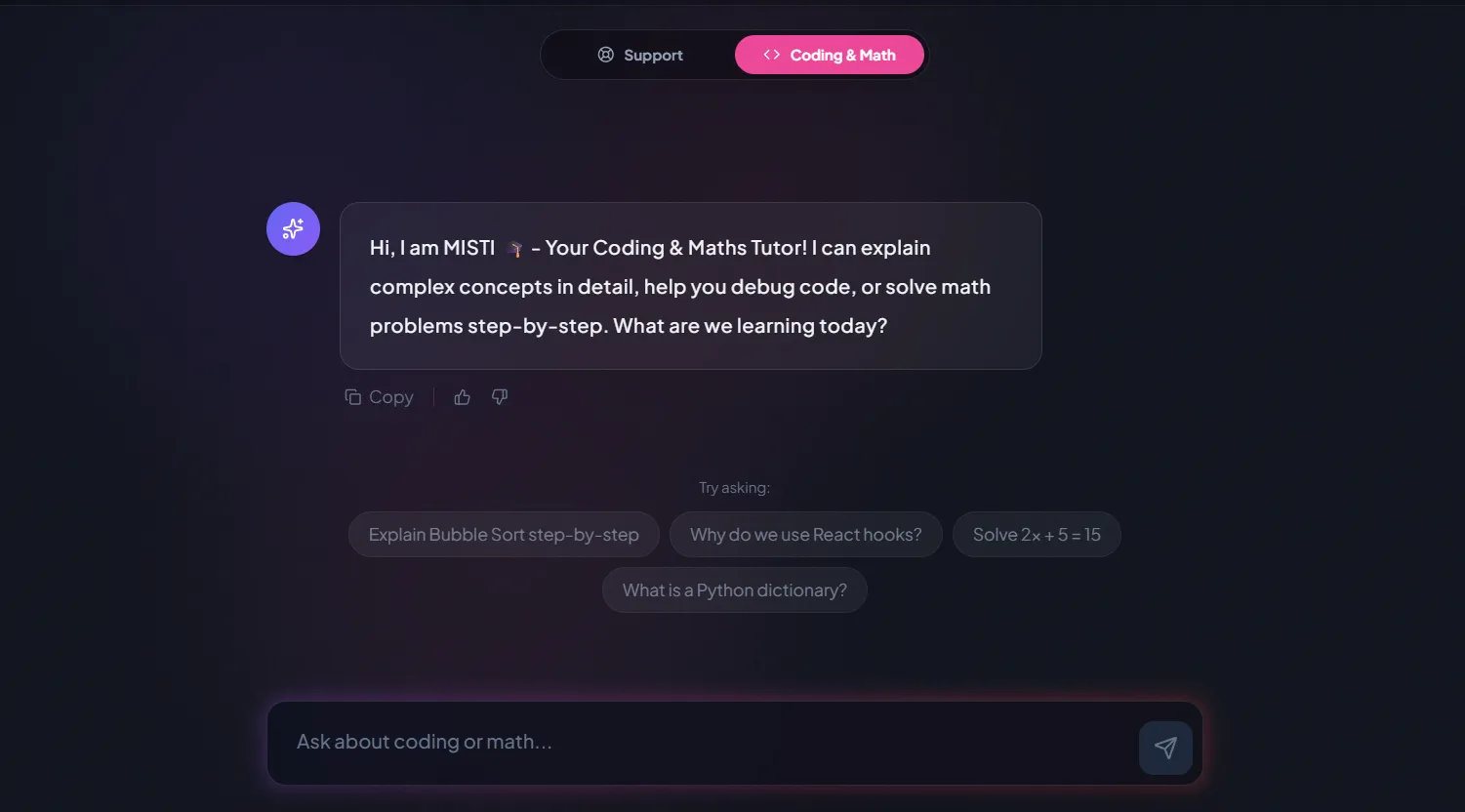
A chatbot that answers mathematics and programming questions, built and deployed by a student.

AI and ML
An assistant that helps a young person recognise unsafe situations online.
Web app
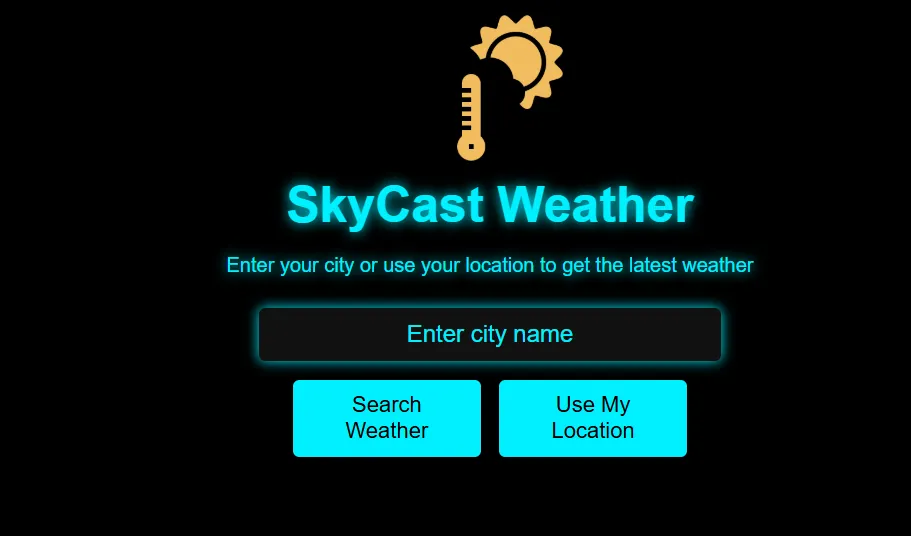
A weather forecasting site with live conditions for any location.
Fees
One charge a month in US dollars, the rate for every family outside India. The free lesson comes first; payment starts only once a course and a regular slot are settled.
Free first class
USD 0
no card required
Group batch
USD 100
a month, billed in US dollars
One to one
USD 150
a month, billed in US dollars
What families say
Google reviews, reproduced exactly as parents wrote them.
★★★★★
"The one step solution for my son. Modern Age Coders make learning coding so simple that kids love it. The teachers explain complex concepts clearly with practical exercises and interactive content."
Ria Mukherjee
Parent
★★★★★
"Modern Age Coders has been a game-changer for me. I struggled to grasp IT concepts and coding before joining, but their classes transformed everything. I can now confidently write complex programs with ease."
Samriddha Mondal
Student
★★★★★
"One of the most wonderful education centres out there. Education is not limited to school syllabus but focuses on skill development."
Vansh Agarwal
Student
★★★★★
"My child Dhairya is really enjoying the Modern Age Coders classes. This is his first online class and he eagerly looks forward to it. I can already see his improvement, and the teachers are very cooperative."
Sonam Oswal
Parent of Dhairya
★★★★★
"Modern Age Coders have wonderful teachers who teach in a clear, easy and practical way. The teacher boosts students' confidence and inspires them to learn without hesitation."
Sonu Goyal
Parent
★★★★★
"I highly recommend this computer coding class! The teachers are incredibly knowledgeable and passionate about coding."
Ritu Kedia
Parent
Questions about Higher Computing Science
Two components: a two-hour question paper carrying 80 marks, two-thirds of the total, and a coursework assignment carrying 40, the remaining third, done in no more than six hours of supervised time.
The structure is the same, but the paper gets thirty more minutes for the same 80 marks, and the content adds algorithms, testing, debugging, floating point, computer structure and aggregate SQL.
Linear search, find minimum and maximum, and count occurrences, which candidates must describe, exemplify and implement using one-dimensional arrays or arrays of records.
Floating-point representation using mantissa and exponent, Unicode and its advantage over extended ASCII, the fetch-execute cycle, performance factors such as cores, bus width, cache and clock speed, and the Computer Misuse Act 1990.
SQL across three or more linked tables using wildcards, aggregate functions such as MIN, MAX, AVG, SUM and COUNT, computed values and aliases, GROUP BY, ORDER BY and WHERE.
Yes, once in the question paper and once in the assignment, exactly as at National 5.
The Higher paper asks candidates to communicate how a program works in technical detail, naming constructs, data structures and reasons rather than describing the output.
It is now awarded by Qualifications Scotland, the body that took over from SQA in February 2026. The course specification written under SQA still applies.
No. A new task is issued each year and marked outside your school as evidence of your own ability, so we stay entirely clear of it and practise the same skills on projects we set ourselves.
Nothing for the first lesson. Afterwards a group place is USD 100 a month and a teacher to yourself USD 150, billed monthly with nothing taken in advance.
Elsewhere on this site
Before Higher, after it, and the system around both.
The level before, and the database or web decision that carries over.
The level after, where the project carries most of the marks.
Primary to S6 in one place, and what the Curriculum for Excellence asks along the way.
Why declared AI content earns nothing in assessed work.
The competition for Scottish pupils who enjoy the mathematical side.
The national page, and the index of every UK page we publish.
Start here
Leave a number and we will come back at a UK hour you choose. The lesson uses real Higher material and ends by naming the new areas that need most work.
Would you rather read first? Every course page carries its syllabus, how we teach is honest about who the method does not suit, and the coding roadmap lays out the order.
WhatsApp us · +91 91233 66161 · contact@modernagecoders.com
WhatsApp is quickest and free from a UK phone. Messages go to our office in India, so the number starts +91.