What are the best AI and programming classes in Telford?
The 2021 census recorded 185,542 people in Telford and Wrekin, with the ONS placing 156,910 in the Telford built-up area and 14,190 in Newport. Children are well represented, with every band from birth to 14 above the England share, while the over-80s are fewer. Learners from 6 up to 67 study AI, programming, Python and maths with our tutors in India, live over video, alone or in same-stage classes of five to ten. The first lesson is free and picks the course. The Telford project turns a Victorian writer's claims about the Iron Bridge into tests a computer can run. Those who continue pay USD 100 monthly for a class or USD 150 monthly for one-to-one.
Ironbridge, Coalbrookdale and Madeley all lie within Telford and Wrekin, and it was at Coalbrookdale, Samuel Smiles writes, that the castings for the first iron bridge were made. Smiles tells the story twice, in two different books, and adds a comparison with Thomas Telford's later bridge over the Severn at Buildwas, in Shropshire: 30 feet wider, yet with less than half the iron, 173 tons against 378. Claims like these usually get read and believed. A programmer can do something better: write each one as a small test, run them all, and see which pass. On this page two claims pass cleanly and two fail, and the failures turn out to be the most interesting part, because they show that the books were using words in different ways.
Facts last verified 27 September 2026. Teaching is online; no Telford branch is claimed.
Choose one to match age and interests. The first live lesson in every course is free, and no card is needed.
Block coding with bridges, building and simple checks.
See the syllabus
First Python with numbers and rules, plus small AI projects.
See the syllabus
Full Python for teenagers, including testing the Iron Bridge claims.
See the syllabus
Adult Python from scratch, up to testing and data work.
See the syllabusBrowse the course atlas for more than one hundred options and use the coding roadmap to check prerequisites.
The four we are known for
These run underneath everything above. Every one is live and online, placed by ability rather than by age, and the first class is free.
Python, web and AI projects where the learner still owns the thinking.
See the syllabus
Automate the work you already do, then let AI carry part of it.
See the syllabus
Train a model, read what it learned, and be able to say why it is wrong.
See the syllabus
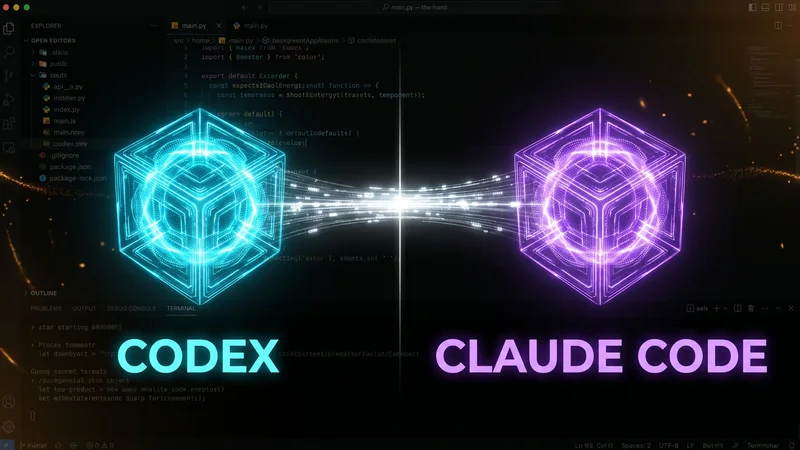
Run AI coding agents on real work without losing control of the codebase.
See the syllabusCensus table TS007A (2021) for Telford and Wrekin, from Nomis, six bands beside England.
| Age | Borough residents | Borough % | England % |
|---|---|---|---|
| Under 5 | 10,562 | 5.7% | 5.4% |
| 5 to 9 | 11,869 | 6.4% | 5.9% |
| 10 to 14 | 12,142 | 6.5% | 6.0% |
| 50 to 54 | 13,476 | 7.3% | 6.9% |
| 80 to 84 | 4,288 | 2.3% | 2.5% |
| 85 and over | 3,579 | 1.9% | 2.4% |
School-age children are above the national share and the oldest residents below it. The ONS lists two built-up areas wholly inside the borough, Telford at 156,910 and Newport at 14,190. Shropshire and Telford schools teach England's national curriculum; tell us the half-terms and our timetable leaves them clear.
Our Shropshire page covers the county, and the West Midlands page links the region.
Write what the book says as code, run it, and read every failure carefully.
The learner copies the key figures from Smiles's two books into Python and writes one unit test per claim. The first is easy: Buildwas has a 130 foot span, the Coalbrookdale bridge 100 feet, so the test checks that 130 minus 100 equals 30, as Smiles says. It passes. The second checks "less than half the quantity of iron": 173 must be less than 378 divided by 2, which is 189. It passes too, with Buildwas using 45.8 per cent of the Coalbrookdale bridge's iron.
| Claim | Test | First result | After reading closely |
|---|---|---|---|
| Buildwas was 30 feet wider | 130 - 100 == 30 | Pass | Pass |
| Less than half the iron | 173 < 378 / 2 | Pass | Pass |
| Span of the Coalbrookdale bridge | 100 in one book, 120 in the other | Fail | 120 was Pritchard's rejected plan |
| Year the bridge was built | 1777 quoted, 1779 stated | Fail | 1777 is when work was done; 1779 is opening |
The third test compares the span of the Coalbrookdale bridge across both books, and fails: 100 feet in The Life of Thomas Telford, 120 feet in Industrial Biography. Reading the passage shows the 120 feet belonged to Mr. Pritchard's design, which was set aside for an all-iron plan drawn up under Abraham Darby by his foreman of pattern-makers, Thomas Gregory. The test was wrong, not the book: it compared two different bridges. The learner rewrites it to name the object being measured, and it passes.
The fourth test asks for the year the bridge was built. Telford, quoted by Smiles, says it "was executed in 1777"; Smiles says it was "opened for traffic in 1779", with the abutments built in 1777-8 and the ironwork erected in three months. "Built" meant different things to different writers. The fix is to split one vague field into clear ones, work begun and date opened, each with its own test. That is exactly how professional programmers find hidden ambiguity in a specification.
Write three facts about your school as true-or-false checks, then argue about one that is unclear.
Turn the four claims into Python unit tests and run them.
Redesign the failing tests, split ambiguous fields, and log each source.
The figures and quotations come from Samuel Smiles's The Life of Thomas Telford and Industrial Biography on Project Gutenberg. The tests and their results are ours.
What Smiles records, across his two books.
| Detail | According to Smiles |
|---|---|
| Project taken up | 1776, by Abraham Darby of Coalbrookdale |
| Design | One semicircular arch of 100 feet span |
| Ironwork erected | In the course of three months |
| Opened for traffic | 1779 |
| Iron used | 378 tons, against 173 at Buildwas |
| A town named after it | Ironbridge, which grew up nearby |
Unit tests are how serious software stays trustworthy. Every time a programmer changes code, thousands of small tests check that each piece still does what it should, and a failing test stops a mistake reaching users. The Iron Bridge exercise teaches the harder half of the skill: a failing test is a question, not a verdict. Sometimes the code is wrong, sometimes the test is, and sometimes the specification never said clearly what it meant.
Our company has no link to Project Gutenberg or to the census office. The books and figures belong to them; each test written here, including any bug, belongs to us.
Years are a guide; the free trial settles the level.
Block coding with conditions and simple checks.
Coding for KidsScratch Coding for KidsFunctions, numbers and first tests in Python.
Python and AI for KidsMaths Through CodingTesting, data and AI alongside GCSE and A level.
Python for TeensHigh School MathematicsConfident summaries can hide a quiet contradiction.
Ask a chatbot when the Iron Bridge was built and it will give one year. Whether that year means work begun or the day it opened is usually left unsaid.
A Telford learner who has watched a unit test fail on 1777 against 1779 knows to ask what a word means before trusting a date.
Programming teaches Telford teenagers to run a check before they repeat a fact, a habit that matters more with every AI answer in 2026. The longer argument is in why teenagers should still learn to code in 2026.
Any home in the borough joins the same lesson.
Learners type every line; the tutor watches the shared screen and asks questions instead of taking over.
From Year 5 to Year 12, the trial and the school year together decide the first topic, with the exam board kept in view.
You pay nothing for a full first lesson, and you leave it with a named course and the reason for it.
A group means five to ten learners from around the UK, all working at the same stage.
Two lessons weekly in term; holidays kept free.
UK clock changes are handled by our tutors, not your timetable.
Why groups are online
Five Telford learners at one level, free at the same hour, seldom live nearby. Online classes give each the right group.
Telford families pay the same fee as every family outside India.
A full lesson free, ending with a course recommendation.
About eight live group lessons each month.
About eight live one-to-one lessons each month.
Prices are in US dollars, never sterling. The first bill follows the trial, once a course and a regular weekday time are agreed. Holidays, missed lessons and a move from group to private are set out on the pricing page.
Rated 4.9 across 547 Google reviews. These are real reviews, reproduced as written.
★★★★★
"The one step solution for my son. Modern Age Coders make learning coding so simple that kids love it. The teachers explain complex concepts clearly with practical exercises and interactive content."
Ria Mukherjee
Parent
★★★★★
"Modern Age Coders has been a game-changer for me. I struggled to grasp IT concepts and coding before joining, but their classes transformed everything. I can now confidently write complex programs with ease."
Samriddha Mondal
Student
★★★★★
"One of the most wonderful education centres out there. Education is not limited to school syllabus but focuses on skill development."
Vansh Agarwal
Student
★★★★★
"My child Dhairya is really enjoying the Modern Age Coders classes. This is his first online class and he eagerly looks forward to it. I can already see his improvement, and the teachers are very cooperative."
Sonam Oswal
Parent of Dhairya
★★★★★
"Modern Age Coders have wonderful teachers who teach in a clear, easy and practical way. The teacher boosts students' confidence and inspires them to learn without hesitation."
Sonu Goyal
Parent
★★★★★
"I highly recommend this computer coding class! The teachers are incredibly knowledgeable and passionate about coding."
Ritu Kedia
Parent
Tell us the learner's age or year group and one interest. Trial options: build a Scratch bridge, write a first Python script, try a small AI task, or test Smiles's bridge claims.
On the borough, the bridge tests and everyday arrangements.
The ONS gives 156,910 for the Telford built-up area in 2021; Telford and Wrekin as a whole had 185,542.
Yes, from Madeley to Newport, anyone aged 6 to 67 can take our live AI, programming, Python and maths lessons online.
Learners turn Samuel Smiles's claims about the Coalbrookdale and Buildwas bridges into Python unit tests and investigate the two that fail.
A small program that checks one piece of code, or here one claim, and reports pass or fail.
Ironbridge and Coalbrookdale are in Telford and Wrekin; Smiles records that the bridge was opened for traffic in 1779.
No, all lessons run live online, so the whole borough is covered.
GCSE and A level maths and computing are covered, with the aim of understanding and no grade guarantee.
Anyone from 6 to 67.
Nothing for the opening lesson; after that, USD 100 per month buys a group place and USD 150 per month a personal tutor.
No, we pause for them.
Read the county view on our Shropshire page; Warrington catches a wrong date in an old book; West Midlands collects the region. The UK hub links every page.