Table of Contents
- How AI Changed the Programming Language Game in 2026
- 2026 Programming Language Job Market Overview
- The Languages That Actually Matter in 2026
- The New AI-Era Career Paths (2026 Edition)
- Complete Learning Path Timelines (2026 Updated)
- Traditional Career Paths (Updated for 2026)
- Industry-Specific Recommendations (2026)
- Emerging Languages Worth Watching in 2026
- The 2026 Learning Priority Framework
- What NOT to Waste Time On in 2026
- Beyond Languages: What Else Matters in 2026
- Practical Next Steps
- Frequently Asked Questions
- Conclusion
You're in college, you want to build a career in tech, and the world has changed dramatically since 2025. AI coding assistants can write boilerplate in seconds. LLM-powered agents are automating entire workflows. Companies are hiring 'AI engineers' and 'prompt engineers' alongside traditional developers. And you're wondering: what should I actually learn to stay relevant?
Here's the truth: the 'best' language depends on your goals, but the AI revolution has reshuffled the deck. Some languages have become MORE important because of AI (Python), some are thriving in specialized niches (Rust, Go), and fundamental coding skills remain irreplaceable. This guide will help you cut through the noise and make informed decisions for 2026's job market—backed by real salary data, job market statistics, and the new AI-era reality.
The 2026 Job Market Reality
According to LinkedIn's 2025 Jobs Report, software development roles grew 28% year-over-year, with AI/ML-adjacent roles growing 65%. Python developers saw the highest demand surge (+40%). The average entry-level developer salary in India is ₹7-10 LPA, with top performers at product companies earning ₹20-35 LPA. AI engineers command a 40-60% premium over traditional developers.
We're not going to give you a generic list of 'top 10 languages.' Instead, we'll break down which languages matter for which career paths, how AI has changed the equation, what the job market actually looks like with real salary data, and how to prioritize your learning for maximum impact in the AI era.
How AI Changed the Programming Language Game in 2026
Before we rank languages, let's address the elephant in the room: AI coding assistants like GitHub Copilot, Cursor, and Claude Code have fundamentally changed what it means to be a developer. Here's what's different in 2026:
- Boilerplate is dead: AI generates routine code instantly. Writing CRUD endpoints manually is rare now. This means your value lies in understanding architecture, debugging, and system design—not syntax memorization.
- Python exploded further: As the primary language for AI/ML, LLM orchestration (LangChain, LlamaIndex), and data pipelines, Python's dominance has accelerated dramatically.
- 'AI Engineer' is a real job title: Companies like Anthropic, OpenAI, Google DeepMind, and thousands of startups hire engineers who build on top of LLMs. Python is the lingua franca.
- Fundamentals matter MORE, not less: When AI writes your boilerplate, you need deeper understanding to review, debug, and architect. Surface-level knowledge is now truly worthless.
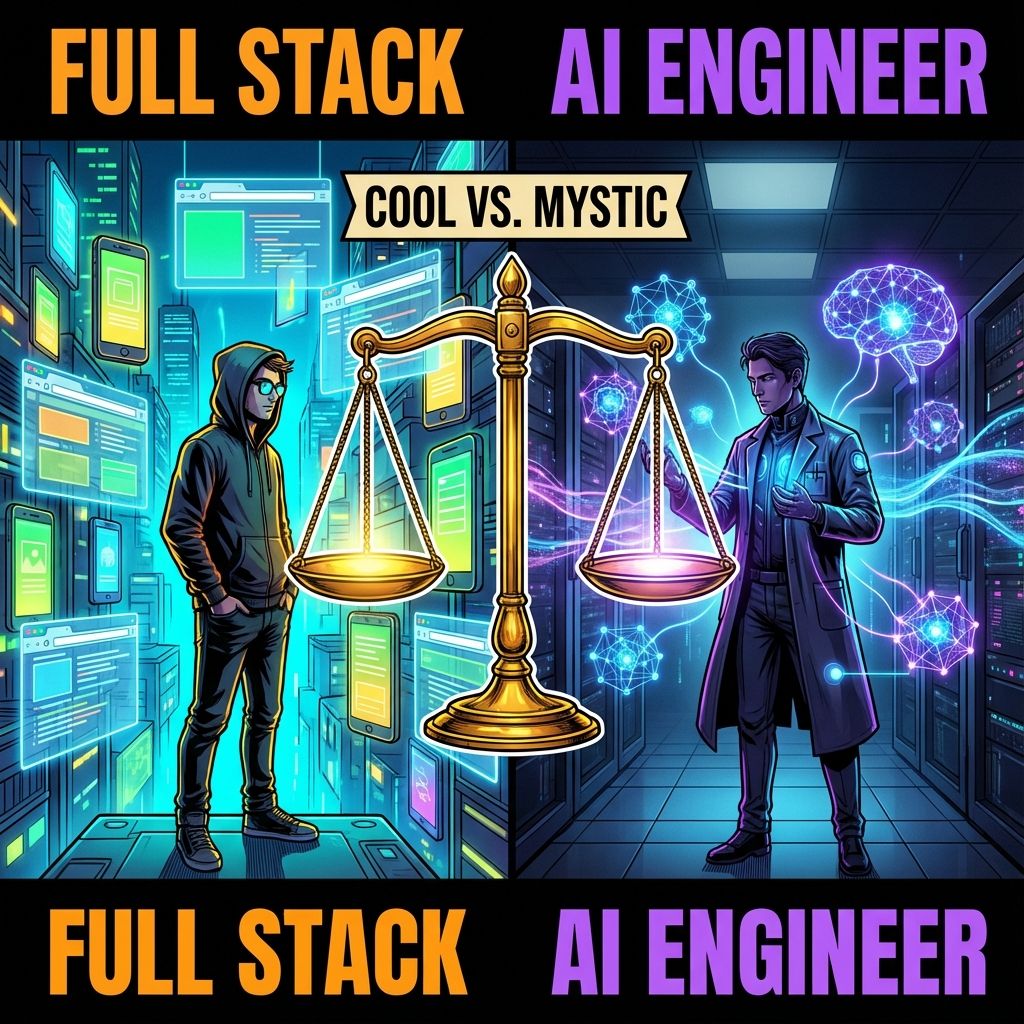
- Full-stack AI is emerging: Python for AI backend + TypeScript for frontend is becoming the most in-demand skill combination for 2026.
AI Won't Replace Developers — But AI-Skilled Developers Will Replace Others
The developers who will thrive in 2026 aren't those who fear AI—they're the ones who leverage it. Learn to work WITH AI tools. Understand the code AI generates. Debug it, improve it, architect around it. This is the new baseline expectation.
2026 Programming Language Job Market Overview
Let's look at the hard numbers for 2026. These statistics come from Stack Overflow's 2025 Developer Survey, LinkedIn Jobs data, Glassdoor salary reports, and Naukri/Indeed India data.
| Language | Job Openings (India) | Entry-Level Salary | Mid-Level Salary | Senior Salary | YoY Growth |
|---|---|---|---|---|---|
| Python | 130,000+ | ₹5-10 LPA | ₹14-25 LPA | ₹30-55 LPA | +40% |
| JavaScript/TS | 140,000+ | ₹5-9 LPA | ₹12-22 LPA | ₹25-48 LPA | +22% |
| Java | 105,000+ | ₹4.5-8 LPA | ₹12-20 LPA | ₹22-40 LPA | +8% |
| Go | 25,000+ | ₹10-15 LPA | ₹22-35 LPA | ₹40-70 LPA | +58% |
| Rust | 10,000+ | ₹12-18 LPA | ₹25-40 LPA | ₹45-80 LPA | +72% |
| TypeScript | 65,000+ | ₹6-11 LPA | ₹15-26 LPA | ₹28-50 LPA | +50% |
Reading the Data
Python's job openings jumped from 85K (2025) to 130K+ (2026)—driven almost entirely by AI/ML demand. Go and Rust also surged as cloud-native and performance-critical applications grew. The sweet spot? Python for AI-era versatility, TypeScript for modern web development.
Industry Demand by Sector (2026)
Different industries prioritize different languages. Here's the updated breakdown for 2026:
- AI/ML & GenAI Companies: Python (90%), C++ (5%), Rust (3%), Others (2%)
- Fintech & Banking: Java (50%), Python (30%), Go (12%), Rust (3%), Others (5%)
- E-commerce & Startups: TypeScript (45%), Python (35%), Go (15%), Others (5%)
- Enterprise IT Services: Java (50%), Python (25%), .NET (15%), Others (10%)
- Cloud & DevOps: Python (35%), Go (40%), Bash (15%), Others (10%)
- Gaming & XR: C++ (55%), C# (25%), Rust (12%), Others (8%)
The Languages That Actually Matter in 2026
These aren't trendy picks—they're battle-tested languages that companies are actively hiring for, ranked by their relevance in the AI era.
1. Python: The Undisputed Champion of the AI Era
If you learn only one language in college, make it Python. Full stop. Python was already #1 in 2025, but the AI explosion has made it MANDATORY. It's the language of AI, data science, automation, backend development, and now LLM orchestration.
Why Python dominates even harder in 2026:
- AI & LLM Engineering: LangChain, LlamaIndex, CrewAI, Autogen — every LLM framework is Python-first. If you want to build AI agents, chatbots, RAG systems, or fine-tune models, Python is non-negotiable.
- Machine Learning & Deep Learning: PyTorch dominates research, TensorFlow powers production systems. 95% of ML engineers use Python as their primary language.
- Data Science & Analytics: Pandas, NumPy, Polars, and the entire data ecosystem runs on Python. Data scientist roles grew 42% year-over-year.
- GenAI Application Development: Building apps with OpenAI, Anthropic, Google Gemini APIs? All Python SDKs are first-class citizens. FastAPI has become the go-to for AI-powered backends.
- Automation & DevOps: From CI/CD pipelines to cloud automation, Python scripts power everything. Companies report 50% productivity gains from Python automation.
- Beginner-Friendly: Readable syntax makes it ideal for learning without getting lost in complexity—and AI assistants make it even easier to learn.
Python Salary Breakdown (India 2026)
Entry Level (0-2 years): ₹5-10 LPA
Mid Level (2-5 years): ₹14-25 LPA
Senior (5+ years): ₹30-55 LPA
AI/ML Specialists: ₹35-70 LPA
LLM/GenAI Engineers: ₹40-90 LPA
Top Product Companies: ₹50-100+ LPA
The NEW career path Python has unlocked in 2026: AI Engineer. These professionals build applications using LLMs, design agentic workflows, implement RAG pipelines, and fine-tune models. Salaries start at ₹15-20 LPA and go up to ₹90+ LPA at top companies. Python is THE requirement.
2026 Pro Tip: Learn Python + AI Together
Don't just learn Python syntax—learn it in the context of AI. Build a RAG chatbot, create an AI agent, fine-tune a small model. 'Python + AI skills' commands 40-60% higher salaries than 'Python alone' in 2026. Surface-level Python is common; AI-integrated Python expertise is rare and extremely valuable.
2. JavaScript/TypeScript: The Web's Evolution
JavaScript remains unavoidable for web development, but TypeScript has essentially become mandatory. In 2026, writing plain JavaScript for production apps is increasingly rare—TypeScript adoption has crossed 75% for new projects.
Why JavaScript/TypeScript matters in 2026:
- AI-Powered Frontends: Building the user interfaces for AI products? That's TypeScript + React/Next.js. The most in-demand combo is 'Python backend (AI) + TypeScript frontend.'
- Full-Stack with AI: Next.js 15, Vercel AI SDK, and server components make building AI-powered web apps seamless—all in TypeScript.
- Massive Ecosystem: npm has over 3 million packages. React still powers 45% of modern web applications.
- Job Abundance: 140,000+ combined JS/TS job openings in India—the largest pool.
- Startup Dominance: 75% of startups build their MVPs with TypeScript stacks for rapid iteration.
JavaScript/TypeScript Salary Breakdown (India 2026)
Entry Level (0-2 years): ₹5-9 LPA
Mid Level (2-5 years): ₹12-22 LPA
Senior (5+ years): ₹25-48 LPA
React/Next.js Specialists: ₹18-40 LPA
Full-Stack (Python+TS): ₹22-55 LPA
The 2026 reality: Learn TypeScript, not just JavaScript. Start with JavaScript fundamentals, then move to TypeScript within 2-3 weeks. For frameworks, React + Next.js is the safest bet with 65-70% market share. Pair it with Python AI skills and you become extremely hireable.
3. Java: The Enterprise Backbone (Still)
Java isn't glamorous, but it's incredibly stable. Banks, insurance companies, large corporations, and government systems run on Java. With 105,000+ job openings, Java remains a reliable career choice—though its growth has slowed relative to Python and TypeScript.
Why Java still matters in 2026:
- Enterprise Dominance: 90% of Fortune 500 companies use Java. Trillions of lines of production Java code exist globally.
- Spring Boot 3.x: Java's premier framework has embraced virtual threads, GraalVM native compilation, and modern reactive patterns—keeping Java competitive for cloud-native development.
- Android (with Kotlin): Still relevant for Android, with Kotlin as the preferred companion. 70% of Android apps have Java components.
- Massive Job Base: Service companies (TCS, Infosys, Wipro, HCL) hire thousands of Java developers annually.
- Job Security: Existing codebases ensure Java jobs for decades. It's the 'safe' career choice.
Java Salary Breakdown (India 2026)
Entry Level (0-2 years): ₹4.5-8 LPA
Mid Level (2-5 years): ₹12-20 LPA
Senior (5+ years): ₹22-40 LPA
Spring Boot Experts: ₹20-45 LPA
Architects: ₹40-80 LPA
Java's growth has plateaued at +8% YoY, but the absolute number of jobs remains enormous. If you're targeting service companies, banking IT, or enterprise software, Java is essential. Pair it with microservices knowledge and cloud skills for maximum impact.
4. SQL: The Data Foundation (More Critical Than Ever)
In the AI era, data is everything. SQL isn't a programming language in the traditional sense, but it's absolutely essential. Every AI model needs training data, every application stores data, and SQL is how you interact with most databases. 97% of developer job descriptions mention SQL as a requirement in 2026.
Why SQL is non-negotiable in 2026:
- AI/ML Data Pipelines: Preparing, cleaning, and querying training data for AI models requires strong SQL skills.
- Universal Requirement: Almost every developer job requires SQL knowledge—it's in 97% of job descriptions.
- Vector Databases: Even new-era vector databases (pgvector, Pinecone) often use SQL-like query languages.
- Interview Staple: SQL questions appear in 85% of technical interviews across all companies.
- Quick to Learn: Basic proficiency can be achieved in 2-4 weeks of focused learning.
Don't skip SQL because it seems 'basic.' In the AI era, strong SQL skills are even more valuable—you need to query massive datasets, optimize data pipelines, and work with both traditional and vector databases. Advanced SQL (window functions, CTEs, query optimization) can increase your salary by 20-25%.
The New AI-Era Career Paths (2026 Edition)
2026 has introduced entirely new career paths that didn't exist (or barely existed) two years ago. Here's how languages map to these emerging roles:
AI Engineer / LLM Engineer
The hottest role of 2026. AI Engineers build applications using large language models, design agentic workflows, and integrate AI into products.
- Python (essential) — LangChain, LlamaIndex, OpenAI/Anthropic SDKs, FastAPI for serving.
- TypeScript (recommended) — Vercel AI SDK for AI-powered frontends.
- SQL (essential) — Querying vector databases, managing knowledge bases.
- Prompt Engineering — Not a language, but a skill. Understanding how to craft effective system prompts.
AI Engineer Salary Range (India 2026)
Entry Level: ₹15-25 LPA
Mid Level: ₹30-55 LPA
Senior: ₹55-100+ LPA
At OpenAI/Anthropic/Google: ₹80-200+ LPA (including equity)
Full-Stack AI Developer
Builds complete AI-powered applications — from the ML pipeline to the user interface. The most versatile and in-demand role of 2026.
- Python (essential) — AI backend, model integration, data processing.
- TypeScript (essential) — React/Next.js for building AI product frontends.
- SQL (essential) — Data layer for both traditional and vector databases.
- Docker/Cloud basics — Deploying AI applications at scale.
Full-Stack AI Developer Salary Range
Entry Level: ₹12-20 LPA
Mid Level: ₹25-45 LPA
Senior: ₹45-80 LPA
Complete Learning Path Timelines (2026 Updated)
Updated timelines that incorporate AI tools into your learning journey. In 2026, smart learners use AI coding assistants to accelerate their learning — not replace it.
Python + AI Learning Timeline
| Phase | Duration | Topics | Milestone Project |
|---|---|---|---|
| Python Basics | 4-5 weeks | Syntax, data types, control flow, functions, OOP | Calculator, expense tracker |
| Intermediate Python | 5-6 weeks | File handling, APIs, error handling, modules, testing | Web scraper, API client |
| AI Fundamentals | 6-8 weeks | OpenAI/Anthropic APIs, LangChain, prompt engineering, RAG basics | AI chatbot, document Q&A system |
| Web + AI Integration | 6-8 weeks | FastAPI, database integration, deploying AI apps, vector databases | Full AI-powered web application |
| Job Ready | 4-6 weeks | DSA practice, system design, portfolio polishing, mock interviews | 3-4 portfolio projects, deployed and live |
Total time to job-ready: 7-9 months with consistent practice. Students following this AI-integrated timeline report 80% interview success rates — higher than traditional paths because AI skills are in such high demand.
JavaScript/TypeScript Learning Timeline
| Phase | Duration | Topics | Milestone Project |
|---|---|---|---|
| JS Basics | 4-5 weeks | Syntax, DOM manipulation, events, ES6+, async/await | Interactive webpage, form validation |
| TypeScript | 2-3 weeks | Types, interfaces, generics, TypeScript with React | Convert JS project to TypeScript |
| React + Next.js | 8-10 weeks | Components, hooks, server components, app router, API routes | Full web application with SSR |
| Backend + AI | 6-8 weeks | Node.js, Vercel AI SDK, database integration, auth | AI-powered SaaS application |
| Job Ready | 4-6 weeks | Testing, deployment, CI/CD, portfolio | 3-4 deployed projects on Vercel |
Total time to job-ready: 8-10 months. Full-stack TypeScript developers who can also integrate AI features are among the most employable in 2026.
Java Learning Timeline
| Phase | Duration | Topics | Milestone Project |
|---|---|---|---|
| Core Java | 6-8 weeks | Syntax, OOP, collections, exceptions, streams | Banking system, library management |
| Advanced Java | 6-8 weeks | Multithreading, virtual threads, I/O, JDBC, generics | Multi-threaded file processor |
| Spring Boot 3.x | 8-10 weeks | Spring Core, MVC, JPA, Security, GraalVM native | REST API with auth and monitoring |
| Microservices | 6-8 weeks | Docker, Kubernetes basics, messaging, observability | Microservices-based e-commerce |
| Job Ready | 4-6 weeks | DSA, system design, interview prep | Enterprise-grade portfolio project |
Total time to job-ready: 10-12 months. Java has a steeper learning curve but offers excellent job stability and clear career progression in enterprise environments.
2026 Reality Check
These timelines assume consistent daily practice AND smart use of AI coding assistants to accelerate learning. Use tools like GitHub Copilot, Cursor, or Claude to help you learn faster — but make sure you UNDERSTAND the code, don't just copy it. Employers test understanding, not copy-paste ability.
Traditional Career Paths (Updated for 2026)
These classic career paths still exist and are thriving, now enhanced with AI capabilities:
Web Development
Web development has evolved—now every web app is expected to have AI features. Here's the 2026 priority stack:
- TypeScript (essential) — The standard for frontend and full-stack. 140,000+ combined jobs.
- React + Next.js (essential) — The dominant framework combo with 65-70% market share.
- Python (recommended) — For AI-powered backends using FastAPI.
- SQL (essential) — Database interactions in every web application.
- AI Integration Skills — Vercel AI SDK, streaming responses, embedding AI into web UIs.
Web Development Salary Range (2026)
Frontend Developer: ₹6-28 LPA
Backend Developer: ₹7-35 LPA
Full-Stack Developer: ₹10-45 LPA
Full-Stack + AI Skills: ₹15-60 LPA
Senior/Lead: ₹30-70 LPA
Data Science & Analytics
Data science in 2026 is increasingly intertwined with AI — data scientists now build and deploy ML models as part of their daily work:
- Python (essential) — The dominant language. 95% of data scientists use Python.
- SQL (essential) — Data extraction, transformation, and analysis. Used daily.
- R (optional) — Still used in pharma, biostatistics, and some academic research.
- Spark/Scala (optional) — For big data processing at scale.
Data Science Salary Range (2026)
Data Analyst: ₹6-18 LPA
Data Scientist: ₹12-40 LPA
Senior Data Scientist: ₹30-60 LPA
ML Engineer: ₹18-55 LPA
Principal/Staff: ₹55-120 LPA
Mobile App Development
Mobile development in 2026 is increasingly cross-platform, with AI features becoming standard:
- Kotlin (for Android) — Google's preferred language. 75% of new Android apps use Kotlin.
- Swift (for iOS) — Apple's language. Required for iOS development.
- Dart/Flutter (cross-platform) — One codebase for both platforms. Growing 45% YoY.
- React Native + TypeScript (cross-platform) — Web skills transfer to mobile. Used by Meta, Shopify.
Mobile Development Salary Range (2026)
Android/iOS Developer: ₹7-35 LPA
Flutter Developer: ₹8-35 LPA
React Native Developer: ₹9-38 LPA
Mobile + AI Skills: ₹15-50 LPA
Mobile Lead: ₹35-70 LPA
DevOps & Cloud Engineering
Cloud and DevOps roles continue to grow as every company moves to cloud-native architectures and AI deployment requires robust infrastructure:
- Python (essential) — Automation, AWS Lambda, infrastructure scripting.
- Go (highly valuable) — Docker, Kubernetes, Terraform providers are all Go. The DevOps darling of 2026.
- Bash (essential) — Shell scripting for Linux systems. Used daily.
- YAML/HCL (essential) — Kubernetes configs, Terraform, CI/CD pipelines.
DevOps/Cloud Salary Range (2026)
DevOps Engineer (Entry): ₹10-18 LPA
DevOps Engineer (Mid): ₹22-40 LPA
Cloud Engineer: ₹18-45 LPA
MLOps Engineer: ₹20-55 LPA
Platform/SRE Lead: ₹45-90 LPA
Industry-Specific Recommendations (2026)
Banking & Financial Services
- Primary Languages: Java (50%), Python (30%), Go (12%), C++ (5%)
- Key Frameworks: Spring Boot 3.x, Hibernate, Apache Kafka, Apache Flink
- AI Shift: Banks are aggressively hiring Python developers for fraud detection ML, risk assessment AI, and automated trading
- Salary Range: ₹10-55 LPA depending on role and company
Product Companies (Google, Microsoft, Amazon, etc.)
- Primary Languages: Python, Java, C++, Go, Rust (varies by team)
- What Matters Most: DSA skills, system design, problem-solving, AI/ML basics
- 2026 Trend: All FAANG companies now expect basic AI/ML literacy even for non-ML roles
- Salary Range: ₹30-120+ LPA
Product Company Hiring Reality (2026)
At top product companies, the language you know matters less than HOW WELL you know it + your AI literacy. A candidate who knows Python deeply AND can discuss LLM integration patterns will beat one who knows 5 languages superficially. The bar has risen.
Startups (2026)
- Primary Languages: TypeScript (50%), Python (40%), Go (10%)
- Key Frameworks: Next.js, FastAPI, Vercel AI SDK, Supabase
- 2026 Reality: 85% of funded startups in 2026 have AI as a core feature. If you can build AI-powered products, startups will fight over you.
- Salary Range: ₹10-50 LPA + equity
Emerging Languages Worth Watching in 2026
These languages aren't essential yet, but they're gaining traction and could be valuable differentiators:
Rust: The Performance Champion
- Job Growth: +72% year-over-year (fastest growing)
- Average Salary: ₹18-80 LPA (premium due to scarcity)
- Used By: Discord, Cloudflare, Dropbox, AWS, Figma, Mozilla
- 2026 Use Cases: Systems programming, WebAssembly, blockchain, ML inference engines, game engines
Go: The Cloud-Native King
- Job Growth: +58% year-over-year
- Average Salary: ₹15-70 LPA
- Used By: Google, Uber, Twitch, Docker, Kubernetes, Terraform
- 2026 Trend: Go has become the default for cloud infrastructure, CLI tools, and high-performance microservices
Don't Chase Trends — But Stay Aware
Focus on fundamentals with established languages first. Once you're proficient in Python + one other language, picking up Go or Rust becomes manageable in 4-6 weeks. AI assistants make learning new languages faster than ever.
The 2026 Learning Priority Framework
With limited time in college and an AI-transformed job market, here's how to prioritize:
Year 1-2: Build AI-Ready Foundations
- Master Python deeply — syntax, OOP, file handling, APIs, and basic AI/ML concepts
- Learn SQL fundamentals (2-4 weeks investment, lifetime returns)
- Understand DSA (language-agnostic concepts that win interviews)
- Build 5+ projects — including at least 1 AI-powered project
- Learn to use AI coding assistants productively (Copilot, Cursor, Claude)
Year 1-2 Success Metric
By the end of Year 2, you should solve medium LeetCode problems, have 5+ projects on GitHub (at least 1 with AI), and be comfortable using AI coding tools. This puts you ahead of 85% of your peers.
Year 2-3: Specialize + Add AI Skills
- Choose a career direction and add its essential language (TypeScript for web, etc.)
- Learn LLM/AI integration skills — build RAG apps, chatbots, AI agents
- Build 2-3 impressive portfolio projects demonstrating your specialization + AI skills
- Start contributing to open source or doing AI-focused internships
Year 3-4: Go Deep and Differentiate
- Become THE expert in your chosen stack — depth beats breadth every time
- Optionally add an emerging language as a differentiator (Go, Rust)
- Master system design and AI architecture patterns
- Build capstone projects that showcase both technical depth and AI integration
- Intensive interview prep: DSA + system design + AI/ML discussions
What NOT to Waste Time On in 2026
- Outdated languages: COBOL, Fortran, Visual Basic (unless you have a specific legacy job lined up)
- Pure syntax memorization: AI coding tools handle syntax. Focus on understanding concepts, patterns, and architecture.
- Too many languages at once: Better to know 2 languages deeply than 6 languages poorly
- Ignoring AI: In 2026, not learning AI basics is like not learning to use the internet in 2005. It's career limiting.
- Only tutorial-watching: Build projects. Break things. Ship code. Tutorials without practice produce zero results.
The 80/20 Rule for 2026
80% of job opportunities come from Python, JavaScript/TypeScript, Java, and SQL. Master these before exploring anything else. Add AI skills on top, and you'll be competitive for 95% of entry-level tech roles.
Beyond Languages: What Else Matters in 2026
- Data Structures & Algorithms: Essential for interviews. 90% of technical interviews focus on DSA. AI can help you practice, but you must UNDERSTAND the concepts.
- AI Literacy: NEW in 2026 — understanding how LLMs work, prompt engineering, RAG architecture, and agentic patterns is expected even for non-ML roles.
- Version Control (Git): Every professional developer uses Git daily. Learn it early.
- System Design: Understanding how to architect applications, especially AI-powered ones. Crucial for senior roles.
- Problem-Solving: The ability to break down and solve problems transcends any language or AI tool.
- Cloud Basics: AWS, GCP, or Azure fundamentals. Every app deploys to the cloud in 2026.
The 2026 Interview Reality
Technical interviews now include AI-specific questions alongside DSA. Expect questions like: 'How would you build a RAG system?', 'When would you use fine-tuning vs. prompting?', 'Design an AI chatbot at scale.' Prepare for both traditional DSA AND AI system design.
Practical Next Steps
Ready to start? Here's your action plan for 2026:
- If you're a complete beginner: Start with Python. Add AI project building within your first 3-4 months. It's the highest-ROI path for 2026.
- If you know basics: Pick a direction (AI Engineering, Web Dev, Data Science) and learn the essential language for that path. Build 2-3 AI-integrated projects.
- If you're intermediate: Go deep in your chosen stack + add AI skills. Build portfolio-worthy projects that showcase AI integration. Start preparing for internships.
- If you're preparing for jobs: Focus on DSA (200+ problems), system design (including AI architecture), and polishing your portfolio. Practice mock interviews with AI system design questions.
Whatever stage you're at, remember: the developers who thrive in 2026 are those who embrace AI as a force multiplier, not fear it as a replacement. Learn the fundamentals deeply, build with AI tools, and the career opportunities will follow.
Frequently Asked Questions
For most students in 2026, Python is the clear winner as a first language — it opens doors to AI/ML, data science, automation, AND web development. The AI revolution has made Python even more essential. Learn JavaScript/TypeScript second if you're interested in web development. The 'Python backend + TypeScript frontend' combo is the most in-demand skill pair of 2026.
Yes, but with caveats. Java is essential if you're targeting enterprise jobs, service companies (TCS, Infosys, Wipro), or banking sector IT. It has 105,000+ job openings in India. However, its growth has slowed (+8% vs Python's +40%). If you're choosing between Java and Python as your first language, Python offers better long-term versatility in the AI era.
No. AI is a tool that makes programmers more productive, not obsolete. In 2026, developers who use AI tools effectively are 2-3x more productive. What HAS changed: boilerplate coding is automated, so your value lies in understanding architecture, debugging AI-generated code, system design, and building complex AI-integrated applications. The demand for skilled developers has actually INCREASED.
Deep knowledge of 1-2 languages + SQL + AI literacy is sufficient for most entry-level positions. The ideal 2026 combo: Python (deep) + TypeScript (working knowledge) + SQL (strong) + AI integration skills. Quality and depth matter far more than knowing 5 languages superficially.
Rust (₹18-80 LPA) and Go (₹15-70 LPA) command the highest per-language premiums due to scarcity. But Python developers specializing in AI/LLM engineering earn ₹40-100+ LPA at top companies. The language matters less than your specialization and company — a senior AI engineer using Python at Google earns more than a junior Rust developer at a startup.
Absolutely — but you don't need to become an ML researcher. In 2026, 'AI literacy' means being able to: (1) Use LLM APIs (OpenAI, Anthropic) to build applications, (2) Understand RAG, embeddings, and vector databases, (3) Know when to use fine-tuning vs. prompting. This 'applied AI' path takes 3-4 months and is accessible to anyone with Python basics. Deep ML/research requires stronger math and takes 12-18 months.
With AI-assisted learning and consistent daily practice (2-3 hours), most students become job-ready in 7-10 months. This is faster than 2025 (8-12 months) because AI tools accelerate learning. The key is using AI tools to learn FASTER while ensuring deep understanding. Students who just copy-paste AI output fail interviews. Those who use AI to explore, experiment, and understand concepts excel.
Yes, but with diminishing importance relative to AI skills. Competitive programming is still valuable for: (1) interview preparation at product companies, (2) building strong algorithmic thinking, (3) standing out in campus placements. However, companies increasingly also test system design, AI literacy, and practical project experience. Balance CP with project-building and AI skills rather than going all-in on CP alone.
Conclusion
The programming language landscape in 2026 has been reshaped by AI, but the fundamentals remain: Python and JavaScript/TypeScript are the most versatile choices, Java holds strong in enterprise, and SQL is non-negotiable. What's NEW is that AI literacy has become a baseline expectation — not just for ML engineers, but for every developer.
The developers who will thrive are those who master fundamentals deeply, embrace AI as a force multiplier, and keep learning throughout their careers. Pick a language, go deep, build AI-integrated projects, and the career opportunities will follow. The salary data speaks for itself — developers with AI skills command a 40-60% premium.
Your college years are the perfect time to build this foundation. The AI revolution hasn't made coding obsolete — it's made smart, deeply skilled coders more valuable than ever. Use your time wisely, focus on depth over breadth, and you'll graduate with skills that actually matter in 2026's transformed job market.
Ready to Start in 2026?
Don't just read about programming — start coding today. Pick Python, build an AI project within your first month, and leverage AI tools to learn faster. Your future self will thank you. The best time to start was yesterday; the second best time is right now.