Most kids don't hate math. They hate being asked to memorize things nobody explained.
A child is told to "flip and multiply" to divide fractions. It works on the worksheet, so everyone moves on. But the child has no idea what just happened, and a year later, when fractions show up inside a bigger problem, the trick falls apart and takes their confidence with it.
This is how a bright six-year-old slowly becomes an eleven-year-old who says "I'm just not a math person." It's almost never true. What broke was the explanation, not the child.
Classrooms of thirty can't always slow down for the one question that would have fixed everything. Math apps are worse. They reward the right tap but can't tell whether a child understood or just guessed.
We do the opposite. One child, one mentor, and the freedom to stop on the exact sentence where it stopped making sense. That is the whole job.
Understanding first. The answer comes after.
Every lesson follows the same honest shape, whether your child is counting or carrying.
Start from something they already know
We anchor each new idea to one your child has already understood. New math should feel like the next step on a path, not a cliff.
Build the idea with their hands and eyes
We use drawings, number lines, and objects on the whiteboard so the idea is something a child can see and move, before it ever becomes a written rule.
Let them explain it back
A child who can say why in their own words actually owns the idea. We ask "how do you know?" far more than "what's the answer?"
Practice until it's automatic: then connect it forward
Only once the reasoning is solid do we build fluency, and then we show where this idea is going next, so nothing feels like a dead end.
"Borrowing" in subtraction: taught the way we'd teach your child.
The problem most kids get told: "To do 52 − 27, you can't take 7 from 2, so cross out the 5, make it a 4, and put a little 1 in front of the 2." The child obeys, gets 25, and learns nothing about why.
How we do it. A number isn't just digits in boxes. It's a pile of tens and ones. 52 is five tens and two ones. We can't hand over 7 ones when we only have 2, so we do something completely ordinary: we break open one of the tens.
open one ten → 4 tens + 12 ones
now take away 27 → (4 − 2) tens + (12 − 7) ones = 2 tens + 5 ones = 25
The child sees that "borrowing" was never a magic trick. It was just trading one ten for ten ones, the same way you'd break a $10 bill into ten $1 bills to pay for something. Once they've seen it, they never forget how to do it, and they understand place value, which is the foundation of everything that comes after.
The thinking that builds a strong coder is the same thinking that builds a strong mathematician.
Break the big into the small
A programmer splits a hard task into tiny steps. So does a child solving "how many wheels on 8 tricycles?" Decomposition is the same muscle.
Find the pattern
Spotting that 3, 6, 9, 12 jumps by three is the same instinct that lets a coder write a loop instead of typing the same line over and over.
Check your own work
"Does this answer make sense?" is debugging. We teach kids to test their thinking, not just trust the first number they wrote.
We are Modern Age Coders. We've taught children to think like builders for years, and math is where that thinking starts. A child who learns math as reasoning, not recipes, walks into coding, science, and every future "hard subject" already knowing how to figure things out.
The full elementary path, grade by grade.
Mapped to the Common Core strands your child's school uses, but always taught for understanding first.
Number & place value
Counting and one-to-one matching, reading and writing numbers, what each digit really means, comparing and ordering, rounding, the bedrock that makes everything else possible.
The four operations
Addition and subtraction with regrouping, multiplication as repeated groups, division as fair sharing, and fact fluency built on understanding rather than flashcard panic.
Fractions & decimals
Fractions as real quantities you can picture, equivalence, adding and comparing, and the bridge to decimals and percentages, the topic most kids fear, made concrete.
Word problems & reasoning
Reading a problem, deciding what it's actually asking, choosing an operation, and checking the answer is sensible. This is where math meets real thinking.
Measurement, data & geometry
Length, time, money, area; reading and making simple graphs; shapes, symmetry and early spatial reasoning.
Confidence & habits
How to stay calm with a hard problem, how to show working clearly, and how to treat a wrong answer as information instead of failure.
The right fit: and an honest word on what to expect.
This is a good fit if your child is in grades K–5 and is bored and ahead, quietly falling behind, anxious about math, or simply deserves better than a worksheet. We teach across the whole range, including kids who are years ahead and need to be stretched.
What changes, realistically. In the first few weeks, the most common thing parents notice is that their child stops dreading math. Real fluency and grade gains follow over a term of steady, twice-weekly work, not overnight. We won't promise a miracle in a fortnight, because that isn't how understanding is built.
What we won't do
- Drill tricks your child can't explain.
- Race ahead to look impressive while gaps quietly widen.
- Make a child feel small for a wrong answer.
- Promise a grade jump we can't honestly stand behind.
Simple, consistent, and built around your week.
1:1, live
One child, one mentor, in a real-time video class with a shared whiteboard. No recordings, no autopilot.
8 classes a month
Two classes each week, usually 60 minutes for younger children. Enough to build momentum without overload.
Your time zone
Mentors across all six US zones. You pick two weekly slots, after school or weekends work best for this age.
You stay in the loop
A short note after every class and a plain-language progress summary every few weeks.
One simple price. No contract.
1:1 Private Mentorship
$150 / month
- 8 live one-to-one classes a month (2 per week, 1 hour each)
- 4 live one-to-one classes a month (1 per week, 1 hour each)
- The same dedicated mentor all year
- A learning plan built around your child
- Notes after every class · cancel any time
Small-Group Cohort
$100 / month
- 8 live small-group classes a month (2 per week, 1 hour each)
- A handful of children at the same level
- Same teaching approach, lower price
- A friendly first step · cancel any time
Want the complete picture of every topic, project and milestone? Explore the Elementary Mathematics Masterclass →
Mentors chosen for patience as much as for math.
Anyone we hire has to do two things well: know elementary math deeply enough to explain it three different ways, and stay genuinely kind when a child is stuck for the fourth time. We test for both. A mentor who can't be patient with a seven-year-old doesn't teach for us.
Your child keeps the same mentor, so trust builds. A child who trusts their teacher will admit "I don't get it", and that admission is where every breakthrough begins.
"My child Dhairya is really enjoying the classes. This is his first online class, and he eagerly looks forward to it. I can see his improvement."
Sonam Oswal, mother of Dhairya · verified Google review
How we differ from the alternatives.
| What matters | Modern Age Coders | Math apps | A typical tutor |
|---|---|---|---|
| Teaches the reasoning | Always, it's the point | Rarely, rewards taps | Sometimes |
| Notices quiet confusion | Yes, live, one-to-one | No | Usually |
| Same teacher each time | Yes, all year | N/A | Often, varies |
| Parent updates | After every class | Score charts | Varies |
| Monthly price | $150 (1:1) / $100 (group) | $10–15 | $200–600+ |
Apps are cheap and fine for drill. A private in-home tutor is excellent and costly. We sit in between on price, with the live attention an app can't give.
Everything you might be wondering.
What ages is this math tutoring for?
Children aged 6 to 11, roughly kindergarten through 5th grade. We place each child by what they actually understand, not just their grade, so a confident 3rd grader and a 5th grader catching up both get work that fits.
Is the tutoring aligned with Common Core?
Yes. We follow the Common Core grade strands, operations and algebraic thinking, base ten, fractions, measurement and data, and geometry, but we teach the reasoning underneath each standard rather than just drilling the procedure.
My child says they hate math. Can this help?
This is the most common reason families come to us. Most kids don't dislike math. They dislike being asked to memorize steps that were never explained. When a child sees why a method works, the fear usually fades within a few weeks. We go slowly and we never shame a wrong answer.
How much does it cost?
The fees for private 1-on-1 and small-group classes are shown in your own currency in the pricing section of this page. Billing is monthly, there is no contract and you can cancel any time.
Can we try a class before enrolling?
Yes. Book a Priority Demo: a full live class of about 45 to 60 minutes, today or tomorrow, with a mentor reserved for your child. After the class the mentor sends a written skill report and a personal learning roadmap on WhatsApp. If you enrol, the demo fee is adjusted against your first month's fee.
Will my child have the same tutor every time?
Yes. We match one mentor to your child and keep that pairing. Consistency matters most for younger learners, who build trust before they take risks with hard problems.
What time zones do you cover?
All six US time zones: Hawaii, Alaska, Pacific, Mountain, Central and Eastern. You choose two weekly slots in your own zone, usually after school or on weekends.
What does my child need to join a class?
A laptop or tablet with a webcam and a steady internet connection. We use a shared online whiteboard, so a stylus is nice but not required. We send a simple link before each class.
Are classes live, or recorded videos?
Every class is live with a real teacher. Recorded videos can't notice the moment a child gets quietly confused, a live mentor can, and stops to fix it.
How will I know my child is making progress?
After each class your mentor leaves a short note on what was covered and what to watch. Every few weeks we send a plain-language summary of what your child can now do that they couldn't before.
Do you set homework?
A little, and only when it helps. For young children we keep practice short and purposeful, usually a handful of problems that lock in the idea from class, not busywork.
Can we start in the middle of the school year?
Yes. We start wherever your child is. Many families come to us mid-year because something specific stopped making sense, and we begin exactly there.
Book a Priority Demo for your child.
Meet the mentor, see how we teach, and watch your child explain a piece of math back to you. No card needed, no pressure afterward.
More math tutoring from Modern Age Coders.
Real student projects
What our students actually build
Every one is a real, live project shipped by a Modern Age Coders student. Explore more in Student Labs.
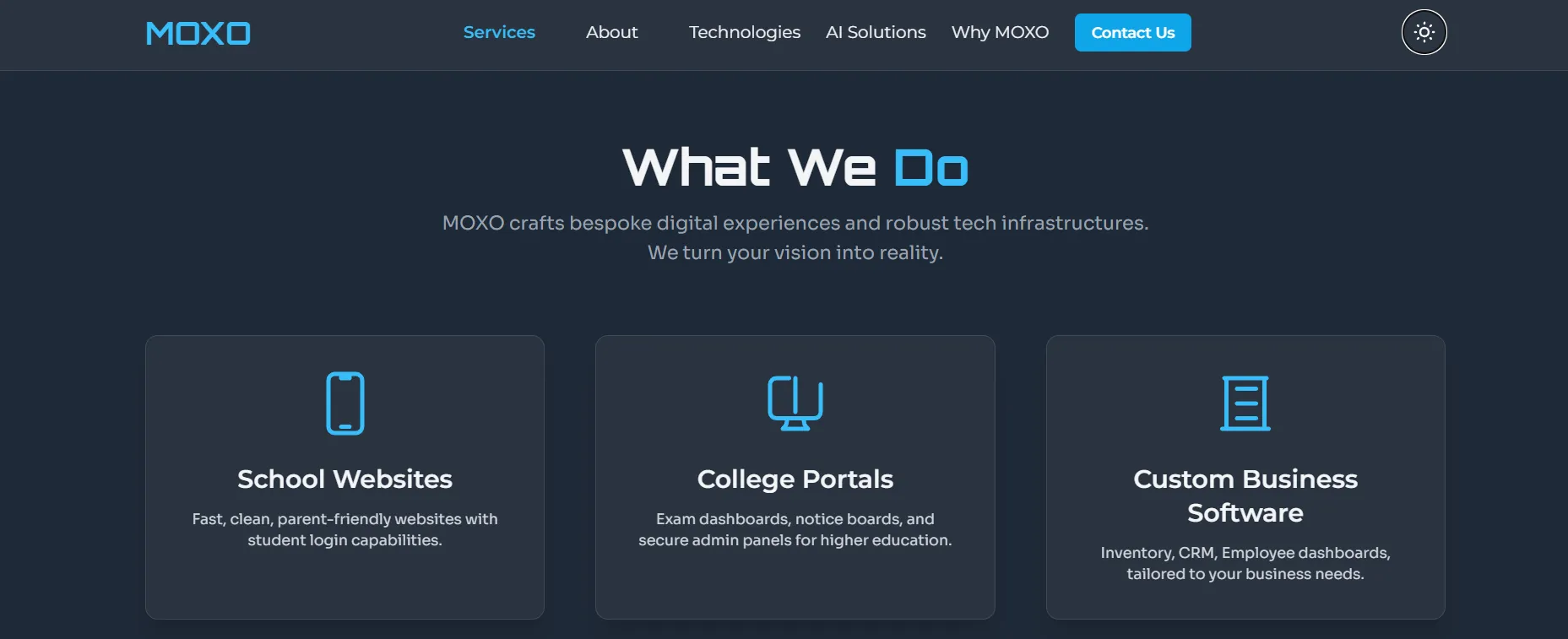 Web AppMoxo: Company Landing PageA stunning modern landing page with smooth parallax scrolling, advanced GSAP animations and elegant section transitions that bring the brand to life.by IshaOpen the live project ↗
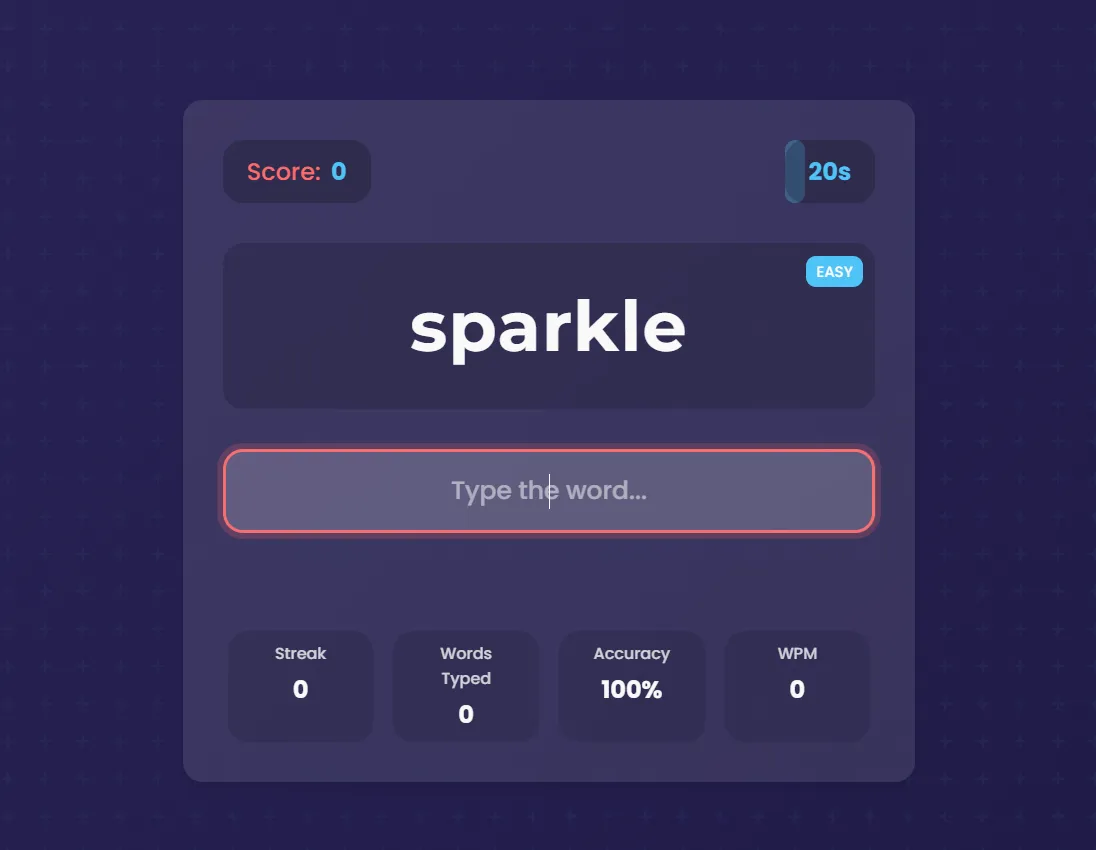 GameBaby: Typing Speed ChallengeAn engaging typing speed challenge where users test how fast and accurately they can type, with a live leaderboard connected to a MongoDB backend.by KritikaOpen the live project ↗
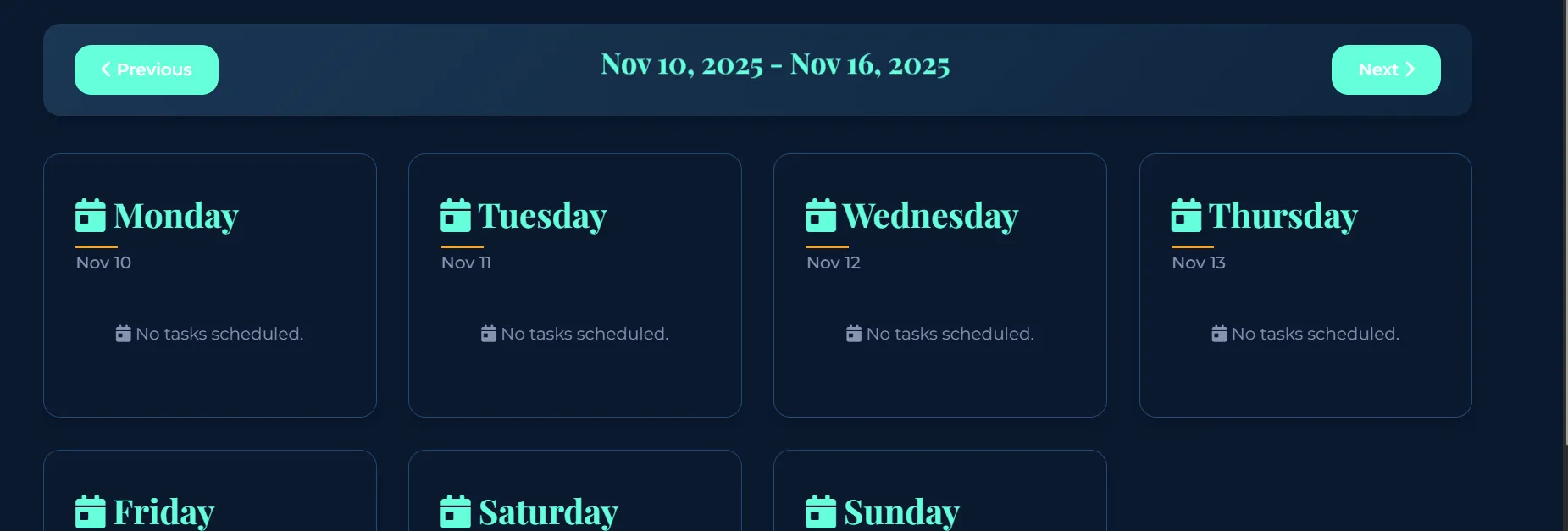 Web AppMyDay: Social Productivity OrganizerA beautifully designed productivity platform to organise daily tasks, set goals and stay consistent, with a community feed of others' plans for inspiration.by VedantOpen the live project ↗
Parent & student voices
What our families say
Real, verified reviews from Modern Age Coders families. Read hundreds more on our Wall of Love.
“Very good classes. Makes learning very easy and interactive.”
Parent
“Modern Age Coders has been a game-changer for me! I struggled to grasp IT concepts and coding before joining, but their classes transformed everything. I'm now the topper in my class and can confidently write complex programs with ease.”
Student
“My child Dhairya is really enjoying the Modern Age Coder IT classes. This is his first online class, and he eagerly looks forward to it. I can see his improvement, and I believe he will grow even more interested in the subject. The teachers are very cooperative and listen to our suggestions. Overall, I am very happy with the class.”
Parent of Dhairya