Pick the course. Start this week.
Every mentor teaches from a structured programme, adapted live to your child. Open a course to see the full syllabus and enroll in minutes, or start with a Priority Demo and let the diagnostic pick the level for you.
 Best fit
High School Mathematics Mastery
Algebra through precalculus and calculus readiness, with exam craft for the courses that decide admissions.
$100/mo group · $150/mo 1-on-1
View course & enroll
SAT Math 800 Prep Course
The algebra core rebuilt, Desmos strategy and full adaptive mock cycles for the Digital SAT.
$100/mo group · $150/mo 1-on-1
View course & enroll
Olympiad & Competition Mathematics
Contest-level problem solving for the student who wants more than the syllabus.
$100/mo group · $150/mo 1-on-1
View course & enrollA good Algebra 2 tutor does three things: organizes the course around function families, linear, quadratic, polynomial, exponential, logarithmic, rational, trigonometric, so fifteen "units" become one repeating story; rebuilds the Algebra 1 machinery the course silently assumes; and connects every topic to the SAT and ACT, which draw most of their hardest math from exactly this course. That is what we do: live one-hour classes in small groups (8 a month) or private 1-on-1, priced for your country and shown in your local currency, Priority Demo first.
The first course that grades understanding.
Geometry can be survived on intuition and Algebra 1 on procedure, but Algebra 2 audits the whole account. A student who learned factoring as pattern-matching meets rational expressions and cannot breathe. A student who never understood exponents meets logarithms, exponents asked backward, and the course becomes hieroglyphics. It is not that Algebra 2 is unfairly hard; it is that it is the first course where rented understanding gets repossessed.
The course also matters beyond its own grade. The SAT and ACT pull their toughest questions from Algebra 2 territory: quadratics, exponentials, function interpretation, rational equations. Colleges read the Algebra 2 grade as the signal of quantitative readiness. And precalculus assumes all of it, fluently.
Here is the reframe that changes everything: Algebra 2 is not fifteen unrelated units. It is one story told seven times: meet a function family, learn its shape, solve its equations, transform it, apply it. Linear, quadratic, polynomial, radical, exponential, logarithmic, rational, trigonometric, same verbs every time. Students who see the repeating structure stop drowning in topics and start recognizing an old friend in new clothes.
Our mentors teach that structure explicitly, while repairing the Algebra 1 machinery each unit silently assumes. The result is a student who can look at any function and know what questions to ask it, which is precisely the skill the SAT is testing.
Nine signs an Algebra 2 student needs help now, not later.
Factoring is pattern-roulette
Trying FOIL-in-reverse, grouping and the quadratic formula at random means Algebra 1 structure never solidified.
Logarithms are hieroglyphics
If log base 2 of 8 does not instantly read as "what power of 2 gives 8?", the exponent connection is missing.
Rational expressions cause panic
Fraction rules plus factoring at once: the unit where two old debts get called in together.
Graphs and equations feel unrelated
Solving x² = 4 but not seeing where the parabola crosses the line means the two halves of the course never met.
Transformations are memorized tables
"Left is plus, or minus?" chanted before every graph means shifting was never understood, just tabulated.
Word problems get skipped outright
Exponential growth and rational-rate problems left blank on tests signal formula-holding without modeling.
Every unit feels like a fresh start
If quadratics and exponentials feel unrelated, the function-family story is invisible, and the course is fifteen times harder than it should be.
SAT prep keeps hitting the same wall
Most "SAT math problems" are Algebra 2 gaps wearing a timer. Prep without repair wastes the practice tests.
The grade is dropping despite more effort
Working harder at memorizing an un-memorizable course produces exactly this curve. Method, not effort, is the problem.
Three or more of these? A diagnostic hour finds whether the gaps live in Algebra 2, Algebra 1 or both. A Priority Demo doubles as that diagnostic: a full live class, with a written skill report afterwards.
One story, seven function families.
The family framework
Every unit runs the same five verbs: shape, solve, transform, apply, connect. By the third family, students predict the structure themselves.
Algebra 1 repaired inline
Factoring, exponent laws and equation fluency get rebuilt exactly when a unit needs them, not in a shameful remedial detour.
Graphs and algebra as one language
Every equation gets its picture and every picture its equation, until "solve" and "find the intersection" mean the same thing.
Logarithms as questions
A logarithm is an exponent question read backward. Taught that way first, the log laws become obvious instead of arbitrary.
SAT connected weekly
Real SAT and ACT questions appear as applications of the current unit, so test prep happens inside the course, not after it.
Live, interactive, out loud
One full hour of predicting, solving and defending, with a mentor who knows exactly which family wobbled last month.
Logarithms, taught as the question they are.
The hieroglyphics version: memorize "log base b of x", memorize the change-of-base formula, memorize three log laws, drown by Friday.
How our mentor teaches it: logarithms answer one question: what exponent? Before any notation, the child answers exponent riddles they already can: 2 to what power gives 8?
That question HAS a name: log₂(8) = 3
log₂(16) = 4 · log₂(1) = 0 · log₂(1/2) = -1
Ten minutes of riddles and the student is evaluating logs mentally. Then the log laws arrive as translations of exponent laws they already own: log of a product is a sum because exponents add when you multiply. Nothing arbitrary remains, and the SAT's favorite log traps become transparent.
The parent test: ask what question log₂(8) is asking. "What power of 2 makes 8" is ownership; a formula recital is rent.
Every unit, organized as the story it actually is.
| Unit | What mastery actually looks like |
|---|---|
| Functions and transformations | Reads f(x) notation fluently, composes and inverts functions, and shifts, stretches and reflects any graph with reasons, not tables. |
| Quadratics, completed | Factors strategically, completes the square knowing why, wields the quadratic formula and the discriminant, and connects every root to the graph. |
| Polynomial functions | Uses end behavior, zeros and multiplicity to sketch; divides polynomials; applies the remainder and factor theorems. |
| Radicals and rational exponents | Moves fluently between root and exponent notation and solves radical equations, catching the extraneous roots. |
| Exponential functions | Models growth and decay, compound interest and half-life, and can say what the base and the exponent each control. |
| Logarithms | Reads logs as exponent questions, uses the laws as translated exponent laws, and solves exponential equations with them. |
| Rational expressions and equations | Simplifies, multiplies and adds rational expressions on a factoring foundation, and solves rational equations minding excluded values. |
| Systems and matrices | Solves linear and nonlinear systems in two and three variables, choosing the method by the problem's shape. |
| Sequences and series | Works with arithmetic and geometric sequences and series, connecting geometric growth back to exponentials. |
| Trigonometry, first pass | Uses the unit circle, radian measure and the sine and cosine graphs, and models periodic behavior. |
| Probability and statistics | Applies counting, conditional probability and normal-distribution reasoning to real questions. |
Curriculum names vary by state and textbook, but this is the load Algebra 2 carries nearly everywhere, and every row above is a favorite SAT hunting ground.
Completing the square, with the square actually completed.
The ritual version: "take half of 6, square it, add 9 to both sides." Followed blind, forgotten by the test, and never connected to the vertex form the next chapter needs.
How our mentor teaches it: draw it. x² is a square, 6x is two rectangles of 3x laid along its sides, and the corner that would complete the bigger square is exactly 3 × 3 = 9. The algebra is a picture.
x² + 6x + 9 = 7 (add the missing corner to both sides)
(x + 3)² = 7
x = -3 ± √7
Now vertex form, the quadratic formula (which is this picture done once in general) and even circle equations later all trace back to one image of a square missing its corner. That is what "understanding" means in Algebra 2, and it is teachable in an hour.
A journey with a map, not an endless subscription.
Weeks 1-2 · Diagnose and win
The Priority Demo maps your teen against the Algebra 2 units and the Algebra 1 machinery underneath. Early classes bank wins where they are nearly solid.
Month 1 · The function framework + quadratics
Function language, transformations with reasons, and quadratics completed properly, the template every later family follows.
Month 2 · Exponentials and logarithms
Growth modeled, logs taught as exponent questions, equations solved both directions, the SAT's favorite territory secured.
Month 3 · Rationals, radicals and the current unit
The factoring-dependent units, with the two-clock rhythm keeping your teen aligned with their class test calendar throughout.
Ongoing · Precalc and test runway
Strong finishers extend into trigonometry depth and SAT fluency. Monthly billing means you re-decide every four weeks.
Who this genuinely fits, and who it does not.
A strong fit if…
• Your child is behind on the function-family story made visible, Algebra 1 repaired inline, and the SAT connected weekly, not re-drilled.
• Your child is coasting at school and needs depth and challenge before boredom becomes a habit.
• Homework has become a nightly negotiation and you want a calm expert to take over the teaching.
• You want one mentor who knows your teen, not a rotating cast or an app with streaks.
Honestly not the fit if…
• Your child cannot yet engage with a screen and a teacher for a full hour. By grade 4 nearly every child can, provided the hour is genuinely interactive, and ours are.
• You want homework done for the child. We teach the child to do it, which is slower on night one and far faster by week four.
• You are looking for a test-cram sprint. Algebra 2 rewards understanding; cramming it produces exactly the grade you are trying to escape and we will say so.
The courses behind the tutoring.
Every mentor teaches from a structured curriculum, adapted live to your teen. If you prefer to see the full syllabus before you start, these are the programmes Algebra 2 students join.
Premium teaching. One honest price.
You are paying for a real teacher, live, for a full hour, twice a week, the same format US tutoring centers charge $300 to $450 a month for. Our cost base is global, so the price is not.
1:1 Private Mentorship
$150 / month
- 8 live one-hour classes a month, 2 per week4 live one-hour classes a month, 1 per week
- A dedicated mentor who knows your teen by name
- Diagnostic-led plan against the full Algebra 2 plan
- Class recordings for revision · cancel any time
Small-Group Class
$100 / month
- 8 live one-hour classes a month, 2 per week
- A handful of children at the same level
- Same teaching method, gentle peer energy
- Recordings included · cancel any time
That is $18.75 per dedicated hour of 1-on-1 teaching, or $12.50 in a small group. No registration fee, no contract, and you can see a full class first with a Priority Demo. Read our zero-risk promise or compare with what US math tutoring costs in 2026.
Mentors who teach the why, in classes kids wait for.
Our mentors are trained in one method: understanding before procedure, concrete before abstract, the child talking more than the teacher. They teach both maths and coding, which matters more than it sounds, because a mentor who can turn "4 groups of 6" into a game your teen wants to build has engagement tools a worksheet never will.
And because the same mentor stays with your teen month after month, teaching compounds. They know that your daughter rushes when unsure, that your son shuts down after two wrong answers, and exactly which idea to revisit before it becomes a gap.
"My child Dhairya is really enjoying the classes. This is his first online class, and he eagerly looks forward to it. I can see his improvement."
Sonam Oswal, mother of Dhairya · verified Google review
"My son struggled with math for years. Integrating it into coding projects has transformed his understanding and confidence. Highly recommended!"
Shewta Singh, mother of Ishan · verified Google review
Your real options for a Algebra 2 student.
| Option | Typical cost | What it really is | Best for |
|---|---|---|---|
| Modern Age Coders | $100–$150 / month | Live one-hour classes with a dedicated mentor, concrete-first teaching | Rebuilding understanding and confidence, sustained progress |
| Mathnasium center | $300-$450 / month + enrollment fee | Drop-in worksheet floor with rotating instructors | Children who focus better out of the house |
| Kumon | $150-$220 / subject / month | Daily worksheet packets, brief check-ins, no taught lessons | Building a drill habit and calculation speed |
| Local private tutor | $35-$80 / hour | Quality varies; twice-weekly quickly costs $280-$640 a month | Short-term help when you have found a gem nearby |
| Math apps | $10-$20 / month | Gamified practice, no teacher, no accountability | Casual practice between real lessons |
Competitor figures are typical published US prices as of July 2026 (tutors.com, brighterly.com). See our full comparisons: vs Mathnasium · vs Kumon · best online math tutoring 2026.
Everything families ask about Algebra 2.
Why is Algebra 2 so much harder than Algebra 1?
Because it is the first course that cannot be memorized. Algebra 1 rewards procedure; Algebra 2 audits understanding: logarithms are exponents asked backward, rational expressions are fractions plus factoring at once, and function families demand seeing structure. Students who felt fine last year and are drowning now usually rented their Algebra 1 rather than owning it, and we repair that inline.
My teen is failing mid-semester. Can this be turned around?
Usually, yes, because Algebra 2 units are more independent than people fear: a disaster in rationals does not doom trigonometry. We stabilize the current unit first, repair the machinery it exposed, then work the two-clock rhythm through the test calendar. Mid-year rescues are our most common Algebra 2 engagement.
How does this connect to SAT and ACT prep?
Directly: the hardest SAT and ACT math questions are Algebra 2 topics with a timer, quadratics, exponentials, function interpretation, rationals. Our mentors weave real test questions into each unit, so by the time formal prep starts, the content is owned and only pacing remains. Many families pair this with our dedicated SAT math track later.
Do you follow my teen's school textbook?
Yes. Algebra 2 sequencing varies by state and text, so the mentor aligns with your school's calendar and test dates while teaching each unit through the function-family framework. The two goals, this Friday's test and genuine understanding, get served together.
How long until the grade moves?
Honestly: the current-unit grade usually stabilizes within two to four weeks, because we teach to the test calendar. The deeper transformation, seeing the family structure so new units stop being fresh disasters, takes a term. Monthly billing means you watch the evidence and re-decide every four weeks.
What does it cost?
The fees for private 1-on-1 and small-group classes are shown in your own currency in the pricing section of this page. Billing is monthly, there is no contract and you can cancel any time.
Who teaches Algebra 2?
Mentors who teach both mathematics and programming, which matters at this level: exponential growth, functions and logarithms all become clearer when you can also build them in code, and many of our Algebra 2 students do exactly that. Meet the team on our team page.
My teen says they will never use this. Response?
Algebra 2 is the mathematics of growth, decay, cycles and scale: interest rates, populations, sound waves, algorithms. Because our mentors also teach coding, "never use this" often ends the week the student builds a compound-interest calculator or a sine-wave animation with the very unit they doubted.
Can you support honors or accelerated Algebra 2?
Yes, including the proof-flavored and precalculus-preview versions honors tracks add. Strong students also get our Olympiad and competition problems for stretch.
Can we try a class before enrolling?
Yes. Book a Priority Demo: a full live class of about 45 to 60 minutes, today or tomorrow, with a mentor reserved for your child. After the class the mentor sends a written skill report and a personal learning roadmap on WhatsApp. If you enrol, the demo fee is adjusted against your first month's fee.
More math help from Modern Age Coders.
Watch one full hour of real teaching. Free.
Book the demo class. Your child gets a real lesson with a real mentor, you get a diagnostic against one full hour of real Algebra 2 teaching, free. If your teen does not leave the hour lighter about math, walk away with our thanks.
Real student projects
What our students actually build
Every one is a real, live project shipped by a Modern Age Coders student. Explore more in Student Labs.
 AI & MLHairSync: AI Hairstyle Try-OnUpload a clear photo and try on any hairstyle before you commit, wolf cuts, curtain bangs, fades, braids and dozens of trending looks, rendered onto your own face by AI in seconds. Kriti vibe-coded this virtual try-on studio from a single idea into a working app.by KritiOpen the live project ↗
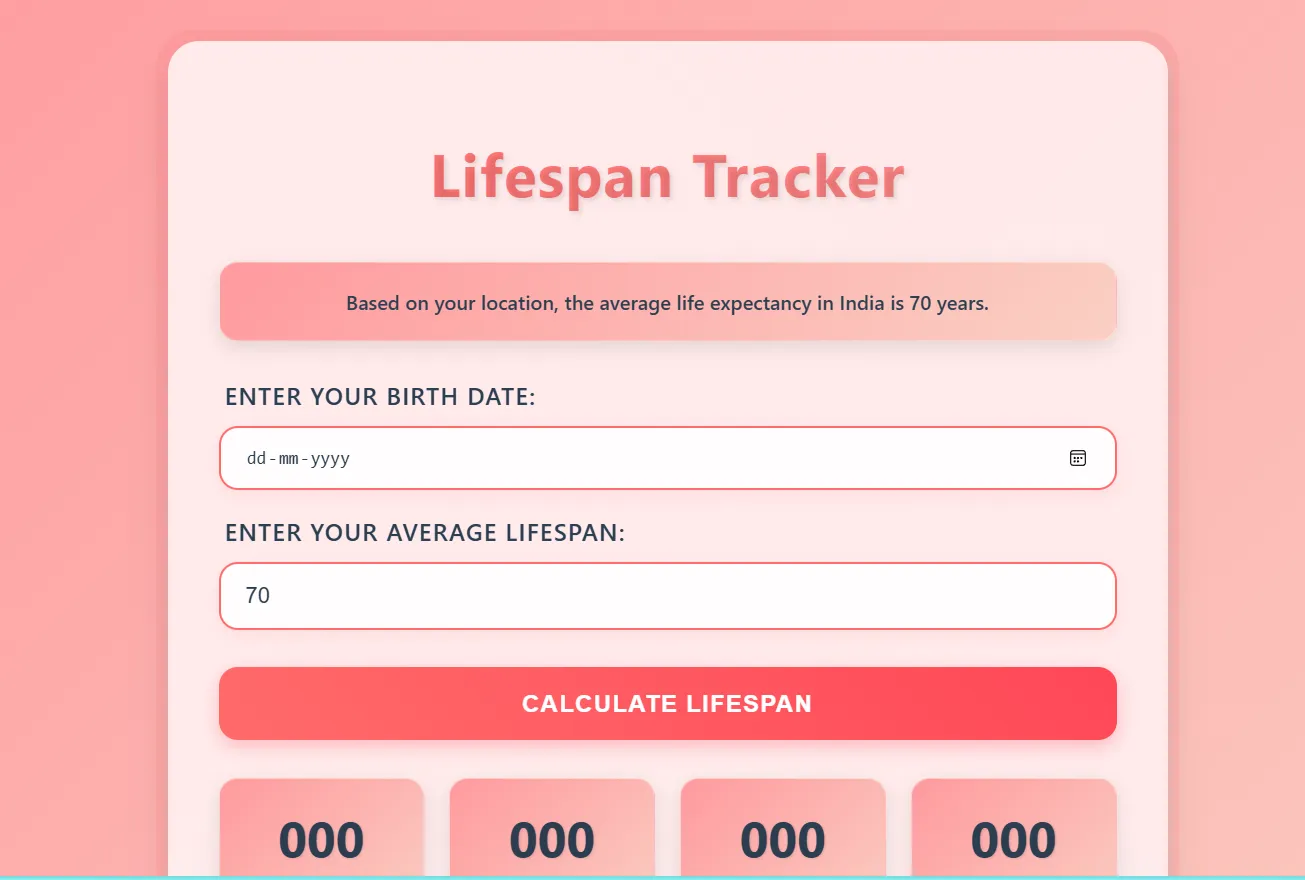 ToolLife Span TrackerAn interactive web tool that calculates expected lifespan, shows days, months and years lived, and visualises remaining time to motivate better habits.by ManayOpen the live project ↗
 AI & MLHugSelle: AI Smile GeneratorA heartwarming AI-powered web app that detects your mood and generates uplifting quotes and visuals to make you smile, a creative blend of technology and positivity.by AnuragOpen the live project ↗