It looks like the easy AP. Then the free-response asks you to explain, and points vanish.
Students arrive at AP Statistics expecting plug-and-chug and find something different: a course that mostly asks you to reason about data and write what it means. The calculator handles the arithmetic. The points come from interpretation, and that's exactly what classes have least time to coach.
So a student who "knows the formulas" sits the free-response section, computes a correct interval, and then loses the point by describing it sloppily or stating a conclusion the data don't support.
Underneath that is real conceptual fog. Most students can run a hypothesis test mechanically but can't say what a p-value is, which means they can't interpret one correctly under pressure.
We fix both layers. We make the concepts, sampling, distributions, inference, genuinely clear, then drill the precise interpretation language the AP rubric demands. Understanding first, then the writing that converts it into a score.
Understand the idea, then write it the way the rubric wants.
AP Stats rewards clear thinking expressed in precise language. We build both.
Build real intuition for variability
Everything in the course flows from one idea: data vary, and we measure how much. We make that concrete before any formula.
Make inference make sense
Confidence intervals and hypothesis tests stop being recipes once a student sees what a sampling distribution is and what it's telling them.
Drill interpretation in context
We practise stating conclusions, defining parameters and checking conditions in the exact phrasing AP readers look for.
Train FRQ & the investigative task
Using released exams, we rehearse the longer free-response items, including the investigative task that extends an unfamiliar idea.
What a p-value is: and the misreading that costs the point.
The trap: a student gets p = 0.03 and writes "there's a 3% chance the null hypothesis is true." It sounds reasonable. It's wrong, and the AP rubric will not award it.
How we do it. A p-value answers a conditional question, and the order of that condition is everything. It assumes the null hypothesis is true, then asks how surprising the data are:
NOT P( null hypothesis is true | data )
p = 0.03 means: "if H₀ were true, data this extreme would
occur only 3% of the time", so we doubt H₀.
We make this stick with a concrete picture: assume the coin is fair, then see how rare your run of heads would be. The p-value measures the surprise given fairness. It never measures the chance the coin is fair. Once a student truly sees the direction of that conditional, every inference conclusion they write becomes correct, and the easy interpretation points stop slipping away. This one idea is among the most heavily tested on the exam.
Statistics is the math behind data, AI and every evidence-based decision.
Reason under uncertainty
Code and statistics both force you to think clearly about what you don't know for sure. That discipline is the core skill in data science and machine learning.
Define before you compute
Stating the parameter precisely before testing it is the same care a programmer takes defining a problem before coding it. Sloppy definitions sink both.
Question the evidence
"Does this conclusion really follow from this data?" is critical thinking the modern world runs on, and exactly what AP Stats grades.
We're Modern Age Coders. Statistics is the foundation of data science and AI, and the precise, skeptical reasoning we teach for programming is exactly what makes statistical inference click. Students who learn it this way are ready for the data-heavy world they're heading into.
The full AP Statistics syllabus.
Mapped to the College Board's units, with the reasoning rebuilt under each.
Exploring data
Distributions, center and spread, graphs, outliers, the normal model, and describing data honestly and in context.
Sampling & experiments
Sampling methods, bias, observational studies versus experiments, randomization, control and what conclusions each design allows.
Probability
Basic probability, random variables, expected value, and the binomial and geometric models the exam relies on.
Sampling distributions
The idea that ties the course together, how a statistic varies from sample to sample, and why the normal model keeps appearing.
Inference
Confidence intervals and hypothesis tests for means and proportions, p-values, errors, power, and chi-square and regression inference.
Exam technique
Calculator use, multiple-choice strategy, and the free-response and investigative-task writing that earns full credit.
The right fit: and an honest word on what to expect.
This fits the student who finds the writing harder than the math, the one foggy on inference, and the strong student aiming for a 5. It also suits future psychology, business, biology and social-science majors, for whom this is the most useful math they'll take.
What's realistic. Conceptual clarity often comes quickly; reliable FRQ scoring takes weeks of focused practice. Your effort between sessions matters as much as the sessions. We'll set an honest target and never guarantee a 5. That depends on your work as well as ours.
What we won't do
- Guarantee a specific AP score.
- Teach test-procedures with no concept behind them.
- Skip the interpretation language FRQs depend on.
- Pretend a last-minute cram replaces real understanding.
Built around the course and the May exam.
1:1, live
One student, one mentor, real-time video with a shared whiteboard for data, distributions and FRQ wording.
8 sessions a month
Two each week, around an hour, tracking your class and released AP material.
Your time zone
All six US zones, around school and activities.
Exam ramp
Focused FRQ and investigative-task practice before May.
One simple price. No contract.
1:1 Private Mentorship
$150 / month
- 8 live one-to-one sessions a month (2 per week, 1 hour each)
- 4 live one-to-one sessions a month (1 per week, 1 hour each)
- The same mentor through the whole course
- Concept rebuilt, then FRQ writing trained
- Released AP material · cancel any time
Small-Group Cohort
$100 / month
- 8 live small-group sessions a month (2 per week, 1 hour each)
- A few students in AP Stats together
- Same teaching approach, lower price
- Good for classmates · cancel any time
Heading toward data science or analytics? Explore the Data Analytics Mathematics Masterclass →
Mentors who know the statistics and the rubric.
Good AP Stats coaching needs a teacher who genuinely understands inference, not just the button sequence, and who knows precisely how the free-response is scored. Our mentors have both, so they can explain why a p-value works and tell you the exact sentence that earns the interpretation point.
The same mentor follows the whole course, so by spring they know which units and which writing habits still cost your student marks.
"My child Dhairya is really enjoying the classes. This is his first online class, and he eagerly looks forward to it. I can see his improvement."
Sonam Oswal, mother of Dhairya · verified Google review
How we differ from the alternatives.
| What matters | Modern Age Coders | Video courses | Review book |
|---|---|---|---|
| Explains the concepts, not just steps | Yes | Sometimes | Briefly |
| Coaches FRQ wording 1:1 | Yes, with feedback | No | No feedback |
| Same mentor all course | Yes | N/A | N/A |
| Fixes your specific misreadings | Live, in the moment | No | No |
| Monthly price | $150 (1:1) / $100 (group) | $20–100 | $15–25 |
A review book is a useful reference. It can't read your student's FRQ answer and tell them the one phrase that turns a partial into a full score. That's what live 1:1 adds.
Everything you might be wondering.
What does AP Statistics actually cover?
Exploring data, sampling and experimental design, probability and sampling distributions, and inference (confidence intervals and hypothesis tests), all aligned to the CED.
Is AP Stats more about writing than calculating?
Largely yes, the points come from clear interpretation in context. We train that writing directly, because the calculator does the arithmetic.
Can you finally explain p-values clearly?
Yes, a p-value is the probability of data at least this extreme if the null were true, not the probability the hypothesis is true. We make the difference concrete.
Is the tutoring aligned with the College Board CED?
Yes, official units and skills, the exam's interpretation language, both multiple-choice and free-response including the investigative task.
How much does it cost?
The fees for private 1-on-1 and small-group classes are shown in your own currency in the pricing section of this page. Billing is monthly, there is no contract and you can cancel any time.
Can we try a class before enrolling?
Yes. Book a Priority Demo: a full live class of about 45 to 60 minutes, today or tomorrow, with a mentor reserved for your child. After the class the mentor sends a written skill report and a personal learning roadmap on WhatsApp. If you enrol, the demo fee is adjusted against your first month's fee.
Will my student keep the same tutor?
Yes, one mentor through the course, ramping into FRQ practice before May.
Do you train the free-response and investigative task?
Yes, using released exams to drill the structure and language readers reward, including the investigative task.
Are sessions live?
Yes, live, one-to-one, with a shared whiteboard.
Will this help with college statistics too?
Yes, the reasoning is the same, a strong score earns credit at many universities, and our mentors teach college stats directly. See our college math page.
What time zones do you cover?
All six US time zones; two weekly slots around school.
Do you also tutor AP Calculus?
Yes. See our AP Calculus page.
Book a free AP Statistics trial session.
Tell us where your student is in the course and how the FRQs are going. We'll show you how we'd make inference click and write it for the score. No card needed.
More math tutoring from Modern Age Coders.
Real student projects
What our students actually build
Every one is a real, live project shipped by a Modern Age Coders student. Explore more in Student Labs.
 GamePalm Arcana: Summon the ElementsOpen your palms to the webcam and computer vision turns your gestures into real magic, the left palm throws a fireball, the right crackles with lightning. A wild blend of hand-tracking AI, creative coding and pure imagination, vibe-coded into a playable browser experience.by AarushOpen the live project ↗
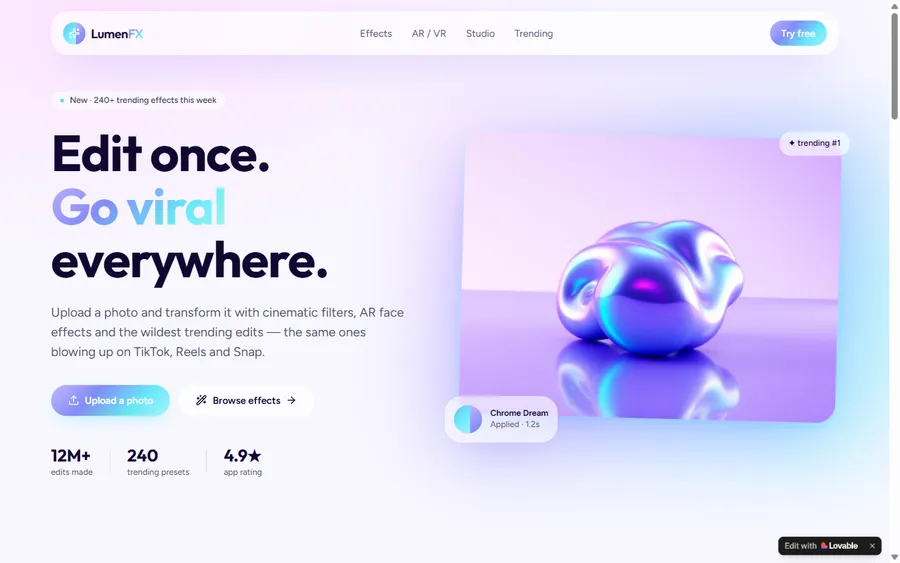 Web AppLumenFX: AR/VR Photo Effects StudioUpload a photo and transform it with cinematic filters, AR face effects and the wildest trending edits, the same looks blowing up on TikTok, Reels and Snap, with 240+ one-tap presets. Raayan vibe-coded the whole studio from an idea: prompted the concept, then built the effects engine and gallery UI by hand.by RaayanOpen the live project ↗
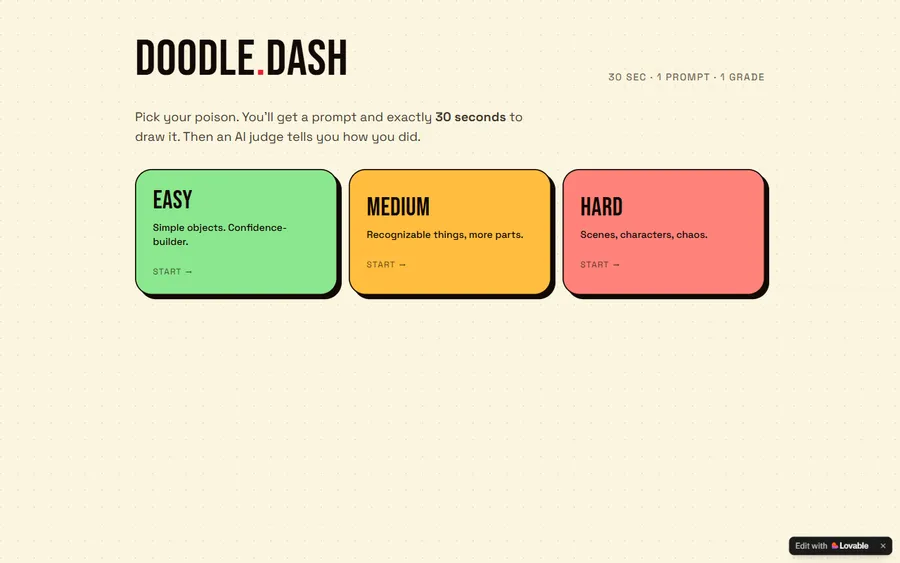 GameDoodle Dash: 30-Second Drawing ChallengePick a difficulty, get a prompt, and you have exactly 30 seconds to draw it, then an AI judge scores how close you got. Three modes from easy objects to chaotic scenes. Shubh vibe-coded it idea-first, wiring real AI image grading into a fast, addictive drawing game.by ShubhOpen the live project ↗
Parent & student voices
What our families say
Real, verified reviews from Modern Age Coders families. Read hundreds more on our Wall of Love.
“I absolutely love it here! I made new friends and learned important valuable coding skills while having the fun of my life. It's not just coding here, it's outings, bonding and most importantly preparing you for your future. Definitely five stars.”
Student
“I'm truly grateful for my experience at Modern Age Coders! The teaching approach of my legendary teachers, Shivam Sir, Mihir Sir and Sonu Sir, is extraordinary. They were not only my teachers but also mentors and friendly figures. The fee is remarkably reasonable and the perks are mind-blowing, one-on-one doubt solving, mentoring, and regular tests. The most impressive part was working on real-world projects.”
Former Student
“My son has been attending this coding class for the past couple of months, and I've been genuinely impressed with both his progress and enthusiasm. The instructors are incredibly patient and knowledgeable. What stands out most is how excited my son is before every class. He looks forward to learning, problem-solving, and sharing what he's built. I've noticed a big boost in his confidence!”
Parent