Pick the course. Start this week.
Every mentor teaches from a structured programme, adapted live to your child. Open a course to see the full syllabus and enroll in minutes, or start with a Priority Demo and let the placement pick for you.
 Best fit
Vibe Coding for Kids
Blocks, game builds and AI tools for ages 8-12: the perfect Minecraft-kid on-ramp to real coding.
$100/mo group · $150/mo 1-on-1
View course & enroll
Game Development Masterclass for Kids
Design, scripting and shipping real playable games, for the child ready to build beyond one world.
$100/mo group · $150/mo 1-on-1
View course & enroll
Python & AI for Kids
The same Python your child meets in Minecraft, grown into apps, games and AI projects.
$100/mo group · $150/mo 1-on-1
View course & enrollGood Minecraft coding classes use the game as a doorway into real programming: block-based MakeCode for the youngest, then genuine Python commanding the Minecraft world, loops that build towers, conditionals that trigger traps, functions that raise castles. Not gameplay coaching, not server drama: code. That is what we do: live one-hour classes with a dedicated mentor, in small groups (8 a month) or private 1-on-1, priced for your country and shown in your local currency, Priority Demo first. Independent classes, not affiliated with Mojang or Microsoft.
Your child already thinks like a programmer. Minecraft taught them.
Watch a Minecraft kid for ten minutes and you will see computational thinking in the wild: they plan structures before placing blocks, they wire redstone circuits with AND-gates and clocks they invented under other names, they debug a farm that stopped working by isolating what changed. The instincts are all there. What is missing is only the language.
That is what makes Minecraft the best coding doorway for a certain kind of child, the builder, the engineer, the one who plays survival like a systems designer. Code arrives not as a school subject but as a power upgrade to a world they already love: why place ten thousand blocks by hand when three lines of Python can raise the wall for you?
The usual offers waste this opening. "Minecraft camps" that are really supervised gameplay. Server communities that teach chat drama. Mod videos that are copy-paste rituals. None of it converts the instinct into the skill.
Our classes do the conversion deliberately: block-based coding in MakeCode for the youngest (the same loops and conditionals, snap-together), then the real jump, Python scripts that command the world, taught line by line with your child predicting what each line will do to their landscape before it runs. The ideas transfer whole into general programming, because they were never Minecraft-only ideas to begin with. Minecraft is a trademark of Mojang/Microsoft; our classes are independent and not affiliated with or endorsed by either.
MakeCode, Python, redstone: the honest decoder.
| Route | What it is | Right for |
|---|---|---|
| Redstone (in-game) | Minecraft's own circuit system: switches, logic, clocks, no code at all | Already happening at home; we use it as the shared vocabulary, not the curriculum |
| MakeCode blocks | Microsoft's block-coding editor driving Minecraft: loops, conditionals and events that act on the world, agent included | Ages 7-9, or any child not yet fluent at the keyboard: real concepts, instant world-sized feedback |
| Python for Minecraft | Genuine Python scripts commanding blocks, positions and events in the world | Ages 9-13: the real language, learned where motivation lives; transfers whole to general programming |
| Java mods (later) | Modding Minecraft Java Edition itself: professional-grade territory | The ambitious teen destination after Python fluency, via our Java track, not the starting line |
The mentor picks the entry point in the Priority Demo, by keyboard fluency and age, not guesswork, and the destination is always the same: a child who can program anywhere, not just in Minecraft.
Eight signs Minecraft coding will land right now.
Builds for hours, happily alone
The builder type is the natural programmer type. Code is just a faster, more powerful way to build.
Redstone contraptions everywhere
A child wiring piston doors has already invented logic gates. We give the instinct its real name and language.
Watches build and mod YouTubers
The appetite to make rather than just play is visible; a mentor converts it into ability.
Asks how mods are made
The exact right question. The honest answer is a road: MakeCode, then Python, then real modding, and we walk it in order.
Survival like a systems designer
Farms, sorters, spawn-proofing: this child optimizes. Programming is optimization with better tools.
Bored of vanilla, wants more
When the game itself runs dry, commanding it with code is the expansion pack that never does.
Age 7-13 and screen-time battles
Same truce as Roblox: same screen, maker's side. Building with code is effortful, creative and worth defending.
Tried coding elsewhere, bounced off
Abstract exercises bored them. Watching a for-loop raise a 20-block tower in their world does not.
Three lines of Python, and a tower grows out of the ground.
for height in range(20):
world.set_block(pos.x, pos.y + height, pos.z, GOLD_BLOCK)
What the child sees: they run the script, and a 20-block golden pillar erupts beside their avatar. The reaction is always the same, and it is loud.
What the child just used: a variable holding a 3D position, a for-loop with a range, coordinates doing arithmetic, and a function call with arguments. Real Python, week two, forever associated with the best feeling in Minecraft: making something exist.
Then the mentor's questions start the real teaching: "how would we make it 100 tall?" "how would we build it lying down?" "what if every second block were glass?" Each answer is one edit, one prediction, one run, and one more idea moving from the world into the child. Homework never needs enforcing; the child was going to be in Minecraft anyway.
The game is the laboratory. The programming is the point.
Concepts, world-sized
Loops build towers, conditionals spring traps, functions raise castles, nested loops carpet floors: every abstract idea gets a visible, block-built body.
Predict before run
Every script gets a "what do you think happens?" before it executes. The gap between prediction and result is where learning lives.
Written, not pasted
Scripts are typed by the child and explained line by line. Copy-paste mod rituals are exactly what we are not.
Class worlds, not public servers
Lessons run in dedicated class worlds with the mentor: no strangers, no chat drama, just the build and the code.
Projects that show off
Auto-builders, treasure hunts, mini-games inside Minecraft: shippable work the child demos to family and our Student Labs wall.
The general-programming road
The Python learned here IS the Python everywhere else. The graduation to apps, games and AI is a step, not a restart.
The trap door: where conditionals get teeth.
pos = player.position()
block_below = world.get_block(pos.x, pos.y - 1, pos.z)
if block_below == REDSTONE_BLOCK:
world.set_block(pos.x, pos.y - 1, pos.z, AIR)
player.say("The floor was a lie!")
What the child sees: step on the red block, and it vanishes beneath you. Their sibling falls for it eleven times. Joy.
Underneath: an event loop, state reading (what block is below me?), a conditional with real consequences, and world mutation, the exact pattern behind every game, robot and sensor system they will ever program. By this phase children are designing their own contraptions and asking the mentor how to build them, which is the moment teaching becomes coaching, and the moment we know the skill is theirs.
From block placer to world programmer, mapped.
Class 1 · The Priority Demo
Your child commands the world with code in the first hour, MakeCode or Python by keyboard fluency, and the mentor reads level and spark.
Months 1-2 · The command vocabulary
Positions and coordinates, loops that build, first conditionals: the child's first auto-builder ships in week three or four.
Months 3-5 · Logic with teeth
Event loops, world-reading, traps and triggers, functions as reusable spells: the contraption phase, and the funniest months of the course.
Months 6-9 · The maker phase
Self-designed projects: treasure hunts, parkour generators, mini-games with scores, planned and shipped with the mentor as coach.
Months 10+ · Beyond the world
The same Python, outside Minecraft: apps, games and AI with our Python track, or the long road toward real Java modding. Same mentor, honest advice.
What one full hour of Minecraft coding looks like.
Every class is a full 60 minutes, live and interactive, in a dedicated class world with the mentor:
0-10 min · Demo and plan
The child shows what their scripts did since last class, and today's build target gets picked together.
10-35 min · New idea, typed live
Today's concept written into a script line by line, with the child predicting each line's effect on the world before it runs.
35-50 min · Build and break
The child extends it their way; the bug where the tower builds sideways is the best teacher in the room.
50-60 min · Explain-back and quest
The child teaches the script back and leaves with a build quest they were going to do anyway, because it is Minecraft.
Parents tell us this is the easiest class attendance of their week. Watch one before believing us: the demo is free. See exactly how we teach →
Who this genuinely fits, and who it does not.
A strong fit if…
• Your child is 7-13 and deep in Minecraft, and you want the builder instinct upgraded into real programming.
• Your child watches mod tutorials and copies commands without understanding, and needs a guide who teaches the code underneath.
• You want one mentor who knows your child by name, not a rotating cast or a video library with a mascot.
• You care about the ten-year road: world-commands now, general Python next, with the bridge crossed on purpose.
Honestly not the fit if…
• Your child cannot yet engage with a screen and a teacher for a full hour. By age 7 nearly every child can, provided the hour is genuinely interactive, and ours are.
• You want projects built for the child so the portfolio looks good. Our mentors ask questions and coach; the child does the building, which is slower in week one and the whole point by month three.
• You want gameplay coaching or server supervision. Our classes are programming lessons that happen to live in Minecraft, and we say so upfront.
Premium teaching. One honest price.
You are paying for a real teacher, live, for a full hour, twice a week, the format US kids-coding companies charge $175 to $350 a month for. Our cost base is global, so the price is not.
1:1 Private Mentorship
$150 / month
- 8 live one-hour classes a month, 2 per week4 live one-hour classes a month, 1 per week
- A dedicated mentor who knows your child by name
- Projects chosen with, and built by, your child
- Class recordings for revision · cancel any time
Small-Group Class
$100 / month
- 8 live one-hour classes a month, 2 per week
- A handful of children at the same level
- Same teaching method, gentle peer energy
- Recordings included · cancel any time
That is $18.75 per dedicated hour of 1-on-1 teaching, or $12.50 in a small group. No registration fee, no contract, and you can see a full class first with a Priority Demo. Read our zero-risk promise or compare with what US kids coding costs in 2026.
Mentors who teach the why, in classes kids wait for.
Our mentors are trained in one method: ideas before recipes, the child's hands on the keyboard, and the child talking more than the teacher. They teach both coding and mathematics, which matters more than it sounds, because a mentor who can turn tower-building loops into multiplication and coordinates into geometry is teaching two subjects in one absorbing hour.
And because the same mentor stays with your child month after month, teaching compounds: they know which ideas landed, which need another costume, and exactly when your child is ready for the next stretch.
"My child Dhairya is really enjoying the classes. This is his first online class, and he eagerly looks forward to it. I can see his improvement."
Sonam Oswal, mother of Dhairya · verified Google review
"My son struggled with math for years. Integrating it into coding projects has transformed his understanding and confidence. Highly recommended!"
Shewta Singh, mother of Ishan · verified Google review
Your real options for a young Minecraft builder.
| Option | Typical cost | What it really is | Best for |
|---|---|---|---|
| Modern Age Coders | $100–$150 / month | Live one-hour classes with a dedicated mentor, ideas-first, projects the child owns | Building a real maker, with the Python road open |
| Premium 1:1 platforms (Juni-style) | $200-$300 / month | Live 1-on-1, often 2-4 sessions monthly at 30-50 minutes, rotating instructors common | Families who want brand-name polish and can absorb the price |
| Marketplace classes (Outschool-style) | $15-$25 / class | One-off or short-series group classes of varying quality; no continuity of mentor or curriculum | Sampling topics cheaply before committing anywhere |
| Coding centers (Code Ninjas-style) | $175-$350 / month | Drop-in dojo floors with game-based curriculum and rotating guides, plus the drive | Children who focus better out of the house |
| Self-paced apps (Tynker-style) | $10-$30 / month | Gamified puzzle tracks, no teacher, no one to ask why | Extra practice between real lessons |
Competitor figures are typical published US prices as of July 2026. See our full comparisons: vs Outschool · vs Tynker · best online coding classes for kids 2026.
Everything parents ask about Minecraft coding classes.
What age is right for Minecraft coding classes?
Ages 7-13. The youngest (7-9) start with MakeCode blocks, real loops and conditionals acting on the world, no typing burden; ages 9-13 write genuine Python. The Priority Demo doubles as placement by keyboard fluency, not just age.
Is this playing Minecraft or learning to code?
Learning to code, unmistakably, the game is the laboratory, not the lesson. Your child writes scripts that command the world: loops that build, conditionals that trigger, functions that construct. The motivation comes from Minecraft; the curriculum is programming.
Which Minecraft edition do we need?
It depends on the route the mentor picks in the demo: MakeCode works with Education Edition or Bedrock setups, and our Python work uses standard tooling around the editions most families already own. We confirm your exact setup before the first paid class, and help configure it, part of the service, not your homework.
My child only wants to play. Will they actually learn?
This is the quiet genius of teaching inside Minecraft: building IS playing to these children. The first time a script raises a golden tower, the distinction dissolves. Mentors keep the ratio honest, every class produces working code, and the explain-back at the end proves the ideas landed.
Is it safe? Are there other players?
Classes run in dedicated class worlds with the mentor, no public servers, no strangers, no chat rooms. What your child does on public servers at home is a separate topic we happily brief parents on, but it is not part of class.
Can my child learn to make real mods?
Eventually, yes, and we are honest about the road: real Java modding is professional-grade territory that sits at the END of the path, not the start. The route that works is MakeCode or Python world-commands first, general Python fluency second, then Java via our Java track for the teens who still want it. Most are building impressive things at every stage along the way.
How is this different from a Minecraft summer camp?
Most Minecraft camps are supervised gameplay with a coding garnish, a week of fun, little retained. This is a continuous mentorship: the same teacher, twice a week, building programming skill that compounds month over month. (We do run a genuine online coding camp in the summer, with the same teaching DNA.)
What does it cost?
Pricing is set for each country and shown on this page in your own currency. Group plans include 8 live one-hour classes a month and 1-on-1 plans run private weekly sessions, all billed month to month. To see a class first, book a Priority Demo. No registration fee, no contract. US kids-coding programs typically run $175 to $350 a month for less contact time.
What equipment does my child need?
A computer (Windows or Mac) with Minecraft and stable internet. Tablets and consoles cannot run the coding tools, which, as with Roblox Studio, is honestly part of the value: creation happens on creation hardware.
Is this affiliated with Mojang or Microsoft?
No. Minecraft is a trademark of Mojang Synergies AB, a Microsoft company; we are an independent school that teaches programming using the game and its free coding tools, and we say so plainly.
Can we try a class before enrolling?
Yes. Book a Priority Demo: a full live class of about 45 to 60 minutes, today or tomorrow, with a mentor reserved for your child. After the class the mentor sends a written skill report and a personal learning roadmap on WhatsApp. If you enrol, the demo fee is adjusted against your first month's fee.
More for young builders from Modern Age Coders.
Watch one full hour of real teaching. Free.
Book the demo class. Your child gets a real lesson with a real mentor, commands the Minecraft world with real code inside the hour. If your child does not leave the hour asking when the next class is, walk away with our thanks.
Real student projects
What our students actually build
Every one is a real, live project shipped by a Modern Age Coders student. Explore more in Student Labs.
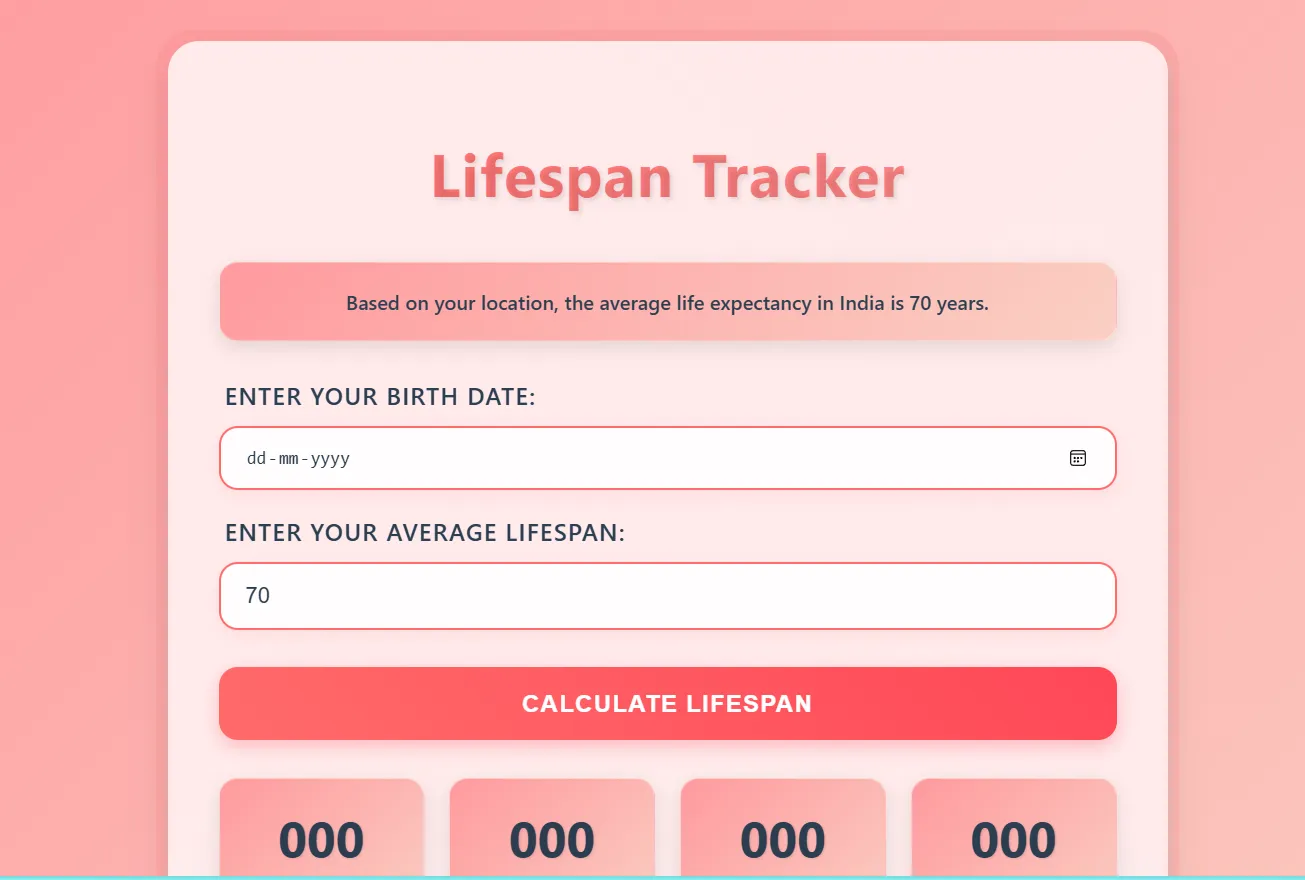 ToolLife Span TrackerAn interactive web tool that calculates expected lifespan, shows days, months and years lived, and visualises remaining time to motivate better habits.by ManayOpen the live project ↗
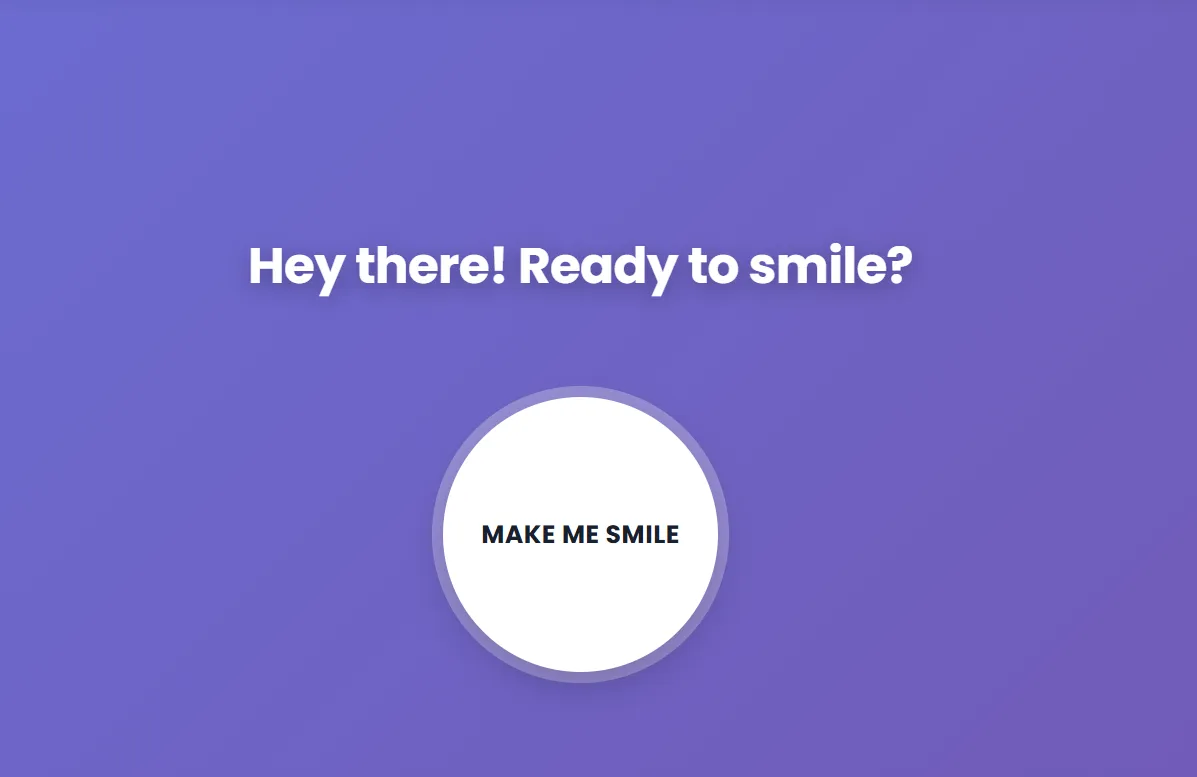 AI & MLHugSelle: AI Smile GeneratorA heartwarming AI-powered web app that detects your mood and generates uplifting quotes and visuals to make you smile, a creative blend of technology and positivity.by AnuragOpen the live project ↗
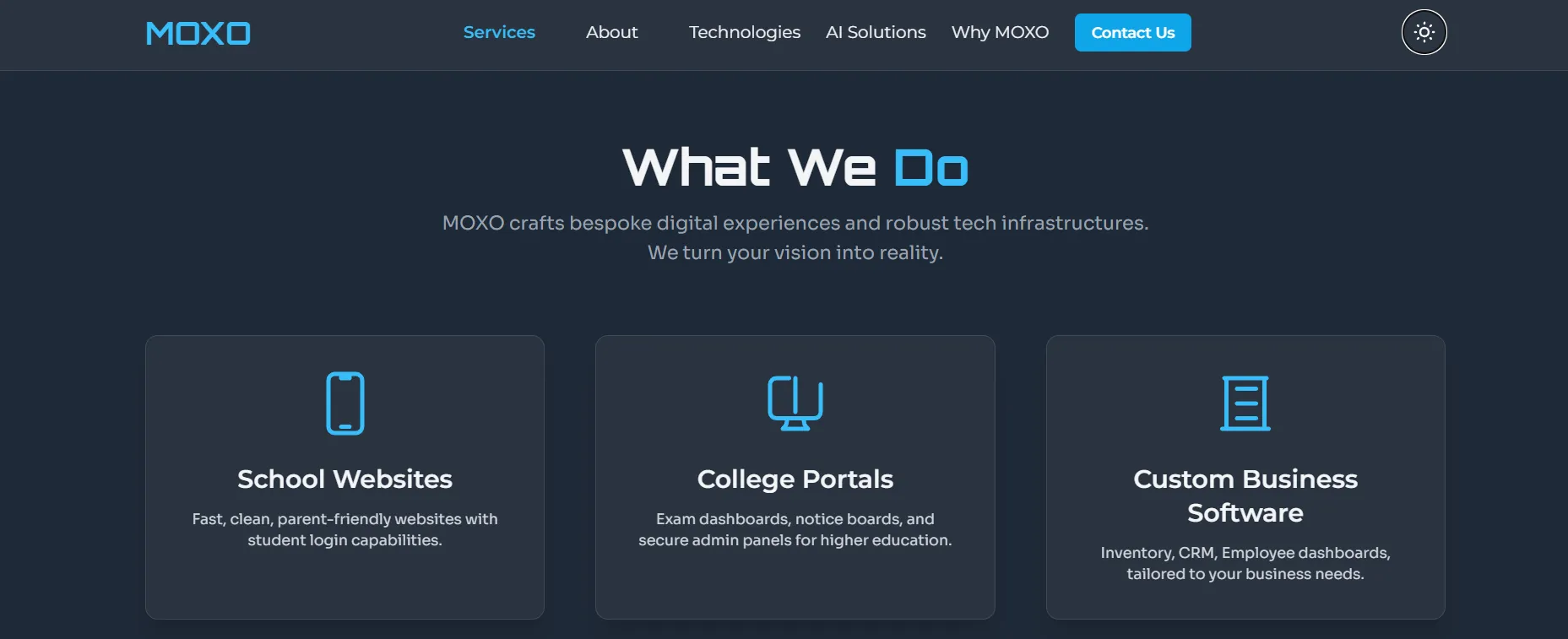 Web AppMoxo: Company Landing PageA stunning modern landing page with smooth parallax scrolling, advanced GSAP animations and elegant section transitions that bring the brand to life.by IshaOpen the live project ↗